
An Ultimate Guide For iBPM - Definition, Features, and Benefits For 2026
iBPM adds AI, real-time analytics, and adaptive decision-making to traditional BPM capabilities. It allows organizations to move beyond static process execution toward workflows that self-monitor, surface insights, and trigger optimization actions automatically based on live operational data. Read the blog to understand what iBPM is, how it differs from standard BPM, and when to adopt it.
What is iBPM?
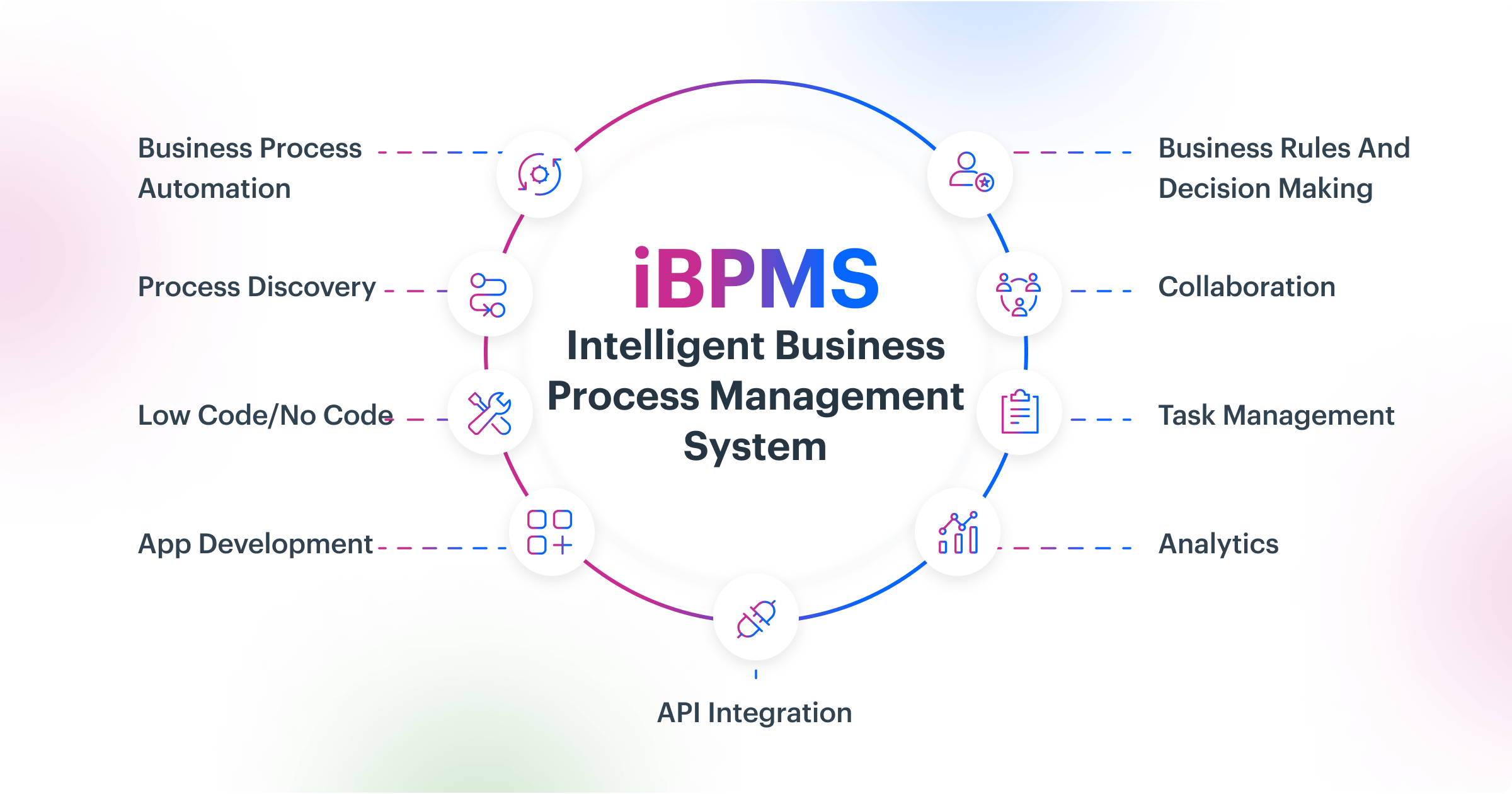
iBPM stands for Intelligent Business Process Management, it takes an already great BPM tool and enriches it with additional intelligence, including features like cloud computing, event processing, real-time decision-making, and systems crosslinking.
In simple terms, intelligent business process management goes a leap beyond traditional BPM and builds a dynamic technology environment based on value-added knowledge work.
Since its introduction as a concept by Gartner in 2012, businesses have been calling iBPM the next big thing in the enterprise BPM domain.
How Should You Apply iBPM?
iBPM sounds like a new concept, but it was already happening when enterprises used business process management systems (BPMS) in combination with other smart tools to optimize their processes.
Intelligent BPM as a single software is still an evolving concept. iBPMS software embeds enriched processes like cloud messaging, message-oriented middleware, IoT integration, complex event processing, and business activity monitoring.
As a consolidated tool, iBPMS leverages business rules, big data mining, machine learning, cloud computing, mobility and social features, etc.
According to Tom Nolle of CIMI Corporation, there are 3 different use cases of iBPM:
1) Service extension for mobile users
To bring mobile users closer to the process no matter where they are.
2) Expansion of analytics capabilities
To add more firepower to a BPM’s analytics and spot trends for process optimization.
3) Capability to process real-time complex events
To run complex event processing (CEP) and offload the burden of analytics
Any agile BPM tool that does the above is an iBPMS by definition.
How is an iBPMS Different From a BPMS?
Intelligent business process management suites (iBPMS) are the more useful, likeable, and successful version of BPM. It’s like the more pleasant, savvy son who takes over the business from his crotchety, hard-to-like father.
Jim Sinur coined the term iBPM when working with Gartner. He says that iBPM emerged as a result of BPM’s inability to become dynamic. Businesses needed intelligent processes and BPM fell short of delivering the operational responsiveness to leverage latest technological advances.
According to Sinur, “Before intelligent processes came along, processes needed to be pre-programmed and have happy paths of execution.It was clear that the kind of processes companies wanted to attempt went way beyond the kind of process technologies [that were] available [around] 2011.”
Here are the Differences Between iBPM and BPM:
- Complex event processing
- Real-time analytics to support Intelligent Business Operations
- Interactive social media platform
- Good support for mobile platforms
Benefits of iBPM:
- Better integration with other tools
- More advanced analysis
- Tools for citizen developers rather than just programmers
- Ability to handle complex events
- Cloud capabilities
- Ability to move towards the Internet of Things (IoT)
How to select right iBPMS service Provider for your Business
Finding the right iBPM partner can be overwhelming despite having a clear and well-structured strategy. However, the right iBPMS software provider will depend on where your business processes currently stand, the skilled resources you have, and how you access data.
Once you've made your choice, you may take advantage of real-time decision management, which is intelligent rather than just automating operations.
So, what next?
If you haven’t chosen the Intelligent Business Process Management Suite (iBPMS) for your organization yet, it’s high time you do it. Choosing the right business process management software is critical for any company that wants to streamline its processes across human and system tasks. Choose a platform that meets your requirements and that your company is ready for.
Kissflow Platform is a human-centric, cloud-based, licensed software, built for business leaders to create their own automated business applications. Start your free trial now!
Frequently asked Questions
1. What is iBPM (Intelligent Business Process Management)?
iBPM extends traditional BPM with real-time analytics, complex event processing, AI-driven decisions, and social collaboration. It manages dynamic, data-intensive processes requiring adaptive intelligence beyond simple rule-based automation.
2. BPM vs iBPM: what's the difference?
Traditional BPM handles structured, predictable workflows. iBPM adds intelligence layers including real-time event processing, predictive analytics, machine learning, and dynamic case management for complex knowledge-intensive processes.
3. Is iBPM still relevant in 2026?
Yes. iBPM has evolved into what analysts call hyperautomation and intelligent automation. The core principles of combining process management with AI and analytics remain central to modern enterprise automation strategies.
4. What are the best iBPM platforms?
Leading platforms include Kissflow, Appian, Pega, and IBM Business Automation Workflow. Kissflow combines intuitive no-code design with analytics and integration capabilities, making intelligent process management accessible to business teams.
5. What are key iBPM features?
Core features include process modeling, real-time analytics, complex event processing, AI/ML integration, dynamic case management, social collaboration, mobile access, and advanced reporting for unpredictable business scenarios.
6. How does iBPM support digital transformation?
iBPM accelerates transformation by automating complex cross-functional processes, enabling data-driven decisions, providing real-time visibility, and connecting legacy systems with modern applications while empowering business-user innovation.
7. What is the difference between BPM and IBPM
BPM (Business Process Management) is a systematic approach to improving and optimizing an organization's work processes to increase efficiency, reduce costs, and improve customer satisfaction. iBPM (Intelligent Business Process Management) is an advanced form of BPM that uses technologies such as artificial intelligence, machine learning, and robotic process automation to automate, streamline, and optimize processes. iBPM adds AI and analytics to traditional BPM, representing its next evolution with predictive and self-learning capabilities.
Related topics:
What Is Intelligent Process Automation? An Overview
Intelligent Automation: Definition, Meaning, and Complete Guide
AI Process Automation: Complete Guide to Smarter Workflows
Business Automation vs. AI: The Powerful Partnership
Business Orchestration and Automation Technologies (BOAT): A Guide for 2026 Success
.webp?width=285&height=570&name=Kissflow-BPM-g2-review-white%20(3).webp)
Related Articles


3 MINUTES READ
5 Things You’ll Miss with Cloud-Based BPM Applications
3 MINUTES READ
Traditional BPM Software Barriers in SMB | Kissflow