- >
- BPM Software>
- When To Replace Your Legacy BPM System: 7 Organizational Warning Signs
When To Replace Your Legacy BPM System: 7 Organizational Warning Signs
Legacy BPM replacement becomes necessary when rising maintenance costs, poor system integrations, lack of mobile support, slow process change cycles, and growing user workarounds signal the platform can no longer meet business demands. Holding on too long only increases switching costs later.
Your BPM system was once the cornerstone of operational excellence. It streamlined approvals, automated routine tasks, and gave your teams the visibility they needed to make smarter decisions. But somewhere along the way, that same system started holding you back instead of pushing you forward.
The truth is, legacy BPM systems were built for a different era. They were designed when business processes were predictable, change cycles lasted years instead of weeks, and integration meant connecting two or three enterprise applications. Today's reality looks nothing like that. Markets shift overnight, customer expectations evolve continuously, and the average enterprise now manages over 106 SaaS applications in its technology stack.
So how do you know when it's time to replace legacy BPM system infrastructure with something more capable? The signs are often hiding in plain sight, masked as "normal" operational friction. Here are seven warning signs that your organization has outgrown its current BPM platform.
7 Warning Signs to Replace Your Legacy BPM System
1. Your IT backlog has become a bottleneck for business agility
Every process change request sits in a queue. Simple modifications take months. And the phrase "we'll need to wait for the next release cycle" has become the default response to any improvement idea.
This scenario plays out in organizations worldwide, and the consequences extend far beyond frustrated business users. According to Gartner, 70% of new applications developed by organizations will use low-code or no-code technologies by 2025, up from less than 25% in 2020. The shift isn't happening because low-code is trendy. It's happening because organizations recognize that legacy BPM limitations create an unacceptable gap between business needs and technical delivery.
When your BPM system requires specialized developers for every modification, you've effectively created a single point of failure. Business teams identify improvement opportunities daily, but the IT department can only process a fraction of those requests. The result is a growing gap between how your processes should work and how they actually function.
Modern BPM platforms address this challenge by enabling business technologists to make changes directly. Gartner reports that 41% of non-IT workers now customize or create data and application solutions themselves. If your current system doesn't support this kind of distributed ownership, you're operating with one hand tied behind your back.
2. Integration has become your biggest operational headache
Legacy BPM systems typically emerged during an era when enterprise architecture was relatively simple. You had an ERP system, maybe a CRM, and a handful of specialized applications. Building point-to-point integrations between these systems was manageable.
That world no longer exists. Today's enterprise technology landscape includes cloud applications, SaaS platforms, microservices, APIs, and an ever-expanding ecosystem of tools that employees adopt with or without IT approval. Research shows that 48% of enterprise apps are now shadow IT, meaning they operate outside formal IT governance. Your BPM system needs to connect with all of them.
When your current platform struggles to integrate with modern applications, several problems emerge. Data becomes siloed. Employees resort to manual workarounds. Process visibility degrades. And the promise of end-to-end automation remains perpetually out of reach.
Organizations experiencing integration challenges often report that their teams spend more time moving data between systems than actually analyzing it or acting on insights. If this sounds familiar, it's a clear sign that your BPM infrastructure has fallen behind your integration requirements.
3. Process changes require code freezes and extensive testing cycles
In a legacy BPM environment, even minor process modifications can trigger extensive regression testing. Teams must verify that changes in one area don't inadvertently break functionality elsewhere. This caution is understandable given the tightly coupled architecture of older systems, but it creates a fundamental conflict with business requirements for agility.
Consider what happens when regulatory requirements change, a common occurrence in industries like financial services, healthcare, and manufacturing. Your compliance team identifies the need for a process modification. The request enters the development queue. Developers assess the impact, build the change, and then the testing cycle begins. Weeks or months later, the modification finally reaches production.
During that entire period, your organization operates with non-compliant processes, accumulating risk with each passing day.
Modern BPM platforms are architected differently. They separate process logic from underlying code, enabling changes without extensive technical intervention. They provide sandboxed testing environments where modifications can be validated quickly. And they support incremental deployments that minimize risk while maximizing responsiveness.
If your current system treats every change as a major release, the architecture itself is working against your business objectives.
4. Your workforce has changed faster than your processes
The past five years have transformed how people work. Remote and hybrid arrangements have become standard. Employee expectations around technology have shifted dramatically. And the competition for talent has made operational friction a genuine retention risk.
According to recent research, 1 in 3 new hires start looking for another job soon after joining due to poor onboarding experiences. While BPM systems might seem disconnected from onboarding, the reality is that cumbersome processes create friction at every stage of the employee lifecycle. When people encounter outdated approval workflows, confusing forms, and disconnected systems, they form negative impressions that influence their long-term engagement.
Legacy BPM systems were designed for centralized, office-based workforces. They assume people are available during standard business hours, working from predictable locations, with consistent access to corporate networks. These assumptions no longer hold.
Modern alternatives provide mobile-first experiences, asynchronous workflow capabilities, and the flexibility to accommodate diverse work patterns. If your current system forces employees to adapt to its constraints rather than adapting to how they actually work, you're creating unnecessary barriers to productivity and satisfaction.
5. Analytics and reporting feel like archaeology projects
When leadership asks for insights into process performance, how long does it take to deliver? In legacy BPM environments, this question often triggers groans from operations teams who know they're about to embark on a data excavation project.
Older systems frequently store information in proprietary formats or siloed databases. Generating reports requires specialized knowledge and often manual data manipulation. By the time insights reach decision-makers, the underlying conditions may have already changed.
Gartner predicts that by 2029, 50% of business decisions will be augmented or automated by AI agents. This vision depends on having access to real-time, structured process data. Organizations running legacy BPM platforms will struggle to participate in this shift because their systems weren't designed for the kind of continuous data flow that modern analytics requires.
Process mining capabilities, real-time dashboards, and predictive analytics have become table stakes for effective process management. If your current platform treats reporting as an afterthought rather than a core capability, you're missing opportunities to identify inefficiencies, predict bottlenecks, and continuously optimize operations.
6. Compliance and governance have become manual exercises
Regulatory requirements continue to intensify across industries. Data privacy regulations, industry-specific mandates, and corporate governance standards all demand demonstrable process controls. Legacy BPM systems often lack the audit capabilities and governance frameworks necessary to meet these requirements efficiently.
When compliance becomes a manual exercise, several negative consequences follow. Teams spend disproportionate time documenting what should be automatically tracked. Audit preparation becomes a scramble to assemble evidence from disparate sources. And the risk of gaps or inconsistencies increases with every manual touchpoint.
According to Gartner, organizations that implement comprehensive AI governance platforms will experience 40% fewer AI-related ethical incidents compared to those without such systems. While this statistic specifically addresses AI governance, the principle applies broadly: systematic governance capabilities reduce risk more effectively than manual controls.
Modern BPM platforms embed compliance features directly into process execution. They maintain complete audit trails, enforce access controls consistently, and provide the documentation necessary to demonstrate regulatory compliance. If your current system requires heroic manual efforts to satisfy auditors, that's a clear signal that your governance infrastructure has fallen behind organizational needs.
7. Your BPM vendor has stopped investing in innovation
Technology markets evolve continuously. Vendors that stop innovating eventually become liabilities for their customers. When your BPM provider focuses primarily on maintenance rather than advancement, you inherit the consequences of their strategic decisions.
Several indicators suggest a vendor has entered maintenance mode. Release cycles slow down. New features address minor enhancements rather than fundamental capabilities. Customer support becomes reactive rather than proactive. And the vendor's roadmap no longer aligns with emerging technology trends like artificial intelligence, machine learning, and advanced automation.
The BPM market itself is experiencing significant transformation. Gartner defines hyperautomation as one of the leading trends, predicting that 85% of organizations adopting hyperautomation will increase their operational efficiency by 30%. Platforms that support this vision integrate process automation with AI, robotic process automation, and advanced analytics. Legacy systems that can't participate in this convergence will increasingly become obstacles rather than enablers.
If your vendor's innovation trajectory doesn't match your organization's ambitions, the partnership may have run its course.
The cost of waiting: why migrate from old BPM now
Organizations often delay BPM modernization because migration seems disruptive and risky. But the cost of maintaining legacy systems accumulates continuously, even when it's not visible in budget line items.
Consider the productivity lost when employees work around system limitations. Factor in the opportunities missed because processes couldn't adapt quickly enough. Add the compliance risks from inadequate governance capabilities. Include the integration costs from maintaining connections that modern platforms would handle natively. The total cost of ownership for legacy BPM extends far beyond licensing and maintenance fees.
McKinsey research indicates that 74% of organizations still struggle to translate technology investments into meaningful business outcomes. Part of this challenge stems from attempting to build modern capabilities on outdated foundations. Migration isn't just about getting new features. It's about establishing an architecture that can evolve with your business.
The signs you need new BPM infrastructure rarely appear suddenly. They accumulate gradually, often masked as "normal" operational challenges. But when multiple warning signs exist simultaneously, the case for modernization becomes compelling.
How Kissflow helps organizations modernize BPM
Kissflow's bpm platform addresses the challenges that drive legacy BPM replacement. By enabling business users to build and modify processes without extensive IT involvement, Kissflow eliminates the backlog bottleneck that constrains operational agility. Native integrations with hundreds of applications resolve connectivity challenges that plague older systems.
The platform's visual workflow designer means process changes don't require code freezes or extensive testing cycles. Real-time analytics and built-in compliance features transform governance from a manual burden into an automated capability. And continuous platform innovation ensures your BPM infrastructure remains aligned with emerging technology trends.
For organizations ready to replace legacy BPM systems, Kissflow provides a migration path that minimizes disruption while maximizing the benefits of modernization.
Frequently asked questions
1. What are the most common signs that indicate I need to replace my legacy BPM system?
The most telling signs you need a new BPM include: growing integration backlogs where IT spends more time building custom connectors than improving processes, inability for business users to modify workflows without IT involvement, poor mobile and remote access capabilities, limited process visibility and analytics, compliance documentation requiring heroic manual effort, scaling costs that increase proportionally with growth, and vendor support shifting to maintenance mode with no meaningful feature updates.
2. How much does it typically cost to migrate from an old BPM system to a modern platform?
Migration costs vary significantly based on process complexity, data volume, and integration requirements. However, organizations should weigh migration costs against the ongoing costs of legacy BPM limitations, which include IT resource drain, productivity losses from workflow bottlenecks, compliance risks, and competitive disadvantage. Research shows that modern BPM implementations can increase productivity by 50%, reduce cycle times by 90%, and improve quality by 80%, often delivering ROI that justifies migration investment within 12-18 months.
3. Can I migrate from my old BPM system in phases, or do I need to replace everything at once?
Phased migration is strongly recommended over big-bang replacement. Start by identifying high-value, lower-complexity processes for initial migration, demonstrate success with measurable outcomes, then expand systematically to more complex workflows. This approach minimizes disruption, allows organizational learning, builds stakeholder confidence, and reduces risk. Most successful BPM modernization projects take 12-24 months for full enterprise migration.
4. What should I look for in a modern BPM platform to avoid the same legacy problems in the future?
Prioritize platforms with: low-code/no-code capabilities that empower business users to make changes without IT dependencies, cloud-native architecture for elastic scaling, robust integration capabilities with pre-built connectors for common enterprise applications, real-time analytics and process mining features, mobile-first design for remote workforce support, and active vendor investment in continuous platform innovation rather than maintenance-only updates.
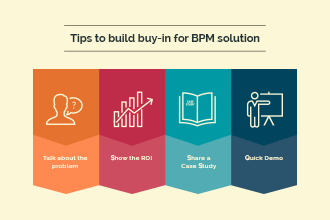
5. How do I build a business case to convince leadership to invest in BPM modernization?
Build your business case by quantifying current-state costs including IT hours on manual integrations, productivity losses from bottlenecks, compliance risk exposure, and competitive capability gaps. Establish clear success metrics aligned with organizational objectives. Reference industry benchmarks showing 30-50% productivity gains from modern BPM implementations. Present a phased migration plan that demonstrates quick wins while managing risk. Include total cost of ownership comparisons between maintaining legacy systems versus modernization investment.
Related Topics:
- The Challenges in Implementing BPM and How to Overcome Them
- Expert Advice On The Latest Business Process Management Challenges
- What's Wrong with Traditional BPM Software
- Traditional BPM Software Barriers in SMB | Kissflow
- Apparently, BPM dies every 2 years! - Kissflow
Explore how Kissflow can transform your process management capabilities.
Related Topics:
Related Articles