10 Best Low-code Companies and Platforms for Enterprise Application Development in 2026: The Complete Guide and Comparison list
Choosing the best low code company depends on the platform’s ability to support enterprise application development, workflow automation, and system integrations. The best low code platforms help organizations build applications faster using visual development tools while still allowing developers to extend functionality with custom code. In this guide, we compare leading low code companies and platforms to help you choose the right solution for building scalable business applications.
Choosing the right low code company is one of the most strategic decisions IT leaders will make in 2026. With the global low-code development market projected to reach $44.5 billion by the end of 2026 according to Gartner, enterprises are under increasing pressure to select platforms that deliver scalability, governance, and measurable ROI. This guide breaks down the top low-code providers, compares their strengths, and helps you identify which company aligns with your enterprise needs.
In this guide we review:
• The best low-code companies in the market
• Key features of leading low-code platforms
• How enterprises evaluate low-code vendors
• What makes a low-code platform enterprise-ready
Best low code development platforms for enterprise applications
The best low code development platforms allow organizations to build applications faster while maintaining enterprise level governance and scalability. These platforms provide visual development tools, automation capabilities, and integration frameworks that simplify application development.
Enterprise teams often evaluate low code development platforms based on factors such as integration support, workflow automation, security controls, and application lifecycle management. The strongest platforms enable developers and business teams to collaborate on building internal tools, operational systems, and business applications without long development cycles.
Several low code companies now provide platforms that help organizations accelerate application development and automate business processes.
What are low-code companies and low-code platforms?
Before diving into vendor comparisons, it helps to understand what separates a low-code company from a low code platform. The term "low-code company" refers to the vendor or organization behind a software solution, while "low-code platform" describes the actual product or technology stack you'll be using. For enterprise buyers, both matter equally. A low code platform provides a visual development environment where applications can be designed, automated, and deployed without writing large amounts of traditional code. Vendor stability, support infrastructure, and product roadmap will directly impact your long-term success just as much as the platform's features.
Low-code companies vs low-code platforms: vendor vs product perspective
When CIOs evaluate low code solutions, they often focus heavily on platform features while underestimating vendor factors. A strong low-code company brings more than just software. It offers implementation support, training programs, professional services, partner ecosystems, and a clear product vision. The platform itself determines what you can build and how quickly, but the company behind it determines whether you'll still be building on that platform five years from now.
Consider this: Forrester reports that 87% of enterprise developers now use low-code platforms for at least some of their development work. That level of adoption means vendor lock-in risks are real, and choosing a company with long-term viability is non-negotiable.
The best low-code providers invest heavily in customer success, continuously evolve their platforms based on market feedback, and maintain transparent communication about their product direction. When evaluating any low code tool, look beyond the demo and assess the organization's commitment to your success.
How enterprises evaluate low-code companies in 2026
Many organizations evaluating the best low code platforms in 2026 look for solutions that support enterprise integrations, automation capabilities, and scalable application development.
Enterprise evaluation criteria have matured significantly over the past few years. In 2026, IT leaders will prioritize vendor financial health, customer retention rates, analyst positioning in reports like the Gartner Magic Quadrant and Forrester Wave, and evidence of enterprise-scale deployments across similar industries.
Procurement teams will also scrutinize security certifications, compliance capabilities, and the vendor's track record with regulated industries like healthcare, financial services, and manufacturing. The days of choosing a low code provider based on impressive demo presentations alone are over. Organizations now demand proof of concept pilots, reference calls with similar-sized companies, and detailed total cost of ownership analyses before signing multi-year contracts.
According to Gartner's research, the low-code application platform market will reach $16.5 billion by 2027 with a compound annual growth rate of 16.3%. This growth attracts both established players and new entrants, making thorough vendor evaluation more important than ever.
For more background, this guide on benefits of low-code development platforms explains the concept in more detail and helps readers continue the low-code learning journey.
Why enterprises are actively evaluating low-code companies and low-code platforms in 2026
The urgency around low code adoption continues to accelerate. Gartner predicts that by 2026, 75% of all new enterprise applications will be built using low code or no-code technologies, up from less than 25% in 2020. This shift is driven by several converging pressures that are forcing IT departments to rethink how they deliver software to the business.
The best low code development platform should support both rapid application development and enterprise governance, allowing organizations to scale applications without compromising security or system integration.
When evaluating vendors, it’s important to consider the best low-code AI platforms that combine automation with intelligent decision-making.
Growing internal application and automation backlogs
Application backlogs have become the number-one barrier to IT effectiveness, regardless of industry or company size. Research from The Economist Intelligence Unit found that the average company has a backlog of planned IT projects spanning three months to one year. Business units are submitting requests faster than IT teams can fulfill them, and the gap keeps widening.
Low-code platforms offer a realistic path to clearing these backlogs by enabling faster development cycles and empowering non-IT staff to build solutions under proper governance. Organizations that have adopted low code tools report that 90% of developers using these platforms have fewer than five app requests per month sitting in their backlog, compared to much higher numbers with traditional development approaches.
Need for IT-governed citizen development at scale
Citizen development is no longer experimental. Gartner forecasts that by 2026, developers outside formal IT departments will account for at least 80% of the user base for low-code development tools, up from 60% in 2021. But scaling citizen development without creating shadow IT requires robust governance frameworks.
Enterprises in 2026 will demand platforms that enable business users to build applications while giving IT complete visibility, control over data access, and the ability to enforce security policies automatically. The best low-code companies understand this balance and have built governance capabilities directly into their platforms rather than treating them as afterthoughts.
Consolidation of workflow, BPM, and app development tools into single platforms
Enterprises are tired of managing fragmented tool stacks. Many organizations have separate solutions for workflow automation, business process management, and application development, each with its own learning curve, maintenance overhead, and integration challenges.
The low-code vendors gaining the most traction in 2026 will be those offering unified platforms that combine these capabilities. Rather than buying three different tools from three different companies, IT leaders want a single provider that can handle process automation, custom application development, and case management within one environment. This consolidation reduces licensing costs, simplifies training, and creates a more cohesive experience for both developers and end users.
For a complete foundation, start with Kissflow’s low-code platform to understand how low-code supports faster app development and automation.
How we evaluated the best low-code companies/platforms
Selecting the top low-code companies for this guide required a structured evaluation framework. We looked beyond marketing claims and focused on factors that matter most to enterprise buyers making platform decisions in 2026. Our assessment considered both the technology capabilities and the organizational strength of each vendor.
1. Enterprise readiness, governance, and security controls
Enterprise readiness goes far beyond having a login page. We evaluated each company's support for role-based access controls, audit logging, data encryption, single sign-on integration, and compliance certifications like SOC 2, HIPAA, and GDPR. The best enterprise low-code platforms provide granular permissions that let IT teams control exactly what each user can access, build, and deploy.
Governance capabilities were weighted heavily in our evaluation. We looked at whether platforms offer centralized administration consoles, the ability to establish development standards, and mechanisms for reviewing and approving applications before they go live. Companies that treat governance as a core feature rather than an add-on scored higher.
2. Platform breadth: applications, workflows, and BPM capabilities
A truly comprehensive low-code platform should handle multiple use cases. We assessed each company's ability to support custom application development, workflow automation, business process management, case management, and external-facing portals. Platforms that excel in only one area may leave enterprises needing additional tools to fill gaps.
We also considered the depth of functionality within each capability area. For workflow automation, can the platform handle complex branching logic, parallel approvals, and conditional routing? For application development, does it support responsive design, offline functionality, and integration with external databases? Breadth without depth creates limitations that surface during implementation.
3. Scalability and performance for enterprise use cases
Enterprise deployments mean thousands of users, millions of records, and applications that need to perform consistently under heavy load. We evaluated each platform's architecture, hosting options, and track record with large-scale implementations. Companies with documented case studies showing successful deployments at organizations with 10,000+ users received higher scores.
Performance testing capabilities and monitoring tools also factored into our assessment. The best low-code providers give enterprises visibility into application performance and provide tools to identify and resolve bottlenecks before they impact users.
4. Integration ecosystem and extensibility
No low-code platform operates in isolation. Enterprises need their applications to connect with existing systems like ERP, CRM, HRIS, and industry-specific software. We evaluated each company's pre-built connectors, API capabilities, and support for custom integrations.
Extensibility matters too. When the visual development tools reach their limits, can professional developers extend functionality with custom code? The top low-code tools provide escape hatches for complex scenarios while keeping the benefits of rapid development for standard use cases.
5. Long-term vendor stability and roadmap
Choosing a low-code company is a multi-year commitment. We considered each vendor's financial health, funding status, acquisition history, and strategic direction. Companies with clear product roadmaps, regular feature releases, and strong customer retention rates scored higher than those with uncertain futures or stagnant development.
We also looked at community strength, partner ecosystems, and the availability of skilled implementation resources. A platform is only as valuable as the ecosystem supporting it.
For more background, this guide on types of low-code platforms explains the concept in more detail and helps readers continue the low-code learning journey.
Types of low-code companies in the market
The low-code market is not monolithic. Different vendors have evolved to serve different needs, and understanding these categories helps narrow down which type of company aligns best with your requirements. The four primary segments each bring distinct strengths and target different buyer profiles.
1. Enterprise-first low-code companies
These vendors built their platforms from day one with large organizations in mind. They prioritize security, governance, scalability, and integration with enterprise systems over ease of use for casual users. Enterprise-first low-code companies typically offer dedicated account management, professional services teams, and SLAs that meet the demands of Fortune 500 organizations.
Platforms in this category often require more technical expertise to maximize their potential, but they deliver the control and customization that complex organizations need. Examples include OutSystems, Mendix, and Appian, all of which have established track records serving regulated industries and global enterprises.
2. Workflow and BPM-centric low-code vendors
Some low-code providers started in the workflow automation or business process management space and expanded into broader application development. These companies bring deep expertise in process orchestration, approvals management, and operational efficiency. They understand how work actually flows through organizations and have built their platforms around that reality.
Kissflow fits squarely in this category, offering a unified platform that combines workflow automation, process management, and application development. ServiceNow App Engine also belongs here, leveraging ServiceNow's ITSM heritage to deliver process-centric solutions. These vendors are particularly strong for organizations whose primary goal is digitizing and automating business operations rather than building customer-facing applications.
3. Developer-led low-code companies
Developer-led platforms prioritize flexibility and technical capability over simplicity. They assume users have at least some development background and provide tools that professional developers find familiar and powerful. These platforms often support custom code, advanced debugging, and integration with professional development workflows like CI/CD pipelines.
OutSystems and Mendix both serve this segment well, offering robust development environments that appeal to IT teams who want to move faster without sacrificing control. The tradeoff is that these platforms have steeper learning curves and may not be ideal for organizations hoping to empower business users to build their own solutions.
4. Business-user-first low-code providers
On the opposite end of the spectrum, some low code tools are designed specifically for non-technical users. These platforms emphasize intuitive interfaces, templates, and guided experiences that let business analysts and process owners build applications without IT involvement.
Microsoft Power Apps, Zoho Creator, and Quickbase target this segment, making it easy for departments to create simple applications quickly. The tradeoff is that these platforms may struggle with complex enterprise requirements, advanced integrations, or scenarios that require significant customization beyond what the visual tools allow.
Best low-code companies and platforms in 2026 - explained
This section provides detailed profiles of the top low-code companies serving enterprise buyers in 2026. Each profile covers what the company is known for, its strengths at the enterprise level, limitations to consider, and the ideal customer profile.
Organizations searching for the best low code platforms often look for solutions that balance speed, flexibility, and governance. The best platforms allow teams to build applications quickly through visual tools while still supporting integrations, custom logic, and enterprise security requirements.
1. Kissflow
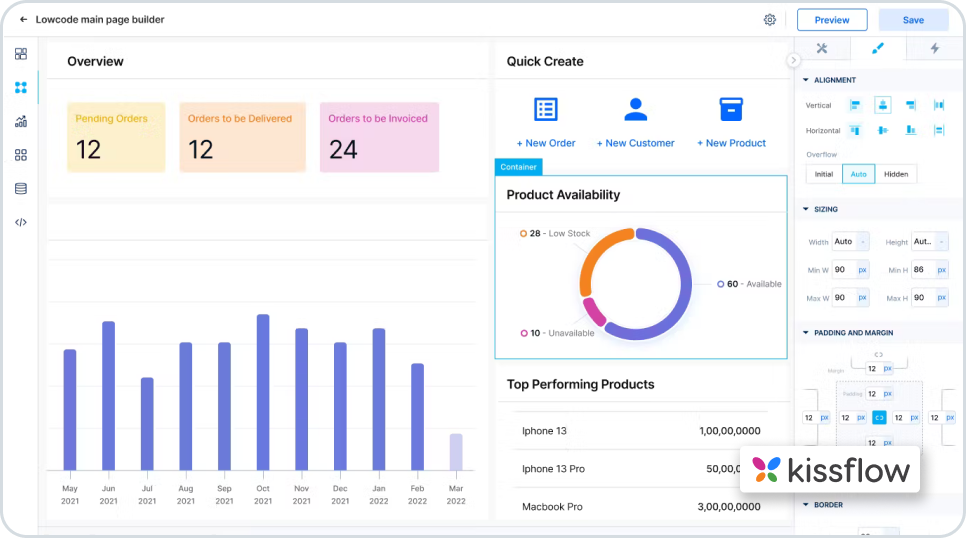
Kissflow has built its reputation as a unified low-code platform that bridges the gap between IT control and business agility. The company focuses on making it possible for organizations to manage workflows, automate processes, and build custom applications within a single environment.
What the company is best known for: Kissflow is recognized for its governed citizen development approach, which enables business users to create solutions while IT maintains oversight and control. The platform combines no-code simplicity for straightforward use cases with low-code capabilities for more complex requirements.
Strengths at the enterprise level: Kissflow delivers strong governance features including role-based access, audit trails, and centralized administration. The platform handles workflow automation particularly well, with robust support for approvals, conditional routing, and process analytics. Its pricing model tends to be more accessible than competitors targeting the same enterprise segment.
Limitations or trade-offs: Organizations needing to build highly complex, customer-facing applications with advanced UI requirements may find Kissflow's capabilities more constrained than developer-focused platforms like OutSystems or Mendix. The platform is optimized for internal operations rather than external product development.
Ideal customer profile: Mid-sized to large enterprises looking to consolidate workflow automation, BPM, and internal application development onto a single platform. Particularly well-suited for organizations in industries like manufacturing, oil and gas, retail, and healthcare where operational efficiency is paramount.
2. OutSystems
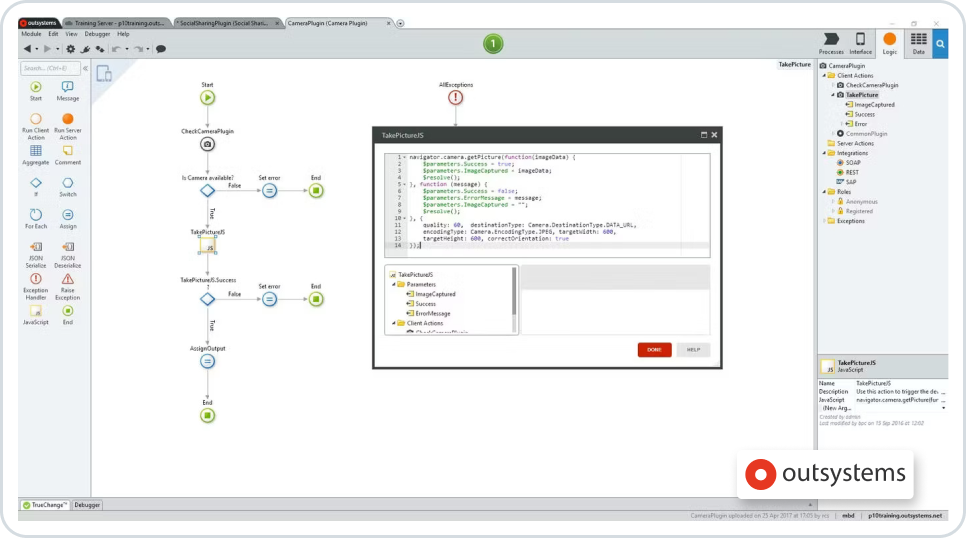
OutSystems positions itself as a high-performance low-code platform for professional development teams. The company has been a consistent leader in analyst reports and has invested heavily in AI-assisted development capabilities.
What the company is best known for: OutSystems is known for enabling rapid enterprise application development with full-stack capabilities. The platform supports complex integrations, mobile development, and scenarios requiring significant customization.
Strengths at the enterprise level: The platform excels at building mission-critical applications that need to scale. OutSystems provides comprehensive DevOps tools, strong security features, and the ability to deploy applications across cloud and on-premises environments. Forrester's 2025 Wave report named OutSystems a Leader, highlighting its superior UX development capabilities and scalable architecture.
Limitations or trade-offs: OutSystems has one of the higher price points in the low-code market, which can make it difficult to justify for smaller organizations or simpler use cases. The platform requires developers with technical skills to maximize its potential, limiting its usefulness for true citizen development scenarios.
Ideal customer profile: Large enterprises with professional development teams looking to accelerate delivery of complex, customer-facing or mission-critical applications. Best for organizations that already have technical staff and want to make them more productive.
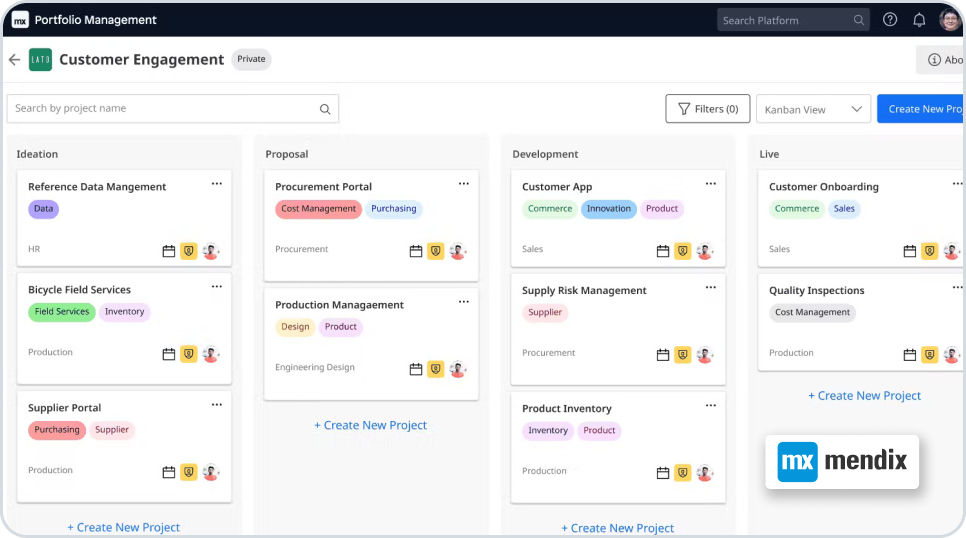
3. Mendix
Mendix, now part of Siemens, offers a comprehensive low-code platform that serves both professional developers and business users. The company has focused on enabling what it calls "fusion teams" that bring together technical and non-technical contributors.
What the company is best known for: Mendix is recognized for its dual approach that provides both a no-code Studio for business users and a more powerful Studio Pro for developers. This flexibility allows organizations to address a wide range of use cases within a single platform.
Strengths at the enterprise level: Strong governance and collaboration features make Mendix attractive for large organizations. The platform offers robust integration capabilities, support for microservices architecture, and deployment flexibility across public cloud, private cloud, and on-premises environments.
Limitations or trade-offs: Like OutSystems, Mendix sits at the higher end of pricing, which can be a barrier for mid-market organizations. The platform's extensive capabilities come with complexity, and organizations may find themselves using only a fraction of what's available.
Ideal customer profile: Large enterprises, particularly in manufacturing and industrial sectors given the Siemens connection, that need a platform capable of supporting both business-led and IT-led development initiatives.
4. Appian
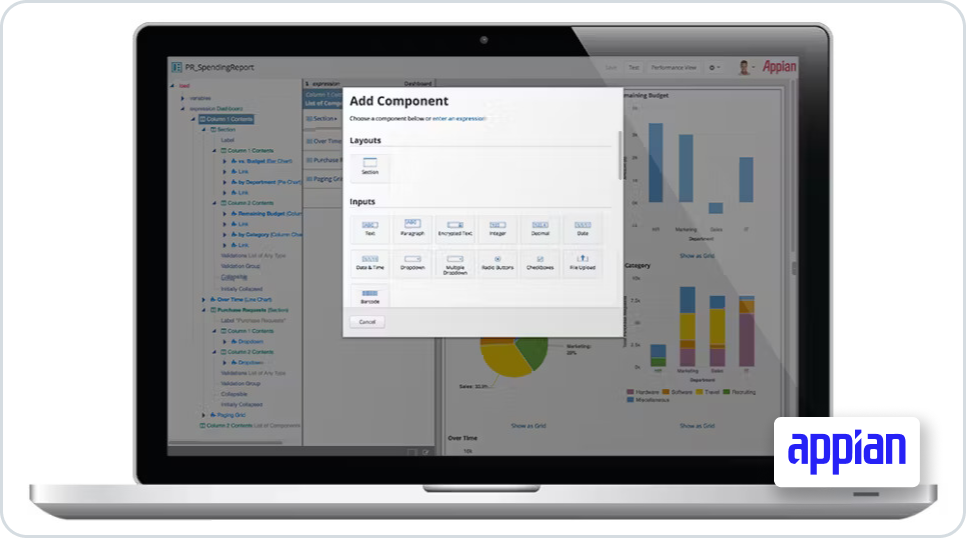
Appian combines low code development with business process management and automation capabilities. The company has a strong presence in regulated industries and emphasizes process orchestration across systems.
What the company is best known for: Appian is known for its process mining, automation, and case management capabilities. The platform helps organizations understand their existing processes, automate them, and build applications that support better decision-making.
Strengths at the enterprise level: Appian delivers strong BPM functionality that goes beyond simple workflow automation. The platform integrates RPA capabilities, supports complex case management scenarios, and provides AI-powered process intelligence. Security and compliance features meet the requirements of highly regulated industries.
Limitations or trade-offs: Appian's interface and development environment can feel dated compared to newer entrants in the market. The platform is optimized for process-centric applications, so organizations looking to build general-purpose custom software may find better options elsewhere.
Ideal customer profile: Enterprises in financial services, government, and healthcare that need to automate complex processes spanning multiple systems and require strong compliance and audit capabilities.
5. Microsoft Power Apps
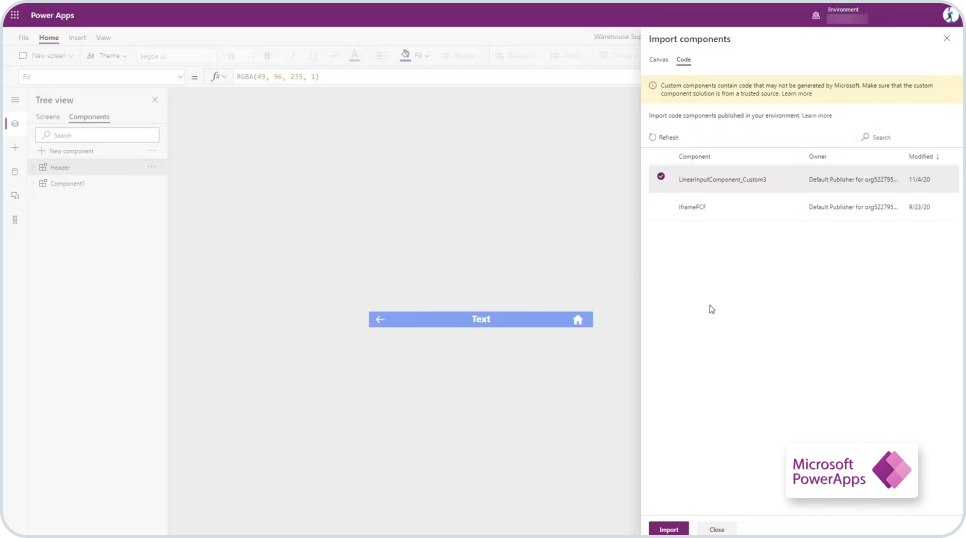
Power Apps is Microsoft's entry in the low-code space, tightly integrated with the broader Microsoft 365 and Azure ecosystem. The platform benefits from Microsoft's massive distribution and familiar interface patterns.
What the company is best known for: Power Apps is recognized for its accessibility and integration with tools that enterprises already use, including SharePoint, Teams, Dynamics 365, and Azure services. Microsoft was named a Leader in Forrester's 2025 Wave for Low-Code Platforms, ranking top in strategy and current offering.
Strengths at the enterprise level: The platform offers more than 1,000 pre-built connectors, making integration with existing systems relatively straightforward. Power Apps benefits from Microsoft's enterprise-grade security, compliance certifications, and global support infrastructure. With 56 million monthly active users, the platform has proven it can scale.
Limitations or trade-offs: Power Apps works best within the Microsoft ecosystem. Organizations heavily invested in non-Microsoft technologies may find integration more challenging. The platform can also become expensive at scale due to its per-user licensing model, and complex applications may push against the platform's boundaries.
Ideal customer profile: Organizations already standardized on Microsoft 365 and Azure that want to extend their existing investments. Particularly effective for departmental applications and scenarios that leverage SharePoint data or integrate with Teams.
6. Zoho Creator
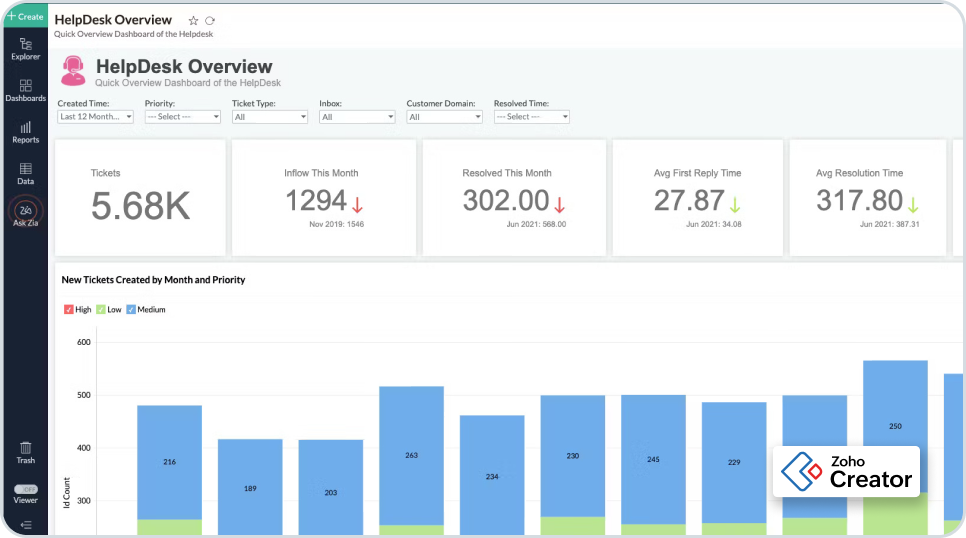
Zoho Creator is part of the broader Zoho suite and offers an accessible low code platform for building business applications. The company targets small to mid-sized businesses but has expanded its enterprise capabilities.
What the company is best known for: Zoho Creator is recognized for its affordability and ease of use. The platform allows business users to build functional applications quickly using drag-and-drop tools and pre-built templates.
Strengths at the enterprise level: Competitive pricing makes Zoho Creator attractive for organizations with budget constraints. The platform integrates well with other Zoho products and offers API capabilities for connecting to external systems. Mobile app generation is included without additional cost.
Limitations or trade-offs: Zoho Creator may struggle with very complex enterprise requirements, high-volume transactions, or scenarios requiring advanced security and governance. The platform is best suited for simpler departmental applications rather than mission-critical enterprise systems.
Ideal customer profile: Small to mid-sized businesses or departments within larger organizations looking for an affordable way to build internal applications without heavy IT involvement.
7. ServiceNow
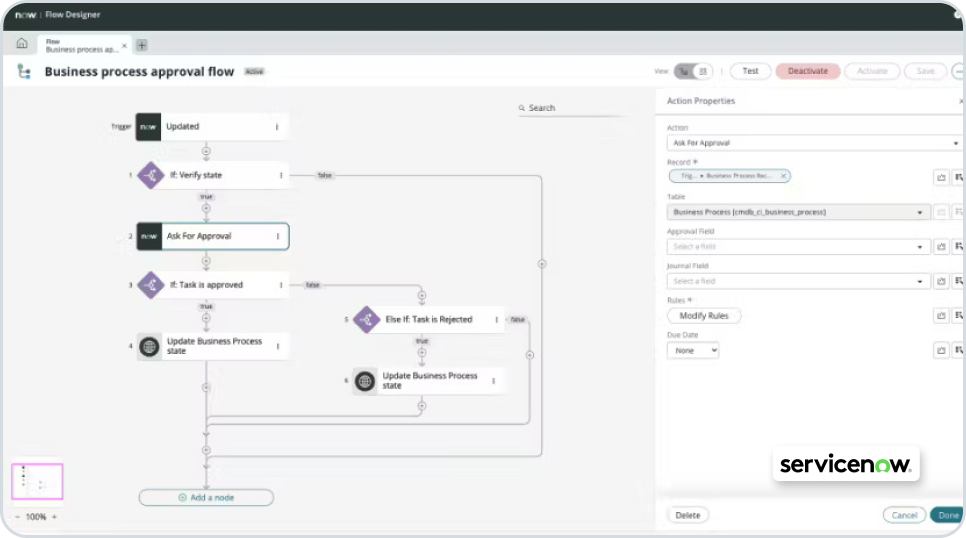
ServiceNow App Engine extends the ServiceNow platform's capabilities to custom application development. The company leverages its strength in IT service management and workflow automation.
What the company is best known for: ServiceNow is known for ITSM, but App Engine allows organizations to build custom applications on the same platform. This creates opportunities to extend ServiceNow beyond IT into HR, customer service, and other operational areas.
Strengths at the enterprise level: ServiceNow was named a Leader in Forrester's 2025 Wave, receiving the highest possible scores in 12 criteria including integration development, application generation, and platform security. The platform excels at process automation and provides strong governance capabilities for both citizen and professional developers.
Limitations or trade-offs: ServiceNow App Engine makes the most sense for organizations already using ServiceNow. The platform's pricing can be substantial, and it may be overkill for organizations that don't need the broader ServiceNow ecosystem.
Ideal customer profile: Enterprises already using ServiceNow for ITSM or other modules that want to extend the platform for additional use cases without introducing another vendor.
8. Quickbase
Quickbase positions itself as a no-code platform for operational efficiency. The company focuses on helping organizations manage data-driven processes and build applications without technical expertise.
What the company is best known for: Quickbase is recognized for enabling business users to create database-driven applications quickly. The platform emphasizes operational use cases like project management, inventory tracking, and field service management.
Strengths at the enterprise level: The platform offers good flexibility for creating custom business applications without coding. Quickbase provides strong data management capabilities and supports integrations with common enterprise systems. Its citizen development focus makes it accessible to non-technical users.
Limitations or trade-offs: Quickbase may not be suitable for highly complex applications requiring advanced logic or sophisticated user interfaces. The platform works best for data-centric applications rather than process-heavy workflows.
Ideal customer profile: Operations teams within enterprises that need to build custom applications for tracking, reporting, and managing operational data without heavy IT involvement.
9. Creatio
Creatio combines CRM, process automation, and low-code development in a single platform. The company has evolved from its CRM roots to offer broader low code capabilities.
What the company is best known for: Creatio is recognized for unifying CRM functionality with process automation and no-code development. The platform allows organizations to automate sales, marketing, and service processes while building custom applications.
Strengths at the enterprise level: The combination of CRM and low code creates efficiencies for organizations that need both. Creatio offers strong process automation capabilities and provides AI-powered tools for improving operations. Pricing tends to be more accessible than some enterprise-focused competitors.
Limitations or trade-offs: Organizations that don't need CRM capabilities may find themselves paying for functionality they won't use. The platform's strength is in customer-facing processes, so purely internal operational applications may be better served elsewhere.
Ideal customer profile: Organizations looking to modernize their CRM while also gaining low-code capabilities for building related applications and automating customer-facing processes.
10. Pega
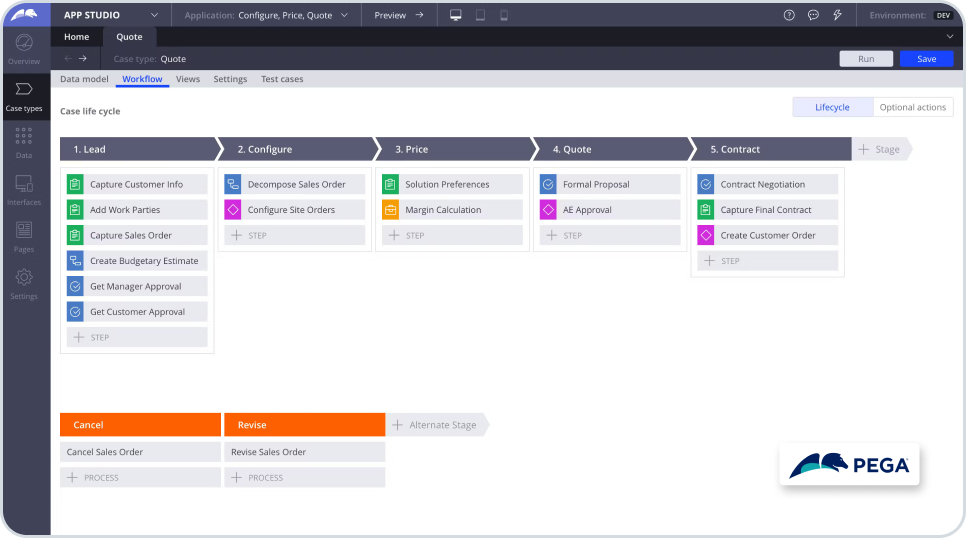
Pega (Pegasystems) is a long-established enterprise software company that combines low-code development with business process management, decisioning, and AI capabilities. The company has a strong presence in highly regulated industries and complex global enterprises.
What the company is best known for: Pega is recognized for its powerful case management, decisioning engine, and AI-driven process automation. The platform excels at orchestrating complex, end-to-end business processes that span multiple systems and departments.
Strengths at the enterprise level: Pega has been consistently positioned as a Leader in Gartner's Magic Quadrant for CRM Customer Engagement and delivers exceptional capabilities for real-time decisioning and adaptive AI. The platform handles highly regulated environments well, with strong audit trails, compliance features, and built-in robotic process automation. Its reusable application layers allow organizations to build once and deploy across geographies with localized variations.
Limitations or trade-offs: Pega has a steeper learning curve compared to other low-code platforms and typically requires certified developers or consultants for implementation. The platform is optimized for large, complex deployments, which can make it overkill for mid-sized organizations or simpler use cases.
Ideal customer profile: Large global enterprises in financial services, insurance, healthcare, telecommunications, and government that need to manage complex, high-volume customer interactions and operational processes with sophisticated decisioning requirements.
Comparison of top low-code platforms
Comparing low-code providers requires looking at multiple dimensions. This section offers side-by-side analysis across the criteria that matter most to enterprise buyers, helping you narrow down which companies deserve deeper evaluation.
Enterprise vs mid-market suitability
Not all low code platforms are built for the same scale. OutSystems, Mendix, Appian, and ServiceNow App Engine are purpose-built for large enterprise deployments with complex requirements. These platforms offer the security, governance, and scalability features that Fortune 500 organizations demand, but they come with higher price points and longer implementation timelines.
Kissflow, Zoho Creator, and Quickbase serve a broader market that includes mid-sized organizations. These platforms balance enterprise capabilities with accessibility and cost-effectiveness, making them practical choices for organizations that need professional-grade features without enterprise-grade complexity.
Microsoft Power Apps and Salesforce Platform occupy an interesting middle ground. They can scale to enterprise needs but are often deployed at departmental levels within larger organizations.
Governance and IT ownership comparison
Governance capabilities vary significantly across vendors. Platforms like Kissflow, ServiceNow App Engine, and Appian provide robust centralized administration that gives IT complete control over who can build what and where applications get deployed. These platforms assume IT will maintain oversight even in citizen development scenarios.
OutSystems and Mendix offer strong governance but are designed more for professional development teams than citizen developers. Their governance features focus on code quality, deployment pipelines, and collaboration among technical staff.
Microsoft Power Apps and Quickbase provide governance tools but may require additional configuration and third-party solutions to achieve the level of control that regulated enterprises need. Organizations in healthcare, financial services, or government should carefully evaluate whether these platforms meet their compliance requirements out of the box.
Workflow, BPM, and application development depth
The depth of capability varies based on each vendor's heritage. Appian and Kissflow offer the strongest process automation and BPM functionality, reflecting their roots in workflow management. These platforms handle complex approval chains, conditional routing, and process analytics better than platforms that added workflow as an afterthought.
OutSystems and Mendix deliver the most powerful application development environments, capable of building sophisticated custom software with complex logic and advanced user interfaces. However, their workflow capabilities, while competent, are not their primary strength.
ServiceNow App Engine combines strong workflow automation with good application development, particularly for IT-centric use cases. Microsoft Power Apps offers decent workflow through Power Automate but requires multiple products to achieve what unified platforms provide in one.
For more background, this guide on visual programming overview explains the concept in more detail and helps readers continue the low-code learning journey.
Customization, extensibility, and integration flexibility
For organizations with complex integration requirements, OutSystems and Mendix offer the most flexibility. Both platforms support custom code, advanced API management, and integration with professional development tools. They can connect to virtually any system but may require developer resources to build and maintain those connections.
Microsoft Power Apps and ServiceNow App Engine leverage their parent platforms' integration ecosystems, offering hundreds of pre-built connectors that simplify common integration scenarios. However, custom integrations outside these ecosystems require more effort.
Kissflow, Appian, and Quickbase provide solid integration capabilities that cover most enterprise needs but may require workarounds for highly specialized or legacy systems.
Comparison table: low-code platform capabilities
|
Company |
Enterprise scale |
Governance strength |
Developer flexibility |
Best for |
|
Kissflow |
Strong |
Very strong |
Moderate |
Operations, unified platform |
|
OutSystems |
Very strong |
Strong |
Very strong |
Complex apps, dev teams |
|
Mendix |
Very strong |
Strong |
Very strong |
Enterprise apps, fusion teams |
|
Appian |
Very strong |
Very strong |
Moderate |
Process automation, regulated industries |
|
Microsoft Power Apps |
Strong |
Moderate |
Moderate |
Microsoft-centric organizations |
|
Zoho Creator |
Moderate |
Moderate |
Moderate |
SMBs, departmental apps |
|
ServiceNow App Engine |
Very strong |
Very strong |
Moderate |
ServiceNow customers, ITSM extension |
|
Salesforce Platform |
Very strong |
Strong |
Moderate |
Salesforce customers, CRM extension |
|
Quickbase |
Moderate |
Moderate |
Low |
Operations, data management |
|
Creatio |
Strong |
Moderate |
Moderate |
CRM plus process automation |
Use cases mapped to the right low-code platforms
Different low code platforms excel at different use cases. This section maps common enterprise scenarios to the vendors best positioned to address them, helping you shortlist companies based on your specific requirements.
1. Internal application development for IT teams
When IT teams need to build custom internal applications faster than traditional development allows, developer-focused platforms deliver the best results. OutSystems and Mendix provide the sophisticated development environments that professional developers expect, including debugging tools, version control integration, and deployment pipelines.
For less complex internal applications, Kissflow and Microsoft Power Apps offer faster time-to-value with lower learning curves. IT teams can prototype and deploy solutions quickly without the overhead that comes with more powerful platforms.
2. Workflow automation and business process management
Organizations prioritizing workflow automation should focus on vendors with deep BPM heritage. Kissflow, Appian, and ServiceNow App Engine were built around process orchestration and understand the nuances of approvals, routing, escalations, and exception handling.
These platforms handle scenarios like purchase requisitions, employee onboarding, contract approvals, and incident management particularly well. They provide out-of-the-box templates and best practices that accelerate implementation for common business processes.
3. Operations and process digitization at scale
Enterprises looking to digitize operations across multiple departments or locations need platforms that combine ease of use with enterprise governance. Kissflow stands out here by offering a unified platform that operations teams can adopt without heavy IT involvement while still maintaining centralized control.
ServiceNow App Engine and Appian also serve this use case well, particularly for organizations with existing investments in those ecosystems. Quickbase provides a more accessible option for operations teams that need to build applications quickly without waiting for IT.
4. IT-led vs business-led development initiatives
The choice between IT-led and business-led development shapes which vendors make sense. For IT-led initiatives where professional developers will do most of the building, OutSystems and Mendix offer the power and flexibility that technical teams need.
For business-led initiatives where departments want to solve their own problems with IT oversight, Kissflow, Microsoft Power Apps, and Quickbase provide the right balance. These platforms empower business users while giving IT the governance tools to maintain control.
How to choose the right low-code company for your enterprise
Selecting a low code vendor is a significant decision with long-term implications. This section provides practical guidance for CIOs and IT leaders navigating the evaluation and selection process.
Buying criteria CIOs and IT leaders should prioritize
Start with your use cases. Identify the specific problems you need to solve and the applications you want to build. This clarity will immediately eliminate vendors that don't align with your requirements.
Evaluate total cost of ownership, not just licensing fees. Factor in implementation services, training, ongoing maintenance, and the internal resources required to manage the platform. Some platforms with lower licensing costs require more expensive professional services to implement.
Prioritize governance and security. Ensure the platform meets your compliance requirements and provides the controls IT needs to maintain oversight. Ask for detailed documentation of security certifications and audit capabilities.
Consider the vendor's trajectory. Look for companies investing in innovation, maintaining strong customer relationships, and demonstrating financial stability. A platform's features today matter less than whether the company will continue improving the product over the next five years.
Key questions to ask low-code vendors during evaluation
Ask for customer references in your industry and of similar size. Speak directly with these customers about their implementation experience, ongoing support quality, and any challenges they've encountered.
Request a proof of concept that addresses your specific use case. Generic demos show what a platform can do in theory; a POC shows whether it can solve your actual problems.
Ask about the typical implementation timeline and what resources are required from your team. Understand whether you'll need to hire consultants or can handle implementation internally.
Inquire about the product roadmap. What features are coming in the next 12 to 24 months? How does the vendor gather and incorporate customer feedback into product development?
Ask about exit strategies. If you need to leave the platform in the future, what does that process look like? Can you export your applications and data?
Common mistakes enterprises make when shortlisting low-code platforms
The most common mistake is letting a compelling demo drive the decision. Demos are designed to show platforms at their best. Real-world implementations are messier, and a platform that looks impressive in a conference room may struggle with your actual requirements.
Another mistake is underestimating the importance of governance. Organizations get excited about enabling citizen development but fail to establish proper guardrails. This leads to shadow IT problems, security vulnerabilities, and applications that nobody can maintain after the original builder leaves.
Failing to involve key stakeholders is another pitfall. IT may select a platform that developers love but business users find difficult. Business teams may choose an accessible tool that doesn't meet security requirements. Successful selection requires input from all parties who will build, maintain, and use applications on the platform.
Finally, choosing based on current needs alone ignores future requirements. Select a platform with room to grow. The low-code vendor you choose should be able to support your needs not just today but as your usage expands over the coming years.
Why Kissflow is a leading low-code platform in 2026
Kissflow has earned its position among the top low code providers by focusing on what enterprises actually need: a platform that balances business agility with IT governance. Rather than trying to be everything to everyone, Kissflow has built a unified solution optimized for operational efficiency and process-driven application development.
1. Governed citizen development approach
Kissflow's approach to citizen development recognizes that empowering business users and maintaining IT control are not mutually exclusive. The platform provides intuitive tools that let process owners and business analysts build solutions without coding expertise, while giving IT administrators granular control over permissions, data access, and deployment.
This balance matters because ungoverned citizen development creates problems. Applications built without oversight can expose security vulnerabilities, create data silos, and become unmaintainable when their creators leave the organization. Kissflow's governance framework prevents these issues while preserving the speed and agility benefits that make citizen development attractive.
2. Unified platform for workflows, BPM, and application development
Instead of requiring enterprises to purchase and integrate separate tools for workflow automation, process management, and application development, Kissflow delivers all three capabilities within a single platform. This consolidation simplifies licensing, reduces training requirements, and creates a more cohesive experience for users.
The platform handles simple approval workflows with the same ease as complex multi-step business processes. Case management, forms, and external portals are all available without leaving the Kissflow environment. For enterprises tired of managing fragmented tool stacks, this unification represents significant value.
3. Enterprise scalability, control, and faster time-to-value
Kissflow serves customers ranging from mid-sized businesses to global enterprises across industries including manufacturing, retail, healthcare, and oil and gas. The platform's architecture supports large-scale deployments while maintaining the performance and reliability that enterprises require.
Implementation timelines tend to be shorter than with more complex platforms. Organizations can have their first applications live within weeks rather than months, demonstrating value quickly and building momentum for broader adoption. This faster time-to-value makes it easier to justify the investment and secure ongoing organizational support.
Low-code market trends shaping companies in 2026
The low code market continues to evolve rapidly. Understanding the trends shaping the industry helps enterprises anticipate where the market is heading and select vendors positioned to thrive in the changing landscape.
1. AI-native and automation-first low-code platforms
Artificial intelligence is becoming embedded in low-code platforms at every level. Gartner and Forrester both highlight AI-assisted development as a key differentiator among leading vendors. In 2026, expect to see platforms that can generate application components from natural language descriptions, suggest process improvements based on usage patterns, and automate testing and deployment.
Companies like OutSystems have made early investments in AI assistance, and Microsoft is infusing AI across the Power Platform. Vendors that fail to incorporate meaningful AI capabilities will fall behind as buyers increasingly expect intelligent assistance throughout the development lifecycle.
2. Enterprise standardization on fewer, stronger vendors
The proliferation of low-code tools has created management challenges for many organizations. IT departments struggle to support multiple platforms, ensure security across all of them, and maintain skilled staff for each technology. This is driving a consolidation trend where enterprises standardize on one or two strategic low-code vendors rather than allowing departments to choose independently.
Vendors with broad platform capabilities will benefit from this trend. Companies that can serve as an organization's primary low-code platform across multiple use cases will gain market share at the expense of niche players addressing only specific scenarios.
3. Shift toward IT-owned, governance-first low-code ecosystems
The early days of low-code saw significant adoption driven by business units trying to work around IT bottlenecks. As these initiatives have matured, organizations have recognized the need for IT involvement to ensure security, compliance, and maintainability.
In 2026, IT departments will increasingly own low-code initiatives even when business users do the building. This means platforms with strong governance capabilities will have advantages over those designed primarily for individual productivity. The vendors thriving in this environment will be those that make IT feel confident about business user development rather than threatened by it.
Frequently asked questions
1. What are the best low code platforms for enterprise application development?
The best low code platforms for enterprise application development provide strong integration capabilities, workflow automation, governance controls, and scalability. Enterprise teams typically look for platforms that support APIs, role based access controls, and application lifecycle management so they can build and deploy applications quickly while maintaining security and compliance.
2. How do you choose the best low code platform for your organization?
Choosing the best low code platform depends on factors such as integration requirements, scalability, governance capabilities, and the complexity of applications you plan to build. Organizations should evaluate whether the platform supports enterprise systems, automation workflows, and IT controls that allow teams to develop applications faster without losing oversight.
3. What is the difference between low code development platforms and low code development tools?
Low code development platforms provide a complete environment for building, deploying, and managing applications, including workflow automation, integrations, and governance features. Low code development tools typically focus on specific capabilities such as form builders or workflow designers but may not provide the full platform required for enterprise application development.
4. Who should use low code platforms?
Low code platforms are used by developers, IT teams, and business technology teams that want to build applications faster without relying entirely on traditional coding. Enterprises often use low code platforms to reduce development backlogs, automate workflows, and enable teams to create internal tools while maintaining governance and security standards.
5. Why do companies use low code platforms instead of traditional development?
Companies use low code platforms to accelerate application development and reduce IT backlogs. Visual development tools allow teams to build applications and automate processes much faster than traditional coding methods while still maintaining flexibility and control over integrations and business logic.
6. What should you look for when comparing low code platforms?
When comparing low code platforms, organizations should evaluate integration capabilities, scalability, governance controls, workflow automation features, and support for enterprise applications. A strong low code platform should allow teams to build applications quickly while maintaining IT oversight and security standards.
7. Are low code platforms suitable for building business applications?
Yes. Many organizations use low code platforms to build internal business applications such as approval workflows, employee onboarding systems, service request portals, and operational dashboards. These platforms allow teams to create and deploy applications faster without long development cycles.
Explore: Kissflow low-code platform
Final recommendations for enterprise buyers
After evaluating the market and profiling the leading vendors, here are practical recommendations for enterprises ready to move forward with low-code adoption.
How to move from vendor evaluation to platform adoption
Once you've selected a vendor, resist the temptation to boil the ocean. Start with a focused pilot project that demonstrates value quickly. Choose a use case with clear success metrics, engaged stakeholders, and reasonable complexity. Success with this initial project builds organizational confidence and creates internal champions for broader adoption.
Invest in training early. Whether you're empowering citizen developers or upskilling IT staff, proper training accelerates time-to-value and reduces the risk of poorly built applications causing problems later. Most vendors offer training programs; take advantage of them.
Establish governance frameworks before scaling. Define who can build what, how applications get reviewed and approved, and how you'll handle maintenance and updates. Getting governance right from the start prevents headaches as your low code footprint grows.
When to pilot vs fully roll out a low-code platform
Pilot when you're uncertain about platform fit, organizational readiness, or the specific use cases you'll address. A pilot lets you test assumptions with limited risk and investment. Set clear success criteria and timelines so you can make a go or no-go decision based on evidence.
Move to full rollout when you have proven the platform works for your needs, have trained staff ready to build and support applications, and have governance frameworks in place. Full rollout doesn't mean deploying everywhere simultaneously. It means committing to the platform as a strategic solution and systematically expanding adoption across the organization.
Consider a phased approach where you pilot in one department or for one use case, then expand to additional areas based on success. This manages risk while building momentum toward organization-wide adoption.
If you're exploring this topic further, consider diving deeper into the below related topics
Low Code Process Automation Software
Establishing Governance Frameworks For Fusion Teams In Low Code Environments
Related Articles


25 MINUTES READ
What Is Low-Code? Definition, Benefits & Guide - Updated 2026