Tank Farm Movement Logbook
A tank farm movement logbook records line-ups, transfers, receipts, and tank status across the farm, validates each movement against capacity and product compatibility, and keeps a live view of what is lined up to what. Kissflow runs that logbook alongside your terminal systems.

Trusted by energy operators worldwide





The line-up in someone's head is the one that causes the incident
A tank farm is a small number of tanks and a large number of possible connections between them. At any moment the operating picture is which tanks are receiving, which are settling, which are on test, which are lined up to which pump and line, and what ullage each has. That picture changes through the shift and lives partly in a board, partly in a logbook, and substantially in the memory of the operator running the farm.
Kissflow holds that picture as a register. Each movement is recorded with source, destination, product, line, pump, and expected volume, and validated at entry against tank capacity, current contents, and product compatibility. A line-up that would overfill a tank or cross incompatible products is questioned when it is entered rather than discovered downstream.
Because status is live, the oncoming shift, the control room, and the scheduler see the same picture. Movement history by tank and line is searchable, which matters when a quality claim or a contamination question has to be answered against what was actually connected at the time.
The operating picture changes hourly and lives partly in one person's head
Line-ups are held on a board and in memory
What is connected to what is not a record, so the oncoming shift inherits an explanation rather than a state.
Capacity is judged rather than checked
Whether a movement fits is an operator judgment made at the moment of line-up, with no validation behind it.
Product compatibility relies on experience
The knowledge that prevents a cross-contamination sits with long-serving operators rather than in the system.
History cannot answer a claim
When a quality or contamination question arrives weeks later, what was actually connected has to be reconstructed from logbooks.
Six process modules
Every module ships with default tank and line configurations, validation rules, status tracking, and dashboards. Configure each one to your farm in the visual builder.
Tank register and status
Every tank held with product, capacity, current contents, ullage, and status covering receiving, settling, on test, released, and out of service.
Movement recording
Each movement recorded with source, destination, product, line, pump, start and stop, and volume, giving a complete record of what moved where and through what.
Line-up management
The current line-up of tanks to lines and pumps held live, so what is connected to what is a record rather than a whiteboard and a memory.
Validation at entry
Checks against capacity, ullage, current contents, and product compatibility applied as a movement is entered, so an unsafe or impossible line-up is questioned immediately.
Live farm view
A live view of tank status, active movements, and current line-ups, visible to the control room, the scheduler, and the oncoming shift.
Movement history
Searchable history by tank, line, product, and date, so a quality claim or a contamination question is answered against what was actually connected at the time.
From request to system of record in four steps
Capture
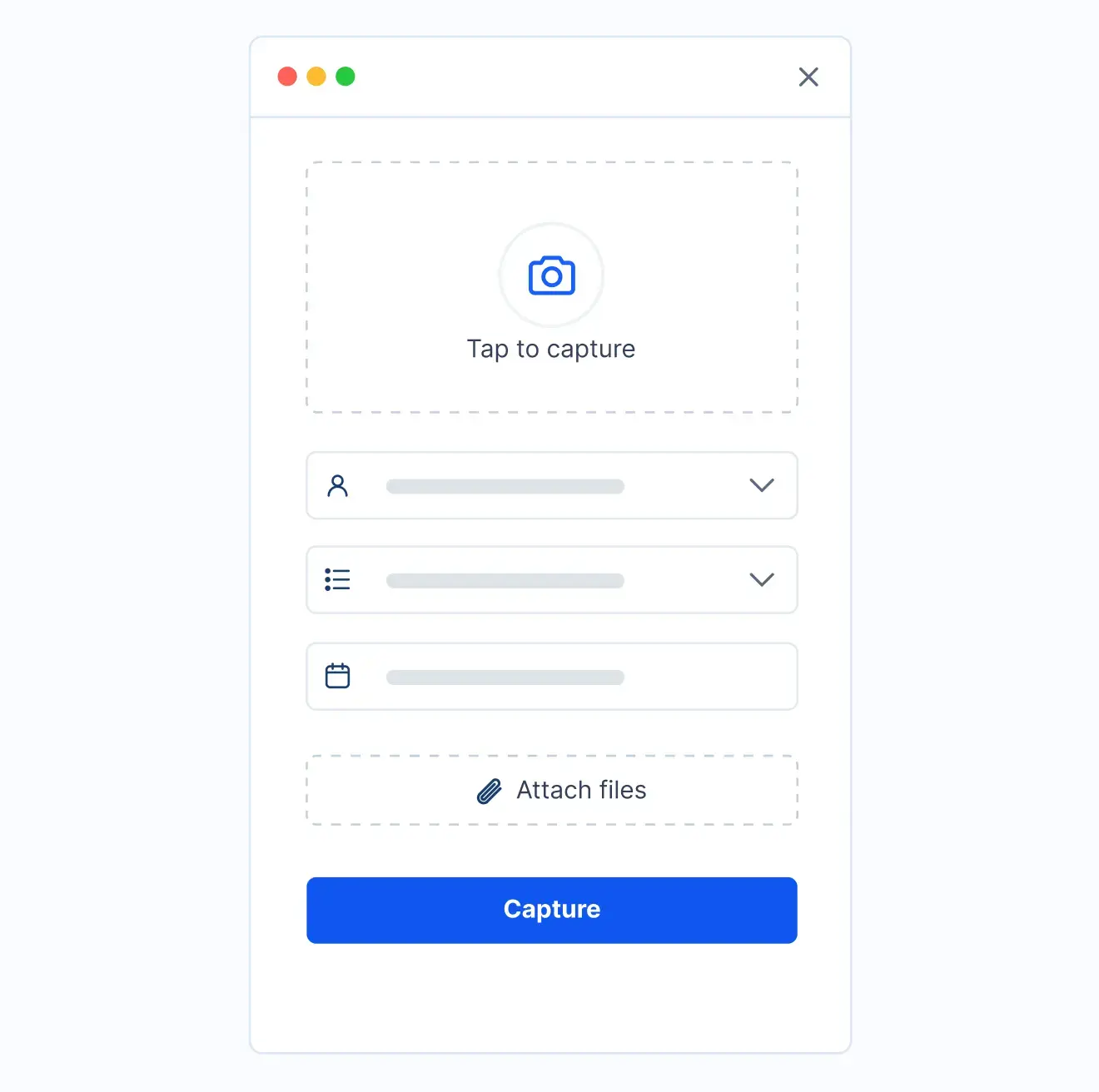
Each line-up, transfer, and receipt is recorded with source, destination, product, line, pump, timing, and volume, at the time it is made.
Validate
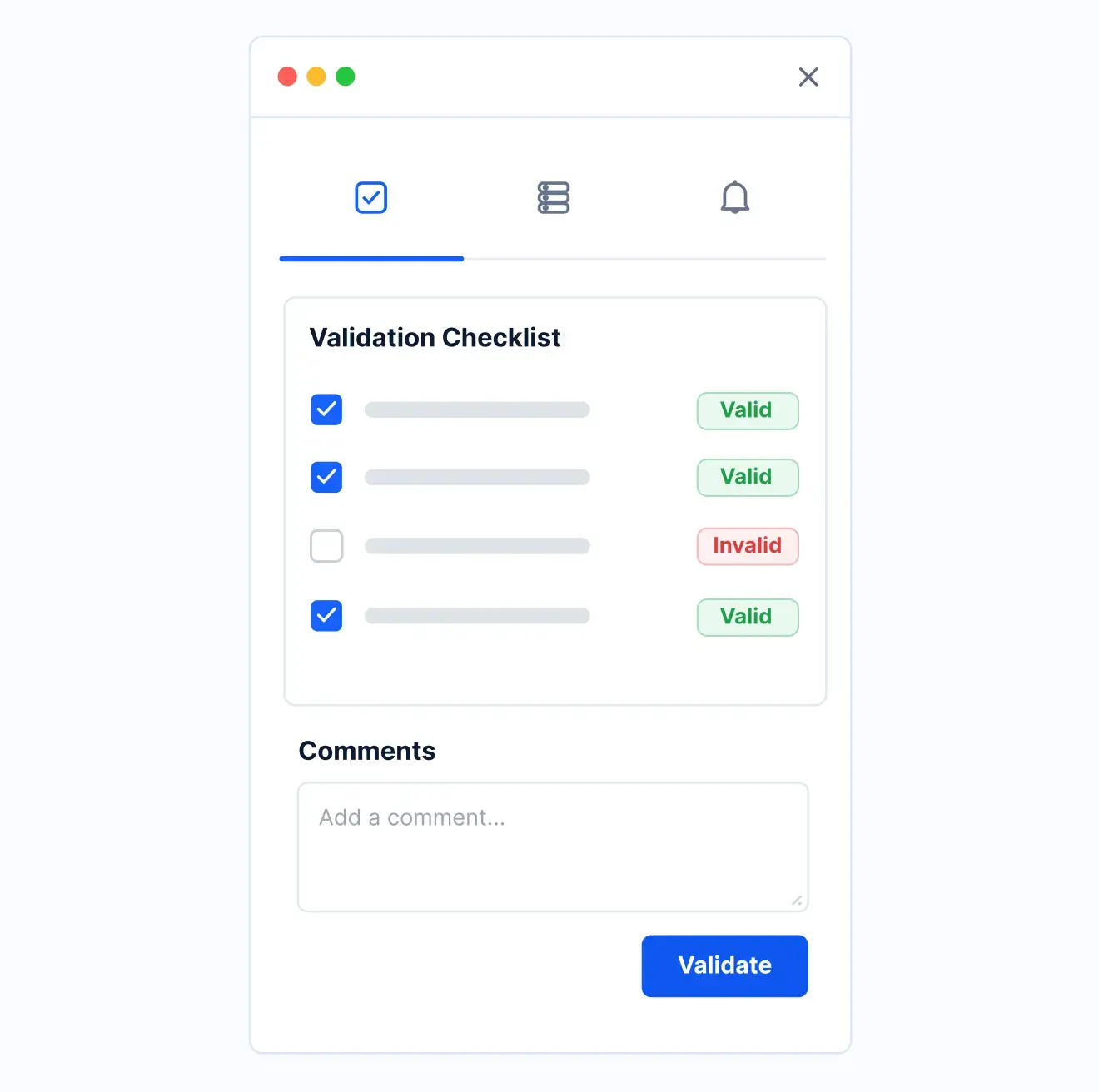
Entries are checked against tank capacity, ullage, current contents, and product compatibility as they are logged, so an impossible or unsafe line-up is questioned immediately.
Track
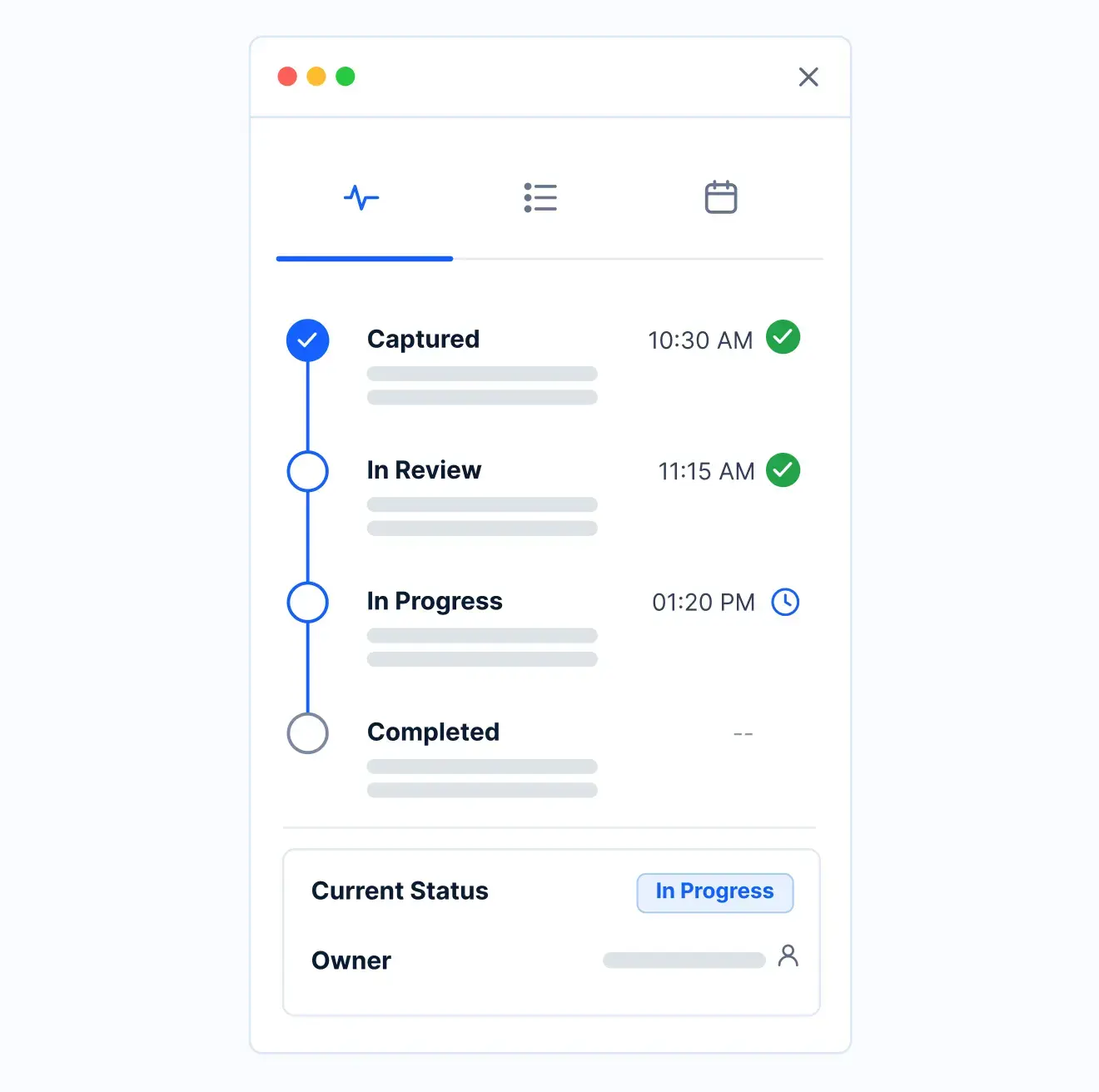
Tank status and current line-ups stay live and visible, and conditions such as low ullage, overdue settling, and tanks out of service surface as exceptions.
Report
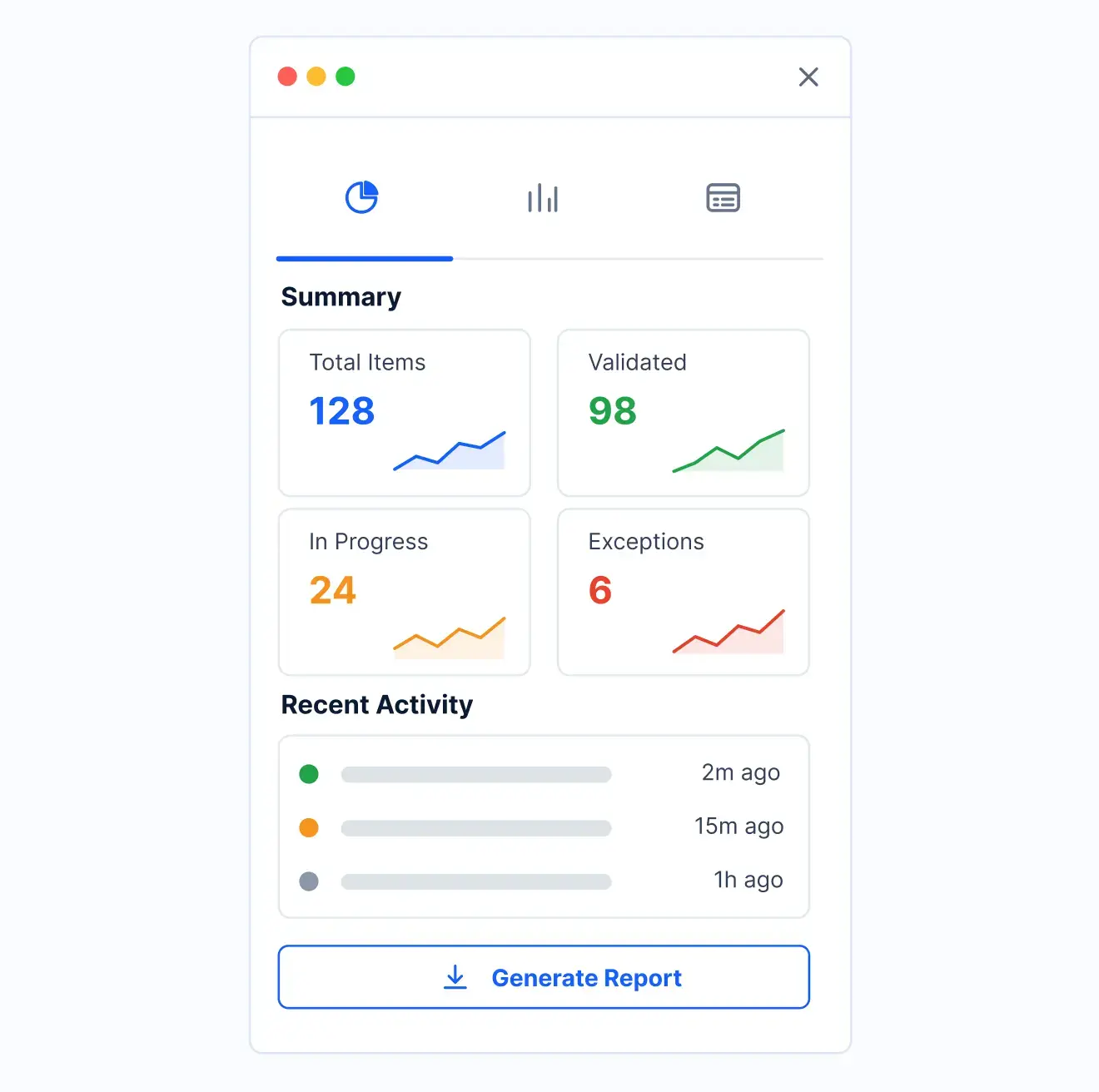
The logbook is itself the movement record, so history by tank, line, and product is searchable for quality claims, contamination questions, and reconciliation.
What changes when the tank farm logbook runs on Kissflow
| Process | Before Kissflow | On Kissflow |
|---|---|---|
| Line-up picture | A board plus the operator's memory | A live register of what is connected to what |
| Movement record | Written up after the movement | Recorded at the time with line and pump |
| Capacity checks | Judged by the operator | Validated against ullage and contents at entry |
| Product compatibility | Known by experience | Checked as the line-up is entered |
| Shift visibility | Explained at handover | The same live view for every position |
| History | Reconstructed from logbooks | Searchable by tank, line, product, and date |
Connects to the systems your operation already runs on
.svg)



.svg)
.svg)
.svg)
.svg)

.svg)
.svg)
.svg)
.svg)
.svg)

.svg)

.svg)

.svg)
.svg)
.svg)
.svg)
.svg)
.svg)
.svg)
.svg)
.svg)

.svg)
Built for a picture that changes every hour
Validation before the movement, not after
Capacity, ullage, and compatibility are checked as the line-up is entered, which is the only useful time to check them.
The line-up is a record
What is connected to what stops being a whiteboard and a memory and becomes something the oncoming shift can read.
History that answers a claim
Movement history by tank and line answers contamination and quality questions against what was actually connected.
A logbook, not a terminal automation system
Your terminal and automation systems move the product. Kissflow holds the operational record and the line-up picture around them.
Governed from day one
Single sign-on, role-based access, and a timestamped audit log are how the app is built. Kissflow runs in the business-process layer, segmented from the OT and control network.
Live in weeks, not a program
Configure in the visual builder, or describe the farm and let the AI Builder generate the app. Delivery moves from weeks to days.
Related apps
Manual transfer reconciliation
Record and reconcile product movements that do not pass a custody meter, within the shift.
Metering & Custody Transfer Exception Workflow
Handle failed provings, mismeasurement, and imbalance at custody points through to agreed correction with the counterparty.
Shift logbook with approval
Record shift events and handover with supervisor approval and a searchable history.
We help terminal leaders put the line-up on a screen instead of in a memory
.gif)

“If a company cannot enable everybody to use AI, they will never get the true benefit of AI. Platforms like Kissflow allow us to put that capability in the hands of our users in a safe way.”
Vagesh Dave
GVP & CIO at McDermott International, Ltd
See The Full Story

“Advanced automation of all processes is easy to set up. I cannot imagine how to manage workflows without this software.”
Tanay Tiwary
Global Head - Digitalization & Business Improvement
See the Full Story

“Kissflow supports rapid application development by building a working application prototype in the shortest amount of time.”
Maria Theresa Cabigon
CIO, SN Aboitiz Power Group
See The Full Story
See what Kissflow can do for you
Talk to usGot questions? We're here to help.
Get SupportIt records line-ups, transfers, receipts, and tank status across the tank farm, validates each movement against capacity, ullage, contents, and product compatibility at entry, and keeps a live view of current line-ups and tank status.
This logbook holds the operational picture of what is connected to what and what moved through it. Manual transfer reconciliation compares recorded movement volumes against tank gauges to find variance. One is the operating record, the other is the check on it.
No. Kissflow runs in the business-process layer and does not control equipment or operate on the control network. Your terminal automation systems move the product; this holds the record and the line-up picture.
Movement history is searchable by tank, line, product, and date, so what was actually connected at a given time is a query rather than a reconstruction from logbooks.
Yes. Fields, categories, routing rules, and escalation thresholds are configured by the process owner in the visual builder, and every change is written to the same audit log as a manual edit.
No. Kissflow runs in the business-process layer alongside the systems you already own and connects to them through APIs and integration connectors. It does not replace your EHS suite, your ERP, or your maintenance system, and it does not operate inside the control system.
No. Kissflow AI maps natural language to platform metadata and produces an inspectable blueprint, so every app is auditable and the process owner can maintain it.
Kissflow is certified to SOC 1, SOC 2, SOC 3, ISO/IEC 27001, HIPAA, GDPR, and CCPA, hosted on Google Cloud with data residency in the US, EU, APAC, and Oceania.