Metering & Custody Transfer Exception Workflow
A metering and custody transfer exception workflow handles failed provings, meter faults, mismeasurement, and imbalance at custody points, routing each through technical review, commercial assessment, and counterparty resolution to an agreed correction. Kissflow runs that chain across the teams involved.

Trusted by energy operators worldwide






A measurement error is a commercial dispute with an engineering cause
At a custody transfer point, measurement is money. A meter that has drifted since its last proving does not just produce a bad number, it produces an invoice that a counterparty will eventually query, and a correction that has to be agreed rather than declared. The awkwardness is organizational: the measurement technician finds the problem, the commercial team owns the counterparty relationship, and finance issues whatever adjustment results. Those three rarely share a system.
Kissflow runs the exception across all three. A failed proving, an out-of-tolerance verification, or an imbalance beyond threshold raises a case that carries the technical evidence, the affected period, and the estimated volume impact. Technical review establishes cause and the correction period. Commercial review decides the counterparty position, and the agreed correction is recorded with its basis before finance acts on it.
Because the case holds the technical and commercial threads together, the audit question, which is usually why a particular adjustment was made and on what authority, has a single answer rather than three partial ones.
A measurement error becomes a commercial problem before anyone has agreed the cause
Three functions, three systems
Measurement finds it, commercial owns the counterparty, finance issues the adjustment, and none of them share a record.
The affected period is settled late
Establishing how far back the error runs happens after positions have already been taken.
The calculation lives in a spreadsheet
The corrected volume is worked out privately, so the method and assumptions are not available when the adjustment is questioned.
Recurring meters are not visible as a pattern
Each exception is handled individually, so a meter that fails proving repeatedly never becomes a replacement case.
Six process modules
Every module ships with default exception types, tolerance rules, review routing, and dashboards. Configure each one to your measurement standard in the visual builder.
Exception intake
Capture of failed provings, verification results outside tolerance, meter faults, and imbalance beyond threshold, with meter, point, period, and evidence recorded.
Technical review
Establishment of cause and the affected measurement period, including whether the error is bias or random, and the estimated volume impact across that period.
Volume impact assessment
Calculation of the corrected volume across the affected period against your measurement standard, with the method and assumptions recorded rather than held in a spreadsheet.
Counterparty resolution
Commercial review and the counterparty position tracked on the case, including correspondence, agreed correction, and any dispute status.
Adjustment handoff
Structured handoff of the agreed correction to finance and accounting with its basis attached, so the adjustment carries its justification.
Measurement performance reporting
Reporting on proving pass rates, recurring meter offenders, exception volume impact, and resolution time by point and counterparty.
From request to system of record in four steps
Report
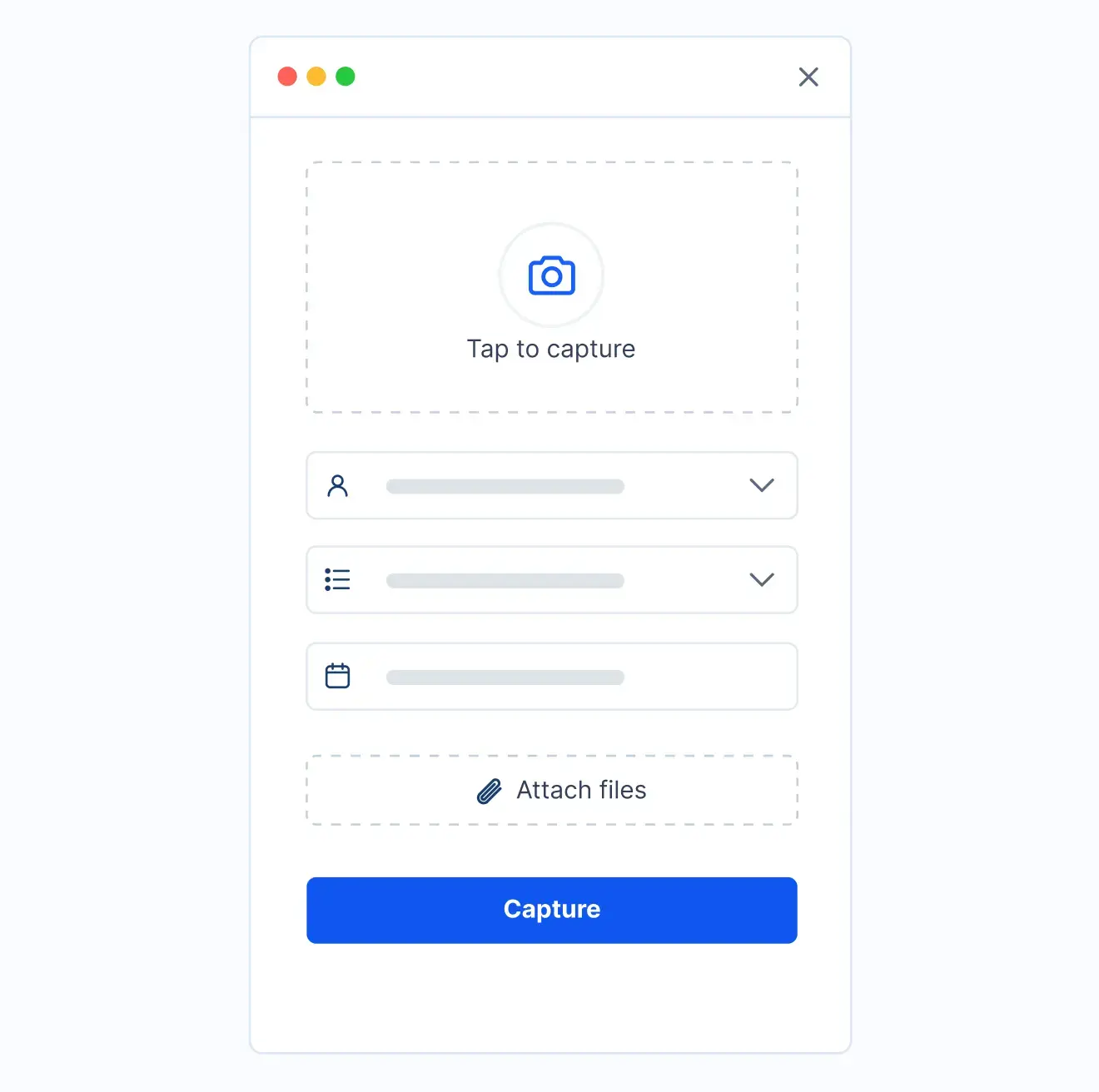
A failed proving, out-of-tolerance verification, meter fault, or imbalance beyond threshold is raised with the meter, custody point, period, and supporting evidence attached.
Assess
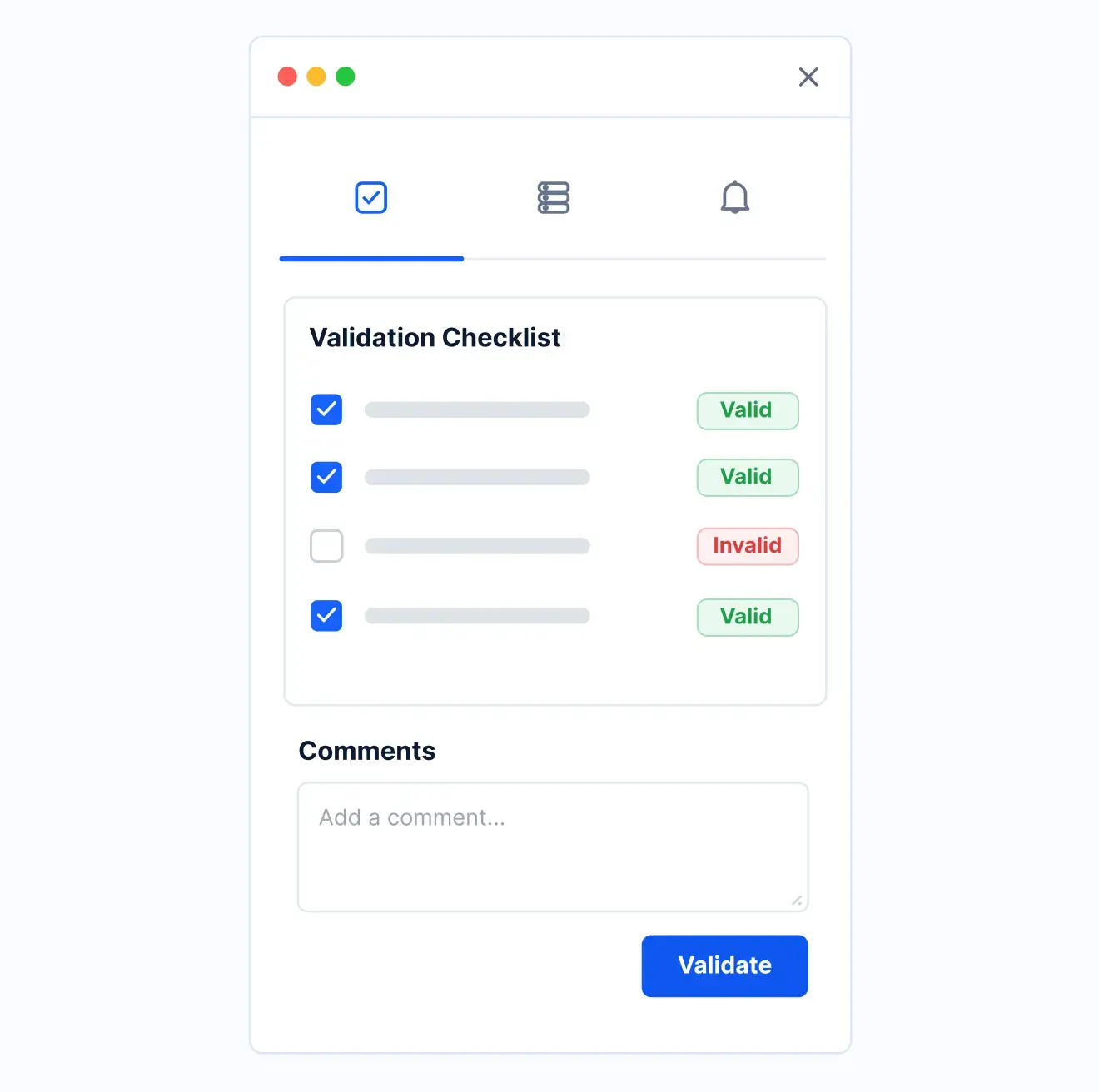
Technical review establishes cause, the affected measurement period, and the volume impact, and commercial review determines the counterparty position.
Resolve
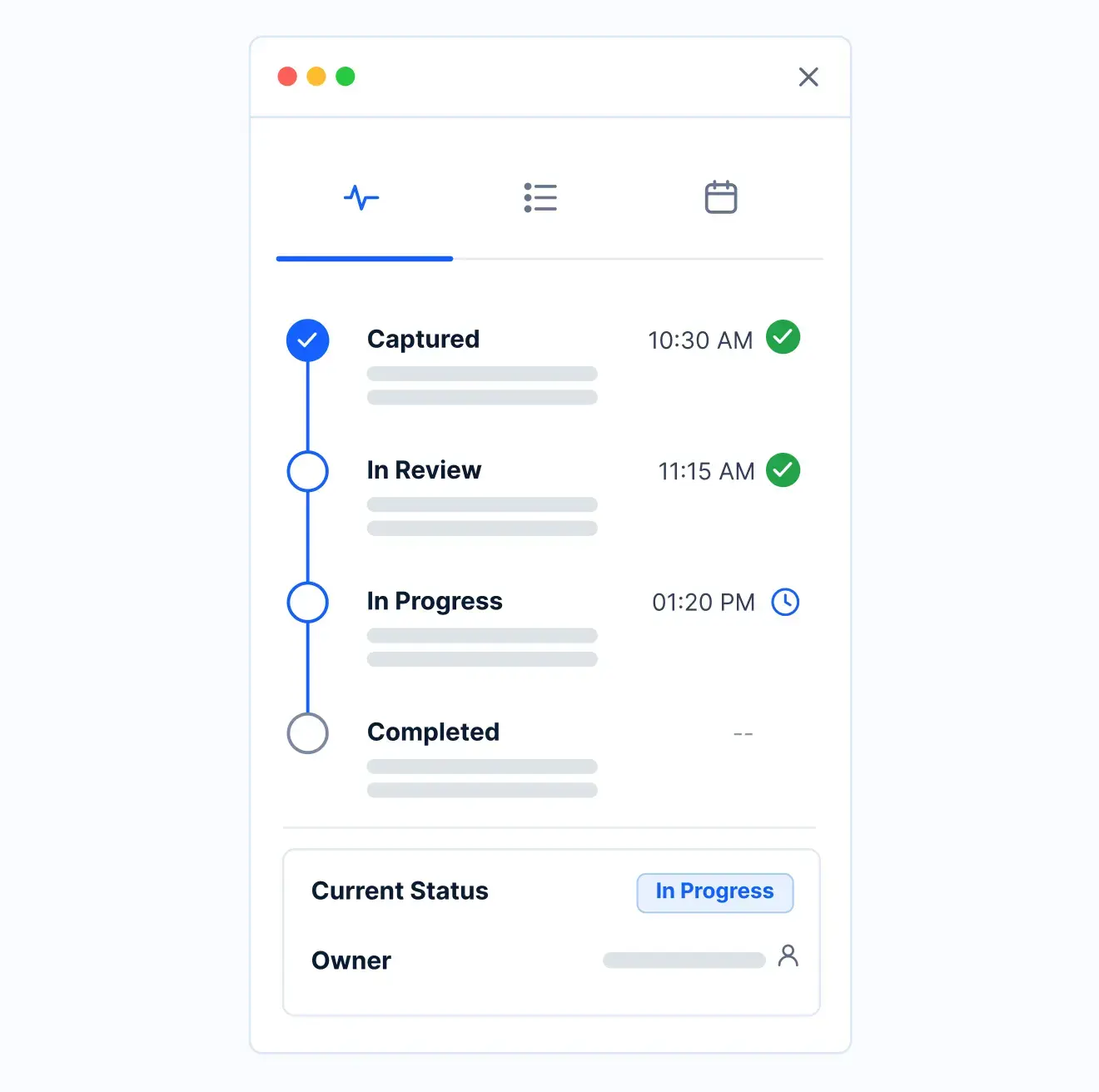
The correction is calculated against your measurement standard, agreed with the counterparty where the contract requires it, and recorded with its method and assumptions.
Record
The agreed adjustment hands off to finance with its basis attached, and the case is closed and retained for audit and for measurement performance reporting.
What changes when measurement exceptions run on Kissflow
| Process | Before Kissflow | On Kissflow |
|---|---|---|
| Exception capture | Noted in a proving report | Raised as a case with evidence and period |
| Affected period | Estimated late in the process | Established in technical review at the start |
| Volume calculation | Held in a private spreadsheet | Recorded with method and assumptions on the case |
| Counterparty thread | Lives in one person's mailbox | Tracked on the case with correspondence attached |
| Finance handoff | An adjustment with no attached basis | A correction that carries its justification |
| Meter performance | Anecdotal | Reported by point, meter, and counterparty |
Connects to the systems your operation already runs on
.svg)



.svg)
.svg)
.svg)
.svg)

.svg)
.svg)
.svg)
.svg)
.svg)

.svg)

.svg)

.svg)
.svg)
.svg)
.svg)
.svg)
.svg)
.svg)
.svg)
.svg)

.svg)
Built for exceptions that cross engineering and commercial
One case, three functions
Measurement, commercial, and finance work the same case rather than three partial versions of it.
The calculation carries its assumptions
Method and assumptions sit on the case, which is what an auditor asks for when an adjustment is questioned.
Recurring offenders become visible
Proving pass rates and repeat exceptions by meter and point turn a series of individual corrections into a maintenance argument.
An exception layer, not a flow computer
Your measurement and accounting systems own the numbers. Kissflow runs the exception, review, and resolution workflow around them.
Governed from day one
Single sign-on, role-based access, and a timestamped audit log are how the app is built. Kissflow runs in the business-process layer, segmented from the OT and control network.
Live in weeks, not a program
Configure in the visual builder, or describe the standard and let the AI Builder generate the app. Delivery moves from weeks to days.
Related apps
Manual transfer reconciliation
Record and reconcile product movements that do not pass a custody meter, within the shift.
Tank farm movement logbook
Record tank line-ups, movements, and status across the tank farm with a live shift view.
Production loss reporting
Log deferred production events with loss reason coding and analysis against plan.
We help measurement and commercial leaders resolve corrections with one shared record
.gif)

“If a company cannot enable everybody to use AI, they will never get the true benefit of AI. Platforms like Kissflow allow us to put that capability in the hands of our users in a safe way.”
Vagesh Dave
GVP & CIO at McDermott International, Ltd
See The Full Story

“Advanced automation of all processes is easy to set up. I cannot imagine how to manage workflows without this software.”
Tanay Tiwary
Global Head - Digitalization & Business Improvement
See the Full Story

“Kissflow supports rapid application development by building a working application prototype in the shortest amount of time.”
Maria Theresa Cabigon
CIO, SN Aboitiz Power Group
See The Full Story
See what Kissflow can do for you
Talk to usGot questions? We're here to help.
Get SupportIt handles failed provings, out-of-tolerance verifications, meter faults, and imbalance at custody transfer points, running each through technical review, volume impact assessment, and counterparty resolution to an agreed correction.
It holds the calculation with its method and assumptions on the case against your measurement standard. The authoritative measurement and accounting systems remain the record, and the agreed correction hands off to them with its basis attached.
The commercial thread, including correspondence, position, agreed correction, and dispute status, is tracked on the same case as the technical evidence, so the two do not diverge.
Yes. Proving pass rates and exception frequency are reported by meter, custody point, and counterparty, which turns a series of individual corrections into a maintenance or replacement argument.
Yes. Fields, categories, routing rules, and escalation thresholds are configured by the process owner in the visual builder, and every change is written to the same audit log as a manual edit.
No. Kissflow runs in the business-process layer alongside the systems you already own and connects to them through APIs and integration connectors. It does not replace your EHS suite, your ERP, or your maintenance system, and it does not operate inside the control system.
No. Kissflow AI maps natural language to platform metadata and produces an inspectable blueprint, so every app is auditable and the process owner can maintain it.
Kissflow is certified to SOC 1, SOC 2, SOC 3, ISO/IEC 27001, HIPAA, GDPR, and CCPA, hosted on Google Cloud with data residency in the US, EU, APAC, and Oceania.