Trusted by companies worldwide

Motorola Solutions
NBC Universal
Southers Glazers
Essilor Luxottica
University of Michigan
NielsenIQ

Where the service desk actually spends itself

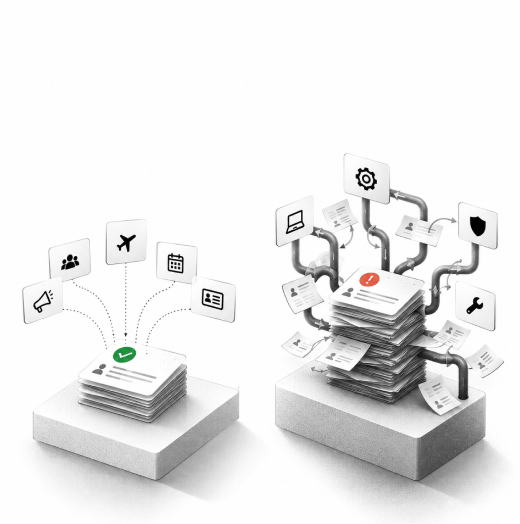
Service management works beyond IT

Non-IT teams resolve 79.5% of requests on first contact, versus 74.14% for IT. The discipline travels; the overhead doesn't.
service_management_works_beyond_it

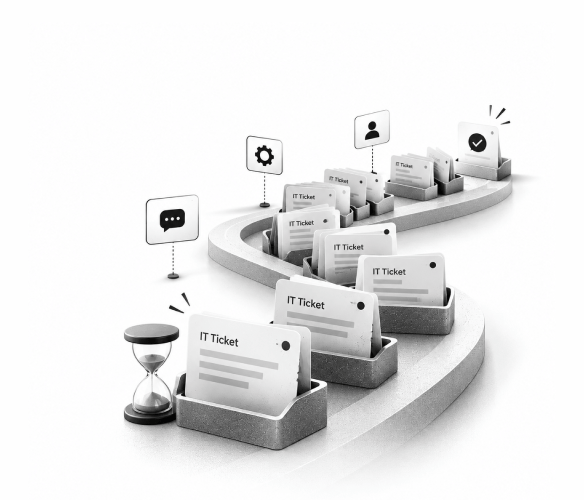
IT tickets spend hours waiting

Average IT resolution takes 21.96 hours, with 9.36 hours to first response. Most of that time is waiting.
it_tickets_spend_hours_waiting

Self-service is still limited

Only 14% of customer service issues are fully resolved without a person, far below the promise of full deflection.

Downtime costs $300K+ an hour

More than 90% of mid and large enterprises put hourly downtime above $300,000. Incidents belong in purpose-built IT tools.

DORA and NIS2 are already here

Both are now in force, making traceable approvals and audit evidence essential, even for requests outside traditional IT.

The SLA is met. The ticket still takes a day

IT teams hit their service levels 96.16 percent of the time while averaging 21.96 hours to resolve.

ServiceNow keeps the incidents. Everything else stops queueing behind them.

Experience — the people raising the requests

An employee who needs access to one folder. A manager ordering a laptop for a Monday start. An HR business partner requesting a letter. A facilities lead who has been emailing IT because there was nowhere else to send it.

Governance icon
Arrow down
Kissflow — the digital operations backbone

Orchestration, escalation, and governance in one layer.

Permits Exceptions Incidents Shutdowns Field capture Contractor access
Arrow up
Systems icon
Systems of record — everything you already run

Incident, problem and change stay in the tool that is certified for them. Identity stays with your directory. Kissflow connects and does not replace.
ServiceNow Jira Zendesk Okta Azure Active Directory

The requests that never needed a change advisory board

Access and permissions

Access and permissions

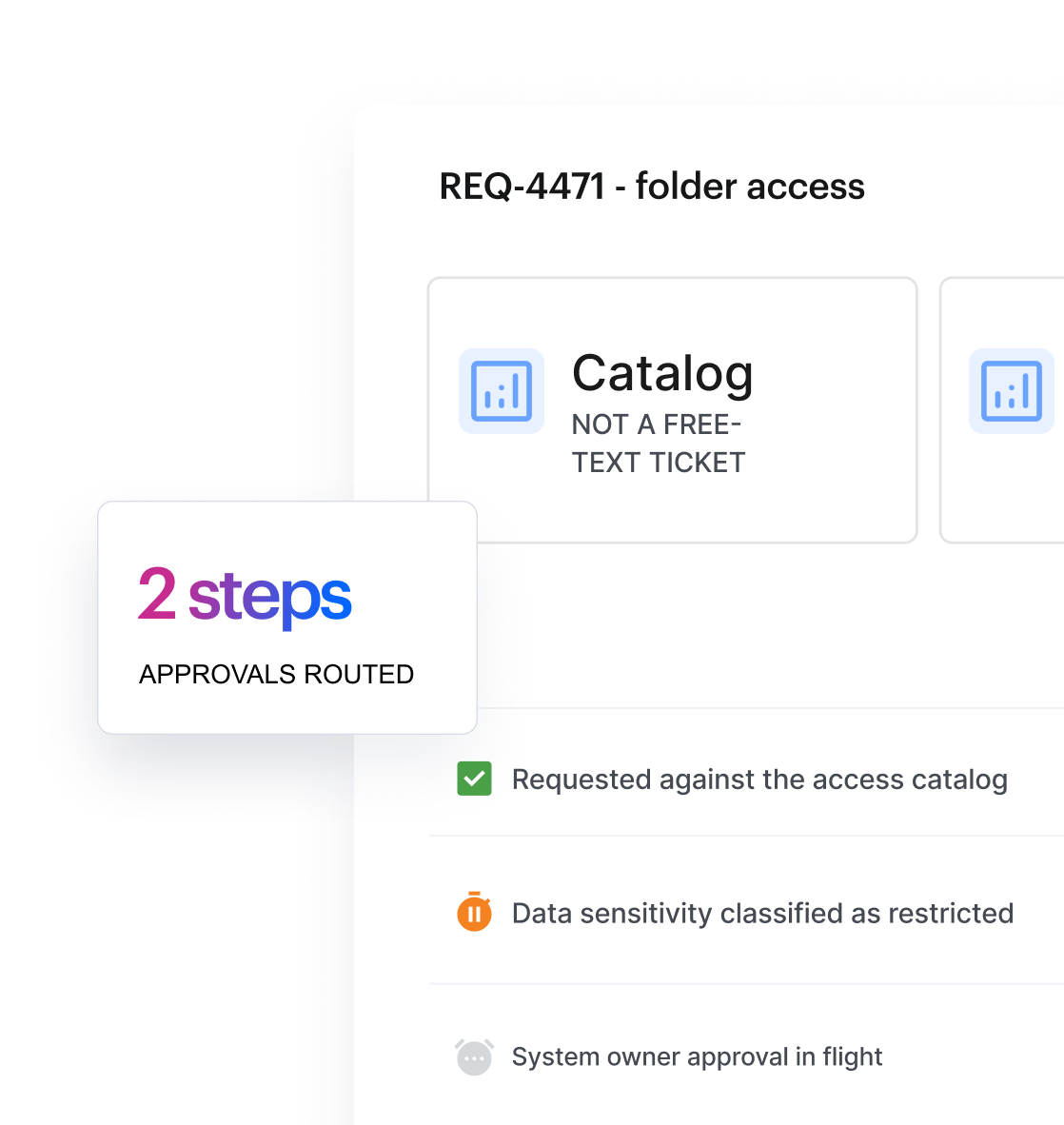
  • Application, folder, and system access requested against a catalog, not a free-text ticket
  • Approval is routed by data sensitivity and by who actually owns the system
  • Revocation triggered by the leaver process rather than remembered later
access-1
Hardware and software

Hardware and software

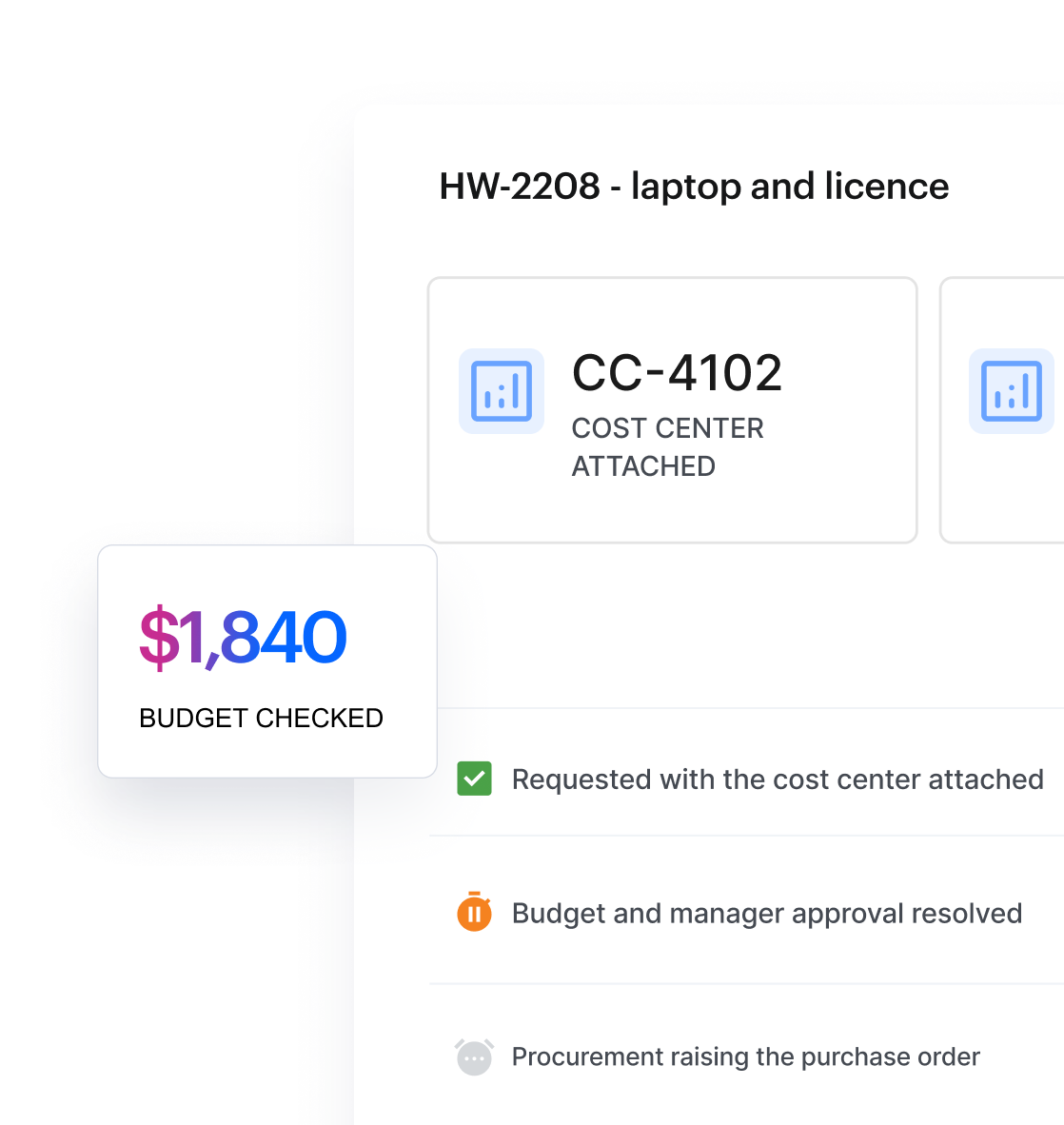
  • Laptops, monitors, phones, and licenses requested with the cost center attached
  • Budget and manager approval are resolved before procurement sees it
  • Asset assigned to a person on issue and tracked back on return
hardware
Joiners, movers, and leavers

Joiners, movers, and leavers

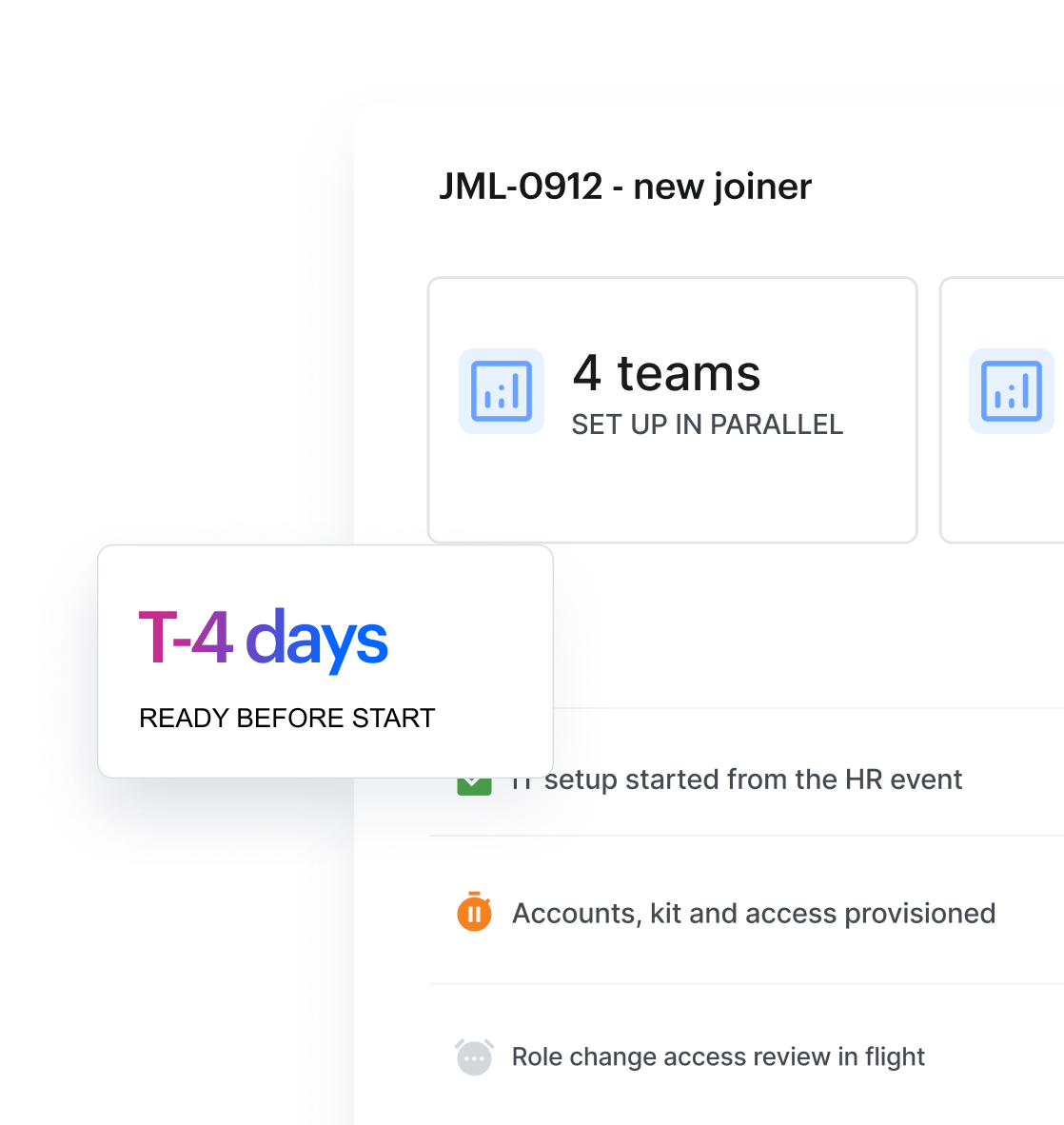
  • IT setup starts from the HR event, not from a forwarded email
  • Role changes trigger the access that should be added and the access that should go
  • Exit clearance runs across IT, finance, and facilities at once and closes as one record
joiner
Beyond IT

Beyond IT

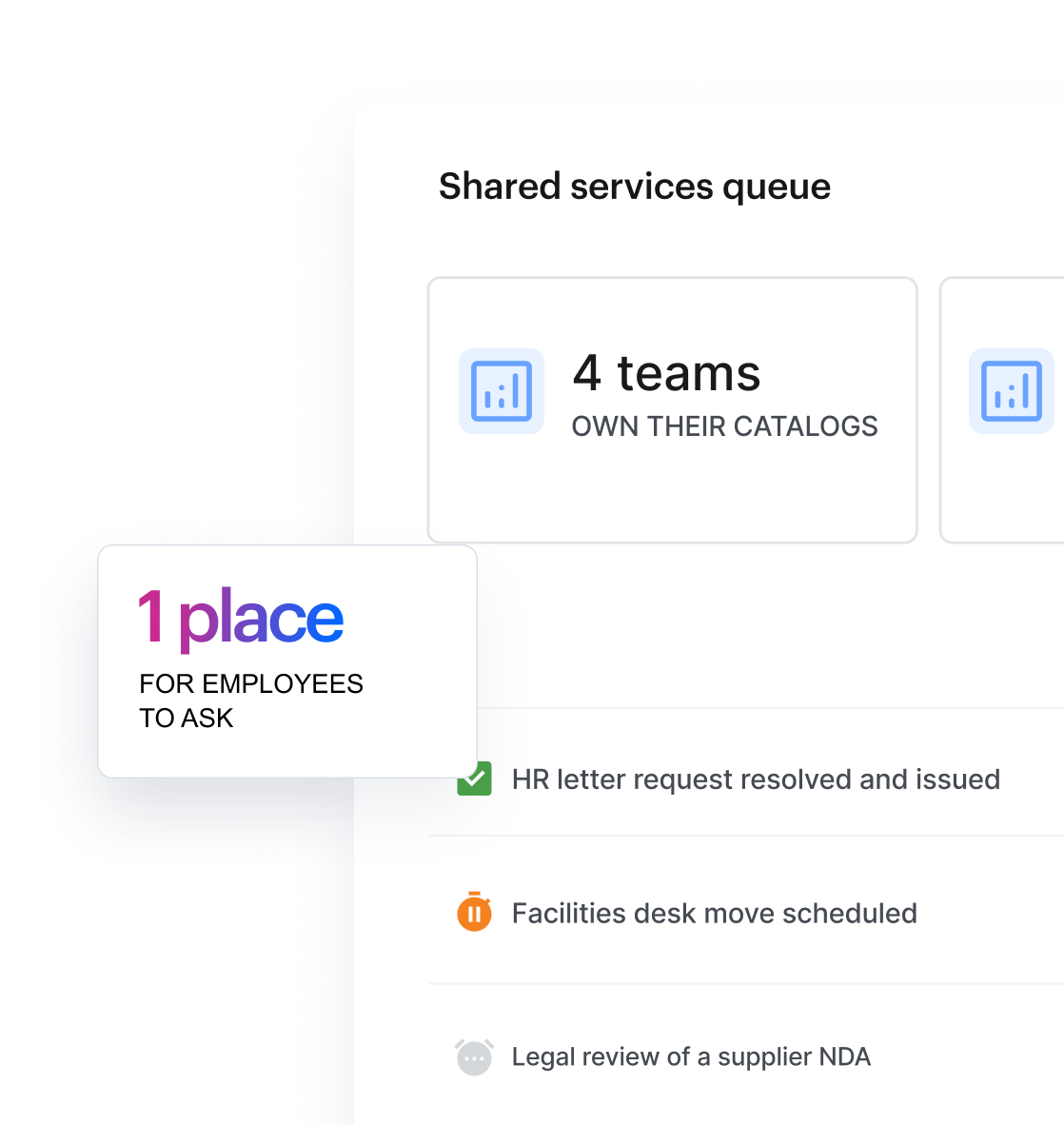
  • HR letters, facilities requests, legal reviews and finance approvals on the same rails
  • Each department owns its own catalog, forms and rules without an IT ticket
  • One place for an employee to ask, whoever ends up answering
beyond_it
Access and permissions

Access and permissions

  • Application, folder, and system access requested against a catalog, not a free-text ticket
  • Approval is routed by data sensitivity and by who actually owns the system
  • Revocation triggered by the leaver process rather than remembered later
access-1
Hardware and software

Hardware and software

  • Laptops, monitors, phones, and licenses requested with the cost center attached
  • Budget and manager approval are resolved before procurement sees it
  • Asset assigned to a person on issue and tracked back on return
hardware
Joiners, movers, and leavers

Joiners, movers, and leavers

  • IT setup starts from the HR event, not from a forwarded email
  • Role changes trigger the access that should be added and the access that should go
  • Exit clearance runs across IT, finance, and facilities at once and closes as one record
joiner
Beyond IT

Beyond IT

  • HR letters, facilities requests, legal reviews and finance approvals on the same rails
  • Each department owns its own catalog, forms and rules without an IT ticket
  • One place for an employee to ask, whoever ends up answering
beyond_it

We don't replace your ITSM tool.
We take the requests it was never worth configuring for.

Keep ITSM for what needs ITSM

Keep ITSM for what needs ITSM

Incidents, problems, and changes stay in ITSM. Kissflow handles the lower-risk request layer around them.

New requests in days

New requests in days

Teams can add forms, approvals, and catalog items without IT tickets, release windows, or service work.

Service management for every team

Service management for every team

HR, facilities, legal, and finance run their own requests without joining IT's queue.

Works with your existing stack

Works with your existing stack

Connect ServiceNow, Jira, Zendesk, Okta, and Azure AD while keeping systems of record intact.

AI drafts. People decide.

AI drafts. People decide.

Describe the request and rules. AI drafts the flow; the process owner reviews and refines it.

Audit trails built in

Audit trails built in

Approvals, access grants, and thresholds are logged automatically, even for requests that once lived in email.


IT teams already running requests on Kissflow

Puma-GIF-optimized

“Advanced automation of all processes is easy to set up. I cannot imagine how to manage workflows without this software.”

Tanay Tiwary

Global Head - Digitalization & Business Improvement

See the Full Story


SN-Aboitiz-optimized

“Advanced automation of all processes is easy to set up. I cannot imagine how to manage workflows without this software.”

Maria Theresa Cabigon

CIO, SN Aboitiz Power Group

See The Full Story


Valantic-GIF-Optimizer

“Everyone uses Kissflow. It requires no previous training. The platform is very intuitive and user-friendly.”

Antonio Serpa Pinto

Head of IT, Valantic

See The Full Story
Previous
    Next

    Everything that was never an incident, on one system.

    Get an enterprise service management demo

    What CIOs and service delivery leads ask before the demo

    Book a Demo

    No, and it would not survive five minutes of due diligence if we claimed it was. Kissflow has no CMDB, no discovery, no ITIL or PinkVERIFY certification, and no incident, problem or change management discipline. Those belong in the tool you already own, and for incident management in particular, they should stay there. What Kissflow runs is the request layer around it: access, hardware, provisioning, joiners and leavers, and the departmental requests that never needed a change advisory board.

    You can, and some organizations do. The question is what it costs in licenses, configuration effort, and release cycles to stand up a request type that carries no operational risk, and whether the departments outside IT will ever be onboarded into an ITSM tool to use it. Most teams find the answer is that those requests stay in email instead, which is the actual status quo this page is about.

    It should not, and the design decision that prevents it is the integration. Requests raised in Kissflow can open, update, and close records in ServiceNow or Zendesk, so reporting stays in one place. If a request turns out to be an incident, it belongs in the incident tool, and the handoff is the point, not an exception.

    ServiceNow, Jira, Zendesk, Okta, and Azure Active Directory, alongside REST APIs and webhooks for anything else. Access provisioning executes in your directory, not here. Kissflow orchestrates and evidences it. There is no monitoring or observability integration, so alert-driven workflows are not something we do today.

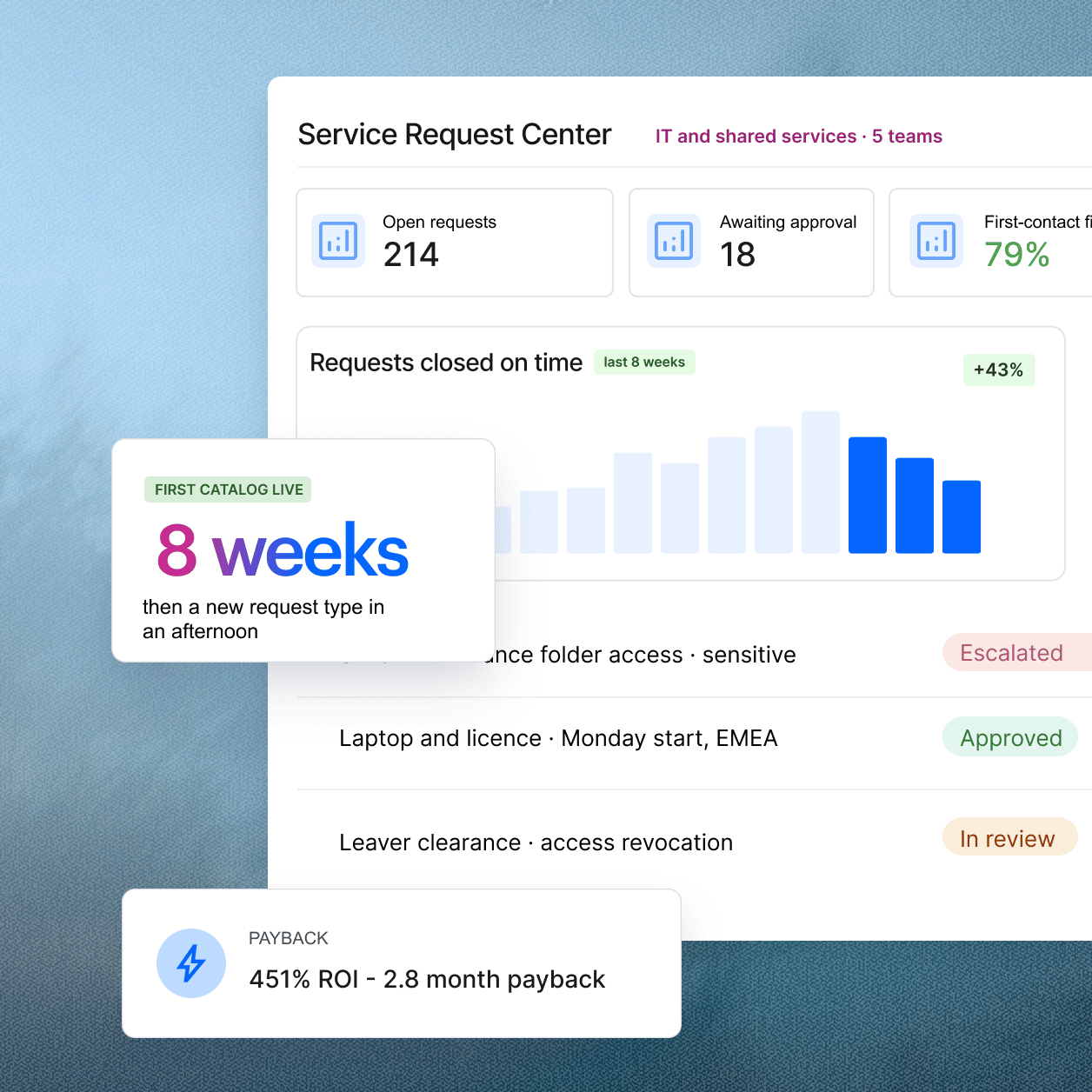
    Most teams run their first request catalog inside eight weeks. Weeks one and two connect the systems. Weeks three and four configure the first set of request types and approvals. Week five pilots with one department. The more useful number is what happens after, because adding the sixth request type takes an afternoon and does not go through change control.

    IT sets the guardrails once for security, integrations, and audit logging. After that, the team that owns a process owns its catalog, its forms, and its approval rules. That is the difference between a request layer that grows and one that stops at whatever IT had time to configure in the first quarter.

    Requests that used to run via email are usually the ones with no evidence trail, and access grants are the ones auditors ask about first. Every approval, threshold, and grant carries an immutable record, with SOC 2 Type II, ISO 27001, and RBAC through SSO underneath. Kissflow is not a compliance product, and it does not replace the controls in your ITSM tool. It closes the gap where there were no controls at all.

    A fixed annual agreement based on the applications you run and the people using them, with no separate charge for AI or API usage. The comparison worth running is not against our list price but against what an additional ITSM license tier costs for people who will raise four requests a year.