Scrap Rework Software
Every rejected part has already spent material and machine time. Kissflow captures each scrap and rework event by part and defect code, checks it against a rate threshold, and routes a breach to the quality lead with a corrective action tracked to closure.

Trusted by leading manufacturers worldwide


One system for every scrap and rework event, from capture to closed corrective action
Every rejected part has already spent the plant's material, machine time, and a slot on the line. The only question left is whether the same defect code shows up again tomorrow.
Today a scrap or rework event gets written on a traveler, keyed into a spreadsheet at shift end, or not recorded at all if the part gets reworked quietly before anyone asks. The defect code, the part number, and the line it happened on are the details that get lost first, and they are exactly what a corrective action needs to point at the right cause.
Kissflow captures each event at the point it happens, checks it against a rate threshold by part, line, or shift, and escalates a breach to the quality lead with the defect data attached, so a corrective action gets assigned and tracked to closure instead of noted and forgotten.
Every scrap event that goes unlogged is a defect pattern nobody can see forming
Scrap gets written on a traveler, not a system
A rejected part gets noted by hand or reworked quietly, with no structured record of part, line, or defect code.
Rate thresholds have no one watching them
A scrap or rework rate can climb through a shift without anyone comparing it against target until the week-end report.
Corrective actions get assigned but not tracked
A quality lead assigns a fix verbally, and there is no record of whether it actually closed.
Defect trends surface too late to act on
The same defect code repeats across three shifts before anyone notices the pattern in a spreadsheet.
Six modules. Built to catch a defect pattern before it costs a week of yield.
Every module ships with default forms, threshold logic, integrations, and dashboards. Configure each one to your quality policy in the visual builder.
Scrap and rework capture
Captures each scrap or rework event by part, line, shift, and defect code at the point it happens, not reconstructed later.
Threshold monitoring
Tracks scrap and rework rate against a target threshold by part number, line, or shift in real time.
Exception and anomaly flagging
Flags a rate breach or an unusual spike in a specific defect code before it becomes the week's biggest yield loss.
Escalation workflow
Routes a flagged exception to the quality lead or shift supervisor with the underlying part and defect data attached.
Corrective action tracking
Tracks the corrective action assigned against a scrap or rework spike through to verified closure.
Trend and cost reporting
Rolls scrap and rework volume into trend and cost reporting by part, line, defect code, and shift.
From request to system of record in four steps
Capture
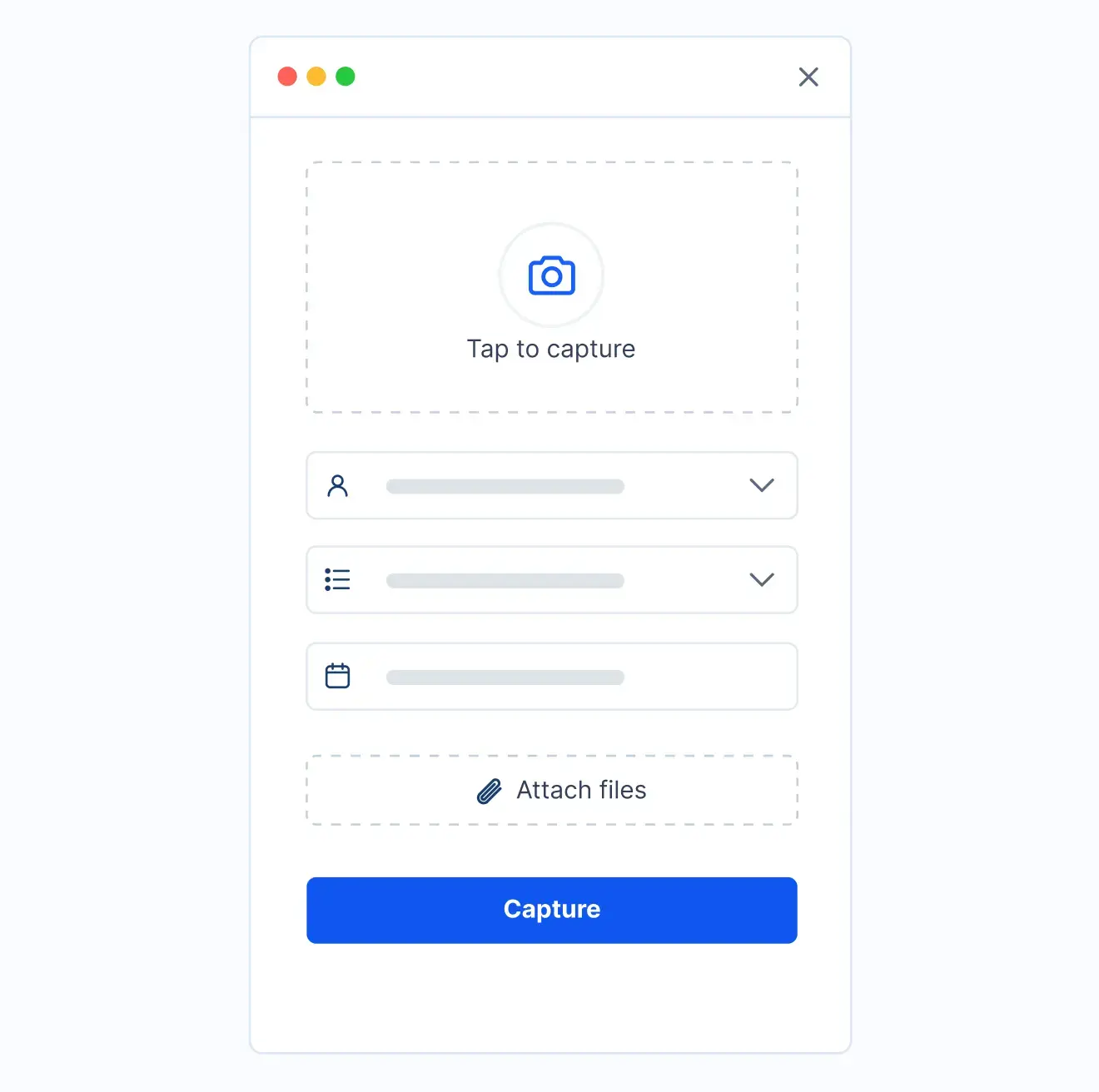
An operator or quality inspector logs each scrap or rework event by part, line, shift, and defect code at the point it happens.
Validate
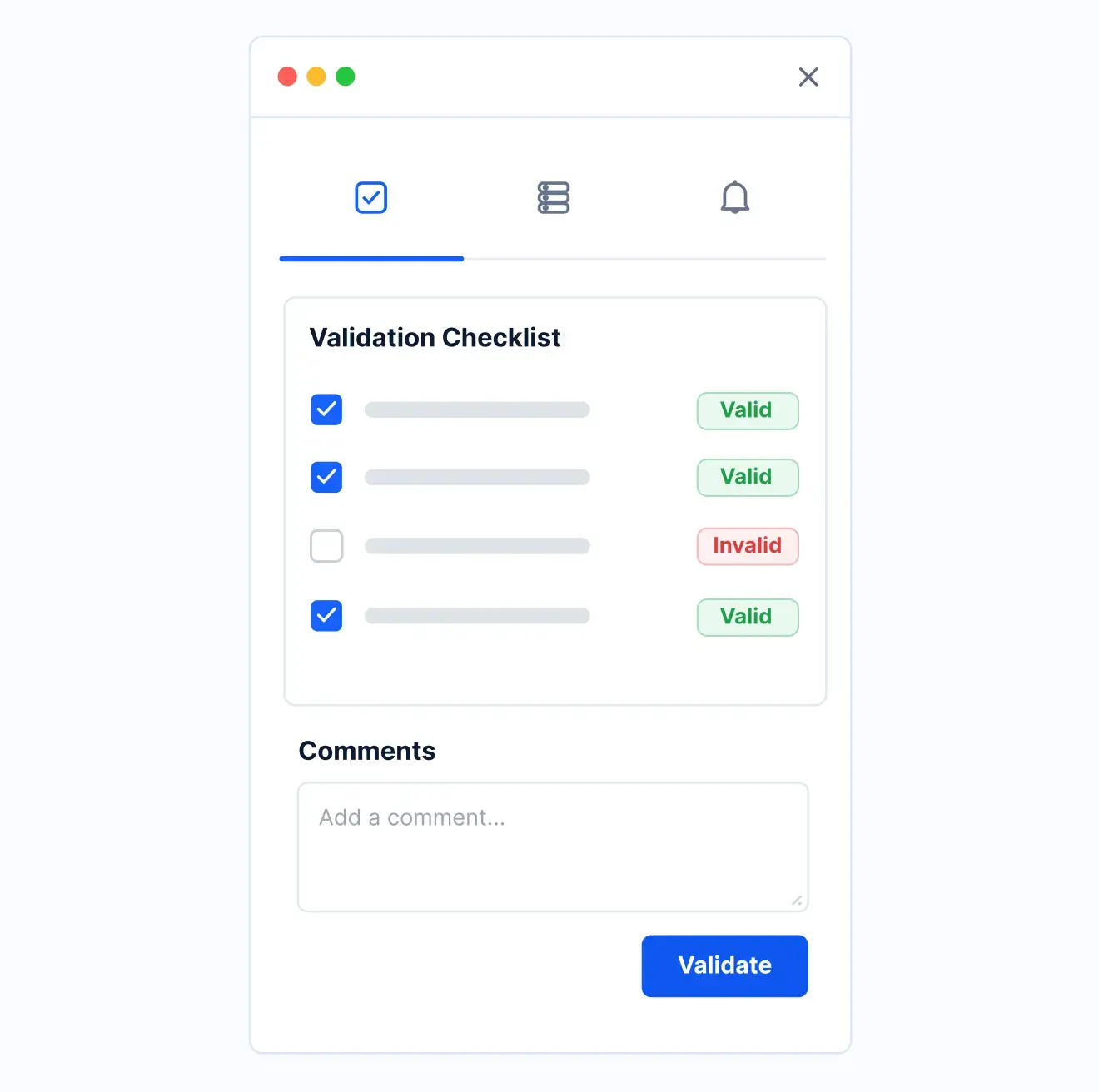
The logged event is checked against the target scrap or rework rate for that part, line, or shift.
Track
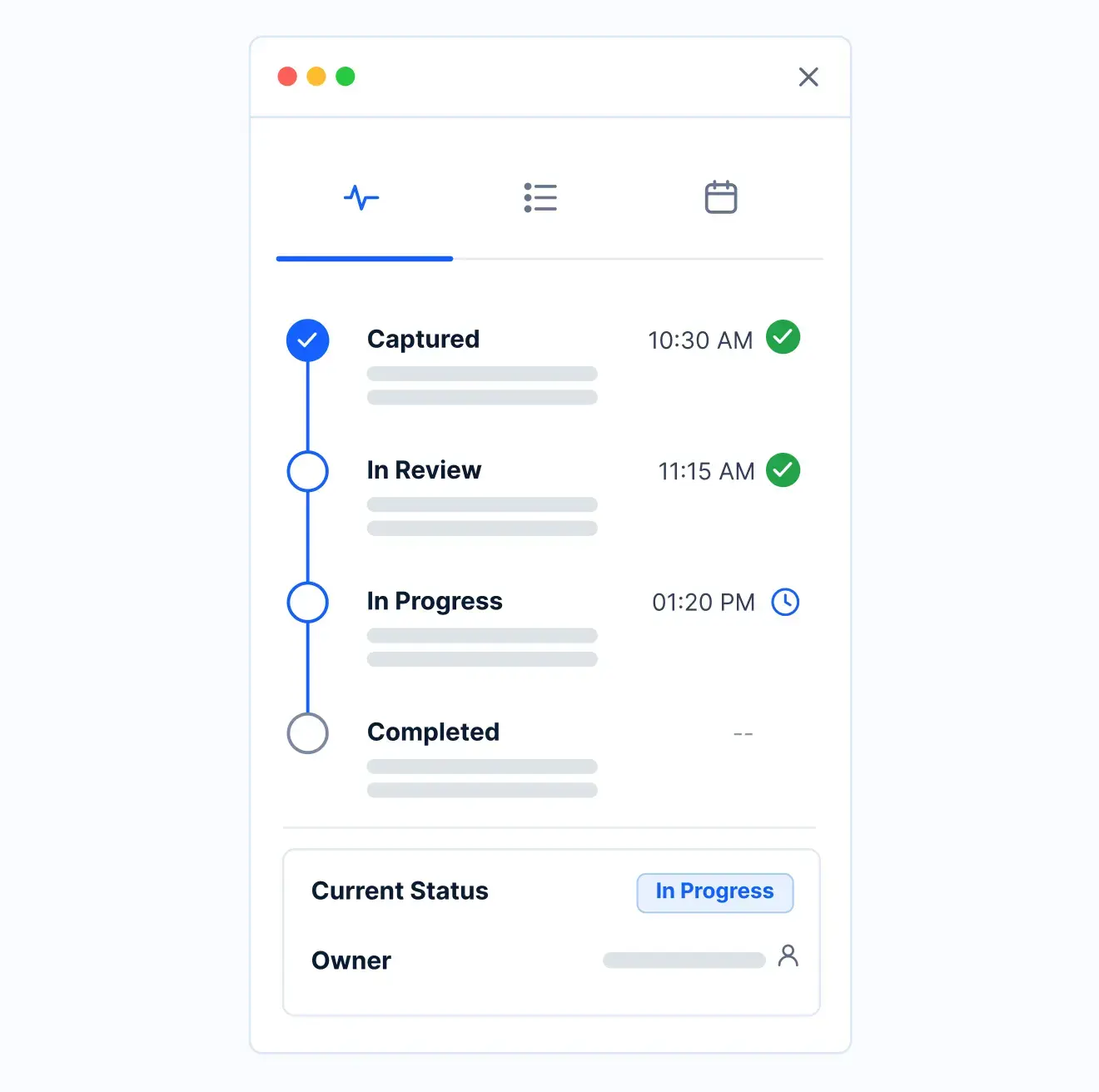
A breach or unusual spike routes automatically to the quality lead or shift supervisor with the underlying data attached, and the corrective action is tracked through verification.
Report
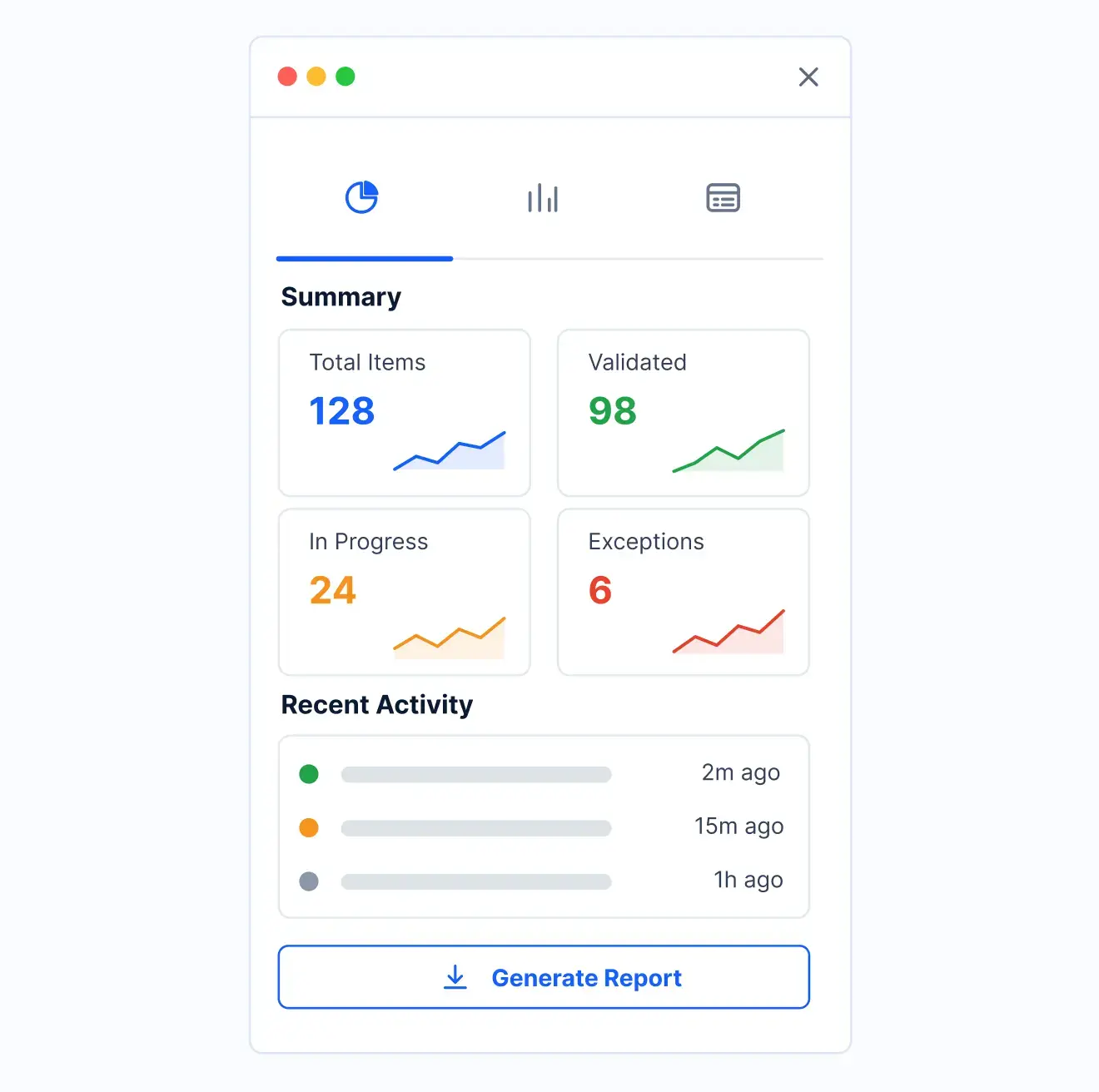
The running register is the record of every event, rolling continuously into the trend and cost reporting used to drive the rate down.
What changes when scrap and rework tracking runs on Kissflow
| Process | Before Kissflow | On Kissflow |
|---|---|---|
| Event capture | Written on a traveler or keyed in at shift end | Logged at the point of scrap or rework by part, line, and defect code |
| Threshold monitoring | No one compares the running rate to target until the weekly report | Rate tracked against threshold in real time, by part, line, or shift |
| Exception flagging | A rate spike blends into the noise of a busy shift | A breach or unusual defect-code spike is flagged automatically |
| Escalation | Depends on someone noticing and calling it out | Routes automatically to the quality lead with the underlying data attached |
| Corrective action | Assigned verbally, closure unverified | Tracked from assignment through verified closure |
| Trend and cost reporting | Assembled manually at month end | Rolls up automatically by part, line, defect code, and shift |
Connects to the MES, quality, and ERP systems already tracking your parts
.svg)



.svg)
.svg)
.svg)
.svg)

.svg)
.svg)
.svg)
.svg)
.svg)

.svg)

.svg)

.svg)
.svg)
.svg)
.svg)
.svg)
.svg)
.svg)
.svg)
.svg)

.svg)
Built for how scrap and rework actually get caught
An exception layer, not a new quality system
Your MES or quality system keeps part and inspection data. Kissflow runs the capture, threshold, and escalation workflow around scrap and rework events.
Live in weeks, not a quality-system overhaul
Configure defect codes, thresholds, and escalation routing in the visual builder, without a system replacement.
Thresholds that watch the rate, not just the total
A rate breach by part, line, or shift is flagged the same day it happens, not the same week.
Corrective action tracked to real closure
Every assigned fix stays open in the system until it is verified closed, not just noted in a meeting.
Trend visibility by defect code
A repeating defect code across shifts surfaces as a pattern instead of three unrelated entries.
Built for cross-shift accountability
Operators, quality leads, and plant managers see the same event record with their own view of it.
Related apps
Corrective and Preventive Actions (CAPA) App
Escalate a scrap or rework pattern into a full CAPA investigation when a single corrective action is not enough.
Nonconformance (NCR) & Material Review Board (MRB)
Formal material review board disposition for nonconforming parts, with recorded concurrence from every required function
OEE (Overall Equipment Effectiveness) Tracking
See how scrap and rework volume rolls into the quality loss component of equipment effectiveness.
We help manufacturing leaders turn scrap data into action, not a spreadsheet
.gif)

“If a company cannot enable everybody to use AI, they will never get the true benefit of AI. Platforms like Kissflow allow us to put that capability in the hands of our users in a safe way.”
Vagesh Dave
GVP & CIO at McDermott International, Ltd
See The Full Story

“Advanced automation of all processes is easy to set up. I cannot imagine how to manage workflows without this software.”
Tanay Tiwary
Global Head - Digitalization & Business Improvement
See the Full Story

“Kissflow supports rapid application development by building a working application prototype in the shortest amount of time.”
Maria Theresa Cabigon
CIO, SN Aboitiz Power Group
See The Full Story
See what Kissflow can do for you
Talk to usGot questions? We're here to help.
Get SupportNo. Your MES or quality system keeps part and inspection records. Kissflow runs the capture, threshold, and escalation workflow around scrap and rework events.
This app captures and escalates individual scrap and rework events against a rate threshold. The CAPA app manages the formal investigation and verified closure once an issue needs more than a single corrective action.
Any part logged as scrapped or sent to rework, captured with part number, line, shift, and defect code.
Thresholds are configurable by part number, line, or shift, so a spike gets flagged against the target that actually applies to it.
Yes. Quality and operations teams configure defect codes, thresholds, and escalation routing in the visual builder, and the AI Builder can generate a working app from a plain-language description.
Through APIs and integration connectors, under single sign-on and role-based access, with every event and corrective action written to an audit log.
Configuration and AI generation move delivery from weeks to days, without a quality-system replacement project.
Kissflow is certified to SOC 1, SOC 2, SOC 3, ISO/IEC 27001, HIPAA, GDPR, and CCPA, hosted on Google Cloud with data residency in the US, EU, APAC, and Oceania.