OEE Tracking Software
Availability, performance, and quality multiply into one OEE number, and a line that looks fine on uptime can still be losing most of its capacity elsewhere. Kissflow calculates all three factors automatically, alerts the moment a shift drops below target, and routes the loss to whoever owns it.

Trusted by leading manufacturers worldwide


One OEE number, calculated continuously and routed to whoever owns the loss
Availability, performance, and quality multiply into one OEE number, and a line that looks fine on uptime alone can still be losing most of its capacity in the other two factors nobody's watching.
OEE usually gets calculated once a month, in a spreadsheet built from data pulled together by hand, with downtime reason-coded differently shift to shift. A line running under target for two weeks doesn't surface until the monthly number comes out, and even then, an availability loss, a performance loss, and a quality loss all land in the same generic report instead of reaching the function that can actually fix each one.
Kissflow captures downtime, cycle counts, and scrap per shift, line, and asset, calculates all three OEE factors automatically, alerts the moment a shift or line drops below target, and routes each loss category to the function that owns it, so a slow decline gets caught while it's still a shift, not a missed month.
An OEE number calculated once a month is a report, not a management tool
Inputs are inconsistent
Downtime gets reason-coded differently shift to shift, so the loss analysis underneath the OEE number doesn't hold up.
Nobody knows until month-end
A line running below target for two weeks doesn't surface until the monthly report goes out.
Losses don't route to an owner
An availability loss, a performance loss, and a quality loss all land in the same generic report, instead of reaching the function that can fix each one.
Trend is invisible
Without a line-by-line, shift-by-shift trend, a slow decline looks like normal variation until it isn't.
Six modules. Calculated automatically.
Every module ships with default forms, alert logic, and dashboards. Configure each one to your operating model in the visual builder.
OEE input capture
Captures downtime minutes, cycle counts, and scrap counts per shift, line, and asset, the three inputs OEE needs.
Availability, performance, and quality calculation
Calculates all three OEE factors and the composite score automatically, instead of a spreadsheet pulled together at month-end.
Threshold alerting
Flags a shift or line the moment its OEE drops below target, not weeks later in a monthly summary report.
Loss routed by category
Sends an availability loss to maintenance, a performance loss to process engineering, a quality loss to quality.
Downtime reason coding
Standardizes the downtime reason code list, so loss analysis adds up to something comparable across shifts.
Trend dashboard by line and shift
Shows OEE trend by line, shift, and asset, so a slow decline is visible before it shows up as a missed month.
From request to system of record in four steps
Capture
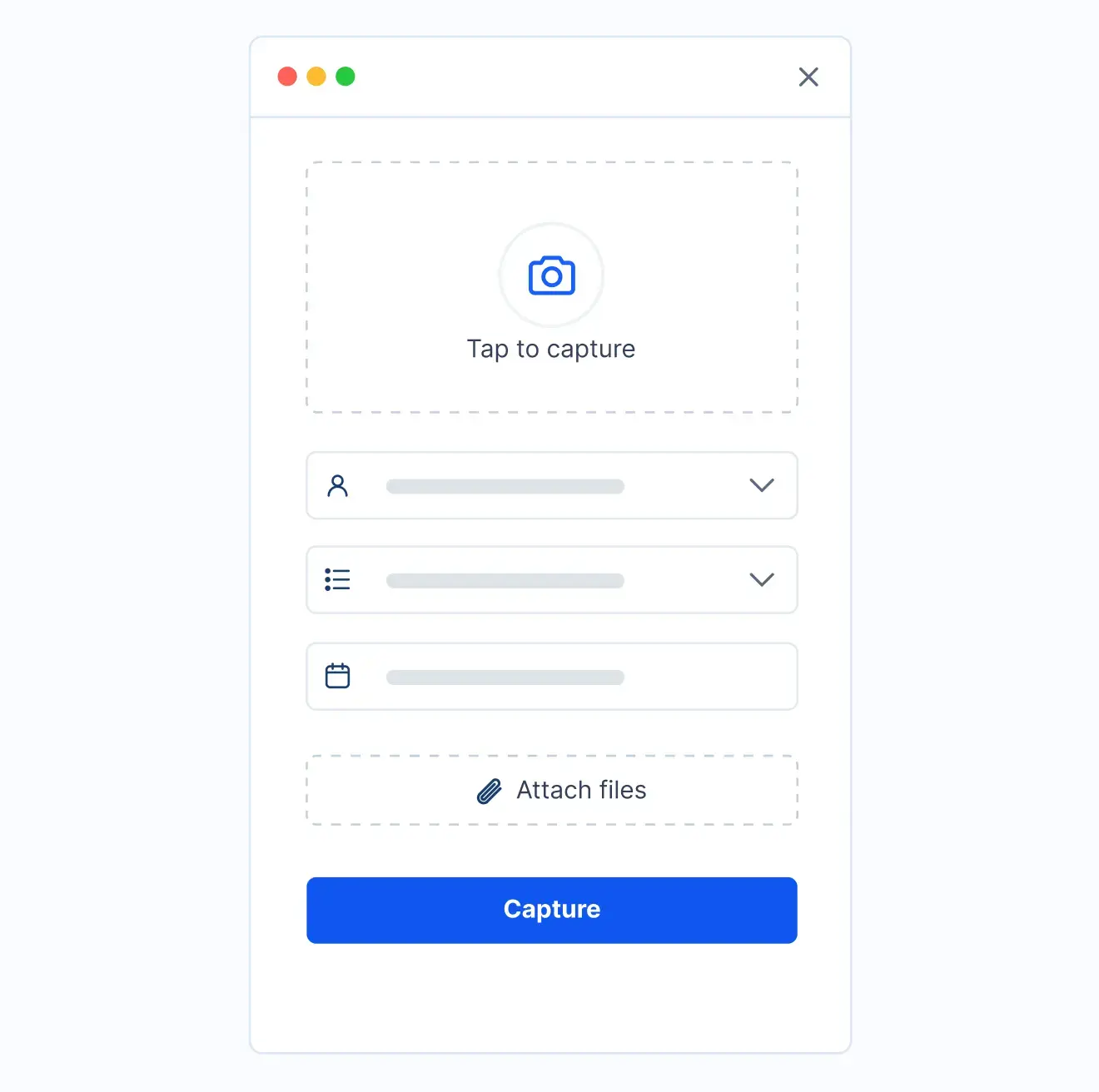
Downtime, cycle counts, and scrap are captured per shift, line, and asset as production runs.
Validate
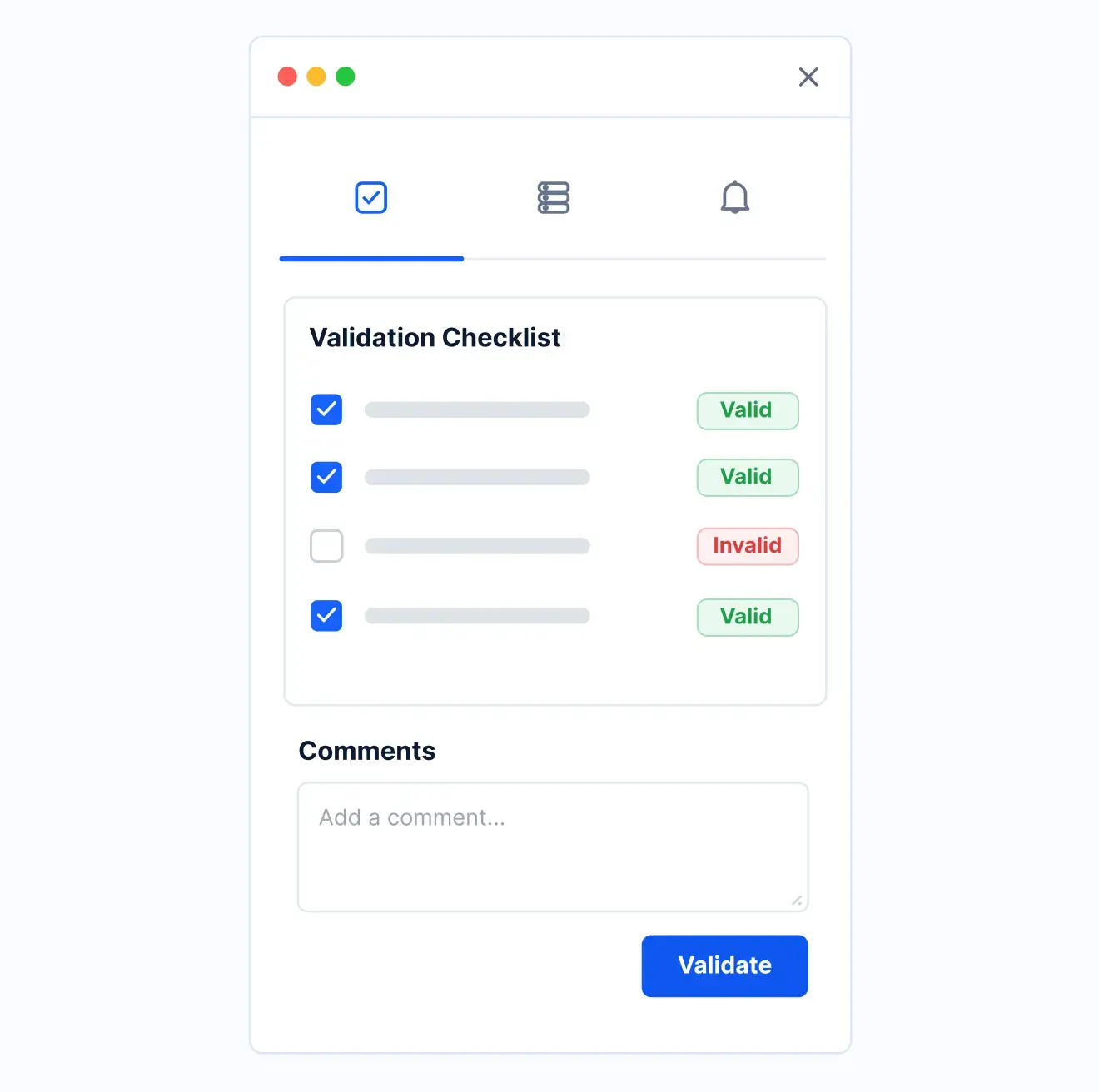
Availability, performance, and quality are calculated automatically into the composite OEE score and checked against target as each shift is logged.
Track
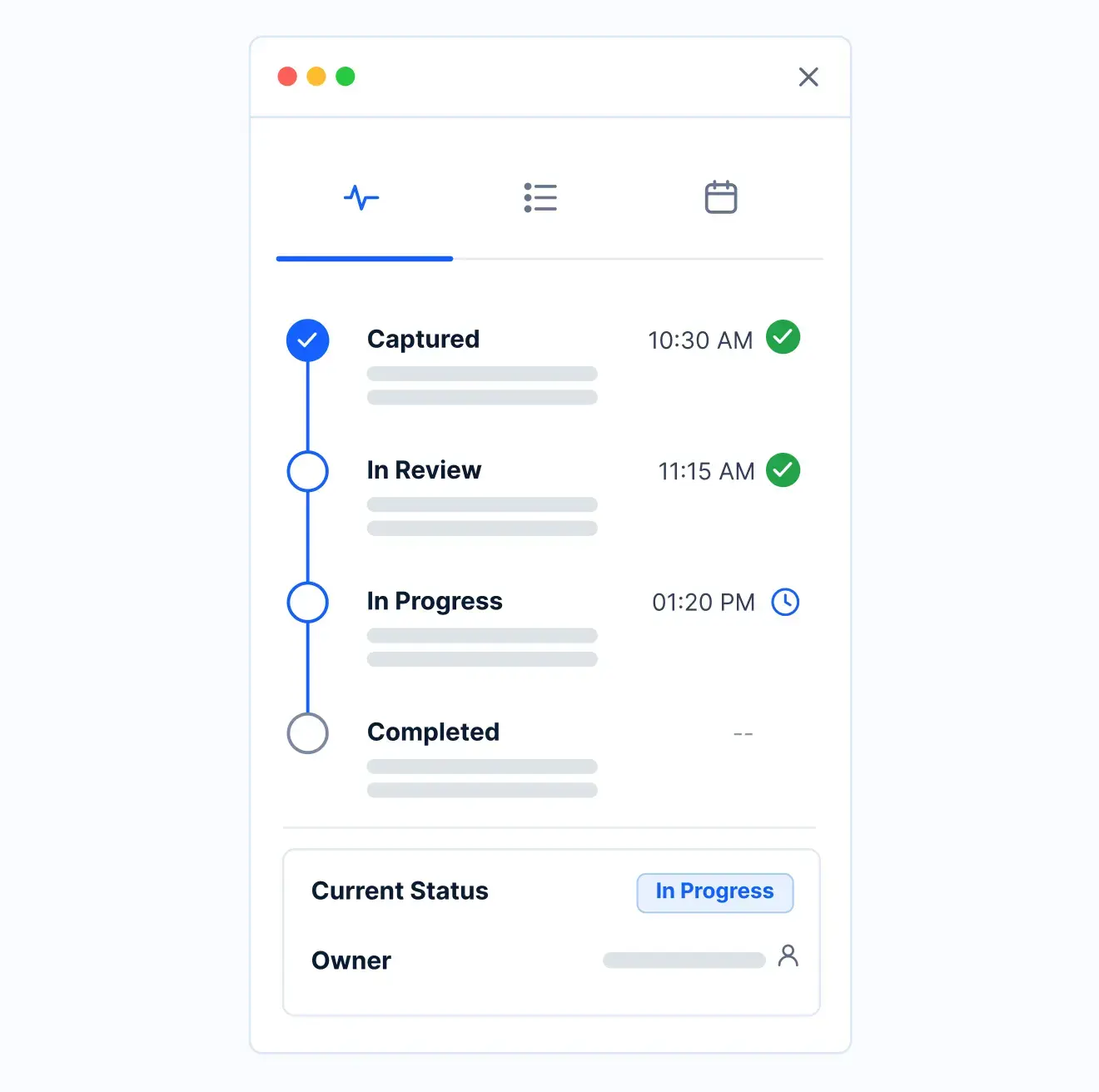
A shift or line dropping below target is flagged and the loss is routed to the function that owns that category, surfacing as an exception.
Report
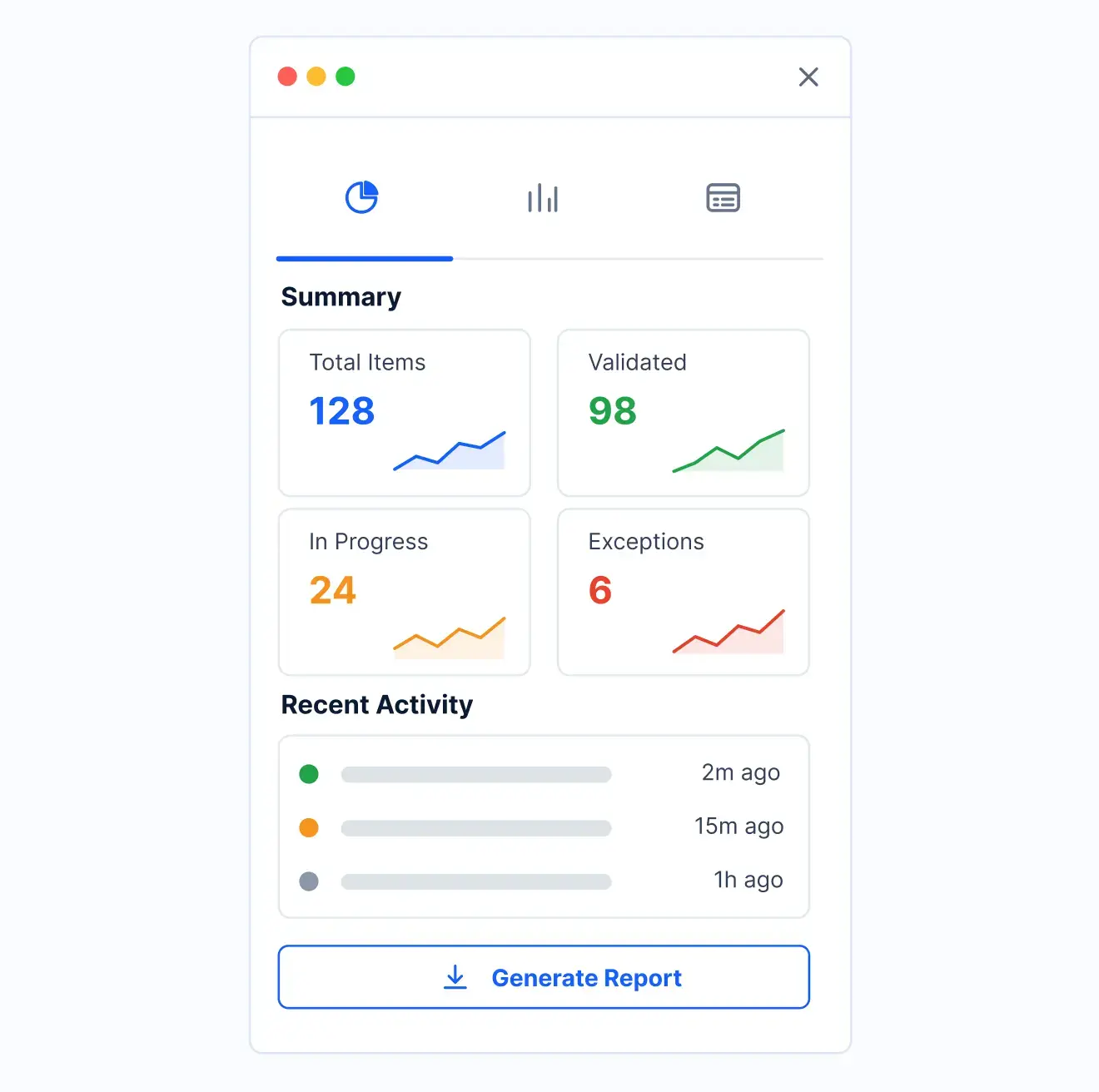
Because the log is the system of record, OEE trend by line, shift, and asset draws straight from it on an ongoing dashboard, not a monthly snapshot.
What changes when OEE tracking runs on Kissflow
| Process | Before Kissflow | On Kissflow |
|---|---|---|
| Inputs | Pulled together by hand at month-end | Captured per shift, line, and asset |
| Calculation | A spreadsheet formula someone maintains | Calculated automatically across all three factors |
| Alerting | None until the monthly report | Threshold alert the moment OEE drops below target |
| Loss ownership | One generic report to everyone | Routed to the function that owns that loss category |
| Reason coding | Inconsistent shift to shift | Standardized across lines and shifts |
| Trend visibility | Invisible until it's a missed month | Visible by line and shift as it happens |
Connects to the MES and maintenance systems you already run
.svg)



.svg)
.svg)
.svg)
.svg)

.svg)
.svg)
.svg)
.svg)
.svg)

.svg)

.svg)

.svg)
.svg)
.svg)
.svg)
.svg)
.svg)
.svg)
.svg)
.svg)

.svg)
Built to turn OEE into an action, not just a number
All three factors, calculated automatically
Availability, performance, and quality calculate from shift-level inputs, not a month-end spreadsheet.
Alerted while it's still a shift
A threshold breach flags immediately, not weeks later in a monthly report.
Loss routed to the right owner
An availability loss reaches maintenance, a performance loss reaches process engineering, and a quality loss reaches quality, each one separately.
Live in weeks, not a re-implementation
Configure OEE targets, reason codes, and loss routing in the visual builder, without a change request against your MES.
Reason coding that holds up
A standardized downtime reason list makes loss analysis comparable across lines and shifts.
Trend, not a snapshot
OEE trend by line and shift is visible continuously, not once a month.
Related apps
Emergency Maintenance Orchestration Workflow
Dispatch and coordinate the repair response once an availability loss this app flags points to a breakdown.
Maintenance Work Order Coordination (EAM-Lite)
Coordinate the planned and breakdown work orders that respond to the availability losses this app surfaces.
Production Yield Loss Investigation & Action
Investigate the root cause behind a quality loss this app's OEE calculation flags.
We help plant leaders turn OEE into an action, not just a number
.gif)

“If a company cannot enable everybody to use AI, they will never get the true benefit of AI. Platforms like Kissflow allow us to put that capability in the hands of our users in a safe way.”
Vagesh Dave
GVP & CIO at McDermott International, Ltd
See The Full Story

“Advanced automation of all processes is easy to set up. I cannot imagine how to manage workflows without this software.”
Tanay Tiwary
Global Head - Digitalization & Business Improvement
See the Full Story

“Kissflow supports rapid application development by building a working application prototype in the shortest amount of time.”
Maria Theresa Cabigon
CIO, SN Aboitiz Power Group
See The Full Story
See what Kissflow can do for you
Talk to usGot questions? We're here to help.
Get SupportEmergency Maintenance Orchestration dispatches and coordinates the response to a breakdown. This app calculates and tracks the OEE metric itself, availability, performance, and quality, and routes the loss to the right owner. It can flag the availability loss that leads to a maintenance response, but it doesn't run the repair dispatch.
Production Monitoring and Optimization tracks threshold breaches on live production parameters. This app is specifically the OEE calculation, availability times performance times quality, with loss routed by category.
Availability times performance times quality, from downtime, cycle count, and scrap inputs captured per shift, line, and asset.
Configurable by loss category: an availability loss typically routes to maintenance, a performance loss to process engineering, and a quality loss to quality.
Yes. Plant leaders configure OEE targets, reason codes, and loss routing in the visual builder, and the AI Builder can generate a working app from a plain-language description.
Through APIs and integration connectors, under single sign-on and role-based access, with every action written to an audit log.
Configuration and AI generation move delivery from weeks to days, without a multi-year platform program or an engineering backlog.
Kissflow is certified to SOC 1, SOC 2, SOC 3, ISO/IEC 27001, HIPAA, GDPR, and CCPA, hosted on Google Cloud with data residency in the US, EU, APAC, and Oceania.