Production Yield Loss Investigation & Action Software
Production Yield Loss Investigation & Action Software opens a case the moment a loss exceeds tolerance, assigns root cause investigation and corrective action with an owner, and verifies the fix held before closing. Kissflow runs that loop instead of a weekly spreadsheet.

Trusted by leading manufacturers worldwide


Every yield loss gets an investigation, not just a note in the log
Scrap at the end of a run rarely gets investigated the day it happens. The operator notes it on the shift log, the number rolls into a weekly yield report, and by the time anyone with authority to fix the cause looks at it, three more shifts have run the same setup and produced the same loss. Nobody owns the gap between flagging a loss and closing out why it happened, so the same defect recurs under a different shift's name.
Kissflow runs yield loss as an investigation case instead of a line item in a spreadsheet. A loss above tolerance opens a case that captures the process, material lot, and shift at the time of the event, and assigns it to whoever owns that step for root cause investigation before the trail goes cold. Corrective actions are assigned with an owner and a due date, and the case does not close on the fix being made. It closes when a verification pass confirms the yield actually recovered and an effectiveness review checks the fix held over the following runs. Every case, cause, and verification is retained, so recurring losses on the same line or the same material become visible as a pattern instead of a fresh surprise each week.
An uninvestigated yield loss is a yield loss waiting to repeat
Events get logged, not investigated
A yield drop earns a line in the shift report, and the investigation stops there because no one owns the next step.
Root cause never gets documented
Without a structured investigation, a recurring yield problem looks like three separate incidents instead of one unresolved cause.
Corrective actions go unverified
A fix gets applied and the record closes, with no one checking whether the yield actually recovered on the next run.
Quality can't see the pattern
Yield loss data sits in disconnected shift reports, so no one can show whether losses trace back to material, tooling, or a training gap.
Six modules. Configurable to your quality process.
Every module ships with default forms, approval logic, integrations, and dashboards. Configure each one to your operating model in the visual builder.
Yield loss intake
A loss above tolerance opens a case automatically, capturing the process, material lot, and shift while the detail is still fresh.
Root cause investigation
The case is assigned to whoever owns that process step, with a structured root cause investigation instead of a guess on the floor.
Corrective action assignment
Corrective actions are assigned with a named owner and a due date, so a fix is tracked rather than promised verbally.
Verification
A verification pass checks the corrective action was actually implemented as specified before the case can move to closure.
Effectiveness review
An effectiveness review confirms yield recovered and held over subsequent runs, not just on the run immediately after the fix.
Audit trail
Every loss, cause, action, and verification is retained as a searchable record instead of scattered shift logs.
From request to system of record in four steps
Report
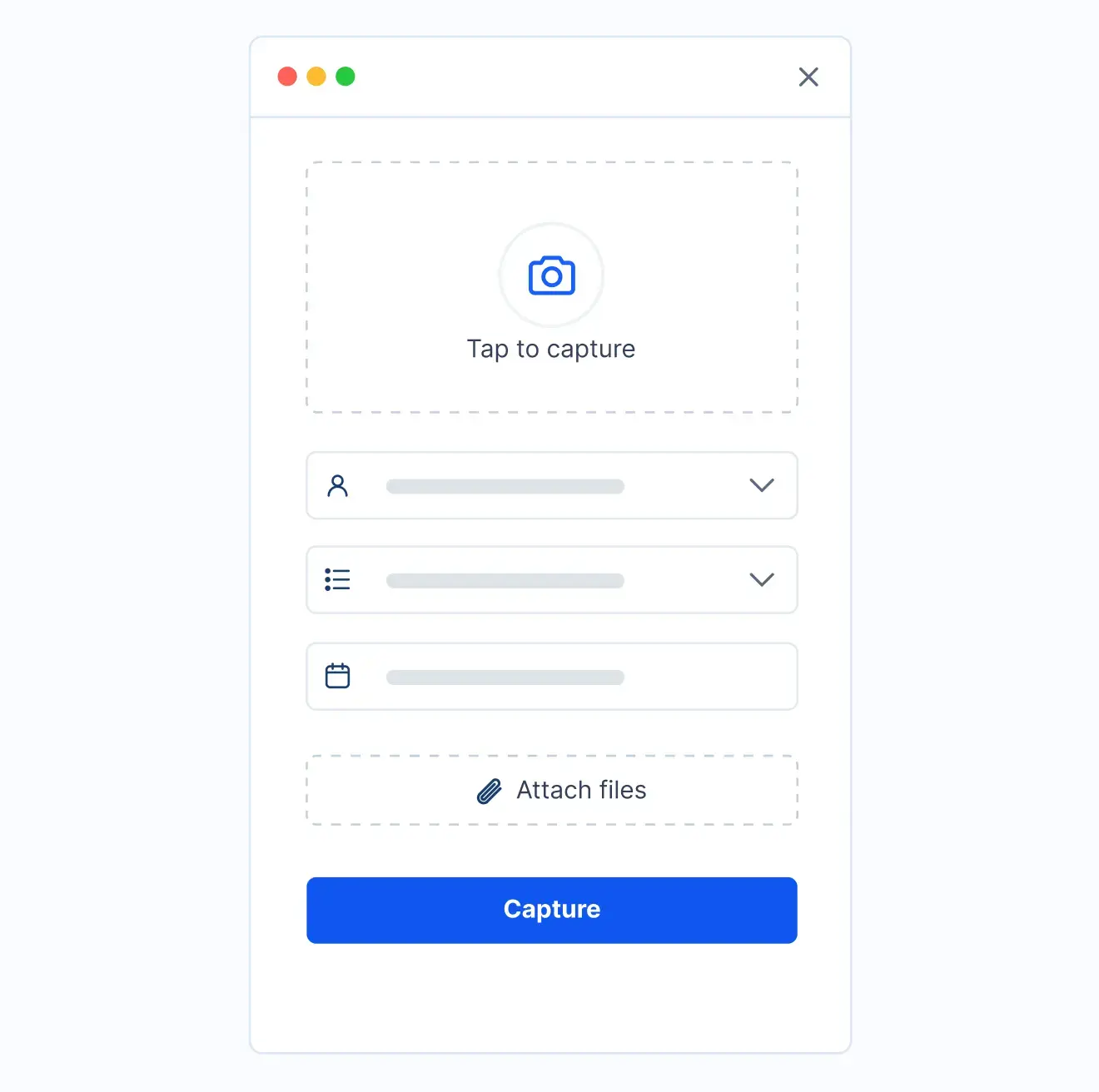
A loss above tolerance is flagged the moment it occurs, capturing the process, material lot, and shift at the time of the event.
Assess
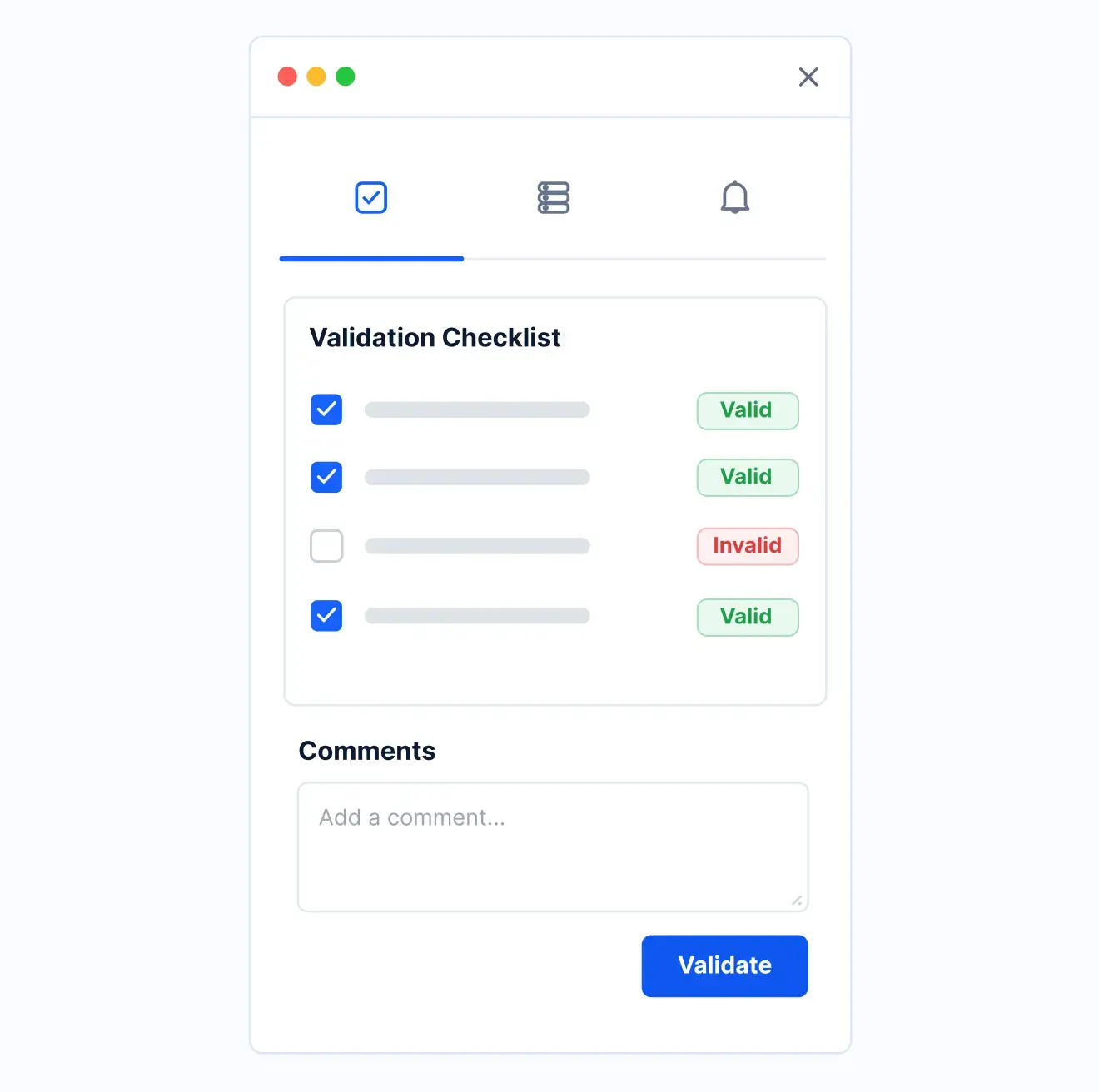
The case is investigated to root cause by the process owner instead of sitting in a weekly report awaiting review.
Resolve
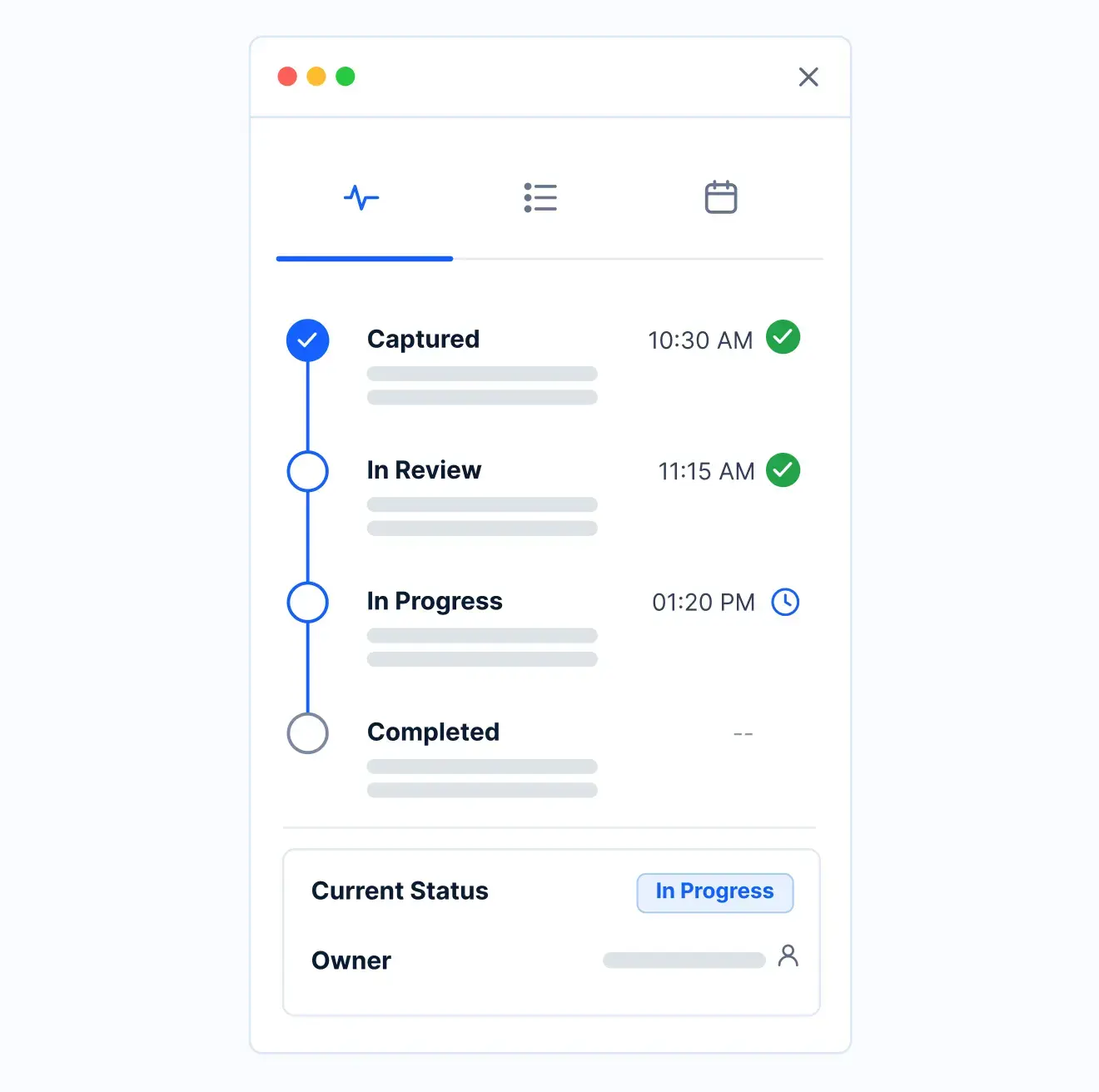
The corrective action is verified as implemented before the case is allowed to move toward closure.
Record
Effectiveness is confirmed against yield over the following runs, and the case closes with the full record intact.
What changes when yield loss investigation runs on Kissflow
| Process | Before Kissflow | On Kissflow |
|---|---|---|
| Event capture | A note in the shift report, easy to miss | A tracked record tied to the line, shift, and run |
| Investigation | Stops after the note gets written | Guided through to a documented root cause |
| Corrective action | Applied informally, not tracked to a due date | Assigned to an owner with a due date and status |
| Verification | Assumed done, rarely checked | Confirmed against the approved action before closure |
| Effectiveness | No follow-up on whether the loss recurred | A scheduled follow-up check on the next relevant run |
| Pattern visibility | Repeat losses look like separate incidents | Losses roll up by cause so patterns are visible |
Connects to the quality and ERP systems you already run
.svg)



.svg)
.svg)
.svg)
.svg)

.svg)
.svg)
.svg)
.svg)
.svg)

.svg)

.svg)

.svg)
.svg)
.svg)
.svg)
.svg)
.svg)
.svg)
.svg)
.svg)

.svg)
Built for how yield loss actually gets fixed
An investigation layer, not a new MES
Your MES or line data system keeps recording the yield numbers. Kissflow runs the governed investigation and corrective action workflow on top of them.
Live in weeks, not a re-implementation
Configure investigation steps, approval routing, and verification checks in the visual builder, without a change request against your MES.
Root cause built into the workflow
The investigation path from finding to root cause is how every event moves, not a separate document someone writes later.
Verification before closure, always
A corrective action cannot close the record until it's confirmed against what was approved.
Pattern visibility across losses
Closed events roll up by cause, so quality and operations leadership see the pattern behind repeat losses, not just the count.
Made for cross-team work
Production, quality, and maintenance work the same investigation record with their own view of it.
Related apps
Corrective and Preventive Actions (CAPA) App
Manage corrective and preventive action for any quality nonconformance, not only yield loss events.
Downtime & Breakdown Reporting with RCA
Log equipment downtime and breakdown events with a structured root-cause investigation.
Production Planning and Scheduling
Coordinate the production plan the investigated run belongs to, from scheduling through close.
We help manufacturing leaders keep the plan and the plant in sync
.gif)

“If a company cannot enable everybody to use AI, they will never get the true benefit of AI. Platforms like Kissflow allow us to put that capability in the hands of our users in a safe way.”
Vagesh Dave
GVP & CIO at McDermott International, Ltd
See The Full Story

“Advanced automation of all processes is easy to set up. I cannot imagine how to manage workflows without this software.”
Tanay Tiwary
Global Head - Digitalization & Business Improvement
See the Full Story
“Kissflow supports rapid application development by building a working application prototype in the shortest amount of time.”
Maria Theresa Cabigon
CIO, SN Aboitiz Power Group
See The Full Story
See what Kissflow can do for you
Talk to usGot questions? We're here to help.
Get SupportNo. Your MES or line data system keeps recording yield and scrap numbers. Kissflow runs the investigation, corrective action, and verification workflow around the losses it surfaces.
The CAPA app manages corrective and preventive action for any quality nonconformance. This app is scoped specifically to production yield loss events, from the shift-level flag through the follow-up check on the next run.
Supplier Corrective Action manages nonconformances traced to a supplier's part or material. This app investigates yield losses that originate inside the plant, whatever the eventual cause turns out to be.
Any scrap, rework, or below-target yield on a production run, flagged from the shift report, the MES, or a manual entry.
Yes. Process owners configure forms, routing, and thresholds in the visual builder, and the AI Builder can generate a working app from a plain-language description.
Through APIs and integration connectors, under single sign-on and role-based access, with every action written to an audit log.
Configuration and AI generation move delivery from weeks to days, without a multi-year platform program or an engineering backlog.
Kissflow is certified to SOC 1, SOC 2, SOC 3, ISO/IEC 27001, HIPAA, GDPR, and CCPA, hosted on Google Cloud with data residency in the US, EU, APAC, and Oceania.