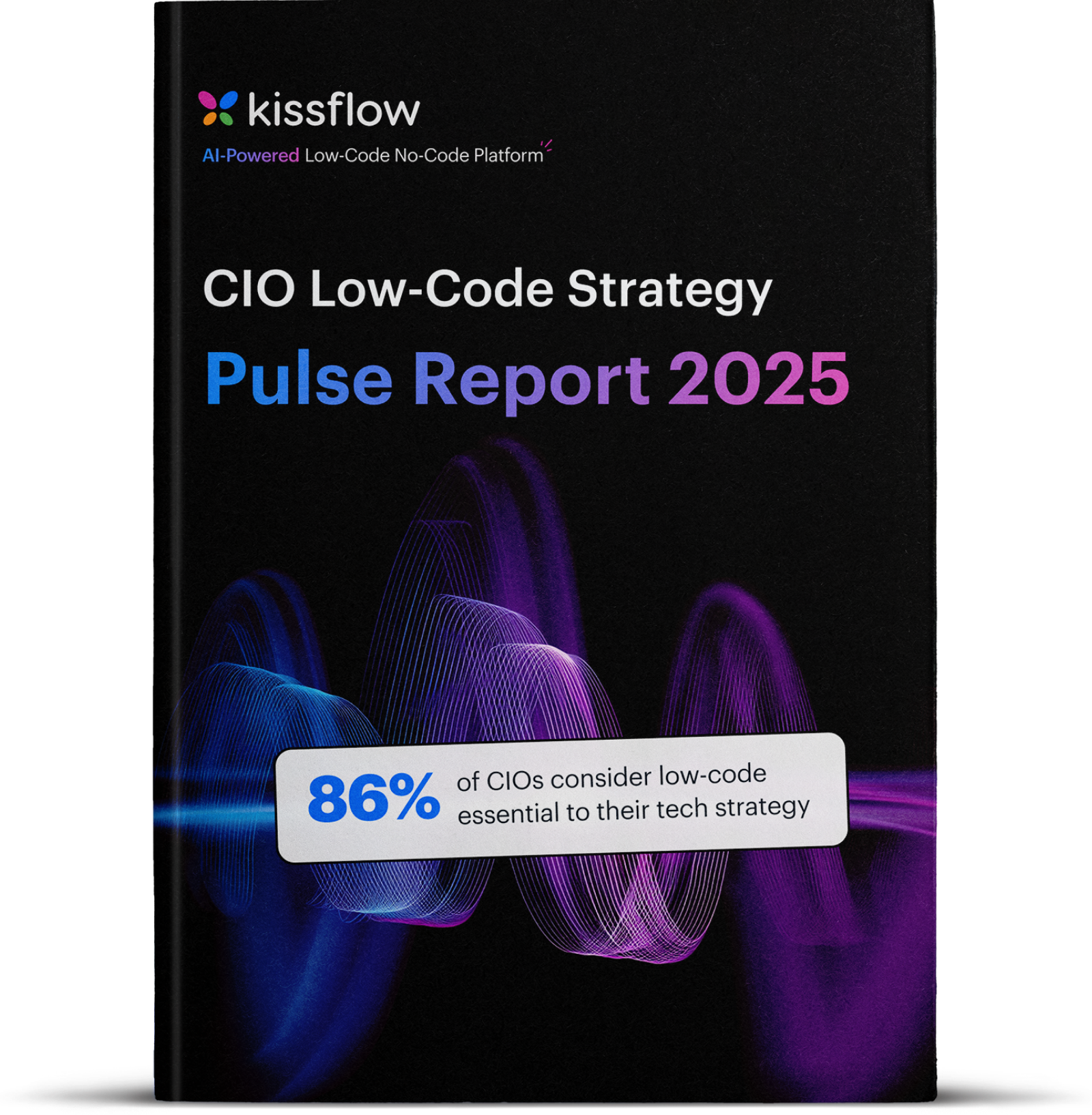
Corrective and Preventive Actions (CAPA) App for Quality Issues That Do Not Recur
A CAPA app takes a quality issue from the moment it is logged through containment, root cause analysis, corrective action, and a verified effectiveness check, with every step on one auditable record instead of a spreadsheet that ends at closed with no proof.
Trusted by leading manufacturers worldwide


A CAPA process is only as good as its record of what actually closed it
Write CAPA-014 in a spreadsheet cell and mark it closed, and nothing in that cell tells an auditor whether the corrective action actually stopped the defect from recurring. Most CAPA tracking lives in a spreadsheet or a document register that stores the paperwork but not the workflow, so an issue gets logged, a fix gets typed in, and the row gets marked closed, often before anyone verifies the fix held.
Kissflow runs CAPA as a governed app with six tracked stages: issue logging, containment, root cause analysis, corrective and preventive action, verification, and a scheduled effectiveness review. Each stage carries its own owner and due date, root cause is a required investigation step rather than a free-text field, and the corrective action is tied directly to the cause it is meant to fix. Nothing reaches closed status until effectiveness review confirms the issue has not recurred.
Quality managers get a system that produces the audit trail an ISO or customer audit expects as a byproduct of the process, not a document rebuilt from memory the week before the audit. The form is configurable to whatever method your quality system uses, fishbone or five-why.
A spreadsheet can hold a CAPA number. It cannot prove the fix worked.
Root cause gets rushed
Without a structured investigation step, a CAPA gets closed against a guessed cause instead of a verified one.
No link between cause and action
The corrective action recorded in a spreadsheet often does not trace back to the root cause it is supposed to fix.
Effectiveness is assumed, not checked
A CAPA closes when the paperwork is filed, not when someone confirms the issue stopped recurring.
Audit prep starts from scratch
Every audit means reconstructing the CAPA trail from emails, spreadsheets, and whoever remembers what happened.
Six process modules
Every module ships with default forms, routing logic, and dashboards. Configure each one to your quality system in the visual builder.
Issue logging
A structured intake form captures what happened, where, severity, and who found it, replacing a free-text spreadsheet row.
Containment
Immediate containment actions are recorded against the issue before root cause work begins, so affected material stays controlled first.
Root cause analysis
A structured investigation form, built for methods like fishbone or five-why, links the confirmed cause to the issue record.
Corrective and preventive action
Actions are assigned to an owner with a due date, and are tied directly to the root cause they are meant to fix.
Verification
A reviewer confirms the corrective action was implemented as planned before the record moves to effectiveness review.
Effectiveness review
A scheduled follow-up check confirms the issue has not recurred before the CAPA is allowed to close.
From request to system of record in four steps
Report
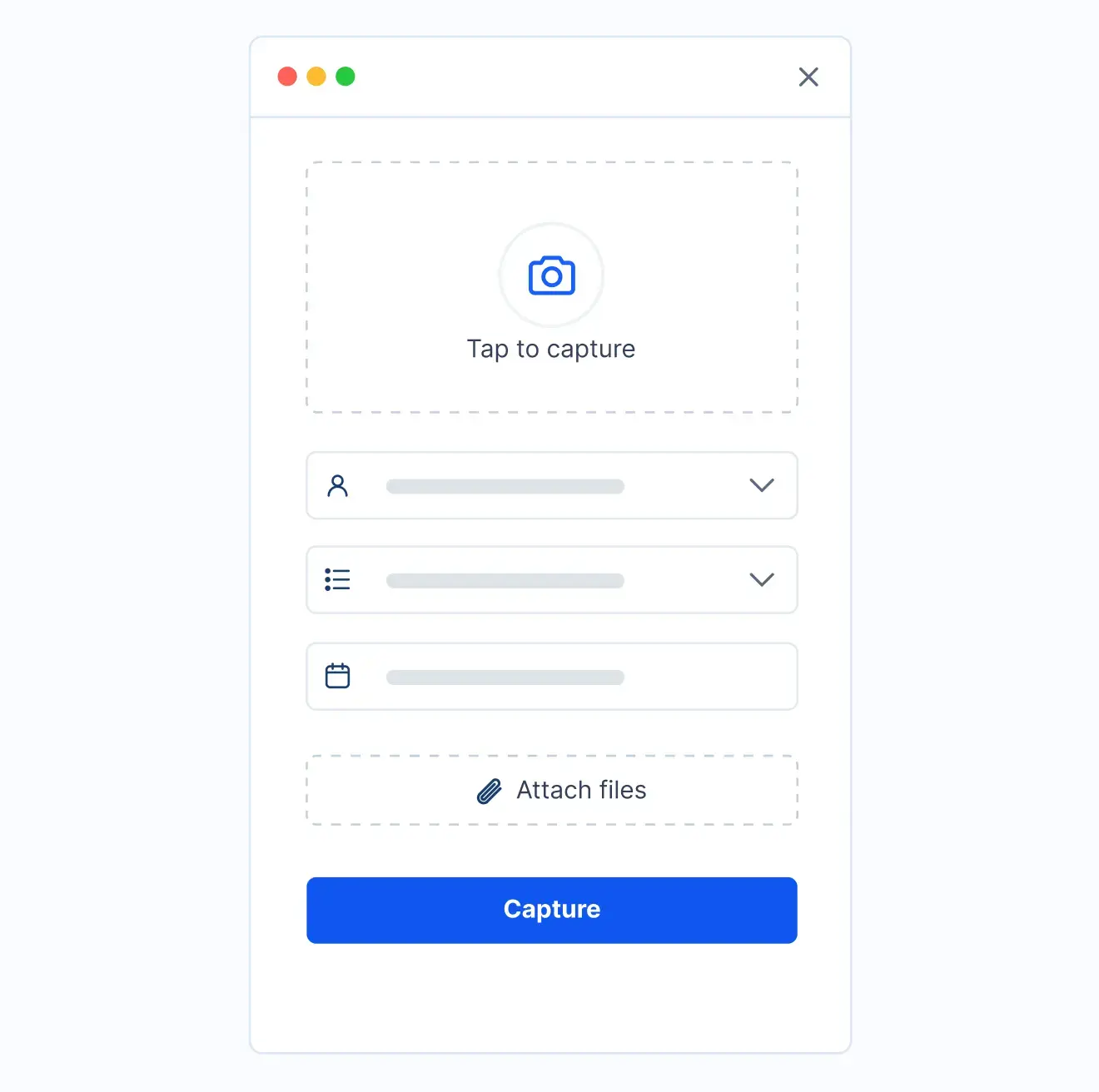
A structured form captures the nonconformance, its severity, and exactly where it was found.
Assess
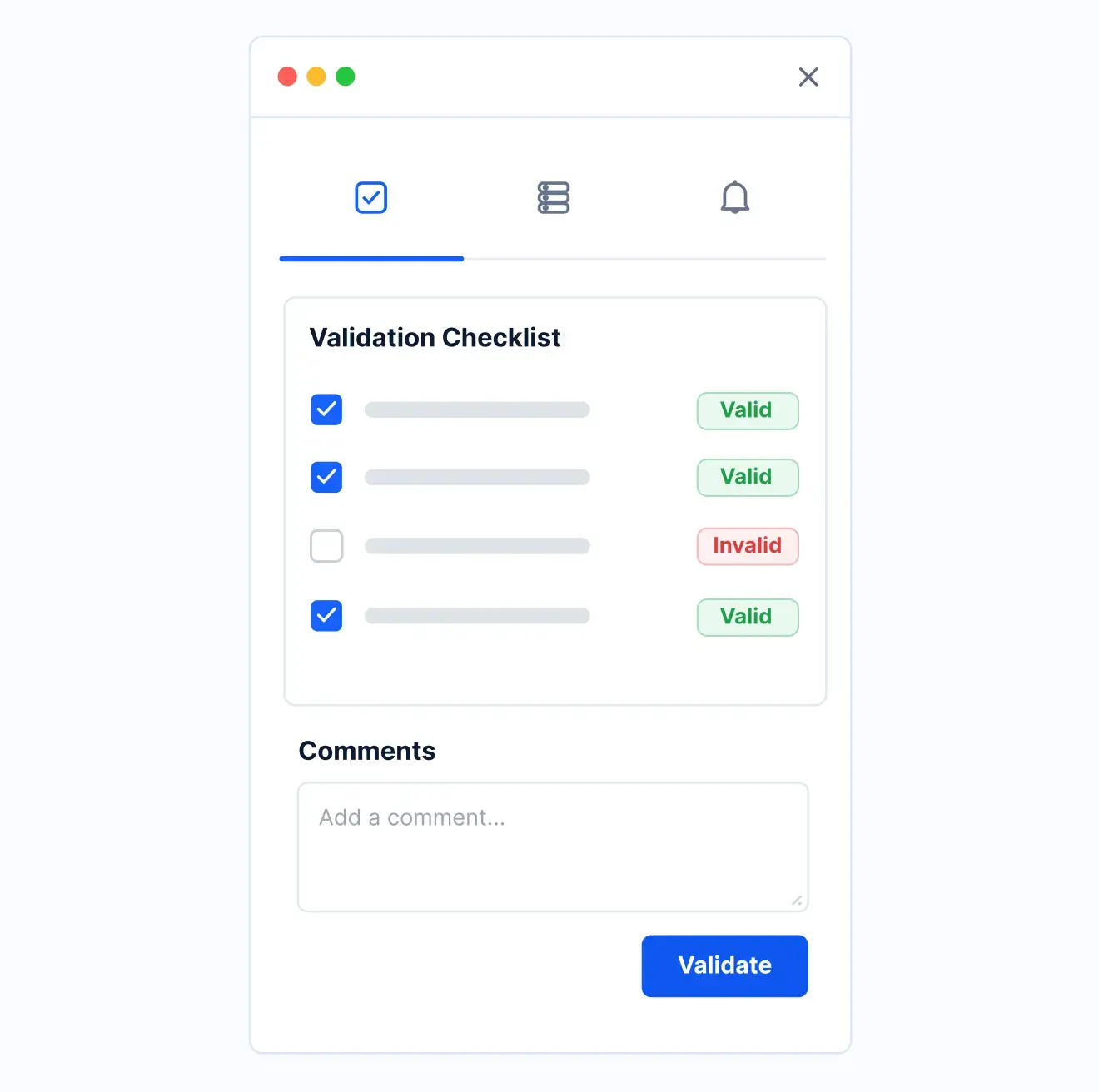
Immediate containment actions are logged and recorded, then root cause analysis begins on the same record.
Resolve
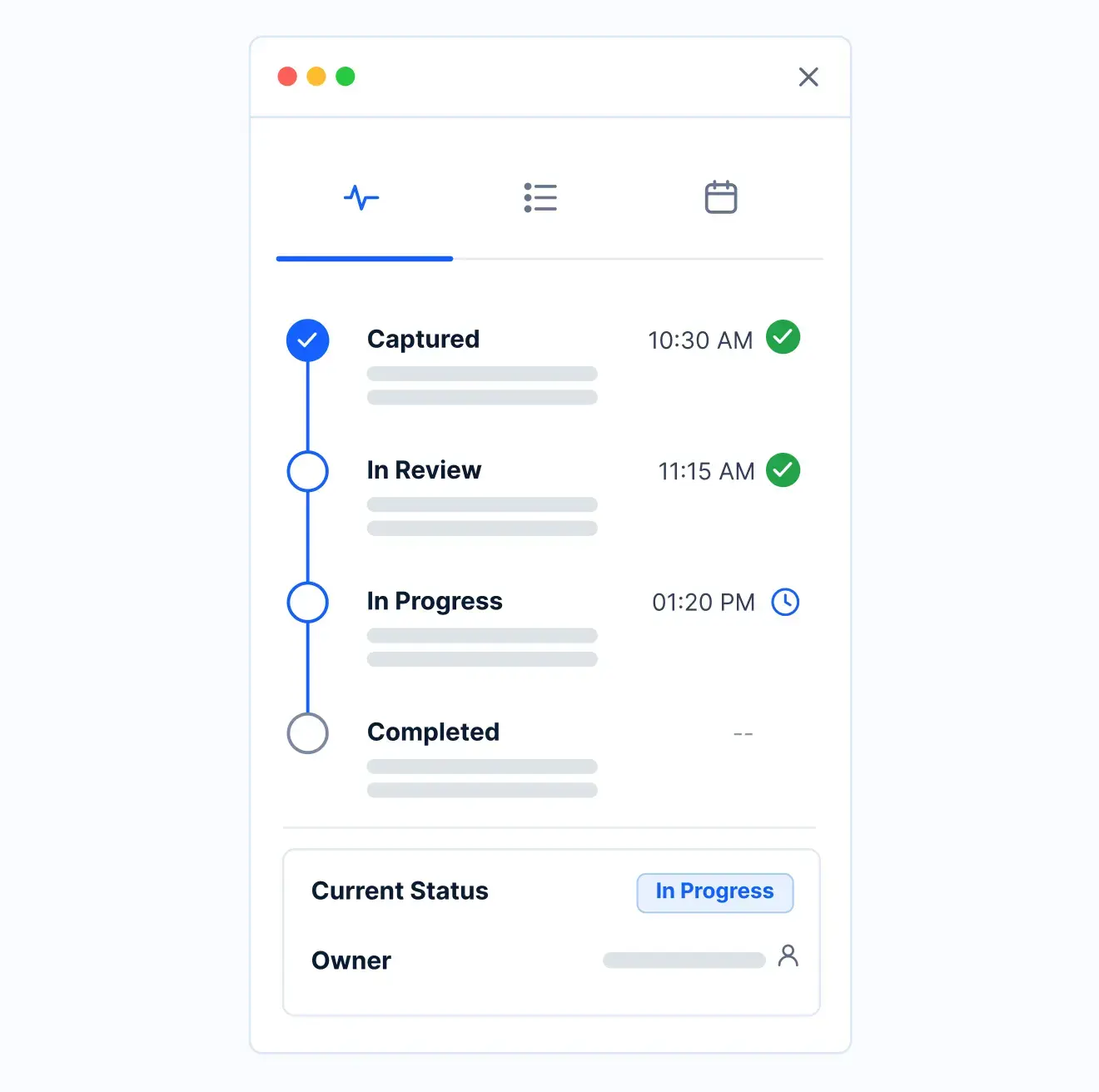
The root cause drives a corrective and preventive action with an owner and a due date.
Record
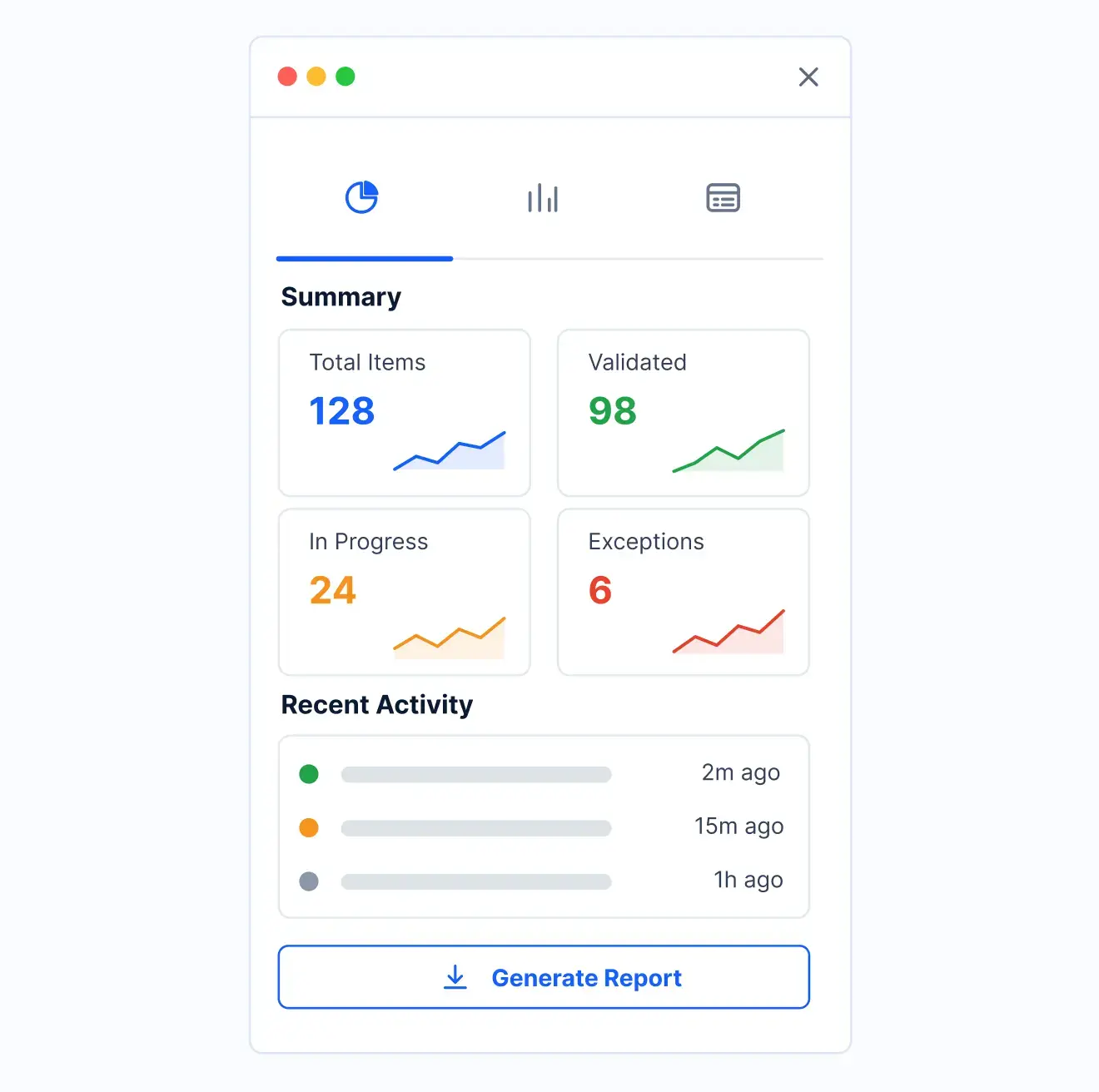
A scheduled effectiveness review confirms the issue has not recurred before the record closes, with every step on one auditable trail.
What changes when CAPA runs on Kissflow
| Process | Before Kissflow | On Kissflow |
|---|---|---|
| Issue logging | Free-text row in a spreadsheet | Structured form with severity and source captured |
| Containment | Handled informally, rarely recorded | Logged as its own tracked stage before investigation |
| Root cause | Guessed or skipped under time pressure | Structured investigation required before closure |
| Corrective action | Typed into a cell, no link to cause | Directly tied to the confirmed root cause |
| Verification | Assumed once the paperwork is filed | A reviewer confirms implementation before sign-off |
| Effectiveness | Not checked after closure | A scheduled review confirms the issue has not recurred |
Connects to the systems your quality team already runs on
.svg)



.svg)
.svg)
.svg)
.svg)

.svg)
.svg)
.svg)
.svg)
.svg)

.svg)

.svg)

.svg)
.svg)
.svg)
.svg)
.svg)
.svg)
.svg)
.svg)
.svg)

.svg)
Built for CAPA that actually stays closed
Nothing closes without verified effectiveness
A CAPA cannot reach closed status until a scheduled effectiveness review confirms the issue has not recurred.
Root cause is a required stage, not a field
Structured investigation is built into the workflow, so a CAPA cannot skip straight from issue to action.
Governed from day one
Role-based access and a full audit trail make every CAPA ready for an ISO or customer audit without extra prep.
Live in weeks
Configure the workflow in the visual builder, or generate a starting app with AI Builder from a plain-language description.
Cause linked to action
Every corrective action traces back to the root cause it addresses, so the record shows why, not just what.
Built for cross-functional ownership
Quality, production, and engineering work the same CAPA record instead of separate trackers.
Related apps
Quality and CAPA Management
Broadens CAPA into a full quality records register with certifications, standards, and renewal alerts.
Deviation Management
Handles process and specification deviations that need a documented disposition, separate from a CAPA investigation.
Factory Compliance and Audit Reporting
Feeds audit findings directly into a CAPA record when a finding needs a corrective action.
We help quality teams close issues that stay closed
.gif)

“If a company cannot enable everybody to use AI, they will never get the true benefit of AI. Platforms like Kissflow allow us to put that capability in the hands of our users in a safe way.”
Vagesh Dave
GVP & CIO at McDermott International, Ltd
See The Full Story

“Advanced automation of all processes is easy to set up. I cannot imagine how to manage workflows without this software.”
Tanay Tiwary
Global Head - Digitalization & Business Improvement
See the Full Story

“Kissflow supports rapid application development by building a working application prototype in the shortest amount of time.”
Maria Theresa Cabigon
CIO, SN Aboitiz Power Group
See The Full Story
See what Kissflow can do for you
Talk to usGot questions? We're here to help.
Get SupportIt is a governed application that takes a quality issue from logging through containment, root cause analysis, corrective and preventive action, verification, and a documented effectiveness review, so a CAPA cannot close until the fix is confirmed.
A spreadsheet stores the paperwork. This app runs the workflow: each stage is tracked with an owner and a due date, and closure requires a verified effectiveness check rather than a filled-in cell.
This app is the CAPA workflow itself, from issue to a verified close. Quality and CAPA Management is the broader quality records register, covering certifications, standards, and renewal alerts, with CAPA as one part of it.
The investigation form is configurable to the method your quality system uses, including fishbone or 5-why, and can be adjusted per issue type.
No. The workflow requires a scheduled effectiveness review before a CAPA can move to closed status.
Yes. Every stage, owner, and timestamp is stored on the record, so the audit trail is complete without a separate reconstruction exercise.
Yes. Role-based access lets each function see and act on its part of the CAPA without separate trackers.
Configuration in the visual builder, or a starting app generated by AI Builder from a plain-language description, typically brings a plant live in weeks.