Leak Detection Escalation Software for Pipeline Operations
Kissflow confirms, assigns, and escalates every pipeline leak detection alarm through a defined response window, reading a flagged event from your SCADA or leak detection system through a read-only integration, so a pressure or flow-balance alarm gets a documented decision instead of a judgment call nobody wrote down.

Trusted by energy operators worldwide






The SCADA screen shows a pressure imbalance. Someone has to decide what it means.
A leak detection system, whether it's a pressure or flow-balance model, an acoustic sensor array, or fiber-optic sensing along the right-of-way, raises an alarm on a pipeline segment. The alarm doesn't know yet whether it's a genuine loss of containment, an instrument drift, a valve that didn't fully close, or a batch interface moving through a meter run. A controller has to make that call, and the decision, who confirmed it, what was checked, when the line was shut in or throttled if it came to that, needs to exist somewhere other than a control room log nobody outside the shift can see.
Kissflow runs leak detection escalation as a response workflow layered on top of the leak detection system, not inside it: the flagged alarm arrives through a read-only integration, a controller or field responder confirms or dismisses it against a documented checklist, an investigation gets assigned with a response-window clock running, escalation moves the event to a duty manager if it isn't resolved in time, and the closure record captures what was found and what action was taken.
If the alarm turns into a confirmed release, the record hands off cleanly into your chemical spill or environmental exception process. If it's a false alarm from a batch interface or an instrument fault, that gets documented too, building a pattern history that helps tune the detection system instead of just clearing the alarm and moving on.
Where leak alarm response breaks down after the alarm sounds
Confirmation isn't standardized
One controller checks pressure trends, another calls the field operator, and neither approach is written down anywhere.
The response clock isn't visible
Nobody can see, in real time, how long an alarm has been open without a confirmed cause.
Escalation depends on someone remembering to call
A duty manager finds out about an unresolved alarm from a shift-change conversation, not a system.
False alarms and real releases aren't distinguished in the record
Without a closure log, there's no pattern showing which segments or conditions trigger nuisance alarms.
Six modules. Every leak detection alarm confirmed, investigated, and closed inside a defined window.
Configure response windows, escalation tiers, and confirmation checklists to your pipeline segments.
Read-only alarm intake
A flagged pressure, flow-balance, acoustic, or fiber-optic event arrives from your leak detection system or SCADA.
Confirmation checklist
A controller or field responder confirms or dismisses the alarm against a documented set of checks.
Response window clock
Every open alarm shows time elapsed against a configured response window, visible to the whole shift.
Tiered escalation
An alarm unresolved past its window escalates automatically to a duty manager or on-call lead.
Field investigation assignment
A confirmed alarm routes to a field team for physical verification and, if needed, line shut-in or throttling.
Closure and pattern log
Every alarm closes with a documented cause, false alarm or confirmed release, building a history by segment.
From request to system of record in four steps
Report
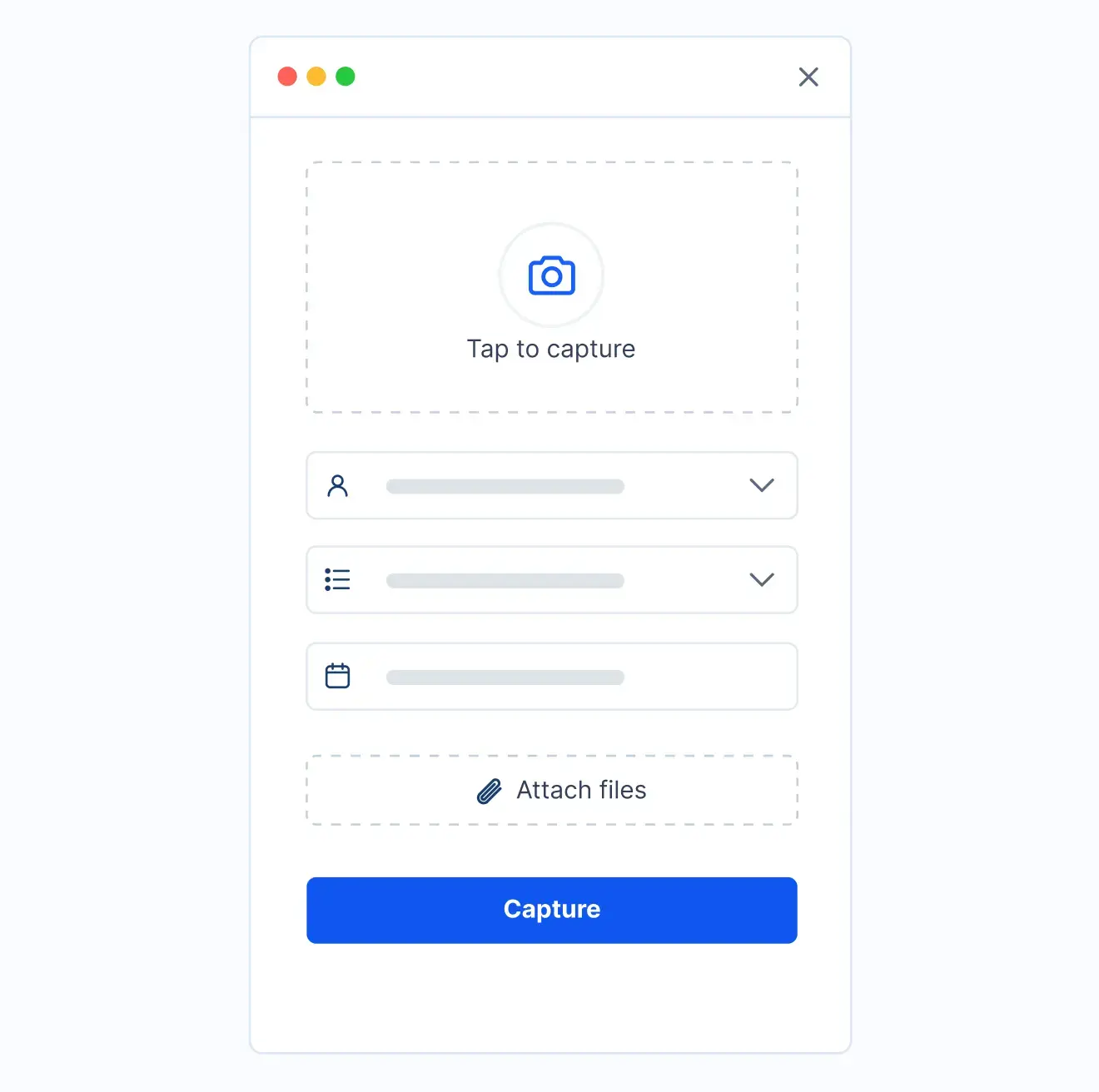
A flagged leak detection event comes in from SCADA through a read-only feed.
Assess
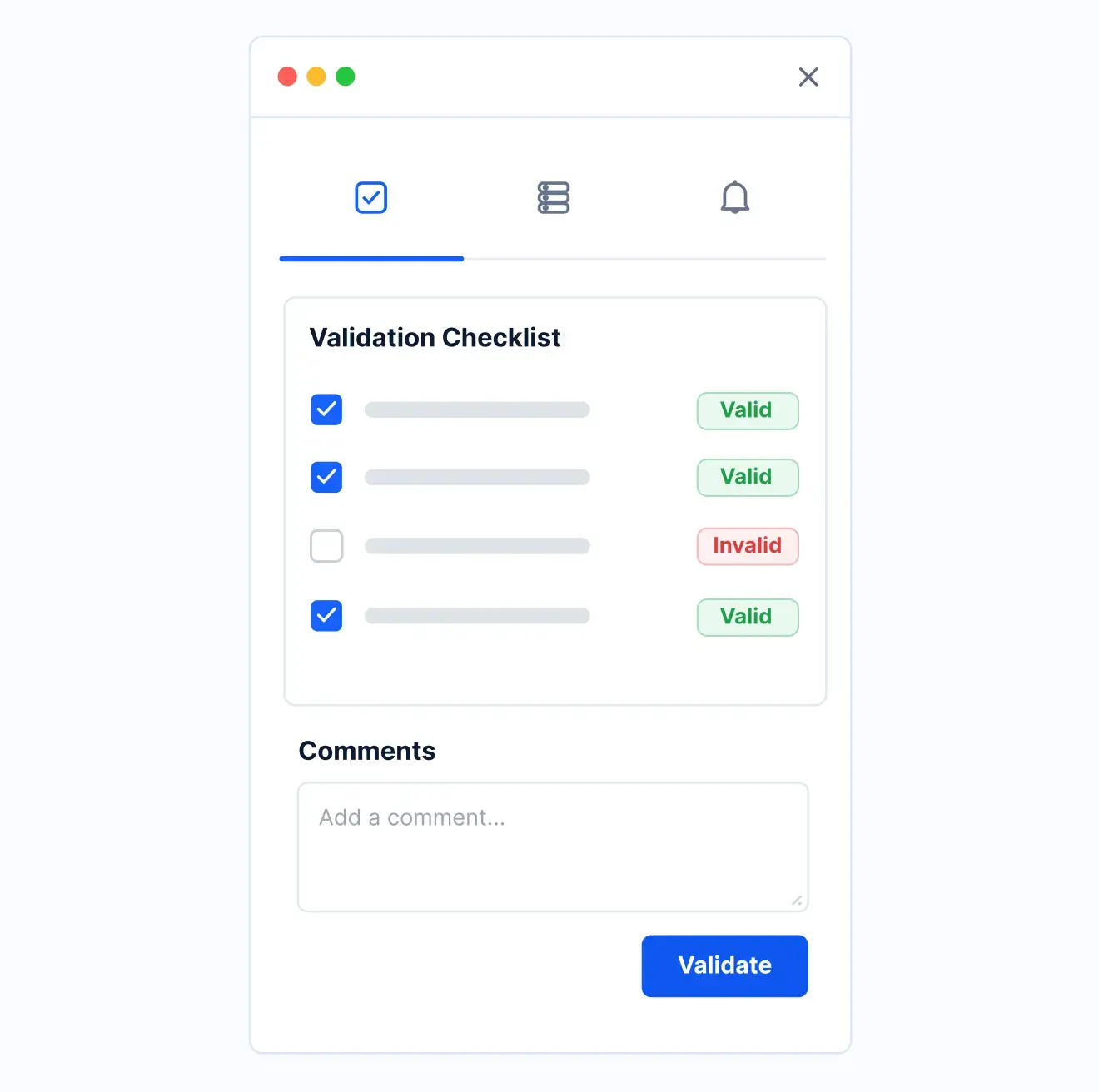
A controller checks the alarm against a documented confirmation checklist, and an open alarm past its response window escalates automatically to a duty manager.
Resolve
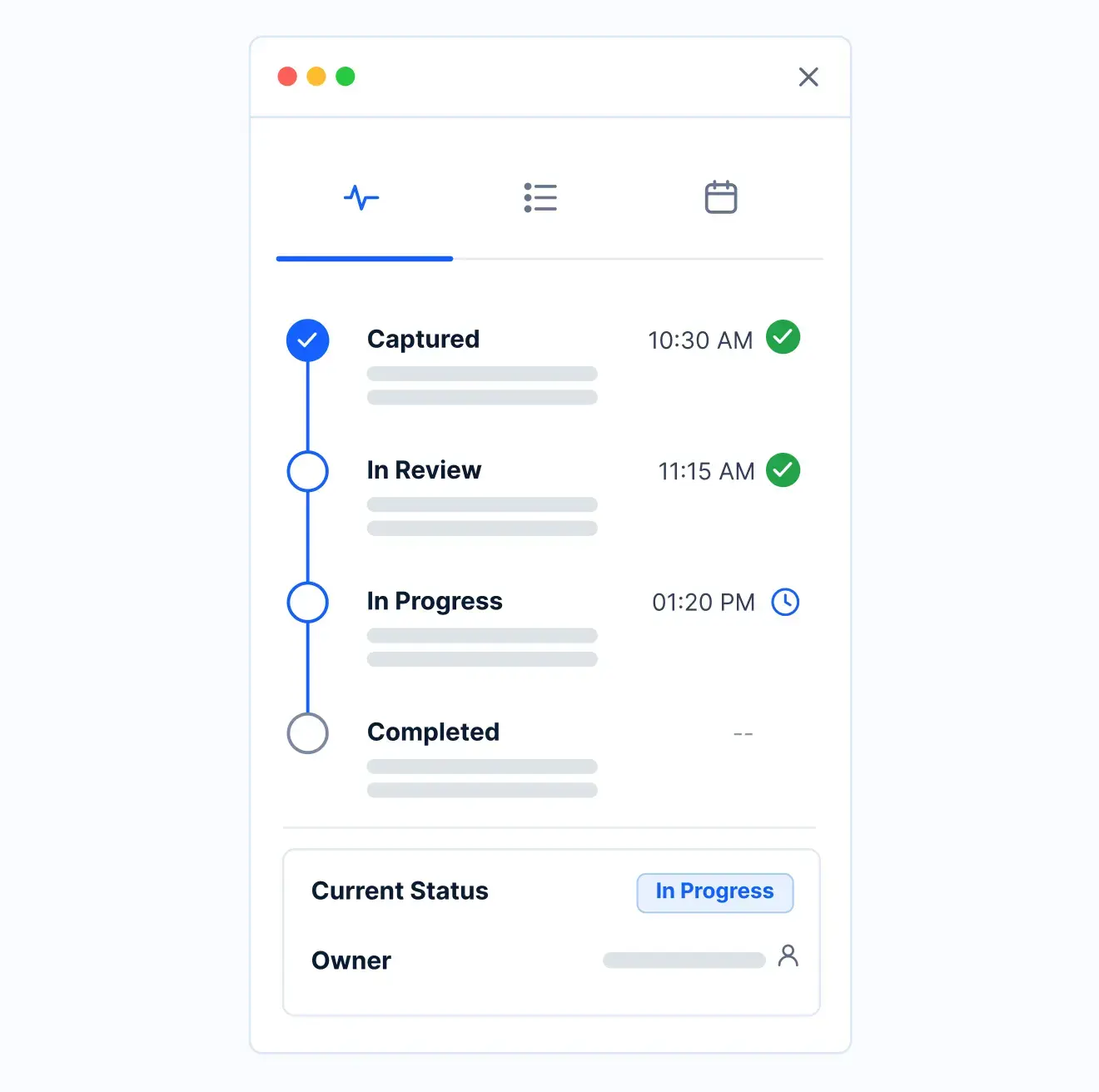
A field team investigates and verifies the cause.
Record
The event closes with a documented outcome instead of a judgment call nobody wrote down.
What changes when leak detection escalation runs on Kissflow
| Process | Before Kissflow | On Kissflow |
|---|---|---|
| Alarm confirmation | Judgment call, undocumented | Checked against a standard confirmation checklist |
| Response window | Tracked informally, if at all | Visible clock on every open alarm |
| Escalation | Depends on someone making a phone call | Automatic, tiered, and timestamped |
| Field investigation | Assigned verbally over radio | Assigned and tracked as a record |
| Closure record | A note in a control room log | A structured record with cause and action taken |
| Pattern visibility | No way to see which segments alarm most | A closure history by segment and cause over time |
Reads flagged alarms from your SCADA or leak detection system through a read-only integration; Kissflow never writes back into the control layer
Kissflow runs the confirmation, escalation, and closure record. Your SCADA and leak detection system stay the system of record for the underlying instrumentation and control logic.
.svg)



.svg)
.svg)
.svg)
.svg)

.svg)
.svg)
.svg)
.svg)
.svg)

.svg)

.svg)

.svg)
.svg)
.svg)
.svg)
.svg)
.svg)
.svg)
.svg)
.svg)

.svg)
Built for how a leak alarm actually gets worked, not just displayed
A response window everyone can see
The clock on an open alarm is visible to the whole shift, not just the person who first saw it.
Escalation that doesn't wait on a phone call
An unresolved alarm reaches a duty manager automatically.
False alarms get documented too
A dismissed alarm still builds a pattern record, instead of disappearing once it's cleared.
Live in weeks
Configure response windows and escalation tiers in the visual builder, or describe the use case to the AI Builder.
Governed from day one
Role-based access and a full audit trail on every alarm, confirmation, and closure.
Reads your leak detection system, doesn't replace it
Kissflow layers a response workflow on top of your existing detection technology.
Related apps
Chemical Spill Response Management System
SDS-linked spill capture, severity classification, escalation, and regulatory-ready containment tracking.
Compression Station Exception Escalation Management System
Escalate equipment-level trips and deviations at a compression station on the same pattern.
Pipeline Integrity Exception Response Management System
Resolve an inline inspection anomaly that crosses a repair threshold.
We help pipeline controllers turn an alarm into a documented decision
.gif)

“If a company cannot enable everybody to use AI, they will never get the true benefit of AI. Platforms like Kissflow allow us to put that capability in the hands of our users in a safe way.”
Vagesh Dave
GVP & CIO at McDermott International, Ltd
See The Full Story

“Advanced automation of all processes is easy to set up. I cannot imagine how to manage workflows without this software.”
Tanay Tiwary
Global Head - Digitalization & Business Improvement
See the Full Story

“Kissflow supports rapid application development by building a working application prototype in the shortest amount of time.”
Maria Theresa Cabigon
CIO, SN Aboitiz Power Group
See The Full Story
See what Kissflow can do for you
Talk to usGot questions? We're here to help.
Get SupportNo. Your SCADA and leak detection system stay the system of record for the underlying instrumentation and detection logic. Kissflow reads a flagged alarm through a read-only integration and runs the confirmation, escalation, and closure workflow on top of it.
Compression Station Exception Escalation handles equipment-level trips and deviations, vibration, discharge pressure, unit trips, at a compression facility. This app is scoped to leak detection alarms along the pipeline segment itself, pressure or flow-balance, acoustic, or fiber-optic events.
The record hands off into your chemical spill or environmental exception process, carrying the confirmation and investigation history with it.
You configure the window per segment or alarm type. Any open alarm shows elapsed time against that window and escalates automatically once it's exceeded.
Yes. Every alarm closes with a documented cause, including false alarms from instrument drift or batch interfaces, building a pattern history by segment.
Whoever you configure, typically the control room operator on shift, with field responders assigned for physical verification.
Configuration and AI-assisted app generation move delivery from a multi-month program to a matter of weeks.
Kissflow is certified to SOC 1, SOC 2, SOC 3, and ISO/IEC 27001, with role-based access and a full audit log on every alarm and escalation.