Compression Station Exception Escalation Software for Midstream Operations
Kissflow reads a flagged compressor trip or pressure deviation from your control system, classifies its severity, escalates it by shift and on-call rotation, and holds the restart approval and root-cause record, without ever writing a command back into the compressor's control system.

Trusted by energy operators worldwide






A compressor unit trips at two in the morning. The gas finds another path through the system. Someone still has to explain why this unit went down.
A compression station running unattended or with a lean overnight crew throws a trip on vibration, discharge pressure, or suction pressure, and the SCADA system logs it. The gas keeps flowing through whatever redundancy the network has, but the unit itself is down, and getting it back online needs a restart approval, not just a reset button. By morning, an operations manager wants to know why it tripped, whether the same thing has happened at this station before, and who signed off on the restart.
Kissflow reads a flagged deviation or trip from your SCADA or control system through an integration, classifies its severity, and escalates it by shift and on-call rotation to whoever is responsible for that station. A restart approval gate holds the unit until the right person signs off, a root-cause step captures what actually happened, and a corrective action record tracks whatever fix, from a sensor recalibration to a maintenance work order, comes out of it.
Kissflow never issues a command into the compressor's control system. It reads what SCADA already flagged and runs the human workflow: who gets told, who approves the restart, and who closes the loop on why it happened.
Where compression station exception handling breaks down overnight
A trip alarm reaches whoever happens to be on shift
Escalation depends on who's awake and near a phone, not a defined on-call chain.
Restart happens without a documented approval
An operator resets the unit and moves on, with no record of who cleared it to restart.
Root cause isn't captured while it's fresh
By the time anyone asks why the unit tripped, the details have faded from memory.
Repeat trips at the same station go unnoticed
The same compressor trips on vibration three times in a month before anyone connects the pattern.
Six modules. Every trip captured, classified, escalated, and closed with a root cause on record.
Configure stations, severity tiers, and on-call rotations to your compression network.
Deviation and trip capture
A flagged trip or pressure deviation is pulled from your SCADA or control system through a read-only integration.
Severity classification
Each event is classified by type and severity: vibration, discharge pressure, suction pressure, or a full unit trip.
Escalation routing by shift and on-call
The event routes to whoever is on shift or on-call for that station, escalating further if it goes unacknowledged.
Restart approval gate
The unit's restart requires a documented sign-off from the responsible operator or engineer before it comes back online.
Root cause and corrective action
What caused the trip is captured, along with whatever fix, from recalibration to a work order, follows it.
Trend and reliability reporting
Repeat trips at the same station or on the same equipment surface in a rollup across the compression network.
From request to system of record in four steps
Report
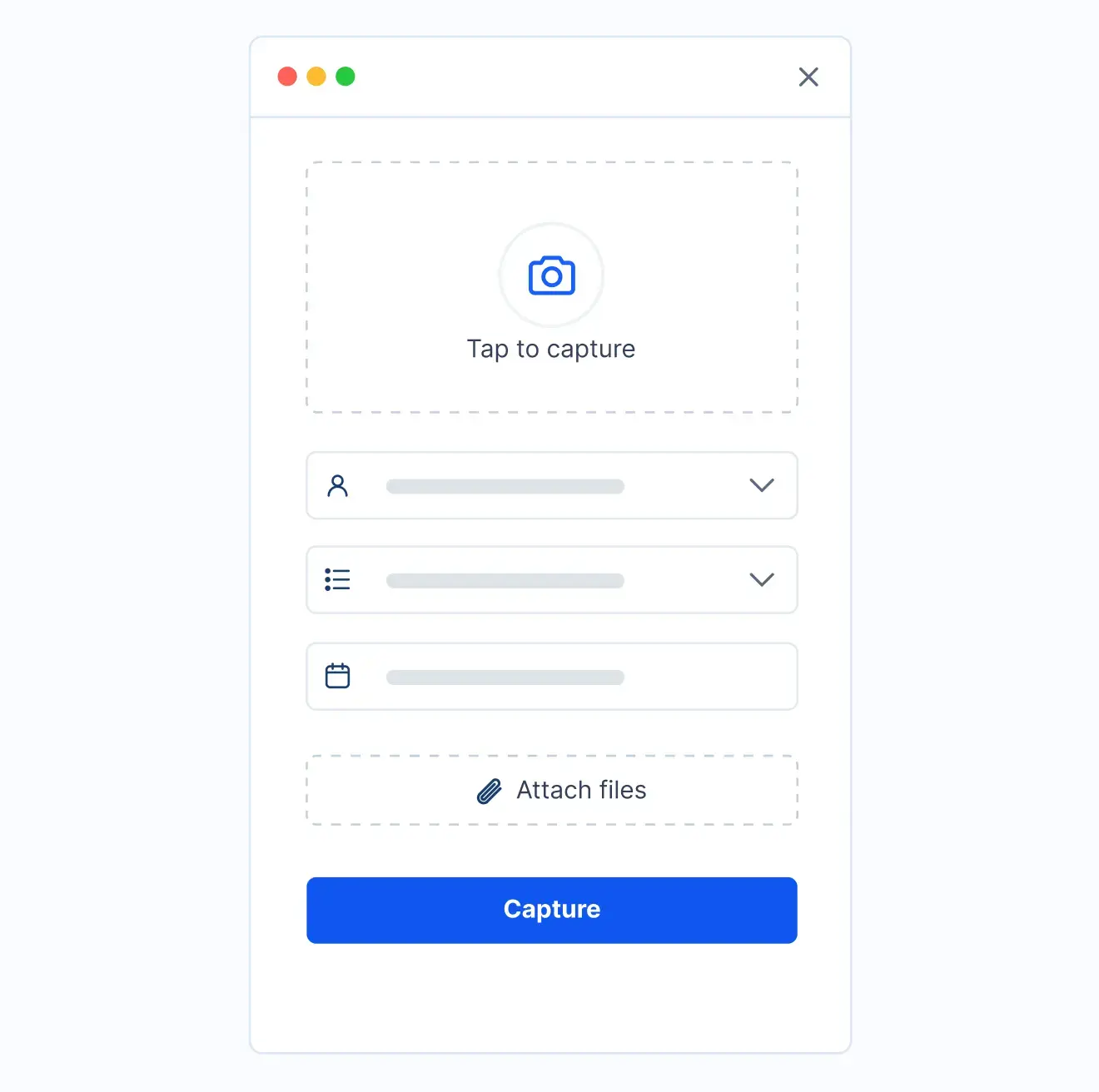
A flagged compressor trip or pressure deviation is read from the control system through an integration.
Assess
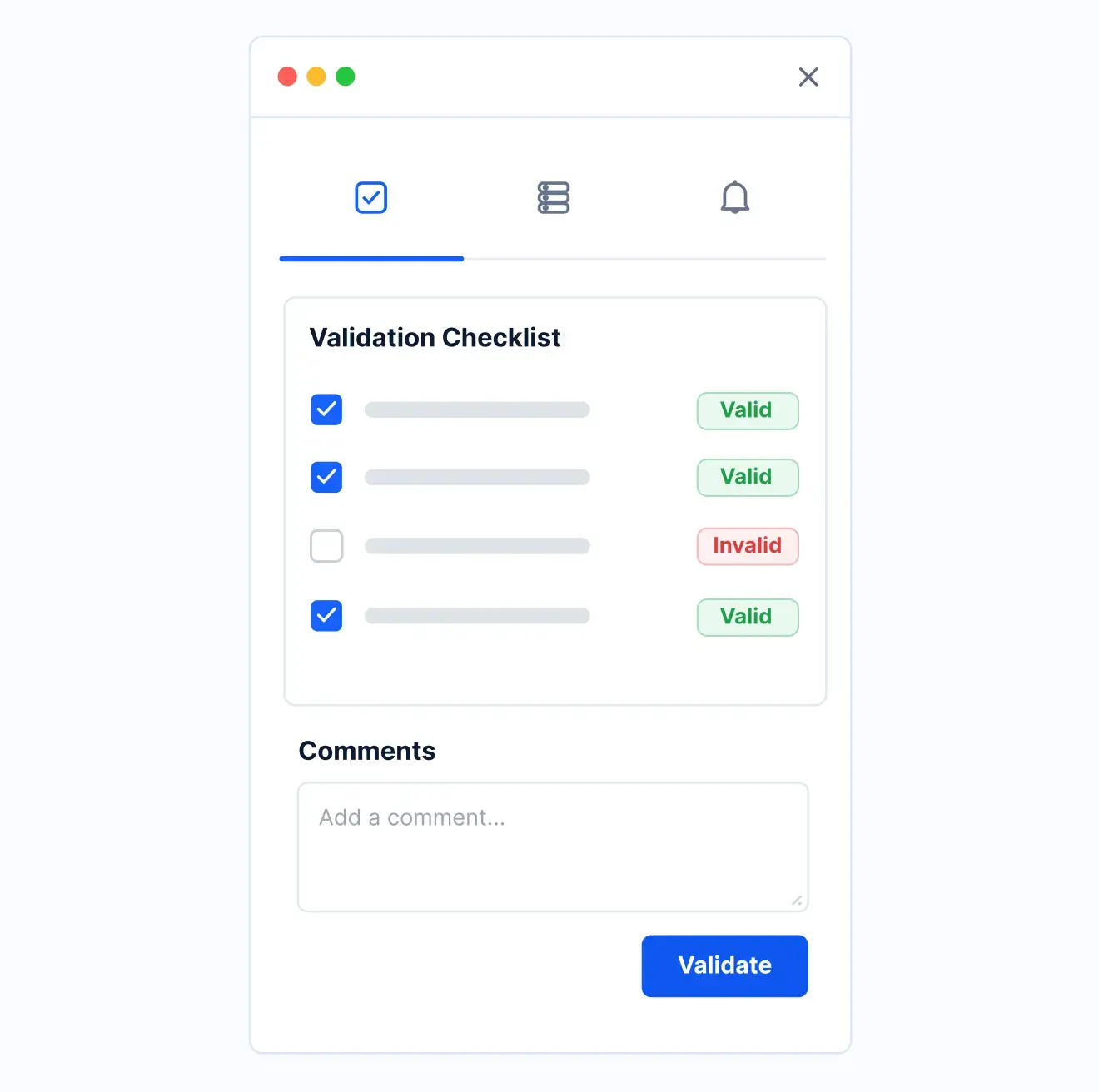
The event is classified automatically by type and severity as soon as it is captured.
Resolve
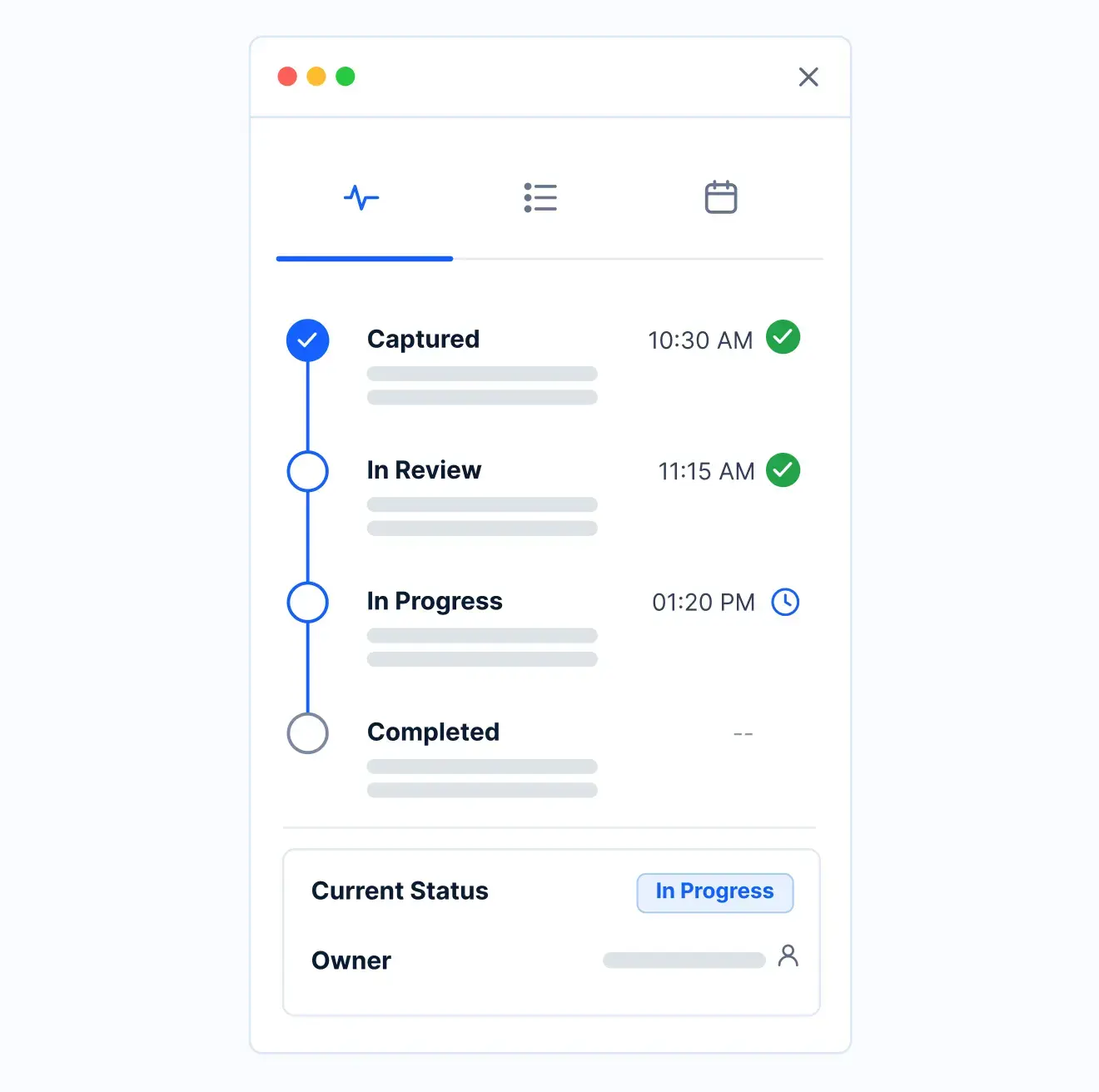
The event routes to whoever is responsible for that station by shift and on-call rotation, escalating if it goes unacknowledged.
Record
A documented sign-off clears the restart, and root cause and corrective action close the record, without any command ever written back to the control system.
What changes when compression station exception handling runs on Kissflow
| Process | Before Kissflow | On Kissflow |
|---|---|---|
| Trip notification | Whoever happens to see the SCADA alarm | Read from the control system and routed automatically |
| Escalation | Depends on who's awake and near a phone | A defined on-call chain by shift and station |
| Restart approval | An operator resets the unit and moves on | A required, documented sign-off before restart |
| Root cause capture | Recalled from memory hours or days later | Captured as part of closing the event |
| Repeat trip visibility | Noticed after the third occurrence, if at all | Surfaced in a reliability trend report |
| Control system boundary | Unclear who can act inside SCADA | Kissflow stays read-only; SCADA remains the control layer |
Reads flagged deviations from your SCADA or control system; Kissflow never writes a command back into it
Kissflow runs the classification, escalation, and restart-approval workflow on top of what your control system flags. Your SCADA and control system stay the system of record and the control layer.
.svg)



.svg)
.svg)
.svg)
.svg)

.svg)
.svg)
.svg)
.svg)
.svg)

.svg)

.svg)

.svg)
.svg)
.svg)
.svg)
.svg)
.svg)
.svg)
.svg)
.svg)

.svg)
Built for how a compression station trip actually gets handled
Escalation that doesn't depend on who's awake
A defined on-call chain routes the event by station and shift.
Restart requires a documented sign-off
A unit doesn't come back online on an operator's own call alone.
Root cause captured while it's fresh
The workflow prompts for what happened before the details fade.
Live in weeks
Configure stations and severity tiers in the visual builder, or describe the use case to the AI Builder.
Governed from day one
Role-based access and a full audit trail on every event and approval.
A clear boundary with SCADA
Kissflow reads flagged deviations; it never issues a command into the control system.
Related apps
SCADA Exception Response Workflow
Run the general exception layer for any control-system tag exceedance across the facility.
Critical Equipment Downtime Log
Track equipment availability and repair performance across every asset, not just compression units.
Refit & Maintenance App
Coordinate a bounded overhaul project for a mobile or marine asset when a trip points to a deeper issue.
We help midstream operators turn a two-a.m. trip into a documented decision
.gif)

“If a company cannot enable everybody to use AI, they will never get the true benefit of AI. Platforms like Kissflow allow us to put that capability in the hands of our users in a safe way.”
Vagesh Dave
GVP & CIO at McDermott International, Ltd
See The Full Story

“Advanced automation of all processes is easy to set up. I cannot imagine how to manage workflows without this software.”
Tanay Tiwary
Global Head - Digitalization & Business Improvement
See the Full Story

“Kissflow supports rapid application development by building a working application prototype in the shortest amount of time.”
Maria Theresa Cabigon
CIO, SN Aboitiz Power Group
See The Full Story
See what Kissflow can do for you
Talk to usGot questions? We're here to help.
Get SupportNo. Kissflow reads a flagged deviation or trip from your SCADA or control system through a read-only integration and runs the human workflow around it. It never issues a command back into the control system.
SCADA Exception Response Workflow is the general layer for any tag exceedance across your control system. This app is scoped to compression station equipment specifically: unit trips, vibration alarms, and discharge pressure deviations.
Whoever you configure, typically the on-call operator or a reliability engineer, depending on the severity classification.
Yes. Escalation routing is configured by station and by your on-call rotation, so an event reaches whoever is actually responsible at that hour.
Yes. The trend and reliability reporting module surfaces repeat events by station and equipment so a pattern doesn't go unnoticed.
Yes, it's a required step, along with whatever corrective action follows, before the event is marked complete.
Configuration and AI-assisted app generation move delivery from a multi-month program to a matter of weeks.
Kissflow is certified to SOC 1, SOC 2, SOC 3, and ISO/IEC 27001, with role-based access and a full audit log on every event and approval.