Chemical Spill Response Software Tied to the SDS Record
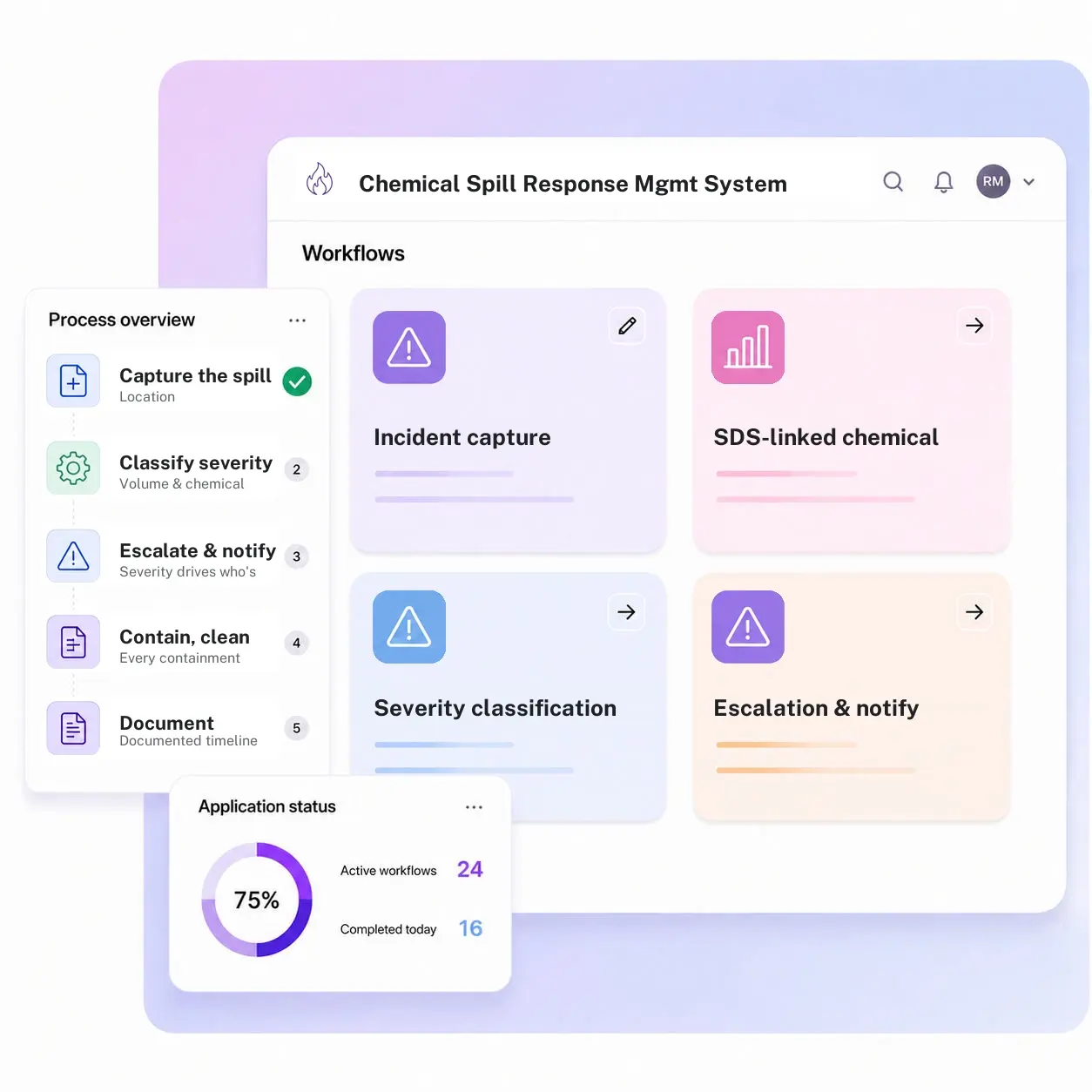
Kissflow links a chemical spill report straight to its safety data sheet, classifies severity by volume and hazard class, starts the regulatory notification clock automatically, and tracks containment, cleanup, and disposal through to a documented closure a regulator can review.
Trusted by energy operators worldwide






Five gallons on a concrete pad and five hundred gallons headed for a drainage ditch trigger the same first phone call and two very different responses after it.
Containment and notification come first in a chemical spill response. From there, the path depends on volume, the chemical involved, and where it's headed, whether it stays on a pad or reaches soil or water, and every one of those decisions has a regulatory clock running against it. A phone tree can get the first call made. It can't confirm which safety data sheet applies to the chemical on the ground, log containment steps as they happen instead of from memory afterward, tell a responder who needs to be notified at this severity level, or show a regulator which notification deadlines were met and when.
Kissflow runs chemical spill response as an exception workflow rather than a phone tree: incident capture from the scene linked directly to the chemical's SDS record, a severity classification driven by volume, hazard class, and destination, automatic escalation and notification the moment severity is set, a containment and cleanup workflow that logs every step as it happens, and regulatory reporting that documents the full timeline from first call to closure.
Where a spill response loses time in the first critical minutes
The SDS isn't linked to the response
Responders look up chemical properties separately from the incident record, costing time in the first critical minutes.
Severity gets judged inconsistently
One responder's minor spill is another's reportable release, with no shared classification driving the response.
Notification deadlines get missed
Regulatory notification windows tied to spill volume and chemical class aren't tracked against the clock.
Cleanup and closure aren't documented
The spill gets cleaned up, but there's no record connecting the containment steps to final closure and disposal.
Six modules. Every spill tied to its hazard data from the first report.
Every module ships with default forms, routing, and dashboards. Configure each one to your chemical inventory and notification rules.
Incident capture
A spill is logged with its location, estimated volume, and the chemical involved, captured from a phone at the scene as it happens.
SDS-linked chemical records
The incident links directly to the safety data sheet for the chemical, so responders aren't hunting a binder while the spill spreads.
Severity classification
Volume, chemical hazard class, and destination (contained versus reaching water or soil) drive a consistent severity rating.
Escalation and notification
Severity determines who's notified and how fast, with regulatory notification deadlines tracked automatically.
Containment and cleanup workflow
Containment, cleanup, and disposal steps are logged against the incident as they happen, not reconstructed afterward.
Regulatory reporting
A documented timeline of notification, containment, and closure, ready for a regulator or an internal review.
From request to system of record in four steps
Report
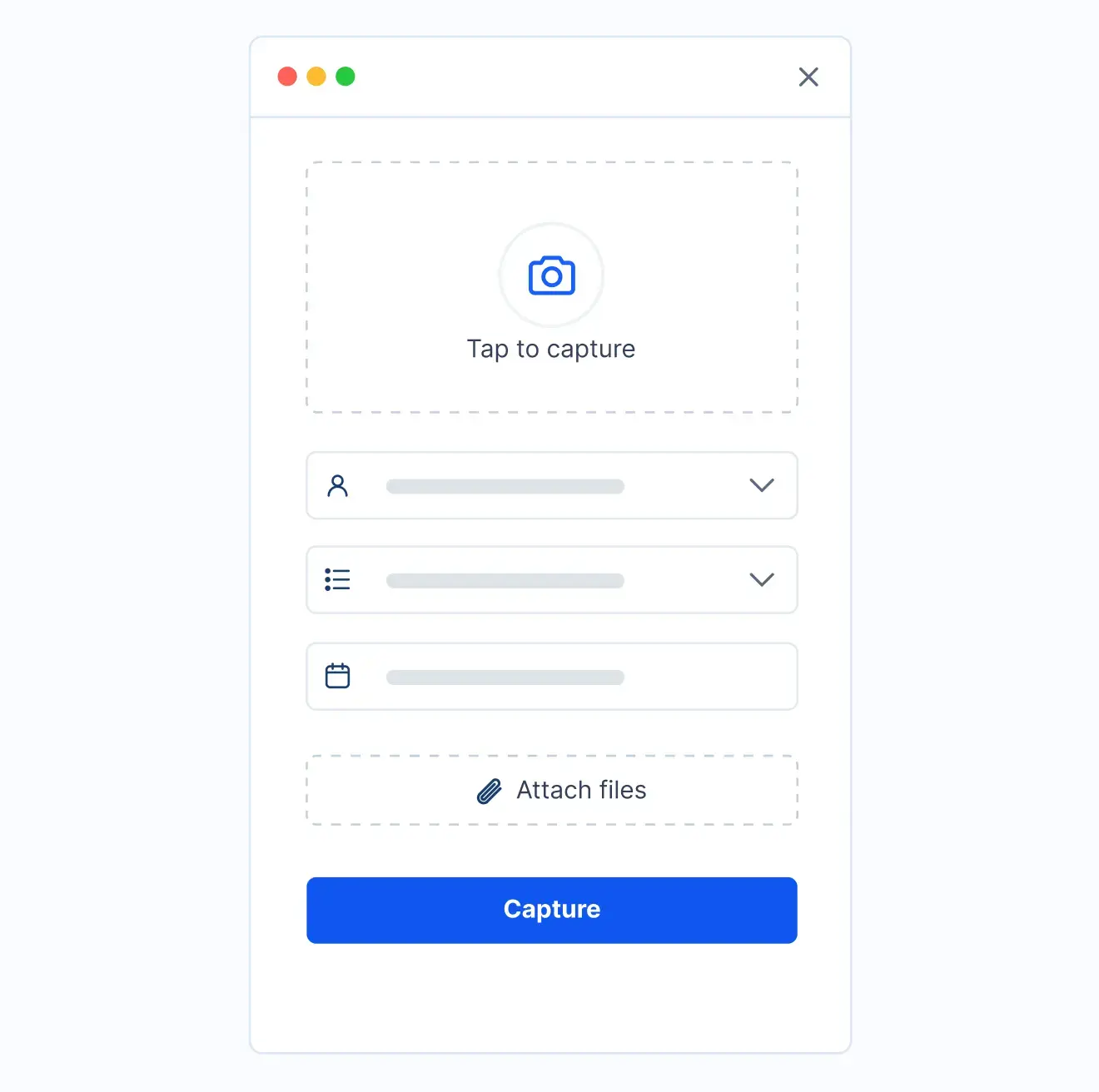
Location, volume, and chemical are logged from the scene and linked to the SDS record.
Assess
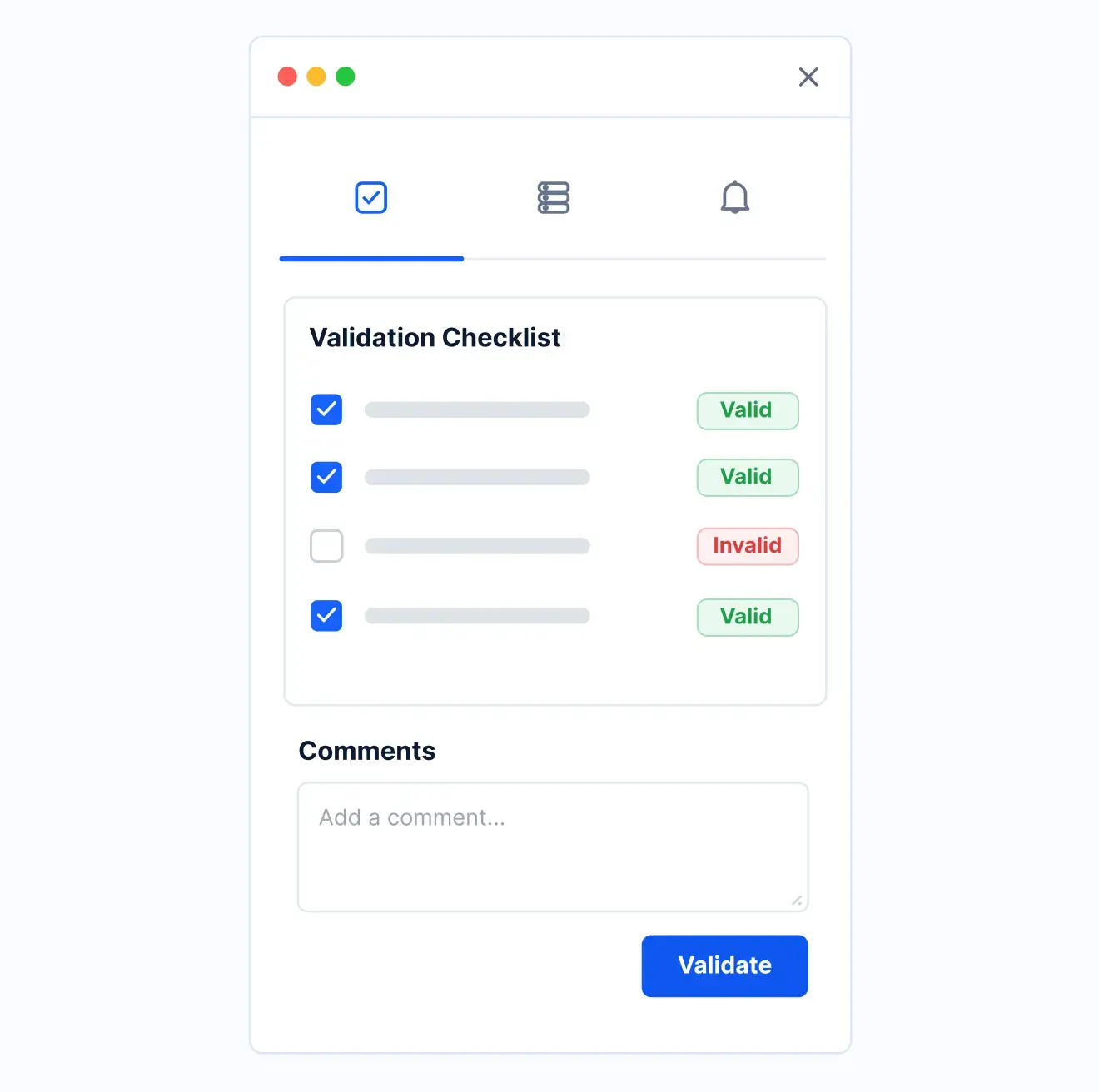
Volume and chemical hazard class set the severity rating and the response required.
Resolve
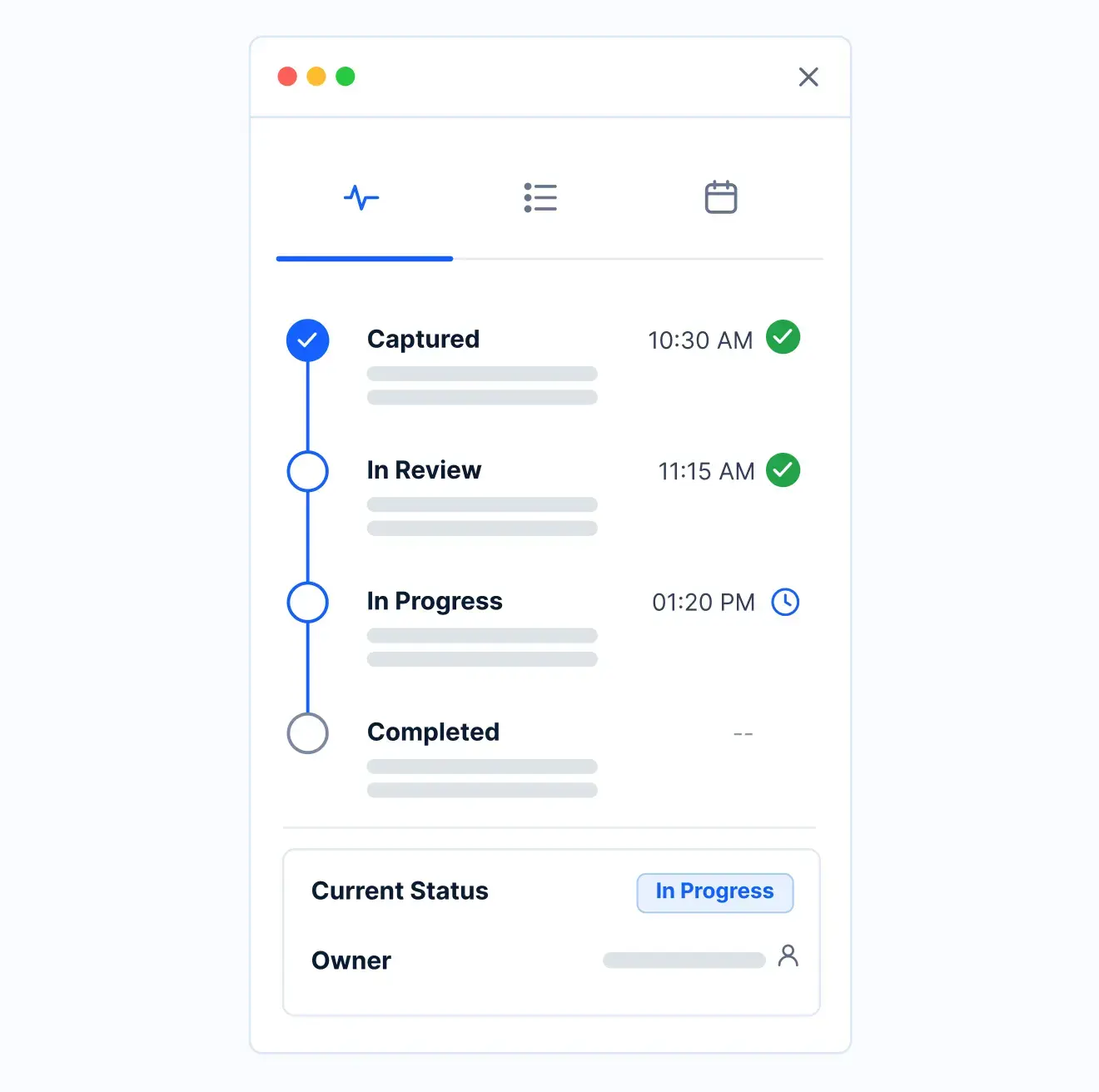
Severity drives who is notified and starts the regulatory notification clock, and every containment and cleanup step is logged.
Record
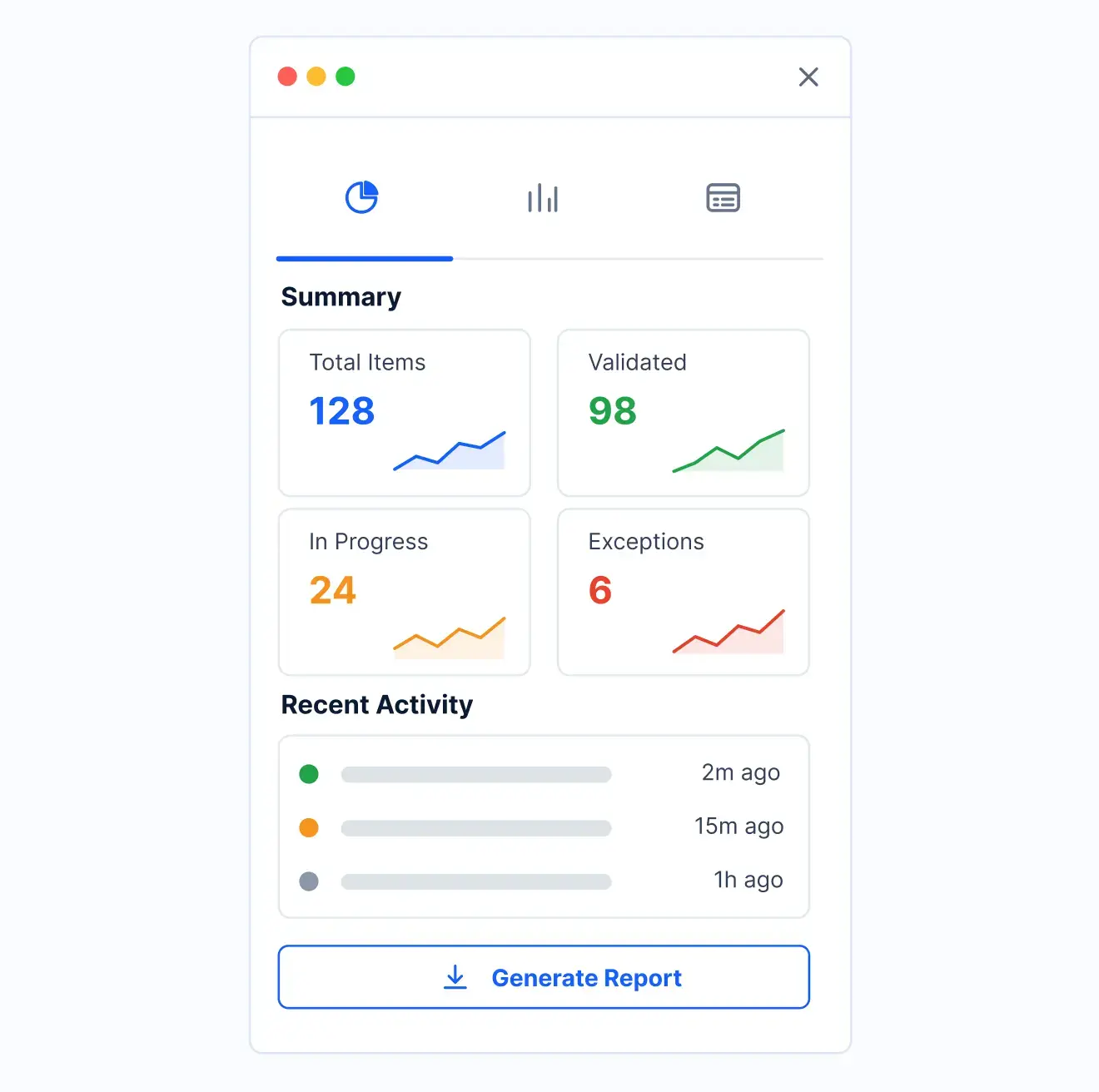
The incident closes with a documented, regulatory-ready timeline.
What changes when spill response runs on Kissflow
| Process | Before Kissflow | On Kissflow |
|---|---|---|
| Incident capture | Reported over radio, details reconstructed later | Logged from the scene with volume and chemical on record |
| SDS lookup | A separate step, costing time in the first minutes | Linked directly to the incident record |
| Severity classification | Judged inconsistently by whoever responds | Driven by volume and hazard class, applied the same way every time |
| Regulatory notification | Tracked on someone's memory of the deadline | Started automatically based on classification |
| Containment steps | Done, then described verbally after the fact | Logged as they happen against the incident |
| Regulatory reporting | Reconstructed from notes for a regulator's request | A documented timeline, ready to produce |
Connects to your SDS/chemical inventory system and EHS platform; those stay the systems of record for chemical data
Kissflow doesn't replace your SDS management system. It runs the incident capture, classification, escalation, and closure workflow linked to the chemical data those systems already hold.
.svg)



.svg)
.svg)
.svg)
.svg)

.svg)
.svg)
.svg)
.svg)
.svg)

.svg)

.svg)

.svg)
.svg)
.svg)
.svg)
.svg)
.svg)
.svg)
.svg)
.svg)

.svg)
Built for the first critical minutes of a spill
SDS linked, not looked up separately
The response starts with the chemical's hazard data already attached to the incident.
Notification on a clock, not a memory
Regulatory deadlines start automatically based on severity, not whoever remembers to check.
Containment logged as it happens
Every step from first containment to final disposal is on the record, not reconstructed afterward.
Live in weeks
Configure severity classification and notification rules in the visual builder, or describe the use case to the AI Builder.
Governed from day one
Role-based access and a complete audit log are built into every incident.
Audit-ready by default
A documented timeline is available the moment a regulator or an internal review asks for it.
Related apps
Environmental Exception Response Tracker
Manage non-air-media exceptions like discharge and waste that don't involve a chemical spill specifically.
Flare Monitoring System
Reading capture, threshold exception flagging, and a repair-to-regulatory-reporting workflow for flare stacks.
Emergency Response App
Coordinate site-wide emergency muster and accountability when a spill escalates into a declared emergency.
We help HSE teams document a spill response while the clock is still running
.gif)

“If a company cannot enable everybody to use AI, they will never get the true benefit of AI. Platforms like Kissflow allow us to put that capability in the hands of our users in a safe way.”
Vagesh Dave
GVP & CIO at McDermott International, Ltd
See The Full Story

“Advanced automation of all processes is easy to set up. I cannot imagine how to manage workflows without this software.”
Tanay Tiwary
Global Head - Digitalization & Business Improvement
See the Full Story

“Kissflow supports rapid application development by building a working application prototype in the shortest amount of time.”
Maria Theresa Cabigon
CIO, SN Aboitiz Power Group
See The Full Story
See what Kissflow can do for you
Talk to usGot questions? We're here to help.
Get SupportEnvironmental Exception Response Tracker handles non-air-media exceptions broadly, spills, discharge, and waste, with a notification-then-remediation path. Chemical Spill Response Management System is scoped specifically to a chemical spill, linked to the chemical's SDS record from the moment it's reported, with severity classification built around volume and hazard class.
No. Your SDS or chemical inventory system stays the source of chemical hazard data. This app links the spill incident to that data instead of requiring a separate lookup.
By volume and the chemical's hazard class, along with whether the spill reached soil, water, or stayed contained, driving a consistent response rather than individual judgment.
Severity classification starts the applicable notification clock automatically, so a deadline doesn't depend on someone remembering it.
Yes, the capture form works from a mobile device at the scene.
The incident can hand off to the Emergency Response App for site-wide muster and accountability, while this app continues tracking containment, cleanup, and regulatory closure.
Configuration and AI-assisted app generation move delivery from a multi-month program to a matter of weeks.
Kissflow is certified to SOC 1, SOC 2, SOC 3, and ISO/IEC 27001, with role-based access and a full audit log on every incident.