Safety Critical Equipment Compliance Tracker
A safety critical equipment compliance tracker holds the verification status of every safety critical element against its performance standard, records impairments and deferrals with their compensating controls, and reports assurance status by asset. Kissflow runs that register alongside your maintenance system.

Trusted by energy operators worldwide






A register that answers the question before it is asked
Every operating asset carries a list of equipment whose failure would matter more than the rest: fire and gas detection, emergency shutdown, relief devices, blowdown, containment, escape and evacuation. Each one has a performance standard and a verification regime behind it. What is usually hard is not doing the verification. It is answering, on any given morning, how many safety critical elements are currently impaired, what compensates for each, and how many verifications are past due.
Kissflow holds that register as a governed application. Each element carries its performance standard, its verification regime, and its current status. When an element is impaired, the impairment is recorded with its compensating control, its authorized duration, and its approver, and it stays visible until it is restored rather than expiring quietly. Deferrals against a verification schedule are authorized explicitly rather than absorbed into a maintenance backlog.
The register is the assurance record. When a regulator, a verifier, or a board asks about safety critical element status, the answer is a report drawn from the same data the operation uses daily, not a reconciliation exercise across the maintenance system and three spreadsheets.
Impairment status is not visible daily
How many safety critical elements are impaired right now is a question that takes a morning to answer, which means it is rarely asked.
Compensating controls outlive their authorization
An impairment authorized for seventy-two hours quietly becomes a standing condition because nothing tracked when the authorization lapsed.
Verification deferrals hide in the maintenance backlog
A verification pushed to the next window looks identical to any other deferred work order, so the assurance consequence is invisible.
Assurance reporting is a reconciliation exercise
The status a verifier receives is assembled from the maintenance system and several spreadsheets, and rarely matches what the asset would say.
Six process modules
Every module ships with default element types, performance standards, verification regimes, and dashboards. Configure each one to your assurance scheme in the visual builder.
Safety critical element register
The master record of every safety critical element by asset, system, and tag, carrying its performance standard, criticality, and verification regime.
Verification scheduling
The verification regime per element, with due dates, assignment, and completion recorded against the performance standard it demonstrates.
Impairment management
Impairments recorded with their compensating control, authorized duration, and named approver, staying visible until restoration rather than lapsing silently.
Deferral authorization
Deferrals against a verification schedule authorized explicitly by a named approver with a stated basis, rather than absorbed into the maintenance backlog.
Live assurance dashboard
A live view of impaired elements, overdue verifications, and expiring authorizations by asset, system, and criticality.
Assurance reporting
Reports drawn from the same register the operation uses daily, for internal verification, regulatory submission, and board assurance.
From request to system of record in four steps
Capture
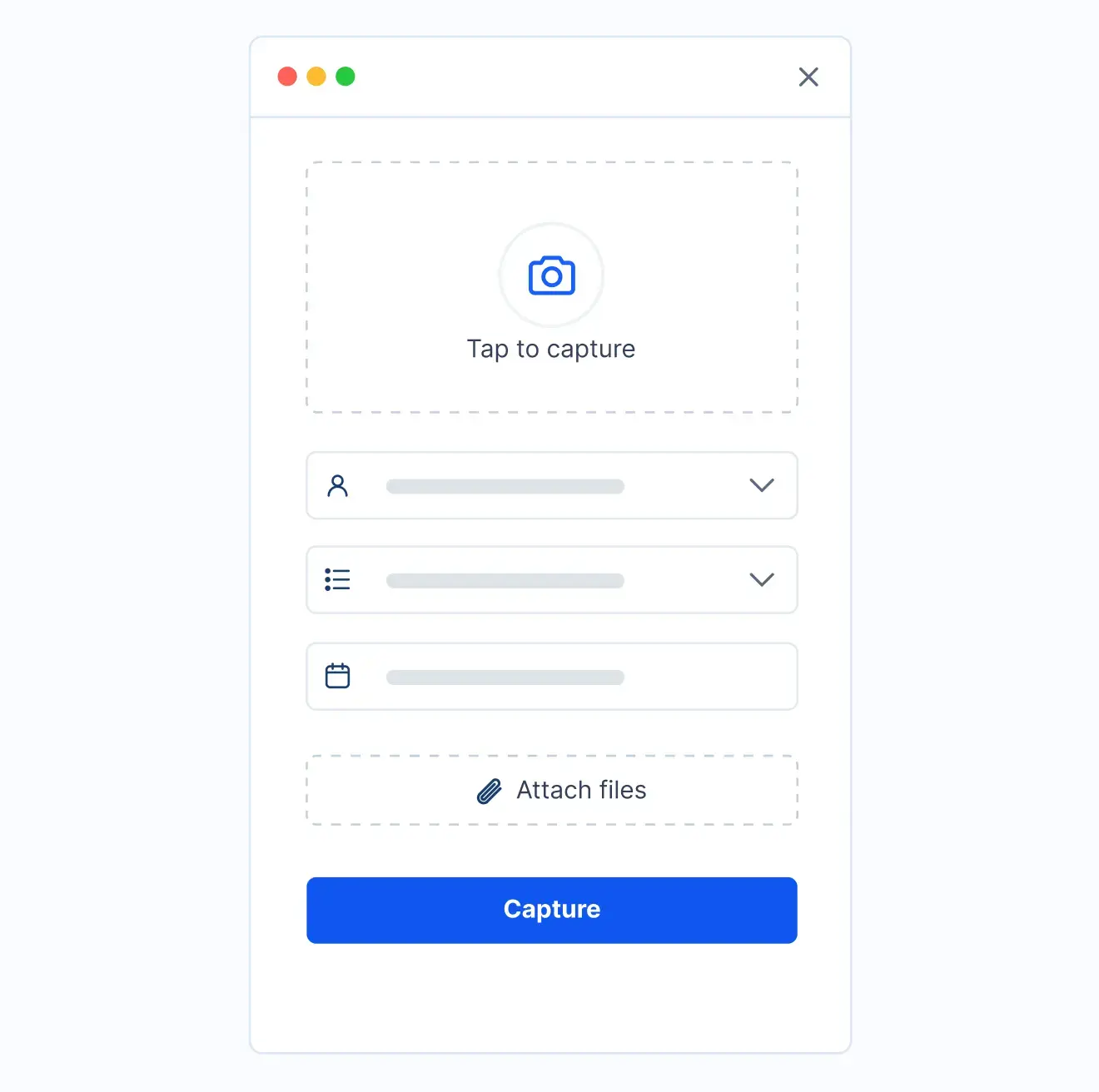
Verification results, impairment notifications, and restoration confirmations are recorded against the safety critical element and the performance standard they demonstrate.
Validate
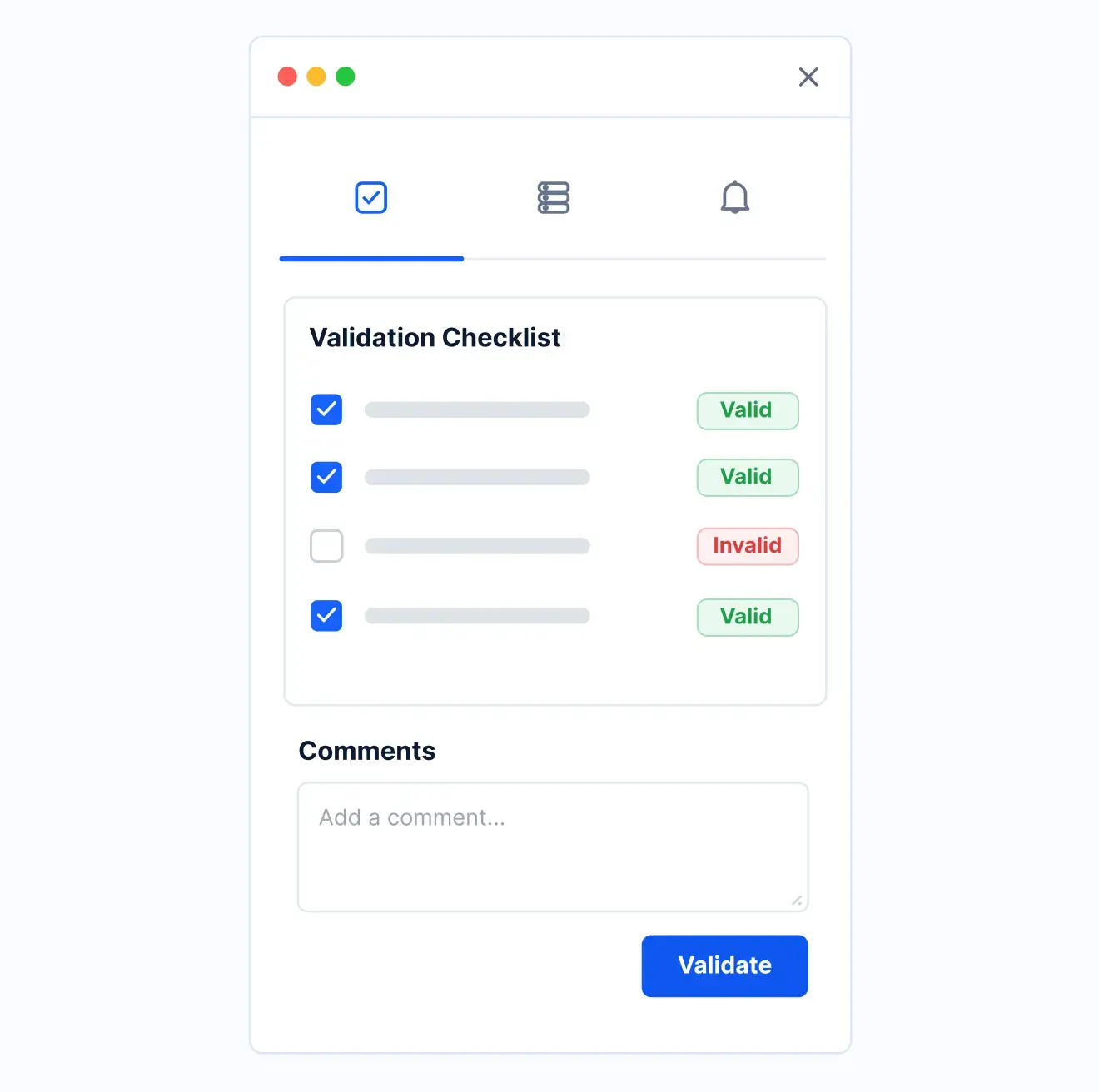
Each entry is checked against the element's performance standard and verification regime as it is logged, so a result that does not demonstrate the standard is not accepted as one that does.
Track
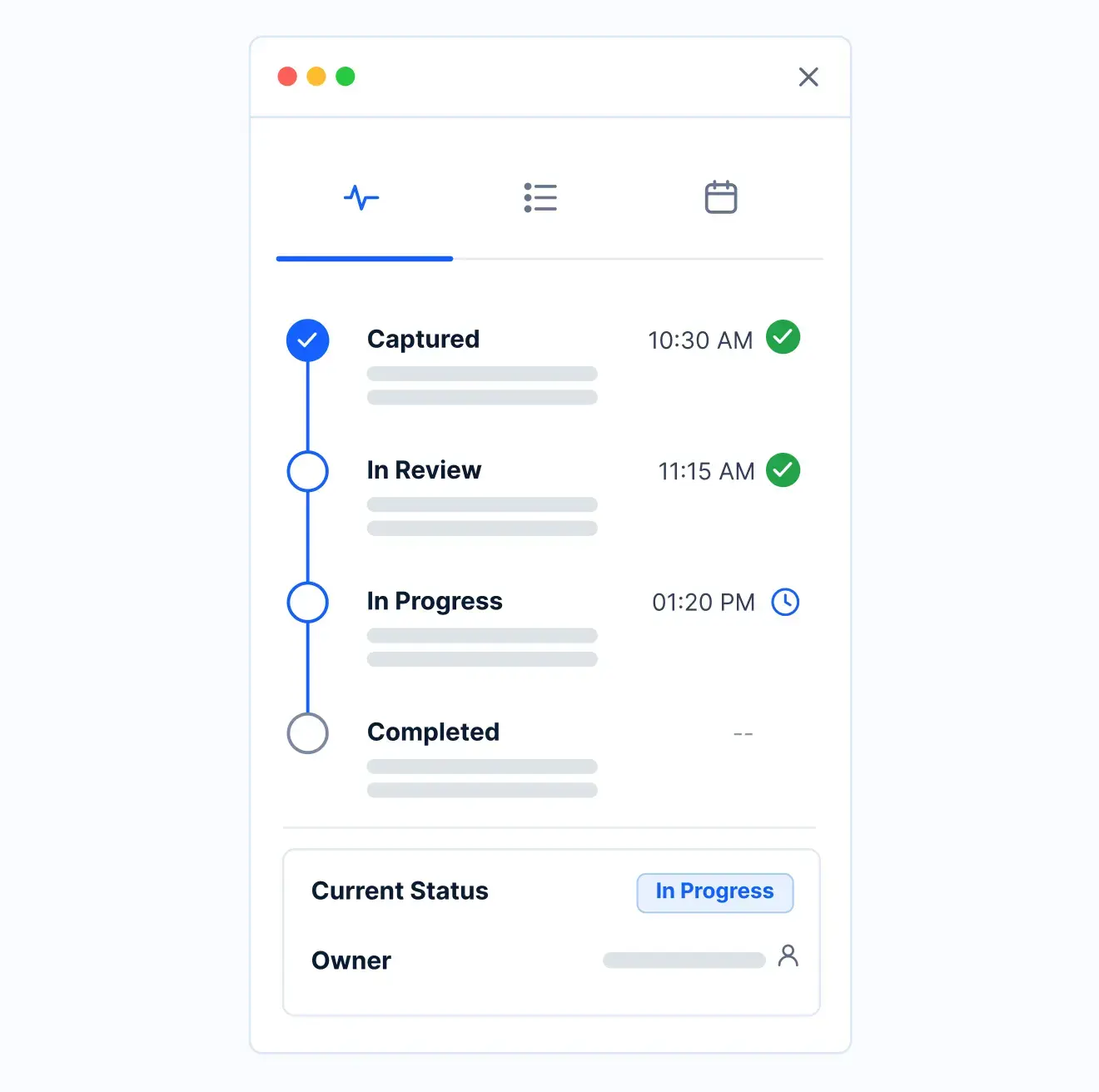
The register stays live, and impaired elements, expiring impairment authorizations, and overdue verifications surface as exceptions rather than waiting for a monthly review.
Report
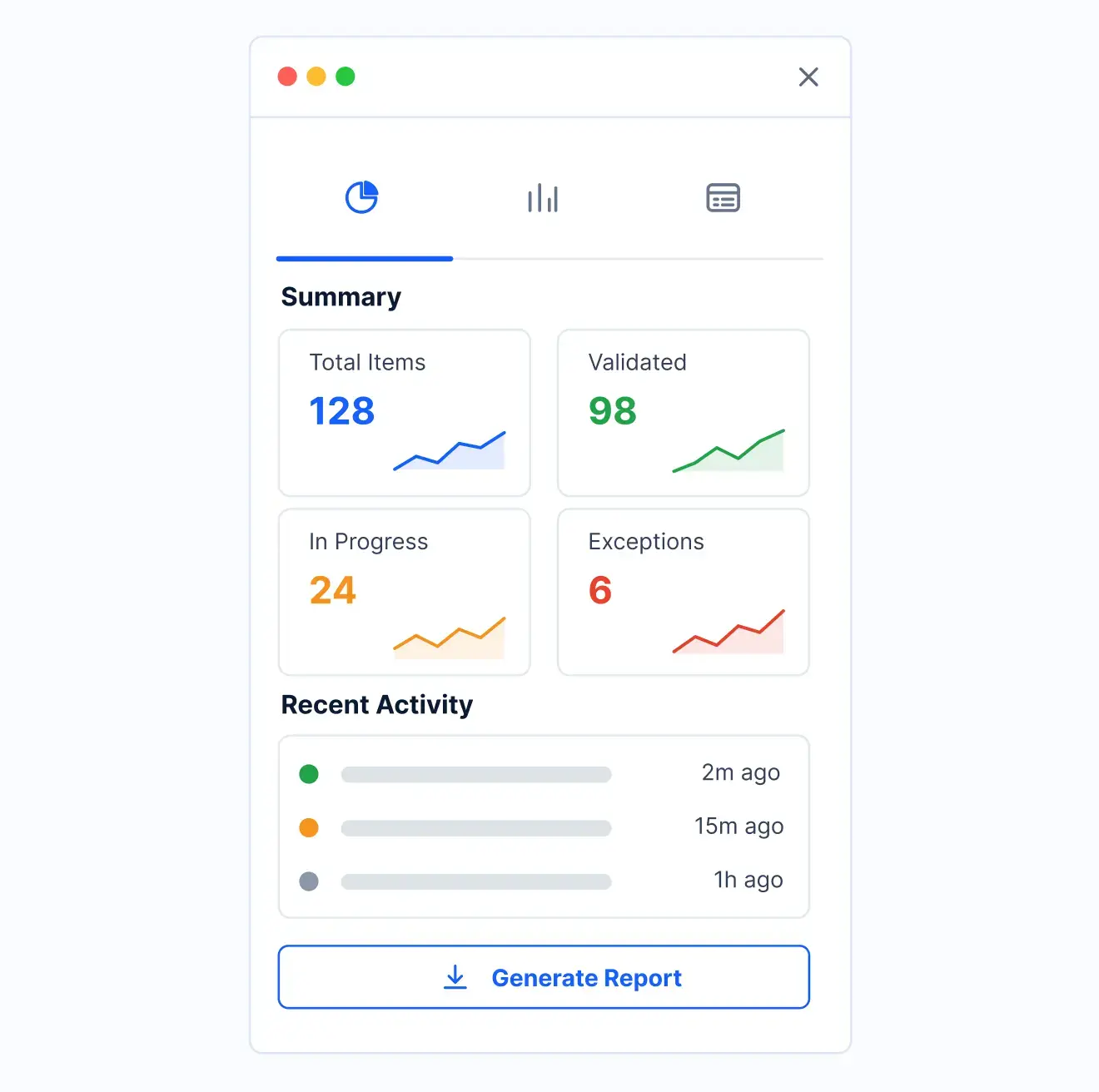
The register is itself the assurance record, so internal verification, regulatory, and board reporting draw straight from the same data the operation uses daily.
What changes when safety critical element assurance runs on Kissflow
| Process | Before Kissflow | On Kissflow |
|---|---|---|
| Impairment visibility | Answered by assembling several sources | Live count by asset, system, and criticality |
| Compensating controls | Recorded informally and remembered | Held against the impairment with an authorized duration |
| Authorization expiry | Lapses without anyone noticing | Surfaces as an exception before it expires |
| Verification deferrals | Absorbed into the maintenance backlog | Authorized explicitly with a stated basis |
| Performance standards | Held in a document nobody opens | Carried on the element record the work runs against |
| Assurance reporting | Reconciled across systems before submission | Drawn from the register the operation uses daily |
Connects to the systems your operation already runs on
.svg)



.svg)
.svg)
.svg)
.svg)

.svg)
.svg)
.svg)
.svg)
.svg)

.svg)

.svg)

.svg)
.svg)
.svg)
.svg)
.svg)
.svg)
.svg)
.svg)
.svg)

.svg)
Built for assurance that has to hold up under verification
The daily question has a daily answer
Impaired elements and expiring authorizations are visible live, not assembled when someone asks.
Impairments cannot lapse quietly
Authorized duration and compensating control are held with the impairment and surface before the authorization expires.
Deferrals are decisions, not backlog
A verification pushed to the next window is authorized explicitly by a named approver rather than disappearing into a work order queue.
An assurance layer, not another EAM
Your maintenance system executes the work. Kissflow holds the assurance status, the impairment record, and the performance standard behind each element.
Governed from day one
Single sign-on, role-based access, and a timestamped audit log are how the app is built. Kissflow runs in the business-process layer, segmented from the OT and control network.
Live in weeks, not a program
Configure in the visual builder, or describe the scheme and let the AI Builder generate the app. Delivery moves from weeks to days.
Related apps
Safety audit action tracking
Route audit and inspection findings to named owners and track every corrective action to verified closure.
Preventive maintenance compliance tracking
Track PM compliance against schedule, with deferrals authorized and overdue work visible by asset.
High-risk activity approval
Route hot work, confined space, and isolation authorizations on risk tier with conflict checks.
We help process safety and integrity leaders answer the assurance question from live data
.gif)

“If a company cannot enable everybody to use AI, they will never get the true benefit of AI. Platforms like Kissflow allow us to put that capability in the hands of our users in a safe way.”
Vagesh Dave
GVP & CIO at McDermott International, Ltd
See The Full Story

“Advanced automation of all processes is easy to set up. I cannot imagine how to manage workflows without this software.”
Tanay Tiwary
Global Head - Digitalization & Business Improvement
See the Full Story

“Kissflow supports rapid application development by building a working application prototype in the shortest amount of time.”
Maria Theresa Cabigon
CIO, SN Aboitiz Power Group
See The Full Story
See what Kissflow can do for you
Talk to usGot questions? We're here to help.
Get SupportIt is a register holding every safety critical element with its performance standard, verification regime, and current status, including impairments with their compensating controls and any authorized deferrals against the verification schedule.
No. Your maintenance system plans and executes the work. Kissflow holds the assurance status, the performance standard, and the impairment record around it, connecting through APIs and integration connectors.
An impairment is recorded with its compensating control, its authorized duration, and a named approver, and stays visible on the assurance dashboard until restoration, with the authorization expiry surfacing as an exception.
Yes. Reporting draws from the same register the operation uses daily, so internal verification, regulatory submission, and board assurance are consistent with the operational view rather than reconciled against it.
Yes. Fields, categories, routing rules, and escalation thresholds are configured by the process owner in the visual builder, and every change is written to the same audit log as a manual edit.
No. Kissflow runs in the business-process layer alongside the systems you already own and connects to them through APIs and integration connectors. It does not replace your EHS suite, your ERP, or your maintenance system, and it does not operate inside the control system.
No. Kissflow AI maps natural language to platform metadata and produces an inspectable blueprint, so every app is auditable and the process owner can maintain it.
Kissflow is certified to SOC 1, SOC 2, SOC 3, ISO/IEC 27001, HIPAA, GDPR, and CCPA, hosted on Google Cloud with data residency in the US, EU, APAC, and Oceania.