Tank Level Monitoring Software for Every Site
Kissflow catches a tank level crossing a configured threshold, escalates it to the right on-shift lead or asset owner, and tracks the corrective action behind it, instead of leaving a level exception to whoever happens to notice the chart during a shift review.
Trusted by energy operators worldwide





A tank gauge shows one reading, the operator's logbook shows another, and nobody reconciles the two until the delivery truck is already at the gate.
Two in the morning, a tank crosses its high-level mark, and nothing about that moment waits for the next shift review to notice. Gauge charts, manual dips, and automatic tank gauge feeds are accurate at the moment they're taken and stale the moment conditions change afterward. A logbook can hold the number someone wrote down. It can't compare that number against a high-level threshold the instant it's crossed, route the exception to the right person, or show whether this tank has been trending toward a problem for a week.
The gap shows up as an overfill nobody caught in time, or a slow leak only noticed once the trend line has climbed for days unwatched. Each reading might get logged correctly on its own. What's missing is the layer that checks every reading against its tank's limits the moment it's captured and flags it before the chart becomes an incident report.
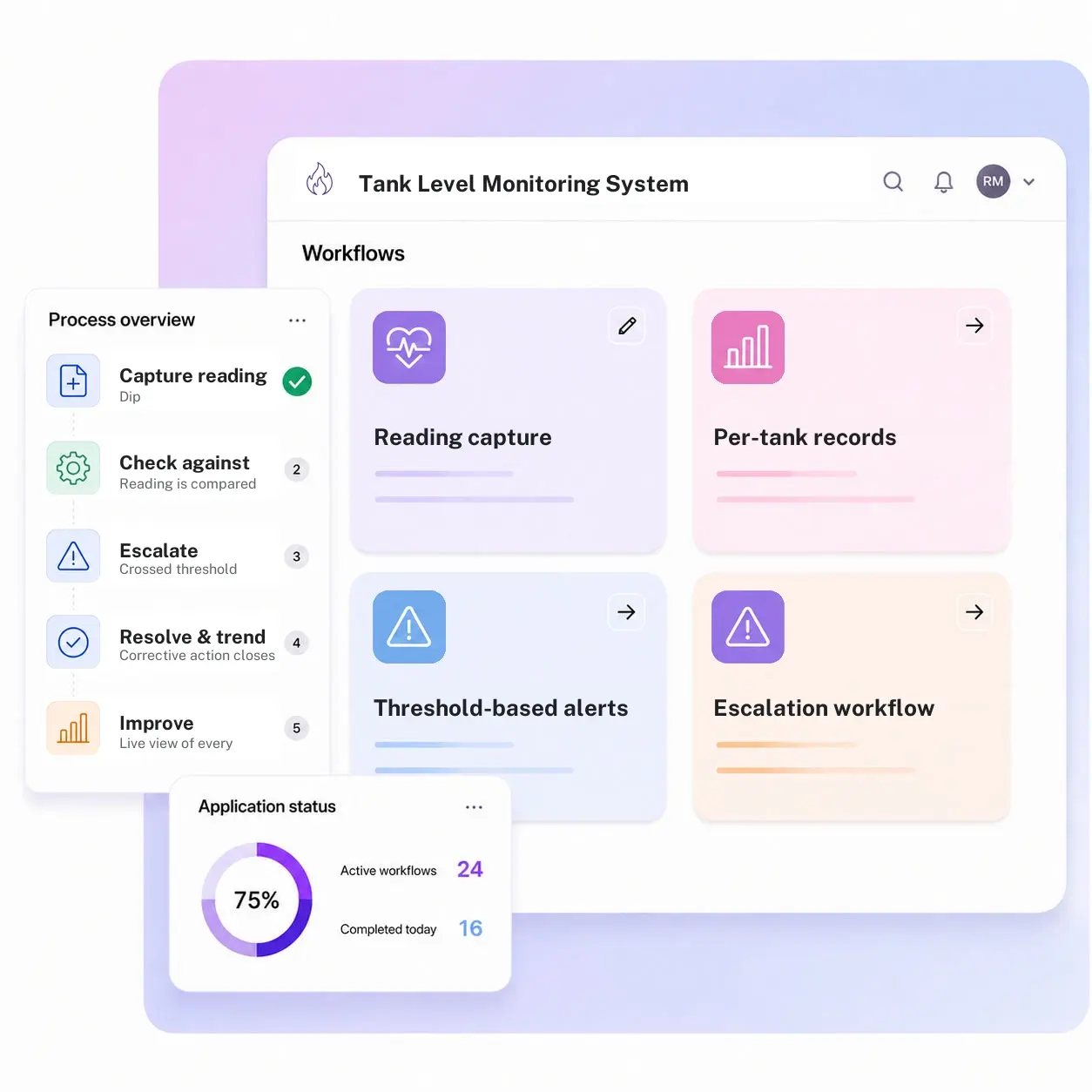
Kissflow runs tank level monitoring as an exception workflow: a capture form or feed for readings, a records dataset per tank, threshold alerts, an escalation workflow when a level crosses a limit, corrective action tracking, and a trend dashboard that shows the pattern before it becomes an incident.
Where tank level tracking breaks down between the gauge and the response
Readings live in isolation
A gauge chart or manual dip gets recorded, but nothing compares it against a threshold the moment it's entered.
Escalation depends on who's on shift
A high-level reading gets noticed only if the person on shift happens to check the right chart at the right time.
No trend visibility
A tank that's been creeping toward its high-level limit for days looks the same as a tank that just crossed it, because nothing tracks the pattern.
Corrective action isn't tracked
Someone adjusts a valve or calls for a pump-out, but there's no record connecting the exception to the action that closed it.
Six modules. Every reading tied to a threshold and a response.
Configure each module to your tanks, thresholds, and escalation chain.
Reading capture
Manual dips, gauge charts, or an automatic tank gauge feed enter through one structured form or integration per tank.
Per-tank records dataset
Every reading is tied to its tank, site, and product, building a searchable history instead of a stack of charts.
Threshold-based alerts
High-level, low-level, and rate-of-change thresholds trigger an alert the moment a reading crosses the line.
Escalation workflow
An unacknowledged exception escalates automatically to the next role in the chain, on a timer that doesn't depend on someone noticing.
Corrective action tracking
Every exception carries the action taken to resolve it, so a pump-out or valve adjustment is on record, not just remembered.
Trend and exception dashboard
A live view of every tank's trend line, open exceptions, and how often a given tank crosses its threshold.
From request to system of record in four steps
Capture
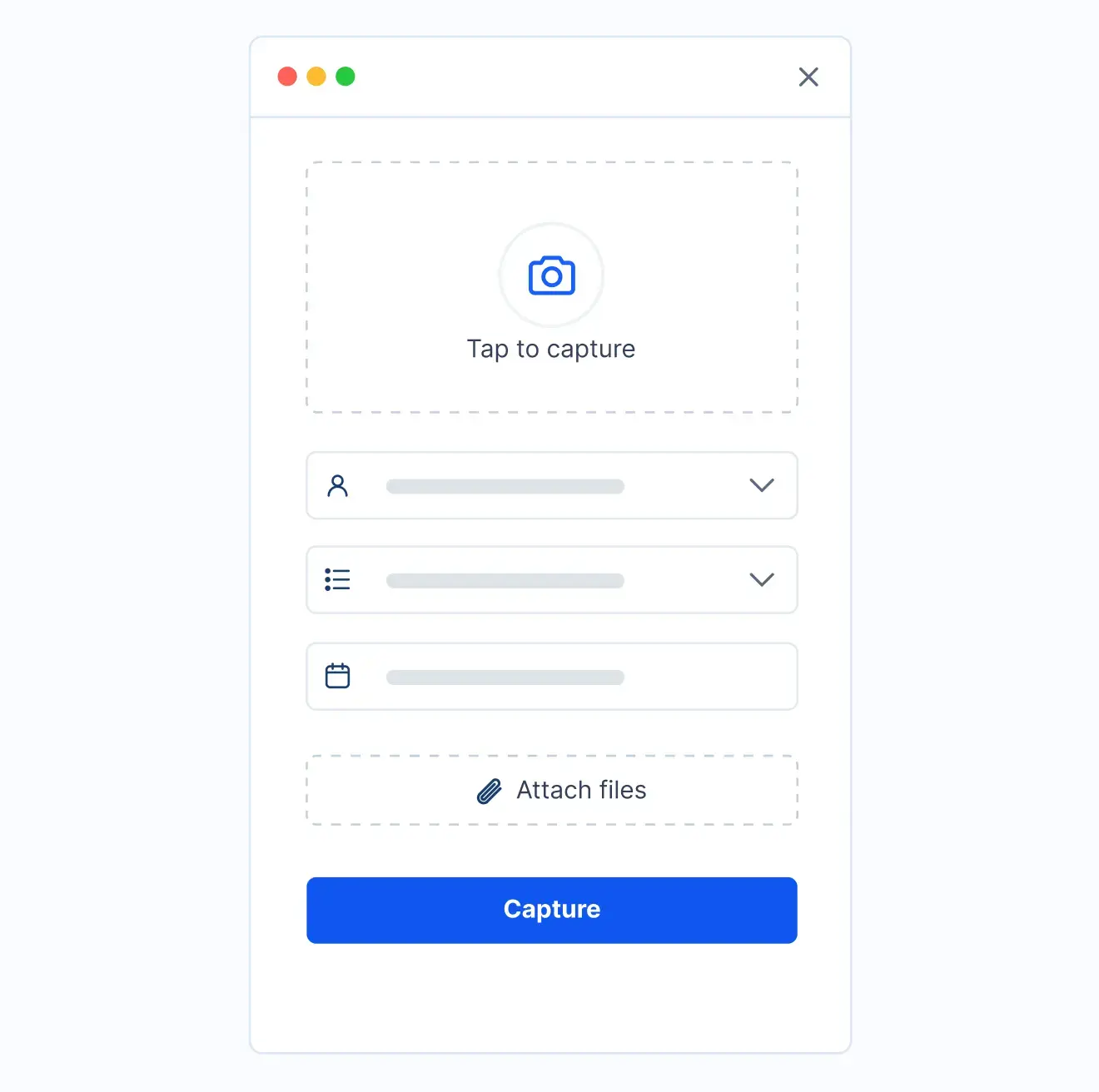
A dip, gauge chart, or ATG feed logs against the tank's record, with a timestamp and the person or system that captured it.
Validate
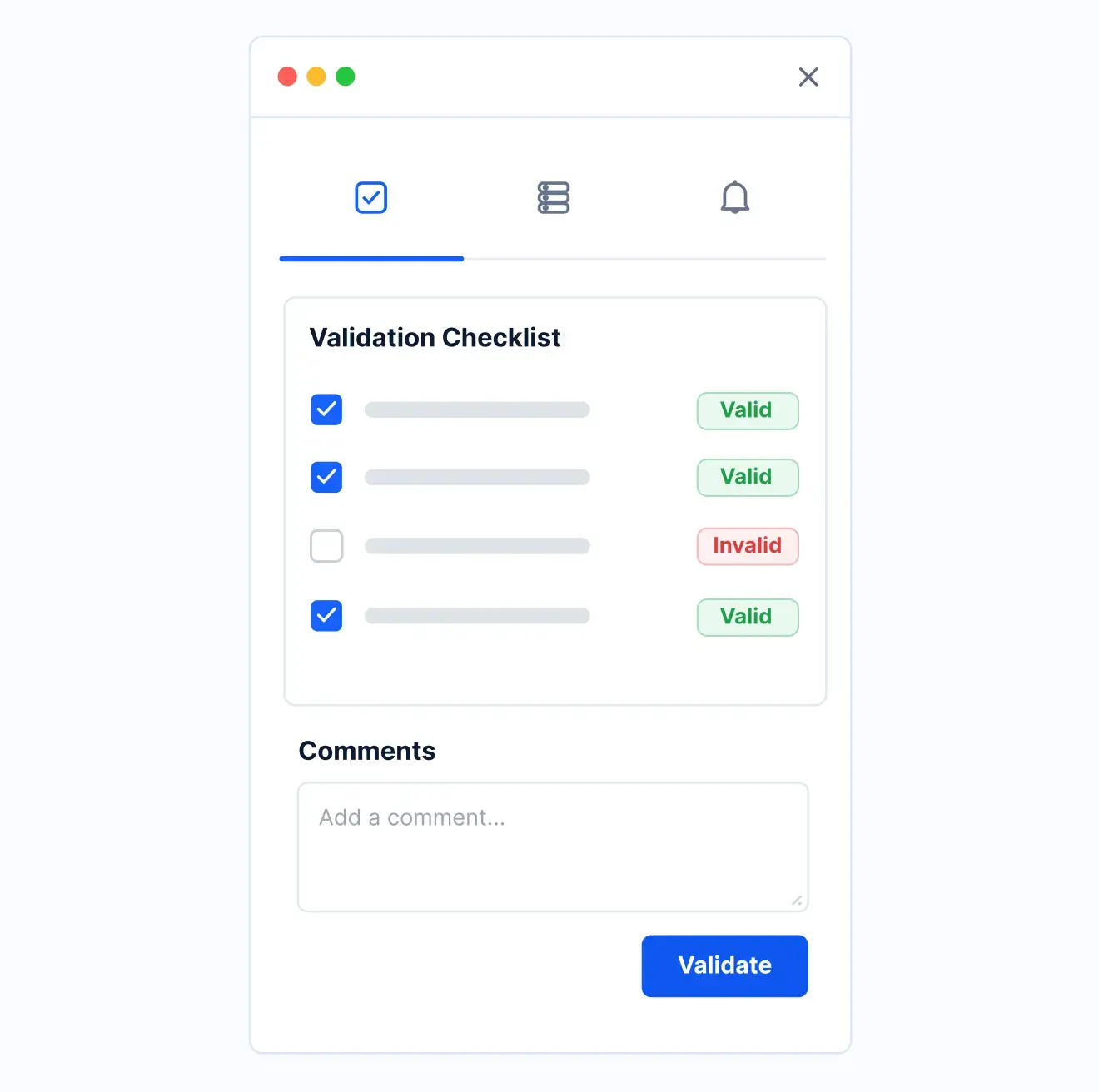
The reading is compared to the tank's configured limits the moment it lands, not on the next shift review.
Track
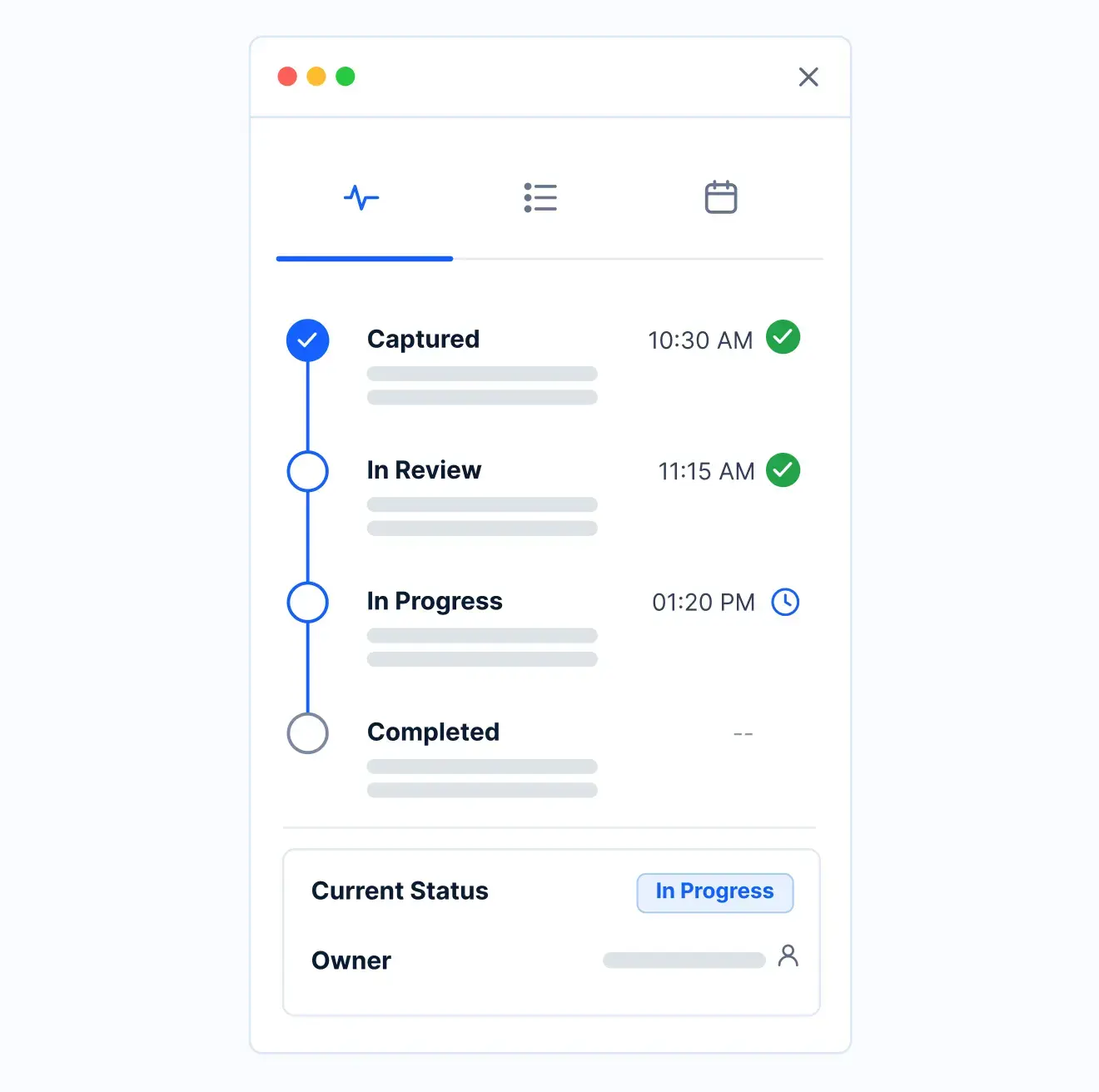
A crossed threshold routes to the on-shift lead or asset owner, escalates further if it is not acknowledged in time, and the corrective action closes the exception.
Report
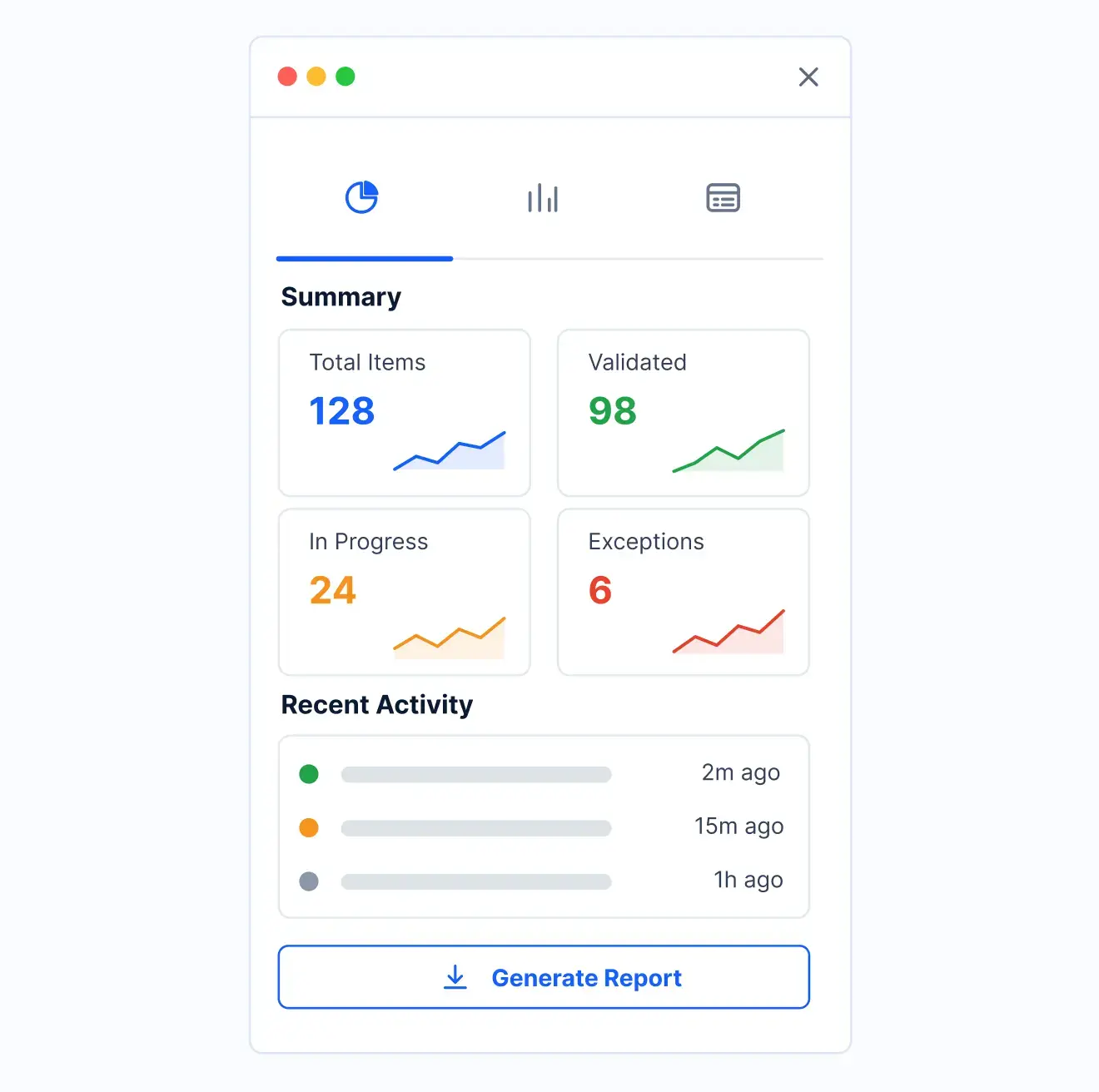
The reading joins the trend line for that tank, and the log is the system of record for levels across every site.
What changes when tank level tracking runs on Kissflow
| Process | Before Kissflow | On Kissflow |
|---|---|---|
| Reading capture | Manual dip or gauge chart written down and filed | Structured entry or ATG feed tied to the tank's record |
| Threshold checks | Compared against the limit whenever someone looks | Checked automatically the moment a reading lands |
| High-level alerts | Depend on who's on shift noticing the chart | Fire immediately and escalate on a timer if unacknowledged |
| Trend visibility | Invisible until a tank actually crosses its limit | Visible days ahead, on a live trend dashboard |
| Corrective action | Handled verbally, no record of what was done | Logged against the exception that triggered it |
| Multi-tank visibility | One chart per tank, no site-wide view | One dashboard across every tank on every site |
Connects to your automatic tank gauge (ATG) system or SCADA historian; the instrumentation stays the source of truth for live readings
Kissflow doesn't replace your ATG or SCADA system. It runs the threshold checking, escalation, and trend reporting layer on top of the readings those systems produce.
.svg)



.svg)
.svg)
.svg)
.svg)

.svg)
.svg)
.svg)
.svg)
.svg)

.svg)

.svg)

.svg)
.svg)
.svg)
.svg)
.svg)
.svg)
.svg)
.svg)
.svg)

.svg)
Built for how tank level exceptions actually get handled
Instant threshold checking
A reading is compared to its limit the second it's captured, not on the next shift's review.
Escalation that doesn't wait
An unacknowledged high-level alert moves up the chain automatically, on a timer.
Trend visibility before the crossing
A dashboard shows a tank creeping toward its limit days before it gets there.
Live in weeks
Configure thresholds and escalation rules in the visual builder, or describe the use case to the AI Builder.
Governed from day one
Role-based access and a full audit log are built into every reading and every exception.
One view across every tank
Operations, HSE, and asset owners see the same live picture instead of separate charts.
Related apps
Tank Inventory & Compliance App
Track testing calendars, SPCC plan reviews, and gauge-to-book inventory reconciliation for every tank.
Tank Farm Movement Logbook
Keep the operating line-up picture and movement history for a full tank farm.
Flare Monitoring System
Reading capture, threshold exception flagging, and a repair-to-regulatory-reporting workflow for flare stacks.
We help operators catch a tank level before it becomes an incident
.gif)

“If a company cannot enable everybody to use AI, they will never get the true benefit of AI. Platforms like Kissflow allow us to put that capability in the hands of our users in a safe way.”
Vagesh Dave
GVP & CIO at McDermott International, Ltd
See The Full Story

“Advanced automation of all processes is easy to set up. I cannot imagine how to manage workflows without this software.”
Tanay Tiwary
Global Head - Digitalization & Business Improvement
See the Full Story

“Kissflow supports rapid application development by building a working application prototype in the shortest amount of time.”
Maria Theresa Cabigon
CIO, SN Aboitiz Power Group
See The Full Story
See what Kissflow can do for you
Talk to usGot questions? We're here to help.
Get SupportNo. Your ATG or SCADA system stays the source of truth for live level readings. Kissflow runs the threshold checking, escalation, and trend reporting on top of that data.
Tank Inventory & Compliance is the regulatory and reconciliation layer: testing calendars, SPCC plan reviews, and gauge-versus-book inventory variance. Tank Level Monitoring System is the real-time exception layer: a level reading crosses a threshold, and the system escalates and tracks the response. Many sites run both.
The Movement Logbook records the operating line-up and movement history across a farm. This app watches individual tank levels against thresholds and manages the exception when one crosses a limit.
Yes. Every tank has its own record and threshold configuration, rolled up into one dashboard across every site.
Whoever you configure, typically the on-shift lead or asset owner first, escalating to a supervisor if the alert isn't acknowledged within a set window.
Yes, the capture form works from a mobile device for sites without an automated feed.
Configuration and AI-assisted app generation move delivery from a multi-month program to a matter of weeks.
Kissflow is certified to SOC 1, SOC 2, SOC 3, and ISO/IEC 27001, with role-based access and a full audit log on every reading and exception.