Tank Inspection Management Software for API 653 Compliance
Kissflow schedules every tank's external, internal, and out-of-service inspection against its own interval, runs a structured checklist with thickness readings and photo evidence, calculates corrosion rate automatically against the prior inspection, and routes repair recommendations to the asset owner.

Trusted by energy operators worldwide




The next API 653 interval was set the day this tank went into service, not the day someone finally has time for it.
A storage tank's external inspection interval, its internal inspection interval, and any out-of-service major inspection are all set by a combination of regulation, the tank's corrosion rate, and the last inspection's findings, not by whoever has time this quarter. Missing an interval is a compliance finding waiting to happen. Even hitting the interval on time doesn't help much if the checklist is a paper form, the thickness readings from the last internal inspection are in a filing cabinet, and nobody's calculated whether the corrosion rate on the bottom plate means the next interval should actually be shorter.
Kissflow runs tank inspection as a scheduled, checklist-driven program: interval scheduling by tank based on its inspection history and API 653 requirements, a structured external and internal inspection checklist with photo evidence, thickness reading capture that calculates corrosion rate automatically against the prior inspection, and a repair recommendation that routes to the asset owner when a finding calls for one.
A tank integrity engineer sees every tank's inspection status, corrosion trend, and open repair recommendation in one place, instead of pulling paper files to answer whether a specific tank is due, current, or overdue.
Where tank inspection compliance breaks down between intervals
Intervals are tracked on a spreadsheet someone maintains manually
A missed update means a tank's next-due date is wrong, and nobody catches it until an inspection is already overdue.
Checklists are paper forms filed after the fact
The inspection happens, but the record doesn't make it into a searchable system for months, if ever.
Corrosion rate isn't recalculated after every inspection
Thickness readings get filed without anyone comparing them to the last inspection to see if the rate is accelerating.
Repair recommendations get lost between inspection and action
A finding that calls for a repair sits in an inspection report that the asset owner never sees.
Six modules. Every tank scheduled, inspected, measured, and tracked for repair action.
Configure inspection intervals, checklist templates, and corrosion rate rules by tank.
Interval scheduling by tank
External, internal, and out-of-service inspection due dates are tracked per tank against API 653 and your own history.
External and internal inspection checklist
A structured checklist with photo evidence covers shell, roof, foundation, and internal bottom condition.
Thickness reading capture
Ultrasonic thickness readings are logged by location on the tank, tied to the inspection record.
Corrosion rate calculation
Each reading is compared against the prior inspection to calculate a corrosion rate automatically.
Repair recommendation routing
A finding that calls for a repair routes to the asset owner with the supporting reading and photo evidence.
Tank integrity dashboard
Every tank's inspection status, corrosion trend, and open repair recommendations roll up in one view.
From request to system of record in four steps
Initiate
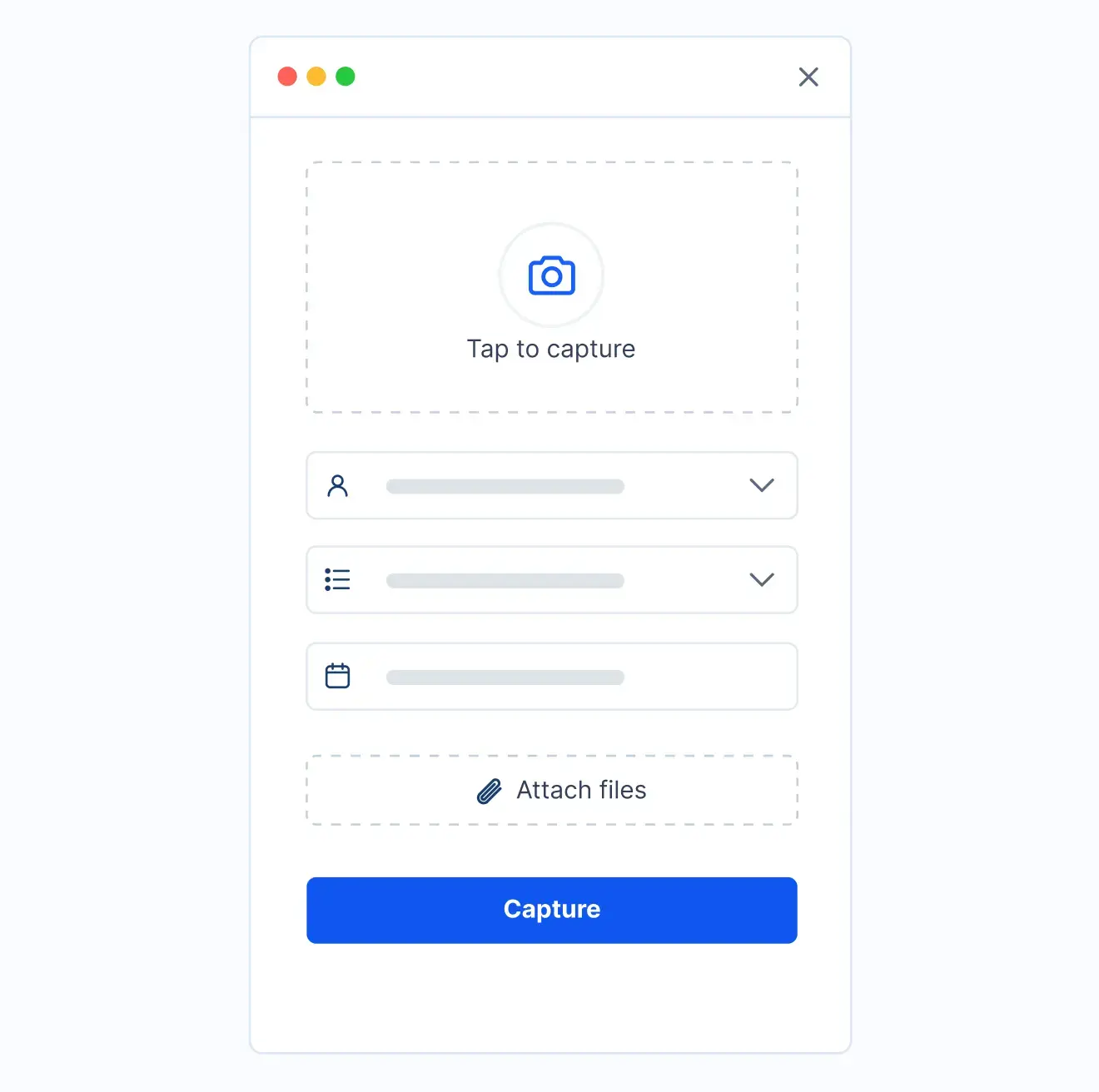
Each tank's external, internal, or out-of-service inspection is scheduled against its own due interval.
Conduct
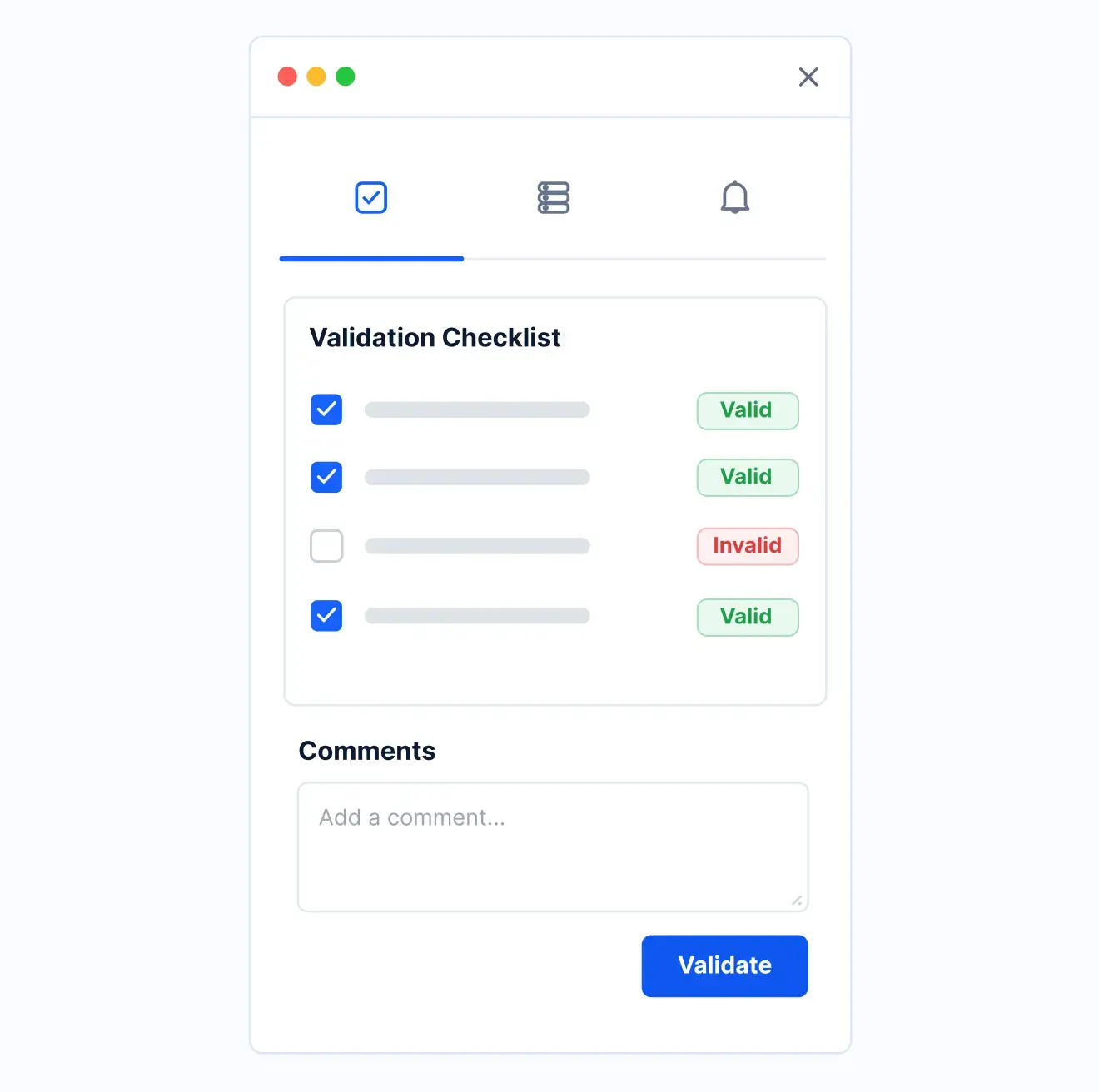
The inspector completes the structured checklist with thickness readings and photo evidence.
Flag
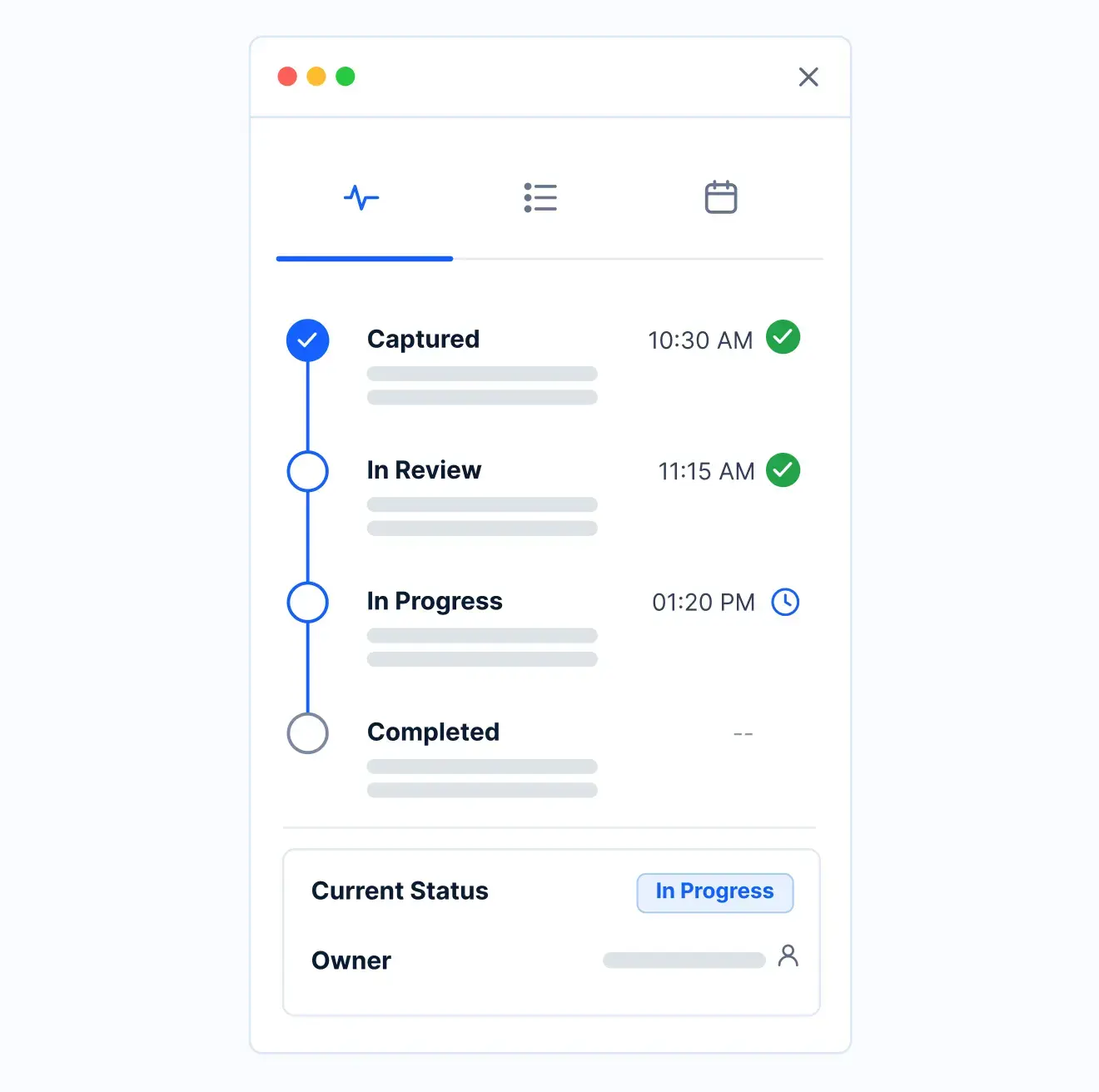
Readings are compared automatically against the prior inspection to calculate corrosion rate, and a finding that calls for action routes to the asset owner with supporting evidence.
Record
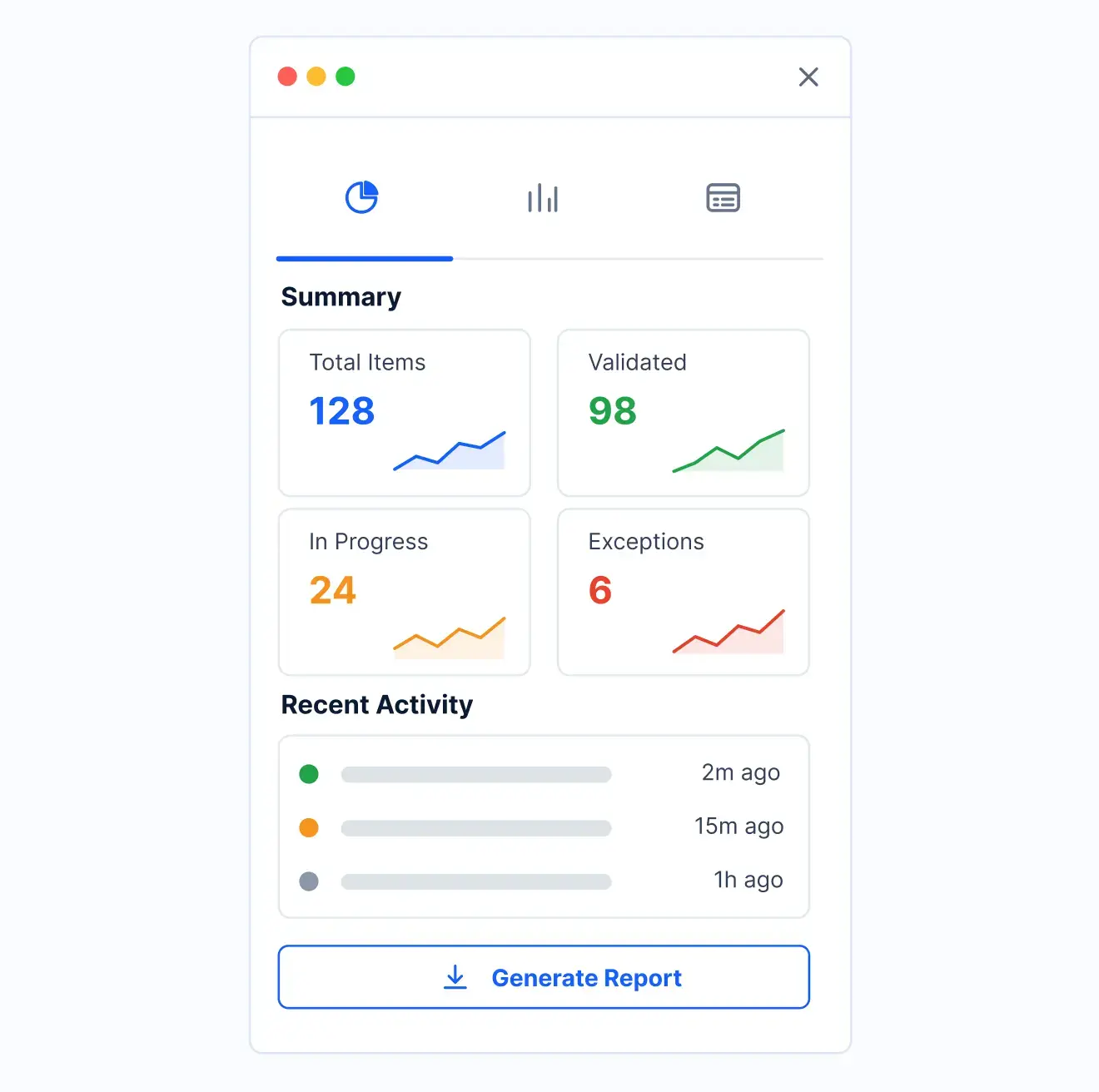
The inspection, its readings, and the repair recommendation are retained against the tank for API 653 compliance.
What changes when tank inspection runs on Kissflow
| Process | Before Kissflow | On Kissflow |
|---|---|---|
| Interval tracking | A spreadsheet someone updates manually, sometimes late | Tracked per tank automatically against API 653 and inspection history |
| Checklist execution | A paper form filed after the inspection | A structured digital checklist with photo evidence captured on site |
| Thickness readings | Filed in a report, compared to the prior inspection only if someone remembers | Logged by location and compared automatically to calculate a corrosion rate |
| Repair recommendations | Buried in an inspection report the asset owner may never read | Routed directly to the asset owner with evidence attached |
| Tank status visibility | Pulled together from paper files on request | A standing dashboard, always current |
| Audit readiness | A search through filing cabinets before a regulator visit | A standing, exportable inspection and repair history |
Connects to your ERP or maintenance management system for the resulting repair work order; Kissflow doesn't replace your system of record
Kissflow runs the inspection scheduling, checklist, and corrosion tracking layer. Your ERP or maintenance system stays the system of record for the repair work order and cost.
.svg)



.svg)
.svg)
.svg)
.svg)

.svg)
.svg)
.svg)
.svg)
.svg)

.svg)

.svg)

.svg)
.svg)
.svg)
.svg)
.svg)
.svg)
.svg)
.svg)
.svg)

.svg)
Built for how tank inspection compliance actually gets managed
Intervals that track themselves
Each tank's next-due date updates automatically off its own inspection history.
Corrosion rate calculated, not just filed
Every thickness reading compares automatically against the last inspection.
Repair recommendations that reach the asset owner
A finding routes directly to the person who owns the tank, with evidence attached.
Live in weeks
Configure inspection intervals and checklist templates in the visual builder, or describe the use case to the AI Builder.
Governed from day one
Role-based access and a full audit trail on every inspection and reading.
One dashboard, every tank
See inspection status, corrosion trend, and open repairs across the whole tank farm.
Related apps
Inspection Finding Management System
Reusable inspection templates, a findings-to-CAPA workflow, photo evidence, and a closure dashboard for every asset type.
Tank Inventory & Compliance App
Track bulk product inventory and regulatory tank-testing compliance alongside physical inspection.
Tank Level Monitoring System
Monitor real-time tank level against operating thresholds, separate from physical integrity inspection.
We help tank integrity teams keep API 653 compliance a schedule, not a scramble
.gif)

“If a company cannot enable everybody to use AI, they will never get the true benefit of AI. Platforms like Kissflow allow us to put that capability in the hands of our users in a safe way.”
Vagesh Dave
GVP & CIO at McDermott International, Ltd
See The Full Story
“Advanced automation of all processes is easy to set up. I cannot imagine how to manage workflows without this software.”
Tanay Tiwary
Global Head - Digitalization & Business Improvement
See the Full Story

“Kissflow supports rapid application development by building a working application prototype in the shortest amount of time.”
Maria Theresa Cabigon
CIO, SN Aboitiz Power Group
See The Full Story
See what Kissflow can do for you
Talk to usGot questions? We're here to help.
Get SupportNo. Your ERP or maintenance system stays the system of record for the repair work order and cost. Kissflow runs the inspection scheduling, checklist, and corrosion tracking layer.
Tank Inventory & Compliance App tracks bulk product inventory and the regulatory testing schedule at the inventory level. This app runs the physical external and internal inspection program itself, the checklist, the thickness readings, and the corrosion rate calculation.
Tank Level Monitoring System is a real-time operational threshold layer watching current fill level. This app is the periodic physical integrity inspection program, unrelated to day-to-day level monitoring.
It tracks intervals against your configured rules, which you set based on API 653 requirements and your own corrosion rate history for each tank.
Yes. Readings are logged by location, shell course, bottom plate grid, or roof, and compared to the same location in the prior inspection.
The finding routes to the configured asset owner with the supporting reading and photo evidence attached, so it doesn't sit unread in an inspection report.
Configuration and AI-assisted app generation move delivery from a multi-month program to a matter of weeks.
Kissflow is certified to SOC 1, SOC 2, SOC 3, and ISO/IEC 27001, with role-based access and a full audit log on every inspection and reading.