Progress Reporting Software for Capital Projects
Kissflow rolls up percent-complete from every discipline and contractor into one weighted S-curve, flags the activities driving variance against plan, and routes the report through sign-off before it goes to the owner, so the monthly number is reconciled once, not argued over.

Trusted by energy operators worldwide






A contractor's percent-complete number and the owner's percent-complete number rarely agree, and reconciling the two eats a day every reporting cycle.
Progress on a capital project comes in from a dozen directions: a civil contractor's weekly quantities, an engineering discipline's deliverable completion, a fabrication yard's spool count, a vendor's manufacturing milestone. Each source tracks its own percent complete, on its own weighting, updated on its own schedule. Rolling those into one project-level number that means the same thing to the owner and every contractor is, most months, a spreadsheet exercise that starts a week before the report is due and ends in a meeting arguing over whose number is right.
Kissflow captures progress input from each discipline and contractor against a configured weighting scheme, calculates a weighted percent-complete roll-up automatically, and plots it against the baseline S-curve so variance shows up the moment it appears, not at month-end. A report goes through a sign-off step before it's issued, so the number the owner sees has already been reviewed, and every prior period's report stays attached for trend comparison.
When a delay event or a scope change is driving the variance on the curve, the report links directly to that record, so a reviewer sees not just that progress is behind plan but why, without opening a second system to find out.
Where monthly progress reporting loses a week to reconciliation
Every discipline tracks its own percent complete
Engineering, procurement, and construction each report progress on different weighting, with nothing forcing a common method.
The roll-up is a manual spreadsheet exercise
Someone rebuilds the weighted S-curve by hand every month, and the formula lives on one person's laptop.
Variance is discovered at month-end, not as it happens
A discipline slipping against plan doesn't surface until the report is already being assembled.
The report ships without a documented review
A number goes to the owner before anyone signs off that it's been checked against the source data.
Six modules. Every discipline's progress rolled into one weighted S-curve, reviewed, and signed off before it ships.
Configure weighting schemes, baseline curves, and sign-off roles to your project structure.
Discipline and contractor progress capture
Each source submits percent-complete input on a defined cadence against its own scope of work.
Weighted roll-up calculation
Progress inputs combine automatically into one project-level percent complete, weighted by your configured scheme.
S-curve variance tracking
The roll-up plots against the baseline curve, flagging variance as it happens instead of at month-end.
Linked delay and scope change context
A discipline behind plan links directly to the delay event or scope change record driving the variance.
Report sign-off
A progress report routes through a documented review before it's issued to the owner.
Report history and trend archive
Every issued report stays attached, building a period-over-period trend without rebuilding the curve from scratch.
From request to system of record in four steps
Capture
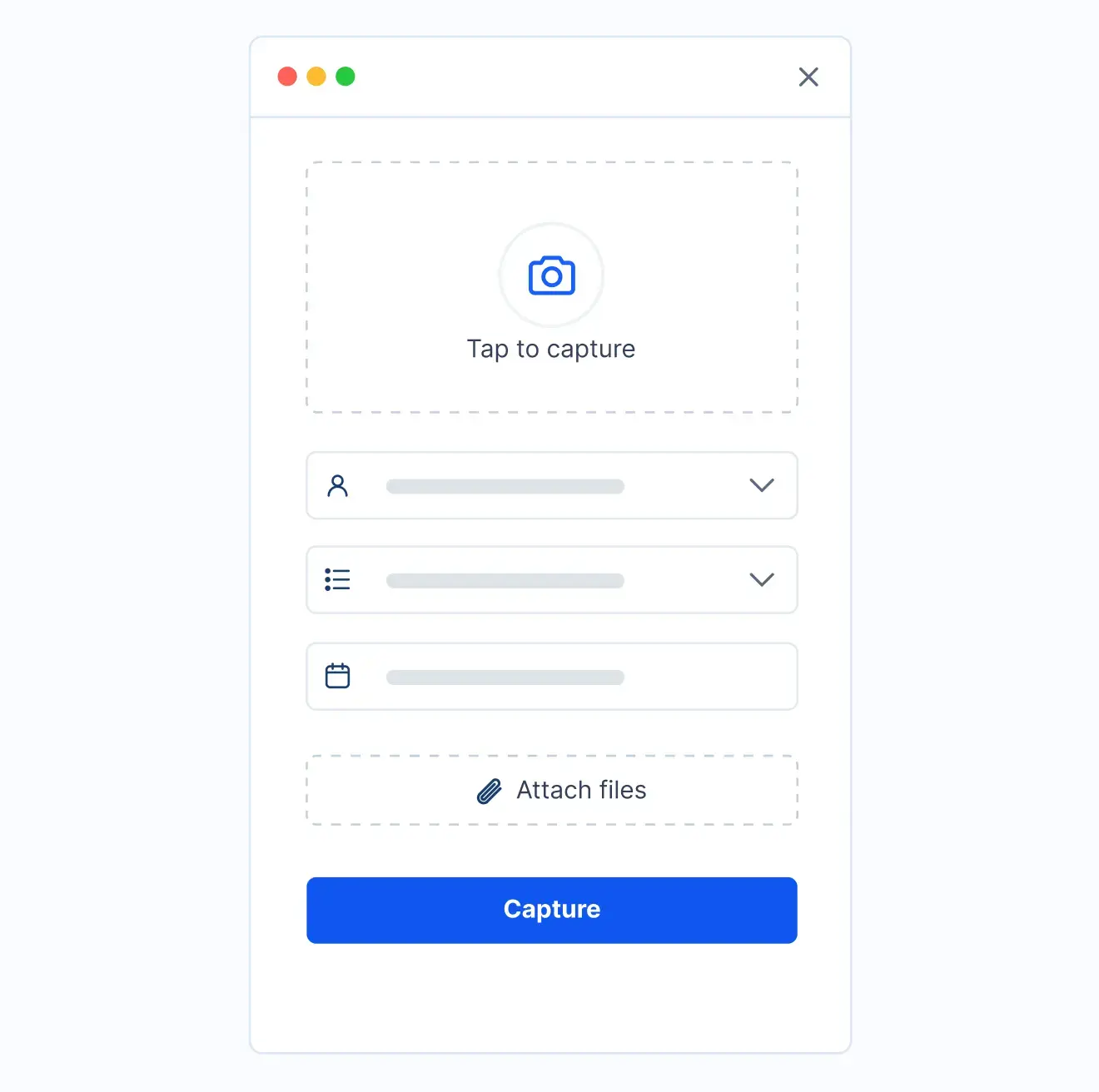
Each discipline and contractor submits percent-complete data on its configured cadence.
Validate
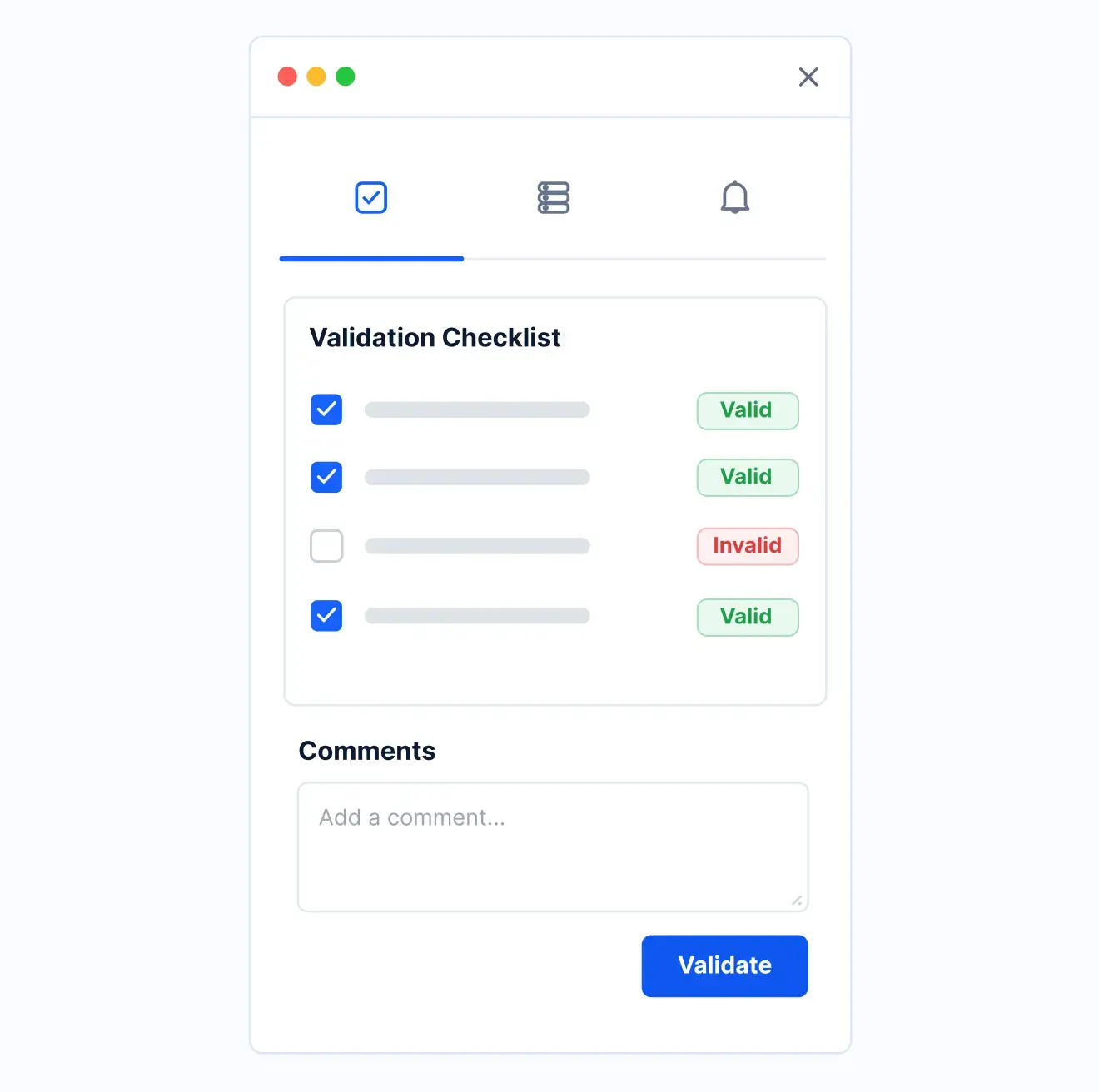
Inputs combine automatically into one weighted percent-complete figure against the baseline.
Track
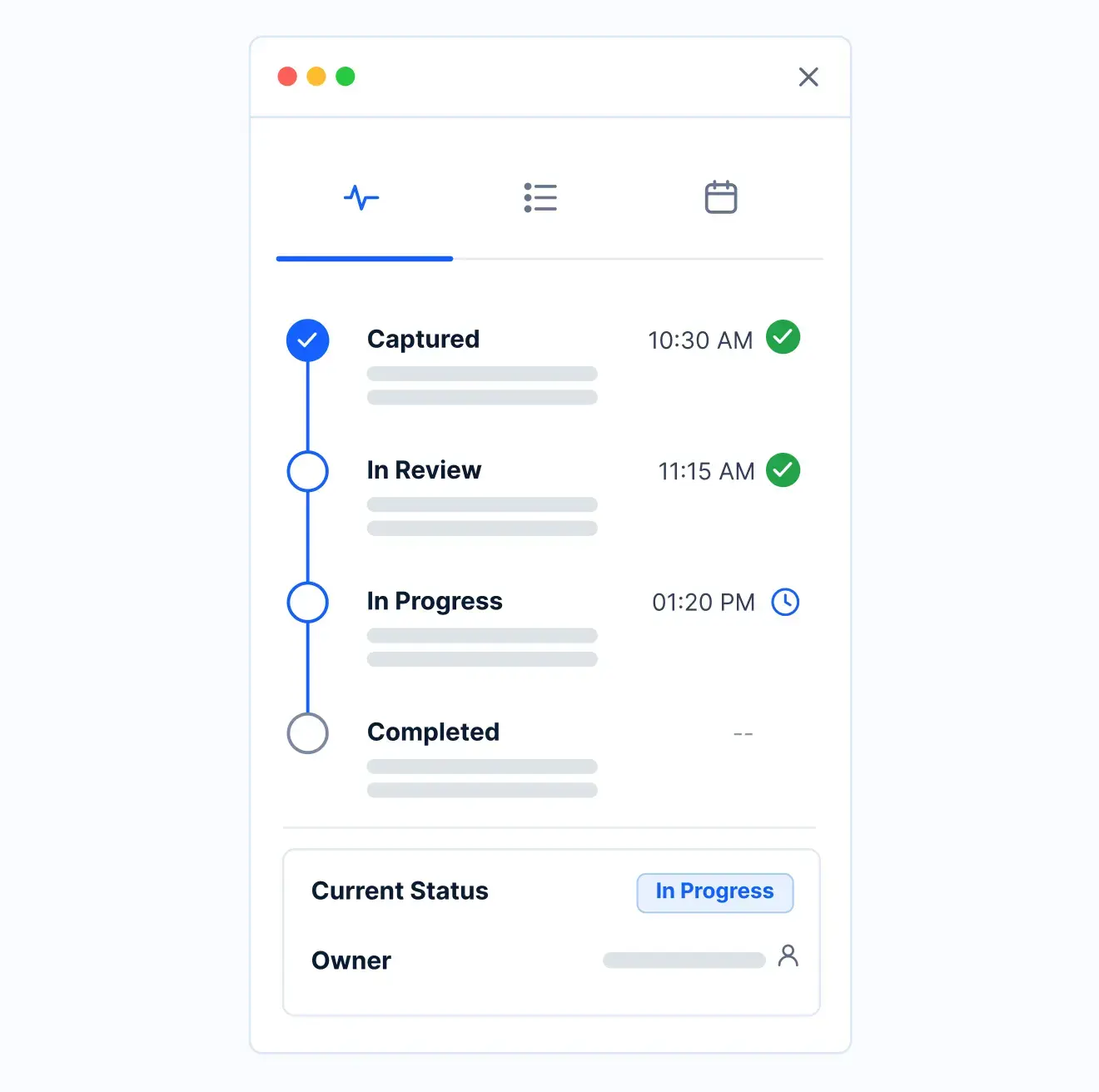
The S-curve highlights where actual progress is running behind or ahead of plan, so variance surfaces.
Report
The report is reconciled once, routed through sign-off before it goes to the owner, and archived, so the app holds the record of the monthly number.
What changes when progress reporting runs on Kissflow
| Process | Before Kissflow | On Kissflow |
|---|---|---|
| Progress data collection | Emails and spreadsheets from each discipline | Submitted against one configured input schedule |
| Roll-up calculation | A manual spreadsheet formula, rebuilt monthly | Calculated automatically from configured weighting |
| Variance detection | Found when the report is assembled | Flagged on the curve as it happens |
| Report review | A number sent to the owner unchecked | Routed through a documented sign-off |
| Historical trend | Reconstructed from old report files | A standing archive of every prior period |
| Explaining variance | A separate conversation with each discipline | Linked directly to the delay or scope change record |
Connects to your scheduling tool and ERP for baseline and cost data; Kissflow doesn't replace your system of record
Kissflow runs the progress capture, roll-up, and sign-off layer. Your scheduling tool and ERP stay the system of record for the baseline schedule and project cost.
.svg)



.svg)
.svg)
.svg)
.svg)

.svg)
.svg)
.svg)
.svg)
.svg)

.svg)

.svg)

.svg)
.svg)
.svg)
.svg)
.svg)
.svg)
.svg)
.svg)
.svg)

.svg)
Built for how a progress number actually gets assembled and trusted
One roll-up, not a dozen spreadsheets
Every discipline and contractor's input combines automatically into one weighted number.
Variance visible as it happens
See the S-curve diverge from plan in real time, not the week the report is due.
A signed-off number, every time
No report reaches the owner without a documented review step.
Live in weeks
Configure weighting schemes and input cadence in the visual builder, or describe the use case to the AI Builder.
Governed from day one
Role-based access and a full audit trail on every progress submission and report.
A trend line, not a snapshot
Every prior report stays archived, so period-over-period comparison doesn't mean digging through old files.
Related apps
Delay Event Management System
Trace the specific schedule delays driving a discipline's variance against the S-curve.
Scope Change Request Management System
See which approved scope changes have shifted the baseline the progress curve is measured against.
Cost Control & Forecasting Exception Management System
Compare schedule progress against cost performance from the same reporting period.
We help project controls teams reconcile one progress number, not a dozen spreadsheets
.gif)

“If a company cannot enable everybody to use AI, they will never get the true benefit of AI. Platforms like Kissflow allow us to put that capability in the hands of our users in a safe way.”
Vagesh Dave
GVP & CIO at McDermott International, Ltd
See The Full Story

“Advanced automation of all processes is easy to set up. I cannot imagine how to manage workflows without this software.”
Tanay Tiwary
Global Head - Digitalization & Business Improvement
See the Full Story

“Kissflow supports rapid application development by building a working application prototype in the shortest amount of time.”
Maria Theresa Cabigon
CIO, SN Aboitiz Power Group
See The Full Story
See what Kissflow can do for you
Talk to usGot questions? We're here to help.
Get SupportNo. Your scheduling tool stays the system of record for the baseline schedule. Kissflow captures progress input and calculates the weighted roll-up against that baseline.
Delay Event Management System tracks individual schedule slippage events and their cause. This app rolls up overall percent-complete across every discipline into one reportable curve, and links to specific delay events when they're driving variance.
Yes. Weighting schemes are configured per discipline or work package, then combined into one project-level roll-up using your defined method.
Yes, if you configure that step. A report can be set to require review and approval before it's issued externally.
Yes. Every issued report is archived, so you can view period-over-period trend without rebuilding the curve from old files.
No, not on its own. Progress Reporting Management System is scoped to schedule and completion percentage. Pair it with Cost Control & Forecasting Exception Management System for the cost side.
Configuration and AI-assisted app generation move delivery from a multi-month program to a matter of weeks.
Kissflow is certified to SOC 1, SOC 2, SOC 3, and ISO/IEC 27001, with role-based access and a full audit log on every submission and report.