Field Safety Observation App
A field safety observation app captures safety observations from wellsites, pipeline right-of-way, and remote facilities, raises follow-up actions on the ones that need a fix, and rolls trends up across every location. Kissflow gives field HSE teams that register without a build cycle.

Trusted by energy operators worldwide




A register that works where the coverage does not
Field operations break the observation program in a specific way. The work is spread across hundreds of locations, most visited by one or two people, often with no signal. An operator running a route sees a leaking fitting, a missing guard, a colleague working alone without a check-in, and the nearest office is ninety minutes away. Anything that depends on getting back to a desk is a program that collects observations from the locations nearest the office and almost nothing from the rest.
Kissflow runs field observations as a governed application built offline first. The observer logs what they saw with photo and location while standing in front of it, and the entry syncs when the truck comes back into coverage. Observations needing a physical fix raise an action against a named owner with a due date. Trends roll up across routes, pads, and facilities rather than stopping at each location.
The field HSE lead owns the categories, the required fields, and the escalation rules, and changes go live under the same access controls and audit log as every other change. Kissflow AI maps each requirement to platform metadata rather than generating code, so the app stays a blueprint an auditor can read.
Coverage decides the data
Observations cluster around the locations with signal and staffing, so the register describes where people were, not where the risk is.
Lone and remote work goes unrecorded
The observations most worth having come from people working alone, which is exactly the situation where filing anything later is least likely.
Findings die at the location
A fix needed at a remote pad is raised verbally to whoever is next on the route, with no owner, no date, and no record it was ever raised.
Roll-up is manual
Each area assembles its own numbers, so a hazard repeating across three areas reads as three isolated notes rather than one pattern.
Six process modules
Every module ships with default categories, offline capture, escalation logic, and dashboards. Configure each one to your field operation in the visual builder.
Offline field capture
Observation entry that works with no coverage, holding photos, GPS location, and the full form on the device and syncing automatically when the vehicle returns to signal.
Validation and triage
Completeness and category checks run at entry, and each observation is triaged for severity so an immediate-risk finding is separated from a routine note.
Follow-up action management
Observations needing a physical fix raise an action against a named owner with a due date, and escalate to the area supervisor when that date passes.
Field observation register
The live, searchable record of every observation by route, pad, facility, area, and category, retained with a timestamped audit trail.
Location and route roll-up
Observations aggregate across routes, pads, and facilities so a hazard repeating in three areas is visible as one pattern rather than three isolated entries.
Trend and participation reporting
Dashboards for repeat categories, open and overdue actions, and observer participation by area, crew, and contractor.
From request to system of record in four steps
Capture
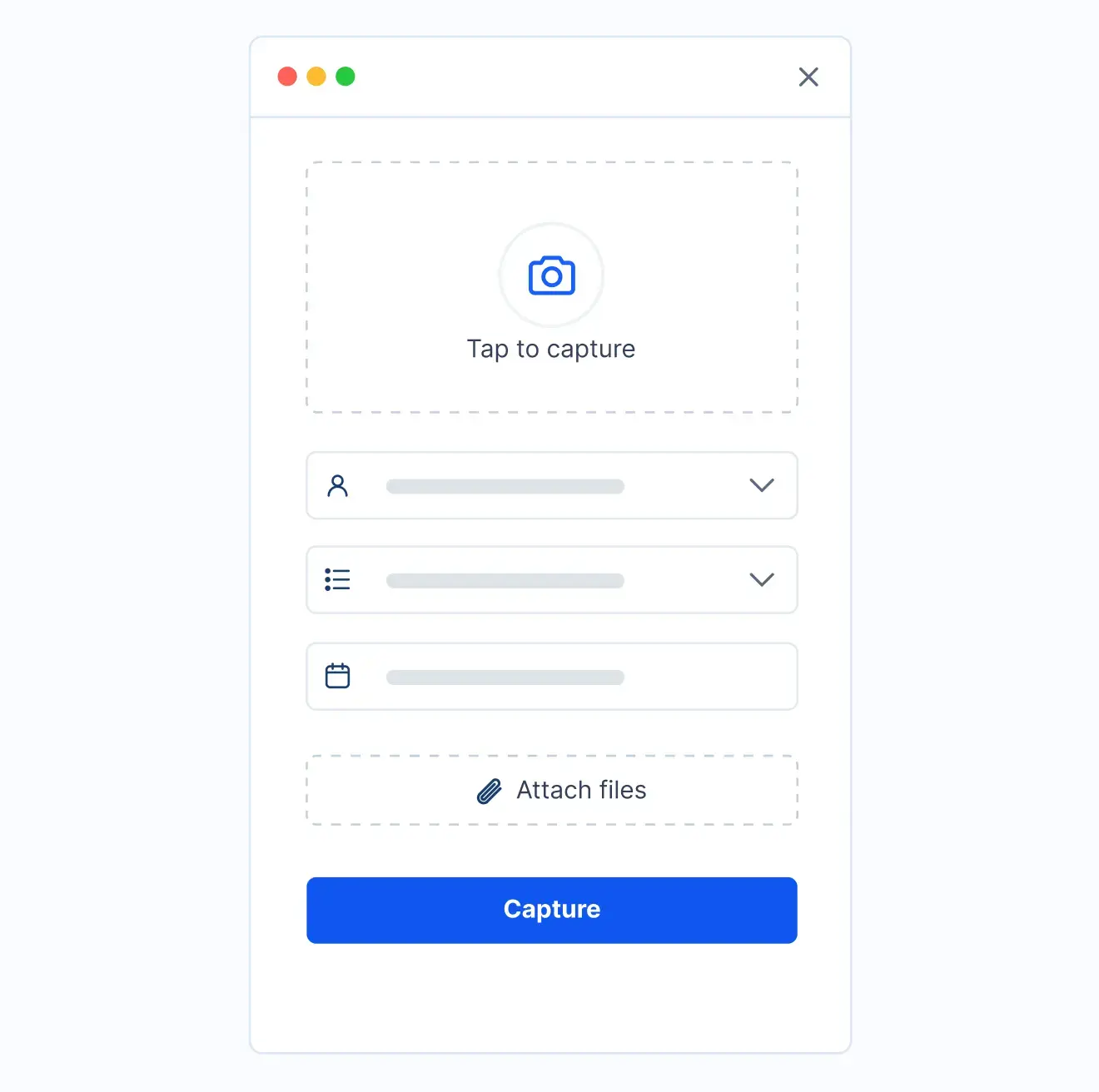
A field operator or supervisor records the observation where it happens, with photo and GPS location, on a form that completes offline and syncs when the device returns to signal.
Validate
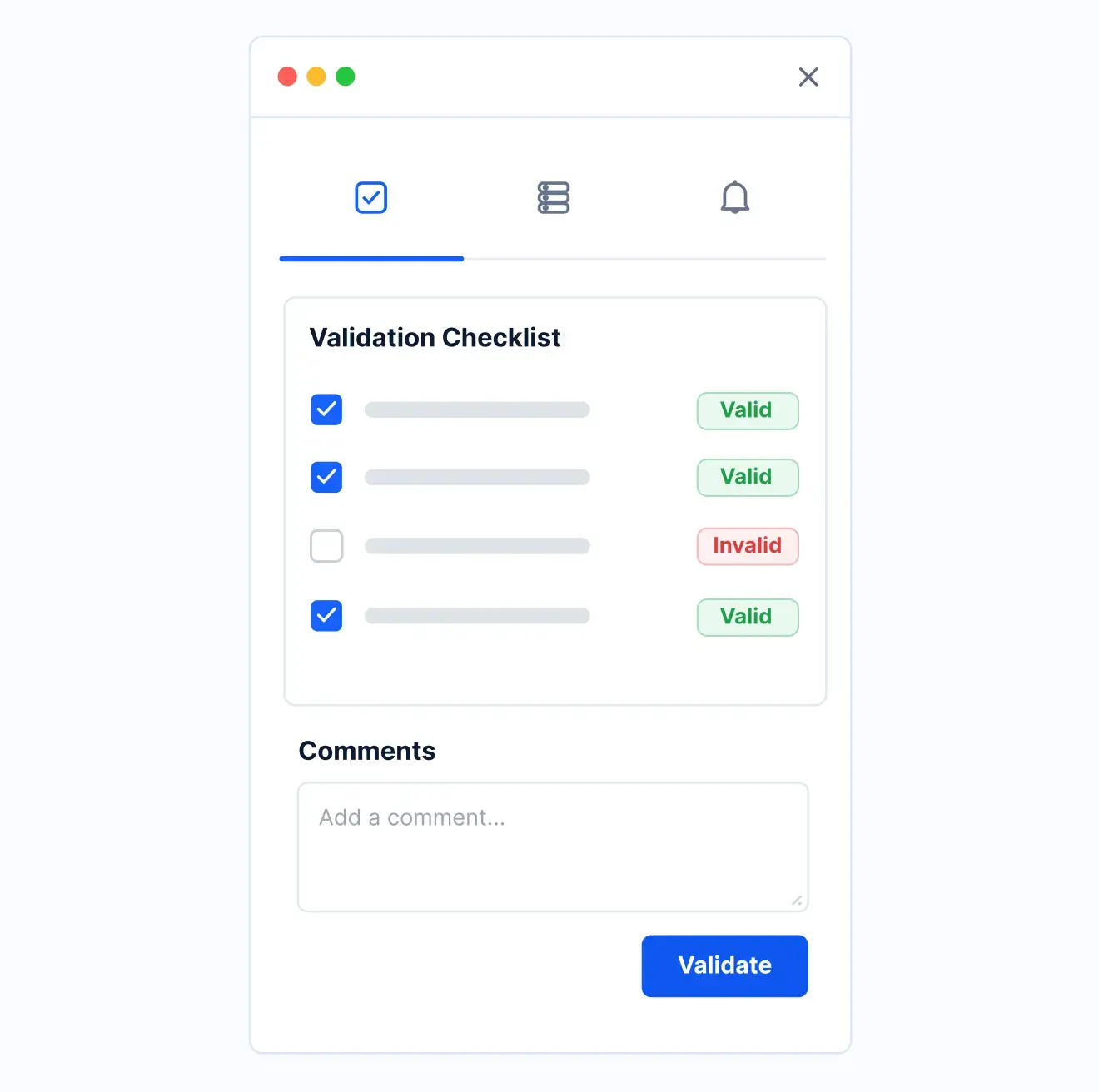
Each entry is checked for completeness and triaged for severity as it is logged, so an immediate-risk finding is routed differently from a routine note.
Track
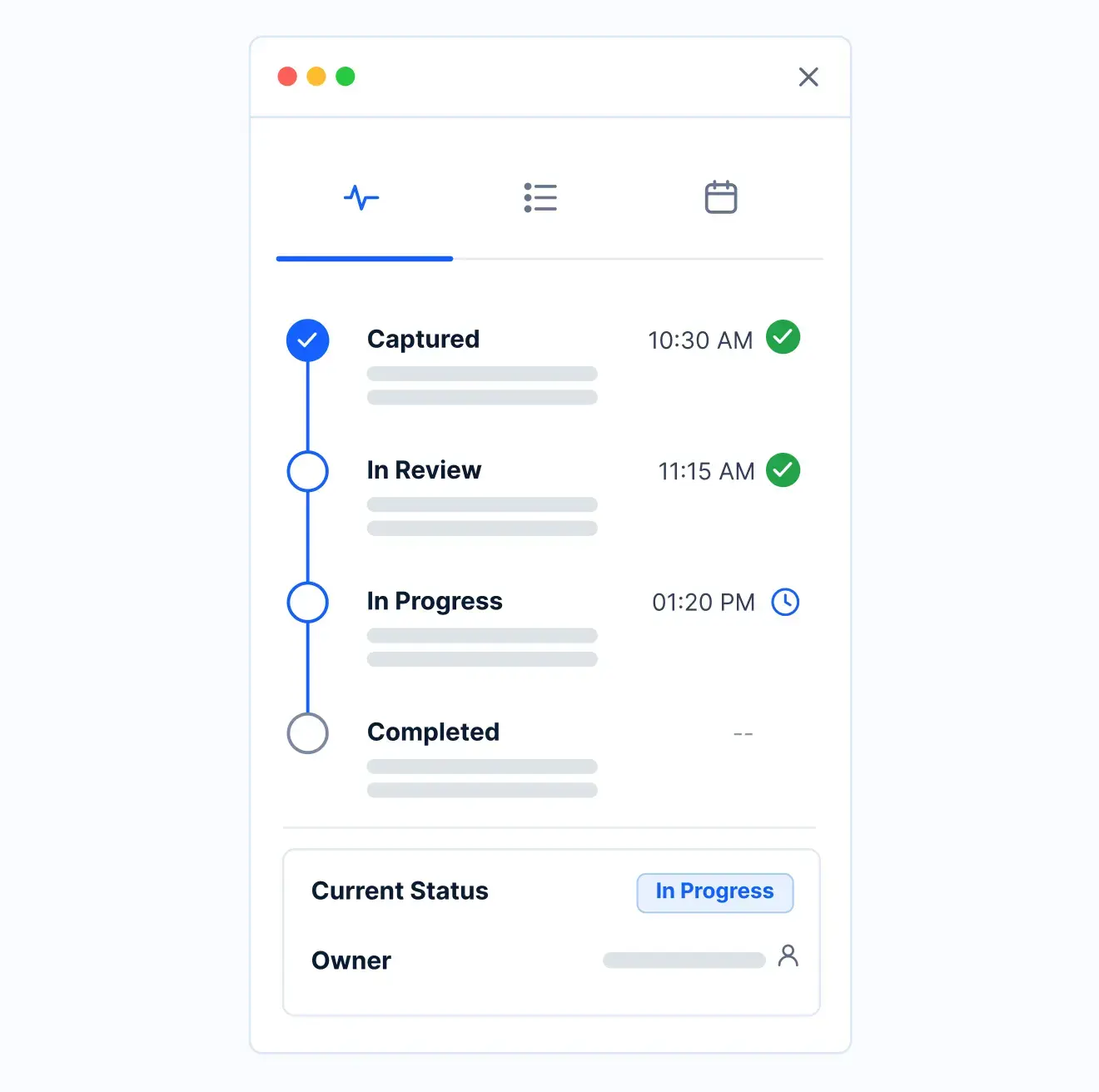
The register stays live and searchable, any observation needing a physical fix raises an action against a named owner, and overdue actions and repeat categories surface as exceptions.
Report
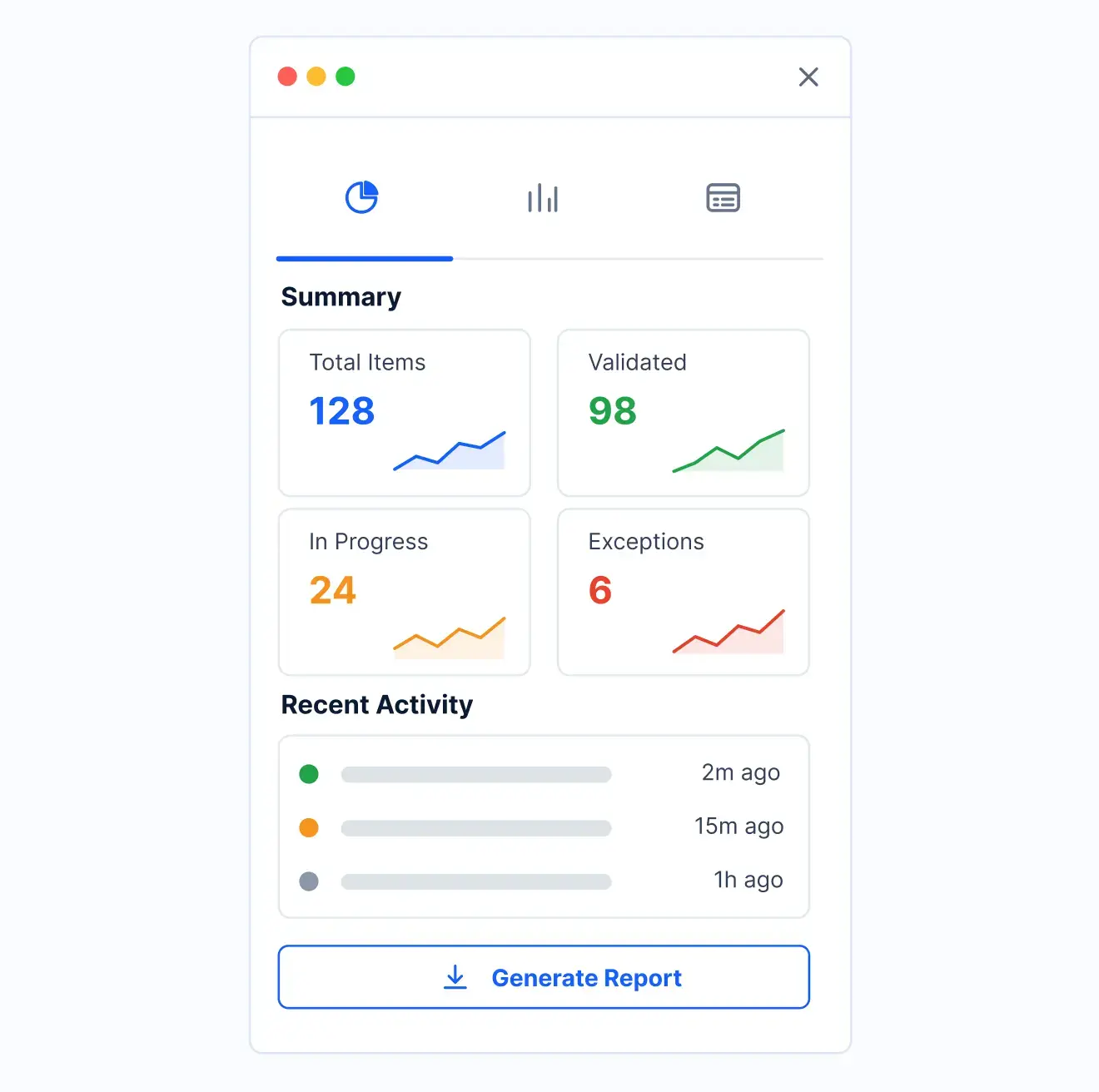
The register is the system of record for field observations, so trends and participation report straight from it by route, pad, facility, and area.
What changes when field observations run on Kissflow
| Process | Before Kissflow | On Kissflow |
|---|---|---|
| Remote capture | Filed later from a desk, if at all | Completed offline at the location and synced on return |
| Location context | A place name typed from memory | GPS and photo attached at the point of observation |
| Severity triage | Everything arrives in the same queue | Immediate-risk findings separated and routed at entry |
| Follow-up | Raised verbally to whoever is next on the route | Tracked action with a named owner and a due date |
| Area roll-up | Each area counts its own, in its own format | One register aggregating routes, pads, and facilities |
| Audit evidence | Collected from notebooks and email when asked | Generated as the observations are logged |
Connects to the systems your operation already runs on
.svg)



.svg)
.svg)
.svg)
.svg)

.svg)
.svg)
.svg)
.svg)
.svg)

.svg)

.svg)

.svg)
.svg)
.svg)
.svg)
.svg)
.svg)
.svg)
.svg)
.svg)

.svg)
Built for dispersed field operations
Offline is the default, not a fallback
The form completes with no signal and syncs on return, because most field locations have no coverage and a program that assumes coverage collects nothing from them.
Roll-up across every location
Observations aggregate by route, pad, facility, and area, so a hazard repeating across the field reads as one pattern.
Every finding has an owner
Observations needing a physical fix become tracked work with a name and a date, not a message passed to the next person on the route.
The field HSE lead owns the categories
Categories, required fields, and escalation rules are changed by the person who owns the program, without a build request.
Governed from day one
Single sign-on, role-based access, and a timestamped audit log are how the app is built. Kissflow runs in the business-process layer, segmented from the OT and control network.
Live in weeks, not a program
Configure in the visual builder, or describe the program and let the AI Builder generate the app. Delivery moves from weeks to days.
Related apps
BBS observation
Run a behavior-based safety program with its own categories, coaching record, and participation targets.
Incident and near-miss reporting
Capture incidents and near misses, route investigation and corrective actions, and close each one on record.
Safety audit action tracking
Route audit and inspection findings to owners and track every corrective action through to verified closure.
We help field HSE and operations leaders run one program across every location
.gif)

“If a company cannot enable everybody to use AI, they will never get the true benefit of AI. Platforms like Kissflow allow us to put that capability in the hands of our users in a safe way.”
Vagesh Dave
GVP & CIO at McDermott International, Ltd
See The Full Story
“Advanced automation of all processes is easy to set up. I cannot imagine how to manage workflows without this software.”
Tanay Tiwary
Global Head - Digitalization & Business Improvement
See the Full Story

“Kissflow supports rapid application development by building a working application prototype in the shortest amount of time.”
Maria Theresa Cabigon
CIO, SN Aboitiz Power Group
See The Full Story
See what Kissflow can do for you
Talk to usGot questions? We're here to help.
Get SupportA field safety observation app is a digital register for safety observations made at dispersed field locations such as wellsites, pipeline right-of-way, and remote facilities. It captures the observation offline, raises a follow-up action where a fix is needed, and rolls trends up across every location.
Yes. The form completes entirely on the device, holding photos and GPS location, and syncs when the vehicle returns to signal. Offline capture is the default rather than a fallback mode.
A BBS program observes behavior and records the coaching conversation, measured on participation and safe-behavior rate. A field safety observation app records conditions and acts seen across dispersed locations, measured on hazard trends and action closure by area.
Yes. Observations aggregate by route, pad, facility, area, and contractor, so a hazard repeating in several places is visible as one pattern rather than several isolated entries.
Yes. Fields, categories, routing rules, and escalation thresholds are configured by the process owner in the visual builder, and every change is written to the same audit log as a manual edit.
No. Kissflow runs in the business-process layer alongside the systems you already own and connects to them through APIs and integration connectors. It does not replace your EHS suite, your ERP, or your maintenance system, and it does not operate inside the control system.
No. Kissflow AI maps natural language to platform metadata and produces an inspectable blueprint, so every app is auditable and the process owner can maintain it.
Kissflow is certified to SOC 1, SOC 2, SOC 3, ISO/IEC 27001, HIPAA, GDPR, and CCPA, hosted on Google Cloud with data residency in the US, EU, APAC, and Oceania.