Emissions Monitoring Exception Workflow
An emissions monitoring exception workflow takes exceedances from continuous monitoring and leaks found by detection surveys, routes each into a repair workflow with a regulatory deadline attached, and tracks it to verified closure. Kissflow runs that response layer alongside your monitoring systems.

Trusted by energy operators worldwide





The instrument found it. Now something has to happen, on a clock.
Detection has improved faster than response. Continuous monitors, optical gas imaging surveys, and increasingly aerial and satellite screening all produce more findings than they used to, and each finding starts a clock defined by a regulation rather than by a maintenance planner. The gap most operations have is not knowing about the emission. It is proving, months later, that the repair happened inside the window and that the resurvey confirmed it.
Kissflow runs the response as a governed application. An exceedance or detected leak becomes a tracked exception with the source, the component, the detection method, and the applicable deadline attached. The repair routes to the crew who can do it, the deadline drives escalation rather than sitting in a planner's queue, and the resurvey verifying the repair is captured against the original finding.
The record assembles as the work happens. When a regulatory submission or an OGMP 2.0 reporting cycle needs the leak population, repair times, and verification evidence, that is a report drawn from the same register operations used to do the work.
Detection has outpaced response
Findings arrive faster than repairs
Surveys, continuous monitors, and aerial screening produce more findings each cycle, and the repair queue was sized for the old volume.
The clock is tracked separately from the work
The regulatory deadline sits in a compliance spreadsheet while the repair sits in a maintenance queue, and neither knows about the other.
Delay of repair is an open item, not a decision
Cases that genuinely cannot be repaired safely or in time are left open rather than classified, which is exactly the inventory a regulator inspects.
Verification is assumed
A repair marked complete is treated as a closed finding, without the resurvey that proves the emission actually stopped.
Six process modules
Every module ships with default detection sources, regulatory clocks, repair routing, and dashboards. Configure each one to your program in the visual builder.
Exceedance and leak intake
Findings captured from continuous monitors, detection surveys, and field observation, with source, component, tag, detection method, and measurement recorded against each.
Regulatory clock assignment
The applicable repair and resurvey deadline attached at intake from the rule that governs the source, so the clock starts with the finding rather than with the work order.
Repair workflow
Routing to the crew who can carry out the repair, with attempted repair, delay of repair, and unsafe-to-repair paths recorded explicitly rather than left as an open item.
Resurvey verification
The verification survey confirming the repair captured against the original finding, so closure means a confirmed result rather than a completed work order.
Deadline escalation
Escalation as a finding approaches its regulatory deadline, with overdue findings surfaced by source, site, and rule.
Regulatory reporting
Leak population, repair times, delay-of-repair inventory, and verification evidence reported from the same register the field work ran through.
From request to system of record in four steps
Report
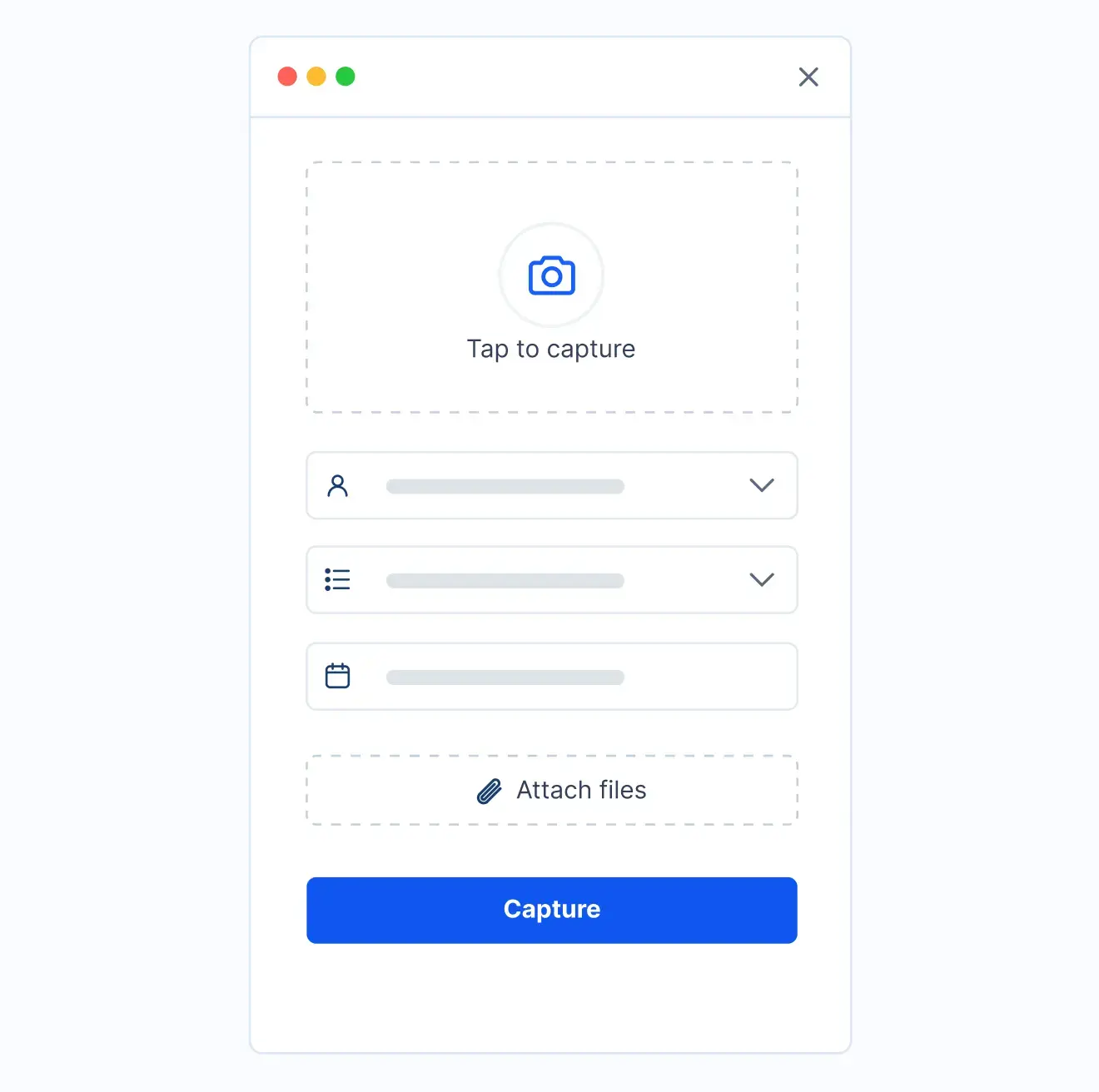
An exceedance from continuous monitoring, a leak from a detection survey, or a field observation is reported with source, component, detection method, and measurement.
Assess
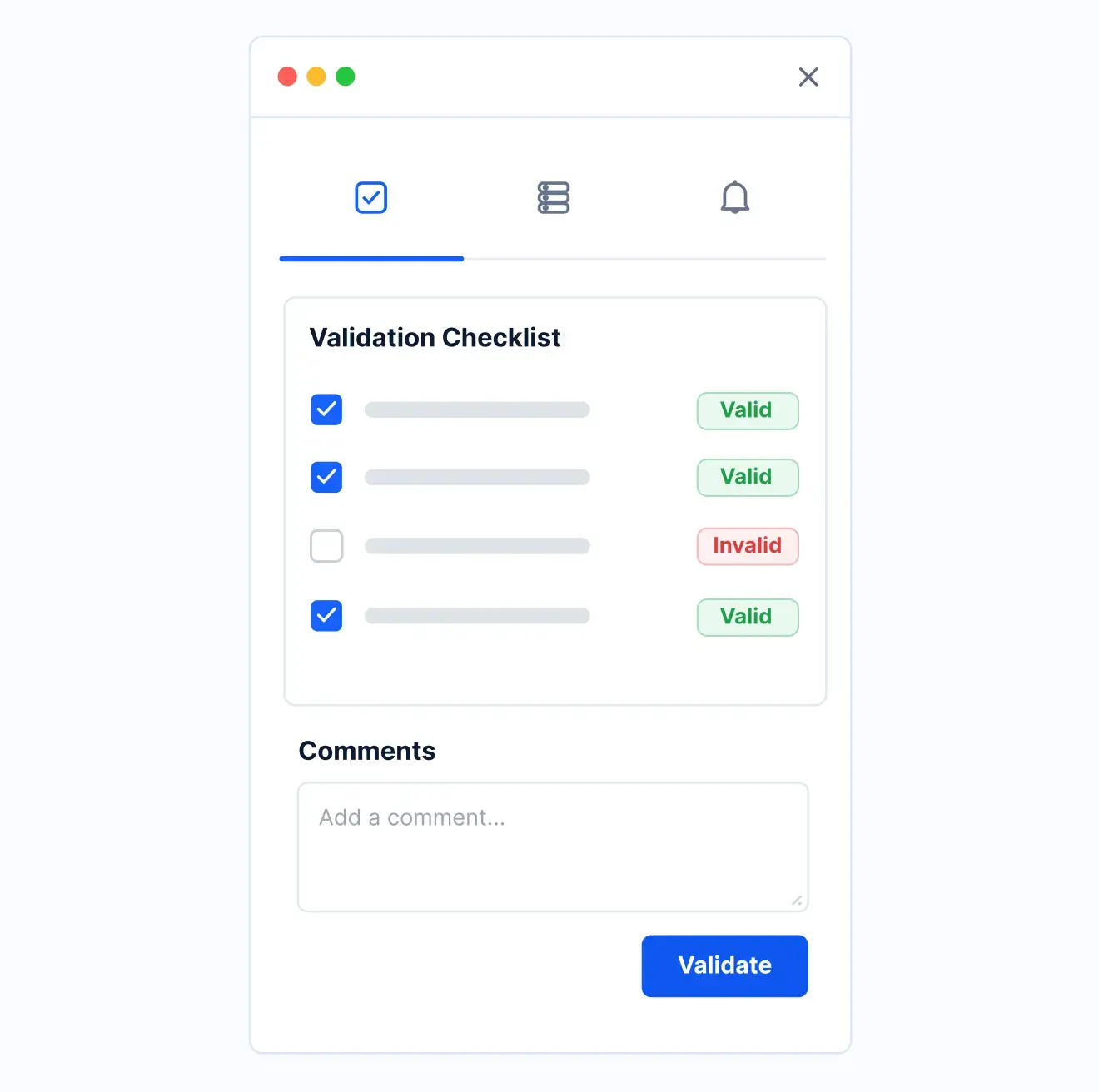
The applicable regulatory clock is attached at intake, severity and repair feasibility are assessed, and unsafe-to-repair or delay-of-repair cases are classified explicitly rather than left open.
Resolve
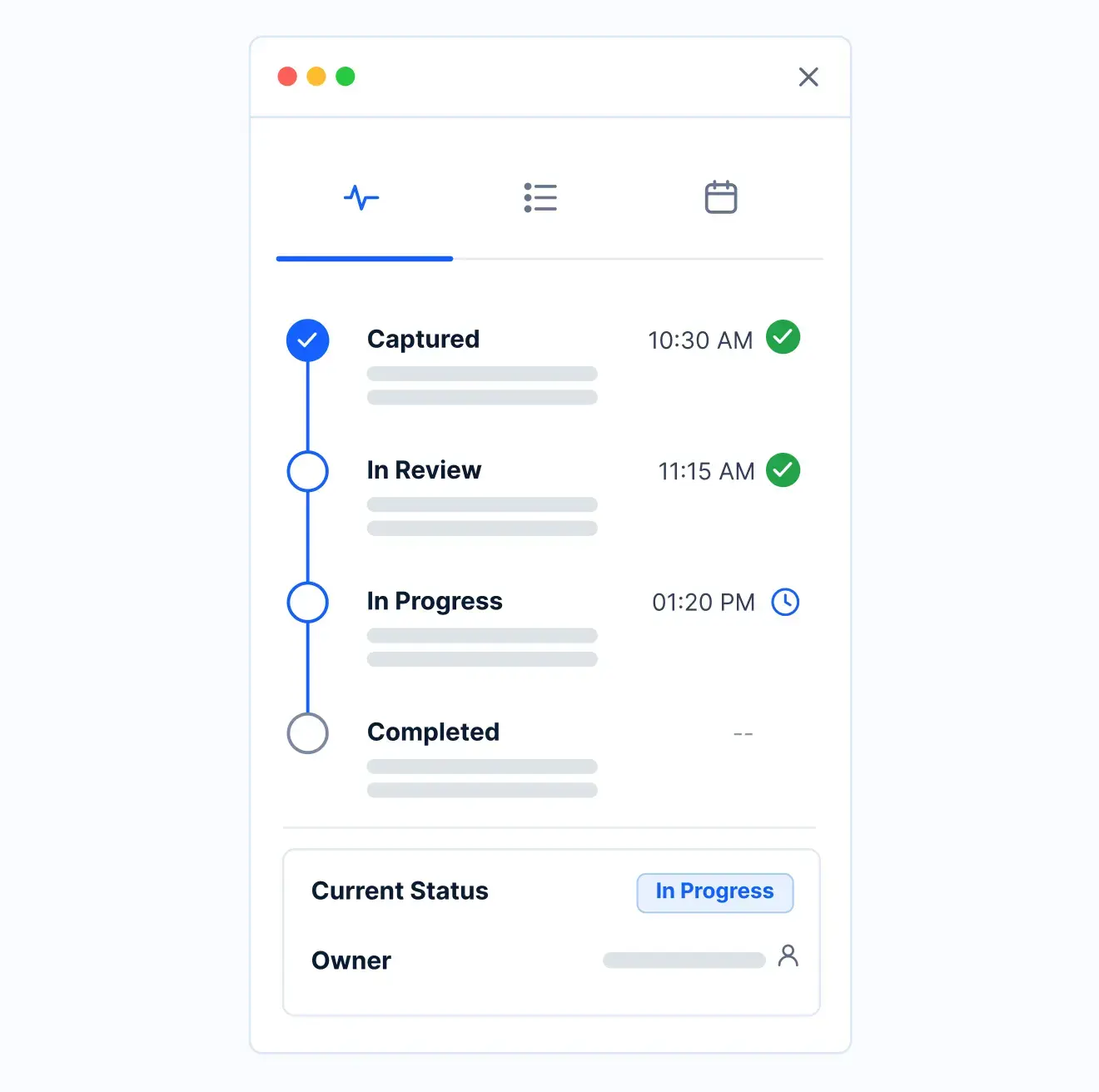
The repair routes to the crew who can carry it out, the deadline drives escalation rather than sitting in a planning queue, and a resurvey verifies the repair against the original finding.
Record
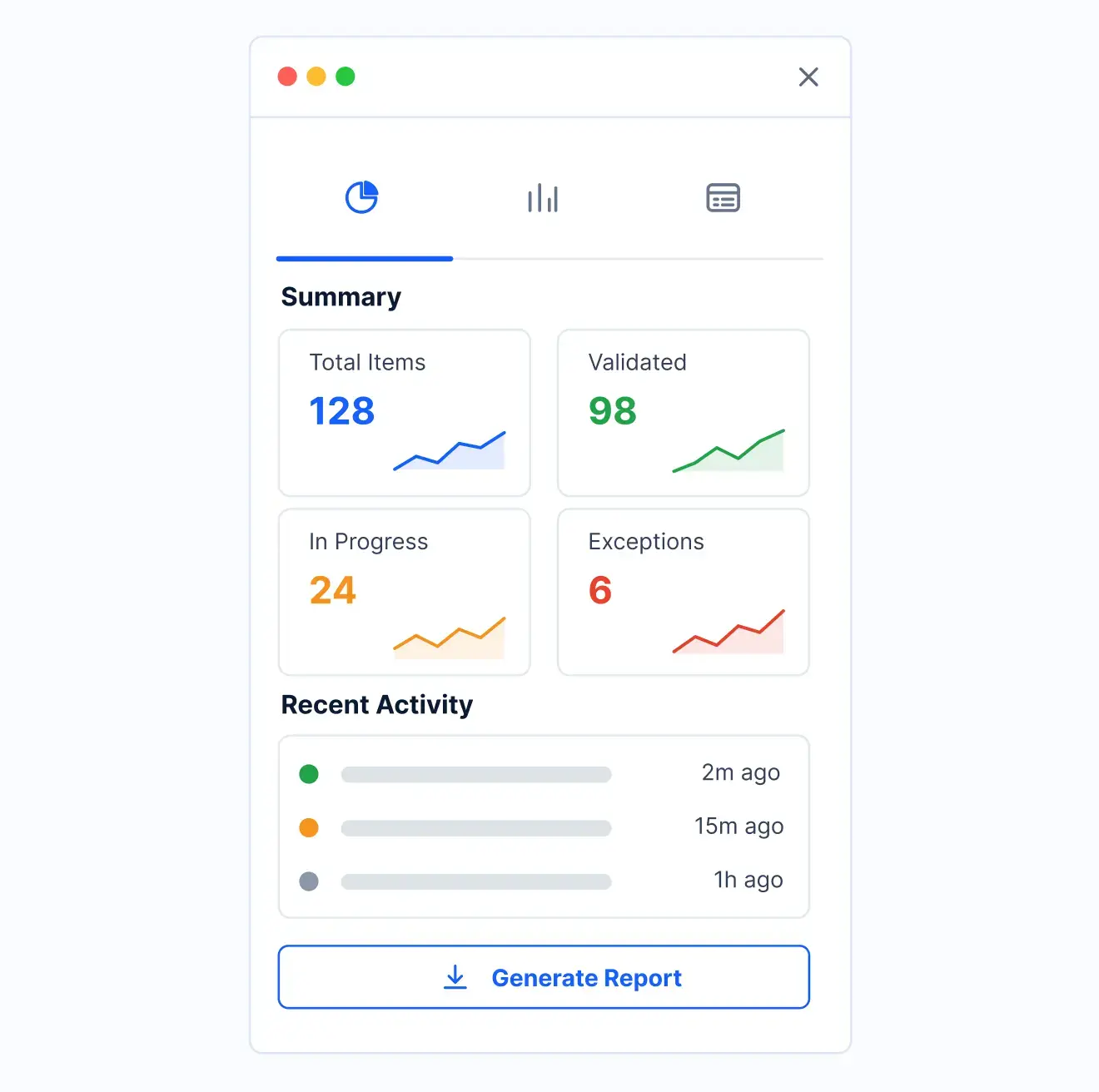
The finding closes on verified evidence and is retained with its full timeline, feeding regulatory submission and program reporting.
What changes when emissions exceptions run on Kissflow
| Process | Before Kissflow | On Kissflow |
|---|---|---|
| Finding intake | Survey results in a contractor report | Findings in one register with source and method |
| Regulatory clock | Tracked separately from the work order | Attached to the finding at intake |
| Repair routing | Enters the general maintenance queue | Routed with its deadline driving priority |
| Delay of repair | An open item nobody classified | An explicit classification with a stated basis |
| Verification | Assumed once the repair is done | Resurvey result captured against the finding |
| Reporting | Assembled from surveys and work orders | Drawn from the register the work ran through |
Connects to the systems your operation already runs on
.svg)



.svg)
.svg)
.svg)
.svg)

.svg)
.svg)
.svg)
.svg)
.svg)

.svg)

.svg)

.svg)
.svg)
.svg)
.svg)
.svg)
.svg)
.svg)
.svg)
.svg)

.svg)
Built for detection programs that have to prove response
The clock starts at detection
The regulatory deadline is attached to the finding at intake, not inherited from whenever a work order was raised.
Closure means a confirmed resurvey
A completed repair is not a closed finding until the verification survey confirms it against the original detection.
Delay of repair is a decision
Unsafe-to-repair and delay-of-repair cases are classified explicitly with a basis, which is exactly what a regulator asks about.
A response layer, not a monitoring system
Your monitors, imaging, and detection contractors find the emission. Kissflow runs the repair, escalation, and verification workflow around the finding.
Governed from day one
Single sign-on, role-based access, and a timestamped audit log are how the app is built. Kissflow runs in the business-process layer, segmented from the OT and control network.
Live in weeks, not a program
Configure in the visual builder, or describe the program and let the AI Builder generate the app. Delivery moves from weeks to days.
Related apps
Environmental emissions exception tracker
Track exceedances against air permit conditions and produce the deviation reports the permit requires.
Environmental exception response tracker
Handle spills, discharges, and waste events across environmental media with response and remediation on record.
Safety audit action tracking
Route audit and inspection findings to named owners and track every corrective action to verified closure.
We help emissions and environmental leaders prove response, not just detection
.gif)

“If a company cannot enable everybody to use AI, they will never get the true benefit of AI. Platforms like Kissflow allow us to put that capability in the hands of our users in a safe way.”
Vagesh Dave
GVP & CIO at McDermott International, Ltd
See The Full Story

“Advanced automation of all processes is easy to set up. I cannot imagine how to manage workflows without this software.”
Tanay Tiwary
Global Head - Digitalization & Business Improvement
See the Full Story

“Kissflow supports rapid application development by building a working application prototype in the shortest amount of time.”
Maria Theresa Cabigon
CIO, SN Aboitiz Power Group
See The Full Story
See what Kissflow can do for you
Talk to usGot questions? We're here to help.
Get SupportIt takes exceedances from continuous monitoring and leaks found by detection surveys, attaches the applicable regulatory repair and resurvey deadline at intake, routes the repair, and closes each finding on verified resurvey evidence.
This app starts from an instrument or survey detection at a component and manages the repair clock. An emissions exception tracker starts from a permit condition being exceeded and manages the deviation report that permit requires. Different trigger, different deadline, different audience.
Kissflow connects to the systems your operation already runs through APIs and integration connectors. It does not sit on the control network or manage time-series telemetry, which remains with your monitoring and historian platforms.
Each is an explicit classification with a stated basis and a named approver, held in the delay-of-repair inventory rather than sitting as an open finding, because that inventory is what a regulator inspects.
Yes. Fields, categories, routing rules, and escalation thresholds are configured by the process owner in the visual builder, and every change is written to the same audit log as a manual edit.
No. Kissflow runs in the business-process layer alongside the systems you already own and connects to them through APIs and integration connectors. It does not replace your EHS suite, your ERP, or your maintenance system, and it does not operate inside the control system.
No. Kissflow AI maps natural language to platform metadata and produces an inspectable blueprint, so every app is auditable and the process owner can maintain it.
Kissflow is certified to SOC 1, SOC 2, SOC 3, ISO/IEC 27001, HIPAA, GDPR, and CCPA, hosted on Google Cloud with data residency in the US, EU, APAC, and Oceania.