Accreditation Documentation Built for Continuous Reaffirmation Readiness
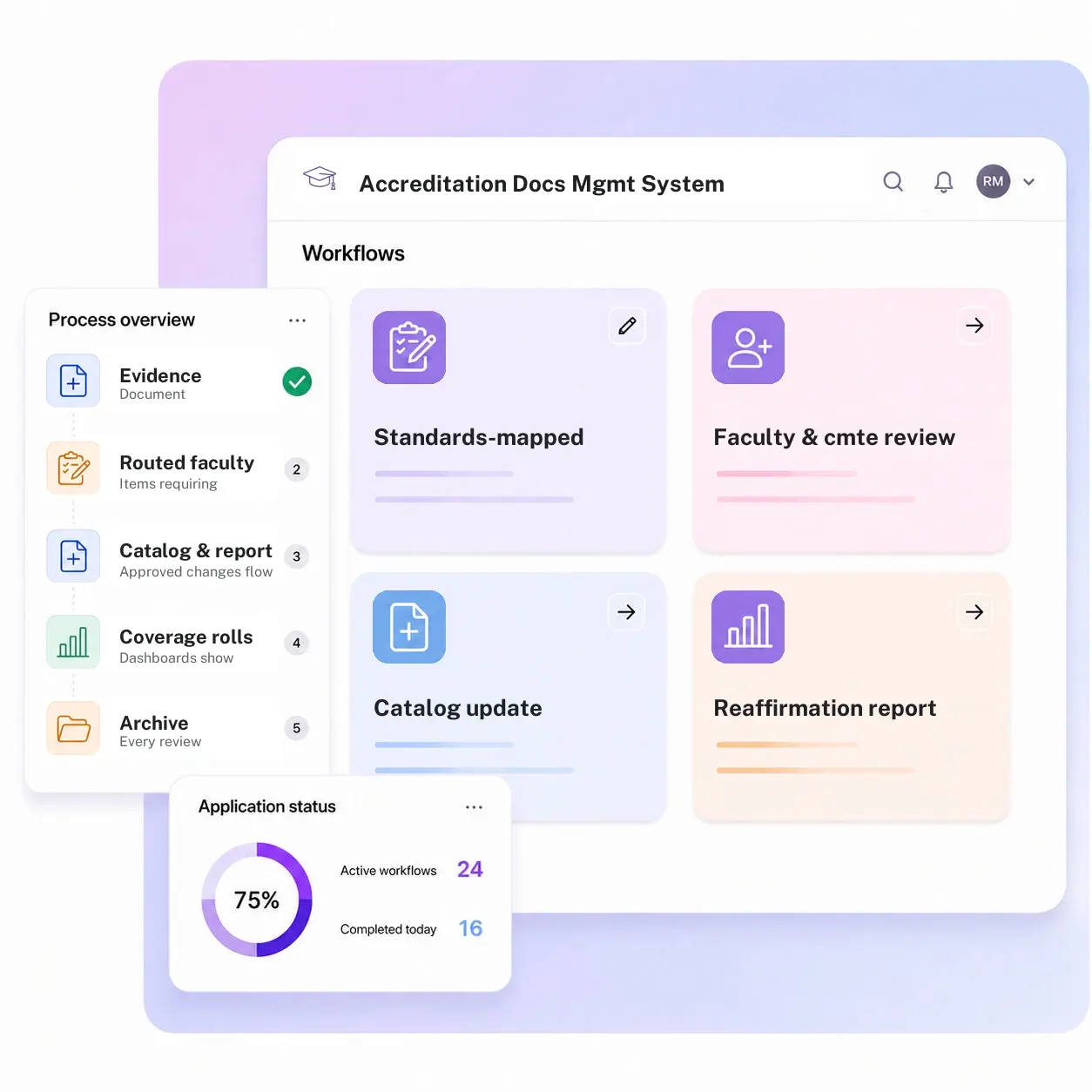
Kissflow gives your accreditation liaison a running evidence record tied to each standard, with faculty and committee review, catalog updates, and reporting built in, so the self-study is assembled as the work happens, not scrambled together the semester before the site visit.
Trusted by leading universities worldwide




Evidence that stays current between site visits, not the semester before one
Nobody schedules a SACSCOC or HLC site visit for a surprise. The standards are known years in advance, and yet most institutional effectiveness offices still spend the two semesters before reaffirmation chasing down evidence that should already be organized: meeting minutes from a curriculum committee, a syllabus revision, an assessment report a department chair filed and forgot about.
Today that evidence sits wherever the person who created it saved it: a shared drive folder, a committee's own meeting archive, an email thread approving a catalog change. None of it is tagged to the standard it supports, so building the self-study means reconstructing a paper trail after the fact.
Kissflow keeps a running accreditation record instead. Evidence gets captured and tagged to a standard as it's produced, routed through the right faculty or committee review, reflected in catalog updates, and rolled into reporting dashboards your accreditation liaison can hand to a site team without a pre-visit scramble. Banner or your SIS remains the system of record for the academic catalog itself; Kissflow is where the evidence trail proving compliance with it lives.
What falls apart without a running evidence record
Evidence lives wherever it was created
A shared drive, a committee's own archive, and an inbox each hold part of the trail, none of it tagged to the standard it supports.
Committee review has no paper trail of its own
Curriculum and policy changes get approved in a meeting, but the approval record itself is rarely captured anywhere searchable.
Catalog updates and their justification get separated
The catalog changes; the reasoning and evidence behind the change stays in someone's inbox.
The self-study becomes a pre-visit sprint
Reconstructing two years of evidence in the semester before a site visit is where findings get missed, not created.
Six modules. Built for how accreditation evidence actually gets proven.
Every module ships with default forms, review routing, integrations, and dashboards. Configure each one to your standards in the visual builder.
Standards-mapped evidence library
Every document, data point, and record gets tagged to the specific standard or criterion it supports, searchable by standard instead of by folder.
Faculty and committee review routing
Curriculum, policy, and assessment items route to the right faculty committee for review, with the decision and rationale captured against the item.
Catalog update workflow
Approved changes move into a tracked catalog update request, so the published catalog and the evidence behind the change stay linked.
Reaffirmation reporting dashboards
Rolls evidence coverage up by standard, showing gaps months before a self-study deadline, not the week of it.
Cycle and deadline tracking
Tracks your institution's actual reaffirmation and Quality Enhancement Plan timeline, with reminders tied to each standard owner.
Full audit trail
Every review, approval, and catalog change keeps a timestamped record, ready to hand to a site team without reconstruction.
From request to system of record in four steps
Capture
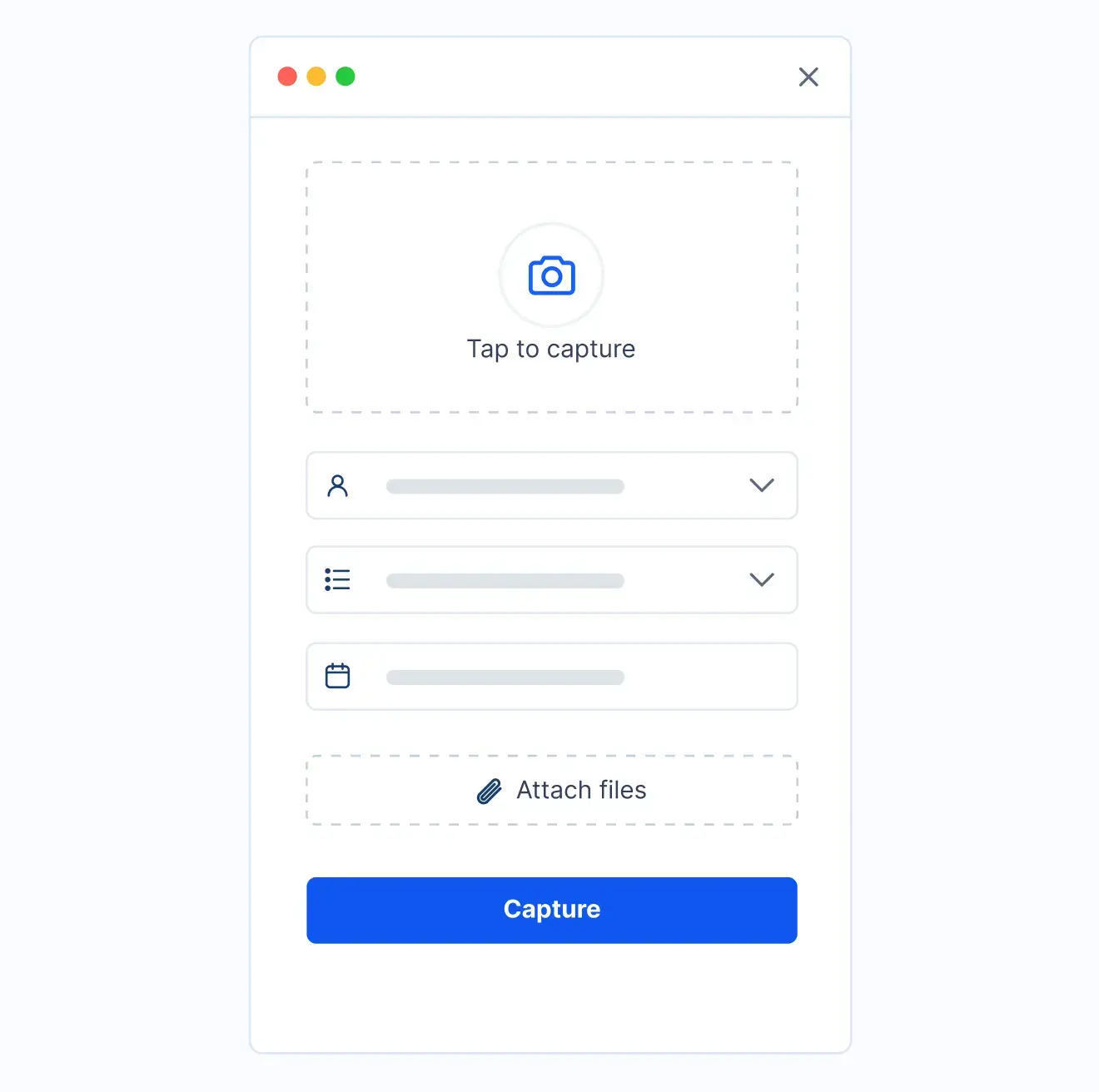
A document, data point, or record is logged and tagged to the standard or criterion it supports as the work happens.
Validate
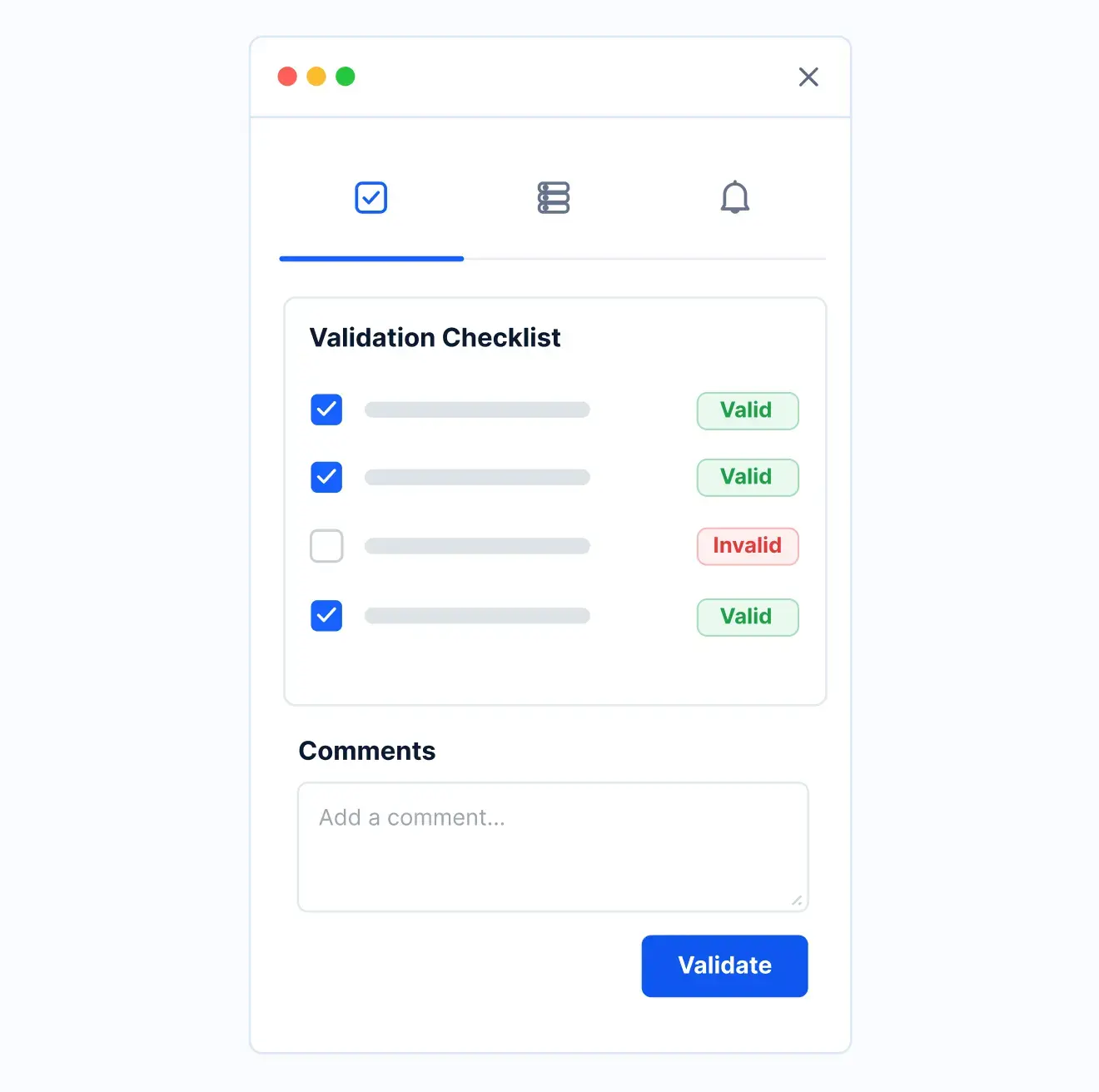
Items requiring approval move to the relevant committee, with the decision and rationale captured against the record before it counts as evidence.
Track
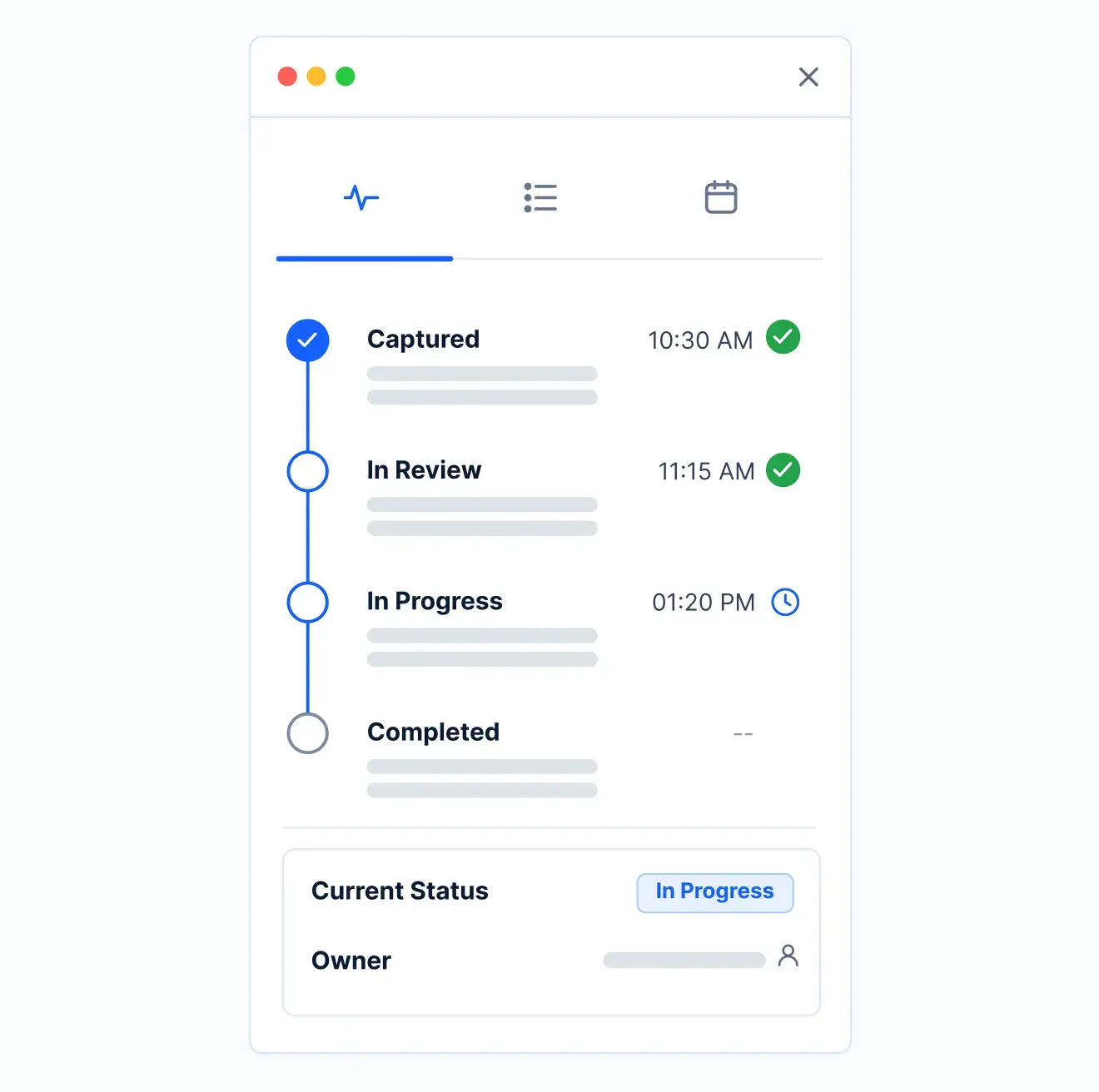
Approved changes flow into the catalog update workflow and the evidence library at the same time, keeping the running record live.
Report
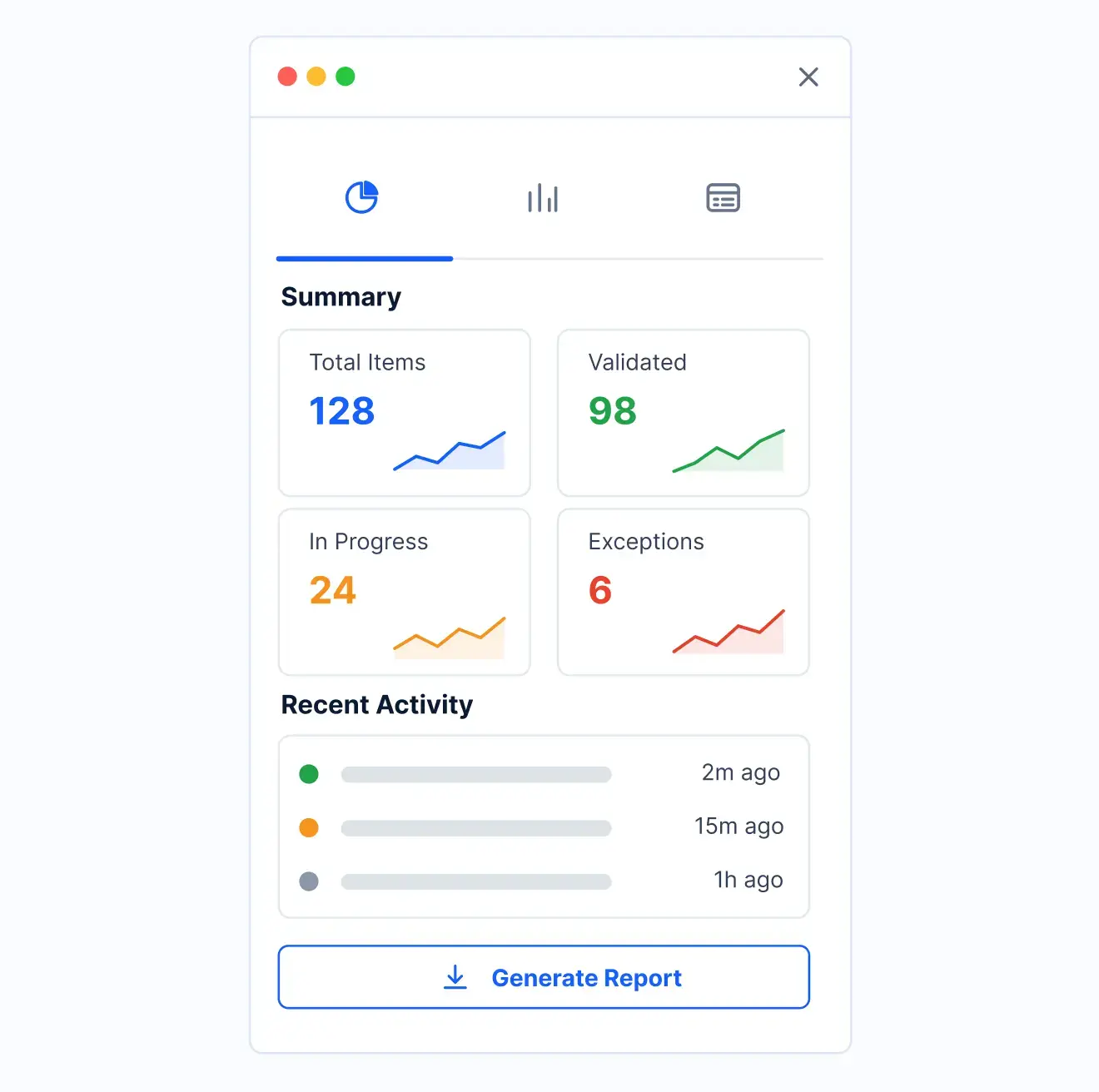
The evidence library is the system of record, so dashboards show coverage by standard and gaps surface long before the self-study deadline.
What changes when accreditation evidence runs on Kissflow
| Process | Before Kissflow | On Kissflow |
|---|---|---|
| Evidence location | Scattered across shared drives, committee archives, and inboxes | Centralized and tagged to the specific standard it supports |
| Committee review | Decided in a meeting with no searchable record of the rationale | Routed and captured with the decision and rationale attached to the item |
| Catalog updates | Disconnected from the evidence that justified the change | Linked directly to the approval and supporting evidence |
| Coverage visibility | Unknown until someone manually audits every standard | Visible on a dashboard by standard, months before a deadline |
| Self-study preparation | A two-semester scramble before the site visit | A running record assembled as the work happens |
| Audit trail | Reconstructed after the fact from emails and memory | Timestamped automatically at every review and approval step |
Connects to your SIS, LMS, and document systems; Banner and Workday stay the system of record
Kissflow does not replace Banner, Workday, Ellucian, or your catalog system. It is the governed layer that collects and organizes the evidence proving what those systems already show.


Built for how accreditation actually gets proven
Standards-first, not folder-first
Evidence is organized by SACSCOC, HLC, MSCHE, NECHE, or ACCJC standard from the moment it's captured, not sorted after the fact.
Shared governance built into the workflow
Faculty and committee review routes through the same governance structure your institution already uses, with the record kept automatically.
Live in weeks, not a systems project
Institutional effectiveness or IR staff configure standards, review routing, and dashboards in the visual builder, without a vendor implementation cycle.
An ERP-adjacent evidence layer
Banner or your SIS stays the system of record for the catalog and academic data. Kissflow sits alongside it, holding the evidence trail those systems don't.
Coverage gaps surface early
Standards with thin evidence show up on the dashboard a year out, not the week before the site team arrives.
Role-based access for sensitive review records
Committee deliberations and draft evidence stay visible only to the people who need to see them, with FERPA-appropriate access controls.
Related apps
Grant Spend and Approvals Management System
Award-level spend tracking with threshold alerts and escalation for sponsored program compliance.
Student Course Progress Management System
Course-level progress tracking with at-risk flagging and advisor routing.
Faculty Lifecycle Events Management System
Stage-gated task orchestration and document collection across a faculty member's full career.
We help institutional effectiveness teams walk into a site visit prepared, not scrambling


“If a company cannot enable everybody to use AI, they will never get the true benefit of AI. Platforms like Kissflow allow us to put that capability in the hands of our users in a safe way.”
Vagesh Dave
GVP & CIO at McDermott International, Ltd
See The Full Story

“Advanced automation of all processes is easy to set up. I cannot imagine how to manage workflows without this software.”
Tanay Tiwary
Global Head - Digitalization & Business Improvement
See the Full Story
“Kissflow supports rapid application development by building a working application prototype in the shortest amount of time.”
Maria Theresa Cabigon
CIO, SN Aboitiz Power Group
See The Full Story
See what Kissflow can do for you
Talk to usGot questions? We're here to help.
Get SupportNo. Banner or your SIS remains the system of record for the academic catalog and student data. Kissflow holds the evidence trail, committee reviews, and standards mapping that prove what those systems show.
The evidence library and standards mapping are configured to your accreditor, whether that's SACSCOC, HLC, MSCHE, NECHE, ACCJC, or a programmatic accreditor layered on top of your institutional one.
Routing follows your existing shared governance structure. Curriculum items go to the curriculum committee, assessment reports go to the relevant department or program, and each decision is captured against the evidence record.
A shared drive stores files. This tracks the review and approval behind each piece of evidence, flags standards with thin coverage before a deadline, and keeps a timestamped audit trail a site team can review directly.
Yes. Standards mapping, review routing, and reporting dashboards are configured in the visual builder, and the AI Builder can generate a starting workflow from a plain-language description of your review process.
Yes. Cycle and deadline tracking follows your institution's actual reaffirmation calendar, with reminders assigned to each standard owner well ahead of the self-study deadline.
Configuration and AI-assisted setup move initial rollout to weeks, so evidence collection can start well before your next self-study is due.
Kissflow is certified to SOC 1, SOC 2, SOC 3, and ISO/IEC 27001, supports HECVAT review for procurement, and is built to support FERPA and GLBA Safeguards obligations, with data residency options in the US, EU, APAC, and Oceania.