Maverick spending, meaning purchases made outside contracted procurement channels, is typically framed as a compliance failure. The solution that follows from that framing is more compliance: better training, stricter policies, stronger enforcement.
This framing misses the root cause. People do not generally make unauthorized purchases because they do not know the rules. They make them because the compliant path is slower, harder, or more opaque than the alternative. When your procurement process takes two weeks and requires four approvals for a $200 software subscription, the employee who needs it for a project due tomorrow is going to find another way.
Fixing maverick spending requires making the compliant path easier than the non-compliant one. That is a systems problem, not a training problem. This guide covers the structural causes of maverick spend, how to diagnose your own exposure, and what a procurement system design looks like when it actually works.
What maverick spending actually costs
The direct cost of maverick spending is the premium paid on unauthorized purchases: prices above contracted rates, duplicate subscriptions for tools the organization already licenses, and vendor relationships started without the legal and commercial protections that negotiated contracts provide.
The indirect costs are larger and less visible. Maverick spend obscures the organization's true procurement picture, which means category managers are negotiating contracts without knowing actual consumption. Vendor relationships built on side purchases carry warranty, liability, and data security exposure that the procurement team cannot mitigate because they do not know the relationships exist. Compliance audits become more expensive because the spend data is incomplete and unreliable.
Perhaps most significantly, maverick spend undermines the leverage that centralized procurement is designed to create. If 30 percent of an organization's spend happens outside contracts, the contracted volumes are understated by 30 percent, and the price the organization pays for compliance is higher than it needs to be.
Six structural causes of maverick spending
1. The process takes too long
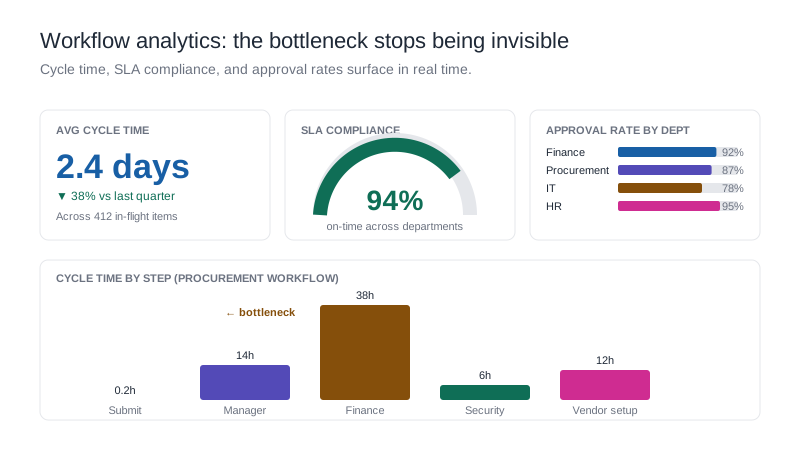
This is the most common cause and the one most organizations underestimate. When the standard procurement cycle runs to weeks, employees facing urgent needs will route around it. The threshold varies by category and urgency, but a process that takes longer than the business problem it serves will consistently produce workarounds.
2. The process is too complex to navigate without help
Procurement forms that require technical knowledge to complete, approval hierarchies that are not clearly documented, and systems that are difficult to use without training all raise the cost of compliance. Employees who cannot figure out the right path on their own will take a different path.
3. Employees do not know what contracts already exist
If the organization has a contract covering a need that an employee is about to procure externally, the employee can only take advantage of that contract if they know it exists and can find it easily. In most organizations, contract visibility is poor: contracts live in a central repository that employees are not accustomed to checking, or that is not easy to search, or that is simply not known about outside the procurement team.
4. The approval system does not match how spending decisions are actually made
Approval workflows designed around organizational hierarchies often do not reflect who actually has the knowledge to approve a purchase. A technical manager approving a software subscription because they are the department head, rather than the engineer who evaluated the tool, is an approval in form but not in substance. Employees who find the approval process perfunctory will find ways to shortcut it.
5. There is no process for urgent or exceptional needs
Standard procurement processes are designed for predictable, recurring purchases. They are typically not designed for urgent needs, novel requirements, or situations where an existing vendor cannot deliver on time. When employees encounter these situations with no legitimate fast-track option, maverick spend is the rational response.
6. Digital and service spend is not covered by existing contracts
Organizations with mature contracts for physical goods and services often have poor coverage of digital spend: software subscriptions, cloud services, data products, and professional services engaged on short timescales. As business spending has shifted toward these categories, organizations whose procurement infrastructure was built for physical goods have accumulated significant maverick spend exposure in categories they had not historically tracked.
A three-stage diagnostic for your procurement system
Before designing interventions, it is worth understanding where your organization sits in its procurement maturity, because the right intervention depends on the stage.
Stage one: reactive procurement
Procurement happens after the purchase decision is made. Spend analysis is manual, periodic, and incomplete. Contract coverage is partial and hard to find. Most maverick spend goes undetected until an audit or a supplier dispute surfaces it.
At this stage, the priority is basic visibility: a spend taxonomy, a contract repository with reliable search, and a purchase request process that captures spend before it happens.
Stage two: structured procurement
Procurement has defined processes, clear ownership, and a central platform. Most spend flows through the system. Maverick spend occurs at the margins: urgent needs, unusual categories, and situations where the process is unclear.
At this stage, the priority is process completion: a fast-track option for urgent needs, better contract visibility for employees, and a structured category management approach that expands contract coverage to emerging spend categories.
Stage three: strategic procurement
Procurement is integrated into business planning. Spend is visible in near real time. Contracts cover the majority of spend categories. The procurement team spends most of its time on strategic supplier relationships rather than transactional processing.
At this stage, maverick spend is a residual issue managed through system design rather than enforcement. The remaining work is continuous coverage of new spend categories as they emerge and refinement of the process for genuinely exceptional purchases.
Five ways to reduce maverick spending
1. Run a spend analysis before designing any intervention
Map actual spend against contracted vendors and categories. This requires combining accounts payable data with purchasing card transactions and any direct vendor invoices that bypass the standard system. The output is a clear picture of where the gaps are, which categories have the highest maverick exposure, and which parts of the organization are most frequently outside the process.
This analysis should be done before any policy or system change. Interventions designed without spend data are frequently targeted at the wrong problems.
2. Make contract visibility a priority, not an afterthought
Employees who know what contracts the organization holds are more likely to use them. A searchable contract repository with category-level search, coverage summaries, and clear instructions for how to engage each contracted vendor reduces the discovery cost for employees who want to comply but do not know what is available.
The repository should be updated in real time, not quarterly. A contract database that is two months out of date is not a reliable resource and employees will stop trusting it.
3. Redesign the procurement process around the user, not the system
Procurement forms should require the minimum information necessary to make a good purchase decision, not everything the system can capture. Approval workflows should be configured to match the decision-making structure of the organization, not the organizational chart. Turnaround time targets should be set and monitored by category.
A useful test: can an employee who has never used the system before complete a purchase request correctly in under fifteen minutes without calling the procurement team for help? If not, the process has friction that is generating maverick spend.
4. Create a legitimate fast-track option for urgent needs
Every procurement system needs a defined exception process: a faster path for purchases that cannot wait for the standard cycle, with appropriate guardrails. The key word is "defined". An exception process that requires escalation through the same slow approval chain is not a fast track. It is a label applied to a standard process.
A real fast-track option has a time limit, a clear set of qualifying criteria, a streamlined approval structure, and a mandatory post-purchase review that captures the exception for category management purposes.
5. Integrate procurement training into onboarding and regular operations
Employees who understand why centralized procurement matters, including the savings it generates, the risk it mitigates, and the vendor relationships it protects, are more likely to use the process when they have the option. This is different from training employees to follow the policy. It is giving them the context to see the value.
Procurement training should be part of new hire onboarding, included in department head development programs, and reinforced at intervals rather than delivered once and forgotten.
How procurement software supports maverick spend reduction
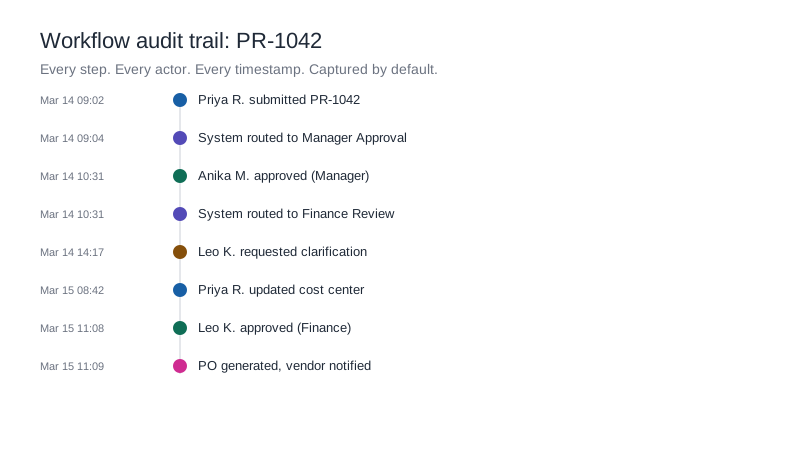
Procurement software reduces maverick spending by making the compliant path the easiest path. A well-designed procurement platform presents employees with a searchable catalog of contracted vendors and categories, routes purchase requests through the right approval structure automatically, and processes approvals quickly enough that the process does not create pressure to route around it.
Kissflow's' workflow platform has procurement workflow capabilities that let organizations configure their purchase requisition and approval processes without developer support. Business users set the routing rules, approval thresholds, and notification sequences. The system enforces them automatically.
This matters for maverick spend specifically because it removes the most common workaround driver: a process that is so slow or difficult to use that employees find alternatives. When the process is fast, clear, and accessible from any device, the incentive to bypass it largely disappears.
Frequently asked questions
1. What is maverick spending?
Maverick spending refers to purchases made outside an organization's contracted procurement channels, either bypassing existing vendor contracts, skipping the approval process, or both. It results in higher purchase costs, incomplete spend visibility, and increased compliance and supplier risk.
2. What causes maverick spending?
The most common root cause is a procurement process that is slower or harder than the workaround. Poor contract visibility, complex approval workflows, and the absence of an emergency purchase option are the structural factors that generate the most maverick spend. Training and policy alone do not fix these problems.
3. How do you calculate the cost of maverick spending?
Start with the premium cost: the difference between what was paid through unauthorized channels and what the contracted rate would have been for the same purchase. Add the compliance costs: time spent on reconciliation, audit exposure, and supplier dispute resolution. The indirect costs, including lost negotiating leverage and incomplete spend data, are harder to quantify but typically exceed the direct premium.
4. What is the difference between maverick spending and rogue spending?
The terms are often used interchangeably. Maverick spending typically refers to purchases outside contracted channels, whether or not the buyer intended to bypass the process. Rogue spending sometimes implies intentional non-compliance. In practice, the distinction matters less than the structural cause, which is usually the same in either case.
5. Can procurement software eliminate maverick spending?
Software can significantly reduce maverick spending by making the compliant process easier and faster. It cannot eliminate it entirely, because some maverick spend results from genuine gaps in contract coverage or exceptional circumstances that the system was not designed to handle. The goal of a well-designed procurement system is to make compliant purchasing the default choice for the vast majority of spend categories.

.webp)