- >
- BPM Software>
- Process Champions vs. Citizen Process Designers: Who Drives BPM Success?
Process Champions vs. Citizen Process Designers: Who Drives BPM Success?
Citizen developer BPM is built on two complementary roles: process champions who own workflows and drive adoption within teams, and citizen designers who use low-code tools to build and modify processes independently. Both are essential for scaling automation across the enterprise effectively. The blog explains how to structure the roles, platform choices, and governance boundaries that make citizen developer BPM sustainable.
The BPM landscape has shifted dramatically in recent years. Traditional approaches concentrated process improvement expertise in specialized teams, usually sitting within IT or dedicated process excellence functions. Today, a new model is emerging where business users take direct ownership of automating and optimizing the workflows they know best.
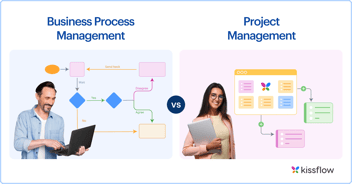
This evolution has created two distinct personas that organizations must understand: process champions and citizen process designers. Both play crucial roles in BPM adoption in enterprises, but they operate differently, contribute uniquely, and require different types of support. Understanding the distinction between these roles and how to leverage both effectively has become essential for organizations pursuing comprehensive process transformation.
Defining the roles: process champions and citizen process designers
Process champions are typically experienced professionals who advocate for process excellence within their domains. They understand how work flows across teams, recognize improvement opportunities, and can articulate the business case for change. They may or may not have technical skills, but they consistently demonstrate deep knowledge of operational realities and strong influence with stakeholders.
The process champions role has existed in various forms for decades. Quality managers, operations leads, and business analysts often function as process champions, even when the title isn't explicit. They bridge the gap between frontline realities and organizational strategy, translating day-to-day challenges into improvement initiatives.
Citizen process designers represent a newer phenomenon. These are business users who actually build automated workflows, forms, and applications using low-code or no-code platforms. They don't just identify problems or propose solutions. They implement those solutions directly, without waiting for IT resources.
Gartner reports that 41% of non-IT workers now customize or create data and application solutions themselves. This represents a fundamental shift in how process improvement happens. The people experiencing process pain points are increasingly the same people building solutions to address them.
The case for process champions
Process champions provide organizational capabilities that citizen development alone cannot deliver. Their strategic perspective spans departmental boundaries, enabling them to identify opportunities that local optimizations might miss.
Consider a process champion reviewing order fulfillment across an organization. They see how sales, operations, inventory, and shipping interact. They recognize that speeding up one step might create bottlenecks elsewhere. They understand the customer experience implications of various process designs. This holistic view prevents the fragmentation that occurs when improvement efforts proceed without coordination.
Process champions also bring credibility that influences adoption. When a respected operations leader endorses a new workflow, teams respond differently than when IT announces another system change. This influence proves particularly valuable during the change management aspects of process transformation, where employee buy-in determines whether technical implementations actually deliver value.
Additionally, process champions often possess institutional knowledge that citizen designers lack. They know why processes evolved to their current state, which constraints are real versus assumed, and where previous improvement attempts have struggled. This context prevents repeating historical mistakes and helps navigate political sensitivities that could derail initiatives.
The case for citizen process designers
While process champions provide strategic direction and organizational influence, citizen process designers deliver something equally valuable: execution speed and contextual relevance.
Traditional process improvement cycles were painfully slow. Business teams identified needs, documented requirements, submitted requests, and then waited months while IT prioritized and implemented solutions. By the time changes reached production, original requirements had often evolved. The resulting solutions frequently missed the mark because too much time separated problem identification from solution delivery.
Citizen process designers collapse this cycle dramatically. Research indicates that low-code platforms can reduce development time by up to 90% compared to traditional approaches. When the person experiencing a process problem can build a solution directly, the feedback loop becomes immediate. Issues are identified, addressed, and validated within days rather than months.
This speed matters beyond efficiency gains. It enables a fundamentally different approach to process improvement: rapid experimentation. Rather than investing months designing the "perfect" solution, citizen designers can build, test, learn, and iterate quickly. This experimental approach often produces better outcomes because it incorporates real-world feedback throughout development rather than only at the end.
Citizen process designers also bring unmatched contextual understanding. They know the workarounds their colleagues use. They understand which steps create frustration. They recognize the edge cases that documented requirements typically miss. This intimate knowledge translates into bpm solutions that address actual needs rather than assumptions about needs.
The BPM governance model: integrating both roles
Successful BPM adoption in enterprises requires both process champions and citizen process designers working within a coherent governance structure. Neither role alone can deliver comprehensive process transformation. The question isn't which model to choose, but how to integrate both effectively.
Effective BPM governance models typically establish clear domains of responsibility. Process champions own strategy, standards, and cross-functional coordination. They define which processes warrant automation investment, establish quality standards for citizen-developed solutions, and ensure that local improvements align with enterprise objectives.
Citizen process designers own execution within defined boundaries. They build solutions that address specific needs, following governance guidelines while maintaining freedom to innovate. They contribute insights from their implementation experiences that inform broader strategic decisions.
This division creates productive tension. Process champions push for consistency and coordination. Citizen designers push for speed and contextual fit. When governance frameworks channel this tension constructively, organizations benefit from both perspectives.
Gartner predicts that by 2026, developers outside formal IT departments will account for at least 80% of the user base for low-code development tools. This projection underscores the importance of governance models that enable citizen development while maintaining appropriate oversight. Organizations that attempt to restrict citizen development entirely will find themselves unable to compete with more agile competitors. Those that enable it without governance will accumulate technical debt and security vulnerabilities.
Building process champion capabilities
Organizations that want to strengthen their process champion capabilities should focus on several development areas.
First, process champions need enterprise-wide visibility. They can't identify cross-functional improvement opportunities from within departmental silos. This visibility requires both formal access to process performance data and informal networks that surface operational realities across the organization.
Second, process champions need influence skills that extend beyond their formal authority. Many improvement opportunities span multiple departments, each with different priorities and constraints. Champions must navigate these complexities through persuasion, coalition-building, and stakeholder management rather than hierarchical authority.
Third, process champions need sufficient technical literacy to evaluate citizen development outputs and identify integration requirements. They don't need to build solutions themselves, but they need to recognize quality, identify risks, and understand how automated workflows interact with enterprise systems.
McKinsey research found that organizations empowering citizen developers score 33% higher on innovation measures than those that don't. Process champions can amplify this effect by creating environments where citizen development flourishes within strategic guardrails.
Enabling citizen process design
Enabling citizen process designers requires different investments than developing process champions. Technology platforms matter, but organizational and cultural factors often prove more decisive.
Platform selection significantly impacts citizen development success. The ideal platform balances capability with accessibility. It should enable meaningful automation without requiring programming skills, while still providing advanced features for complex scenarios. It should integrate readily with existing enterprise systems. And it should include governance features that enable oversight without creating bottlenecks.
Beyond platforms, organizations need training programs that build confidence as well as skills. Many potential citizen developers have the aptitude for process design but lack confidence in their abilities. Effective training addresses psychological barriers alongside technical capabilities, creating safe spaces for experimentation and celebrating early successes that build momentum.
Cultural factors prove equally important. In some organizations, building solutions outside IT feels transgressive, something that might get people in trouble. Leaders must actively communicate that citizen development is not only permitted but encouraged. This communication must be reinforced through recognition systems that celebrate citizen contributions rather than marginalizing them.
According to research, the average company avoided hiring two IT developers by using low-code tools, reaping about $4.4 million in increased business value over three years from citizen-developed applications. Organizations that fail to enable citizen development miss these gains while competitors capture them.
Avoiding common pitfalls in role definition
Several pitfalls frequently undermine efforts to leverage both process champions and citizen process designers effectively.
The first pitfall is treating roles as mutually exclusive. Some individuals can serve as both process champion and citizen designer. Forcing a rigid distinction might exclude your most capable contributors or create artificial boundaries that impede collaboration.
The second pitfall is over-centralizing either function. Concentrating all process champions in a central team risks disconnection from operational realities. Restricting citizen design to designated individuals undermines the distributed capability that makes the model powerful.
The third pitfall is inadequate coordination between roles. When process champions and citizen designers operate independently, duplicated efforts, conflicting approaches, and missed opportunities result. Regular communication channels and shared visibility into initiatives prevent this fragmentation.
The fourth pitfall is static role definitions. As individuals develop skills and organizations mature, optimal role assignments evolve. Governance models should accommodate this evolution rather than locking people into categories that no longer fit.
Measuring success in role-based process improvement
Effective measurement tracks outcomes rather than activities, and attributes contributions appropriately across roles.
For process champions, relevant metrics might include portfolio health across managed processes, adoption rates for standards and methodologies, and cross-functional coordination effectiveness. These metrics should capture strategic contribution rather than just tactical execution.
For citizen designers, relevant metrics might include solutions delivered, business impact achieved, and quality indicators like stability and user satisfaction. These metrics should capture value creation rather than just development velocity.
Organizations should also measure system-level outcomes that reflect the combined contribution of both roles: overall process performance improvement, time-to-value for improvement initiatives, and capability development across the organization.
Almost 90% of IT professionals report increased business growth due to automating various processes. But this growth emerges from effective collaboration between strategic process leadership and distributed implementation capability. Measuring both contributions ensures appropriate recognition and investment.
How Kissflow supports both process champions and citizen designers
Kissflow's BPM platform is designed to enable both process champions and citizen process designers to contribute effectively within integrated governance frameworks.
For process champions, Kissflow provides visibility across the process portfolio, enabling strategic oversight without micromanagement. Analytics dashboards surface performance trends and improvement opportunities. Governance features ensure that citizen-developed solutions adhere to enterprise standards.
For citizen designers, Kissflow's intuitive interface enables rapid solution development without programming skills. Visual workflow builders, form designers, and integration capabilities put powerful automation tools in the hands of business users. And the platform's collaborative features enable iteration based on stakeholder feedback.
This dual enablement reflects the reality that BPM success requires both strategic direction and distributed execution. By supporting both roles within a unified platform, Kissflow helps organizations capture the full potential of modern process improvement approaches.
Frequently asked questions
1. What is the difference between a process champion and a citizen process designer?
Process champions are designated individuals responsible for specific business processes end-to-end, owning performance metrics, coordinating improvement initiatives, ensuring strategic alignment, and maintaining accountability for outcomes. Citizen process designers are employees who create or modify workflow applications without formal software development training, leveraging low-code platforms to address immediate operational needs. Process champions focus on strategic oversight across process lifecycles; citizen designers focus on tactical implementation and rapid iteration at the workflow level.
2. Should my organization centralize BPM under process champions or empower citizen developers?
The most successful organizations do both. Framing this as either-or creates false choices. Strategic decisions about process priorities, organizational alignment, and governance benefit from centralized champion oversight. Tactical decisions about workflow execution, exception handling, and user interfaces benefit from distributed citizen design. Research shows 80% of organizations consider citizen developers critical for success, yet governance failures cause citizen development to create problems. Structure their interaction thoughtfully rather than choosing between approaches.
3. How do I build an effective BPM governance model that includes both roles?
Define explicit boundaries for citizen authority, specifying what can be modified independently versus what requires champion approval based on process criticality, compliance requirements, or cross-functional impact. Establish bidirectional feedback loops where citizens identify improvement opportunities and champions identify conflicts between initiatives. Create enabling standards with templates, components, and guidelines that accelerate citizen development while ensuring consistency. Invest in capability development at both levels so champions understand low-code possibilities and citizens understand process improvement fundamentals.
4. What role does the process champion play in ensuring citizen development success?
Process champions provide strategic direction that prevents multiple citizen development efforts from pulling in conflicting directions. They maintain governance oversight ensuring citizen solutions meet compliance requirements. They coordinate cross-functional optimization that individual citizens cannot see. They provide templates and standards that reduce duplication while preserving legitimate variation. They serve as institutional memory when personnel turn over. They balance enterprise needs with departmental agility, enabling citizen innovation within appropriate guardrails.
5. What technology platform features support collaboration between process champions and citizen designers?
Look for platforms with differentiated access levels matching governance requirements, where citizen designers build workflows using intuitive visual tools within parameters that process champions define. Champions need administrative dashboards providing visibility across all citizen-developed solutions. Both roles should work in the same environment seeing the same process data. Integration capabilities should be visible to champions even when citizens build connections. Version control should enable both rapid iteration and governance review when needed.
Ready to empower both process champions and citizen designers
Related Topics
Related Articles