The job was scheduled. The permit was not.
Govern every work request, readiness check and permit in one system, so the job reaches the technician ready.


4.5/5 on Gartner Peer Insights







Maintenance requests run onwhoever picks up the radio
Truth 1 — Your CMMS holds the order, not the request
SAP PM and Maximo record the job faithfully, and the triage that decides whether one exists happens in a morning meeting.
Truth 2 — Permits still run on paper
A multi-signature permit on paper has no queue, no escalation, and no alarm when its window quietly expires.
Truth 3 — Ready backlog and total backlog are one number
Jobs waiting on parts sit beside jobs that could start tomorrow, and every weekly schedule inherits both.
The workflow connects your core systems in one place
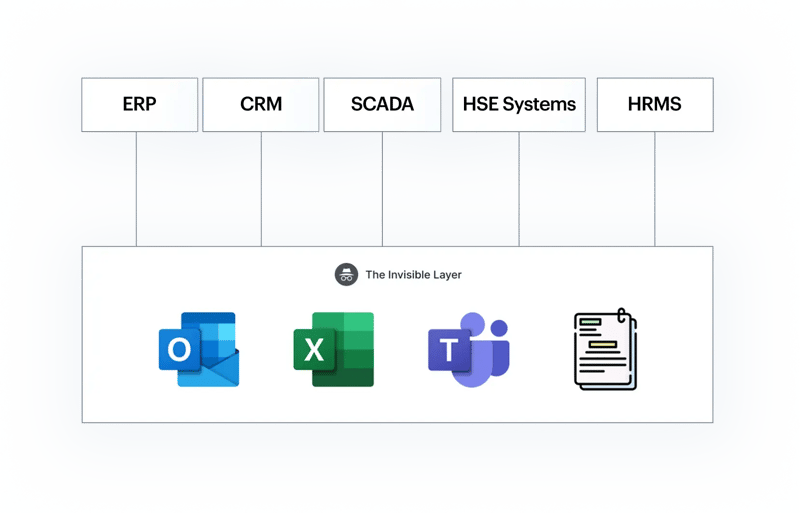
Kissflow runs the requests, readiness gates and permits between operations, maintenance and EHS. SAP PM, Maximo and your EAM stay the systems of record.
Experience — the teams doing the work
Operators, planners, supervisors, EHS and contractors. One shared record.


Kissflow — the execution layer
Routing, escalation, evidence and governance in one layer.


Systems of record — everything you already run
Native integrations, REST APIs and webhooks. Nothing existing moves.
Why maintenance and reliability leaders pick Kissflow
Six reasons plant and reliability teams choose Kissflow over another CMMS module.

Action layer, not another CMMS
Govern the intake, approvals and permits that decide whether a job can start.

Built for the person on the floor
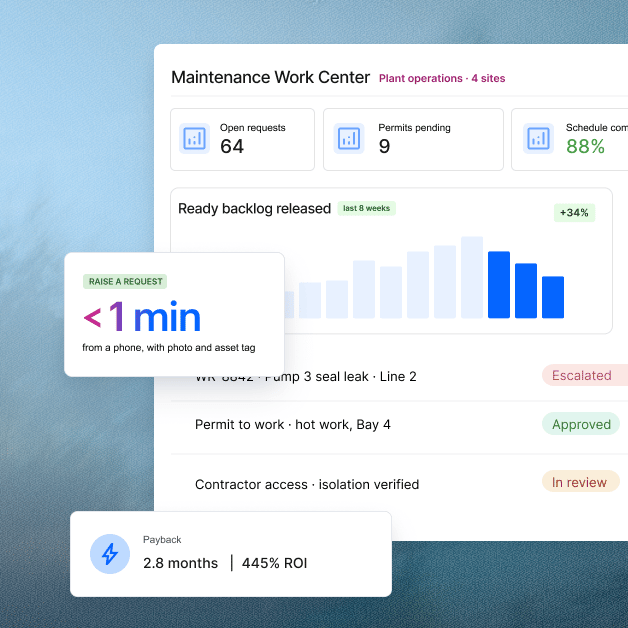
An operator raises a request in under a minute from a phone, with a photo and an asset tag.

30 to 60 day rollout
Go live without opening a project against your asset management roadmap.

Audit-ready safety records
Capture every permit, isolation, verification and handback with a name and a timestamp.

System integrations
Connect SAP PM, IBM Maximo, Infor EAM and Fiix without replacing them.

Reaches contractors
Issue permits to people who will never hold a seat in your asset system.
.webp)
“The Kissflow team met our expectations and helped make the transition smooth. The support personnel has been very helpful and always available when needed to help us to fix issues.”
Nicholas Githinji
Group Processes Head, Ramco
Watch Story