Adverse Event Reporting Built Around the Clock That Starts the Moment It Happens
Kissflow triages an adverse event or unanticipated problem by severity the moment it is reported, starts the notification clock to the IRB chair and, where required, the sponsor and OHRP, and tracks the investigation through to a documented closure.

Trusted by leading universities worldwide





The reporting clock does not wait for Monday
Friday at 4:55 is when an unanticipated problem tends to get reported, and the IRB's notification clock does not check the calendar before it starts. A serious adverse event on an active protocol can carry a 24-hour, 5-day, or 10-day reporting requirement depending on severity and relatedness, and the requirement starts running the moment the event occurs, not when someone gets around to writing it up.
In a lot of research offices, that report arrives as an email to the IRB coordinator, who forwards it, who then has to figure out which clock applies and who else needs to know, the department chair, the sponsor, sometimes OHRP, before anyone starts on the actual investigation.
Kissflow triages an event by severity at intake, starts the applicable notification clock automatically, and routes it to the IRB chair with the sponsor and OHRP copied where the protocol requires it. The investigation and corrective action stay attached to the same record through closure. Your IRB submission platform remains the system of record for the protocol; this is where the event that happened on it gets reported, escalated, and closed out on time.
What a reporting clock loses when it starts as an email
Severity is judged after the fact
The applicable notification window depends on figuring out severity and relatedness first, and that step often waits for the coordinator to have time.
Notification recipients are decided case by case
Whether the sponsor or OHRP needs to be copied gets worked out fresh each time, instead of following the protocol's own requirement.
The clock is not visible until it is close
Nobody sees a reporting deadline approaching until someone happens to check the date the event was first reported.
Investigation and closure live apart from the report
The corrective action taken lands in a separate file from the original report, so proving closure means reconstructing the timeline.
Six modules. Built for a clock that starts the moment it happens.
Every module ships with default forms, routing, and dashboards. Configure each one to your IRB's reporting requirements.
Severity-triaged intake
An event is logged and classified by severity and relatedness at the point of report, not after review.
Notification clock
The applicable reporting window, 24 hours, 5 days, 10 days, starts automatically based on the event's classification.
IRB, sponsor, and OHRP routing
Notification routes to the IRB chair and, where the protocol requires it, the sponsor and OHRP, without a manual distribution list.
Investigation tracking
Findings, interim actions, and follow-up are logged against the same event record as they happen.
Corrective action and closure
A documented remediation step closes the event, with the closure date on record.
Full audit trail
Every classification, notification, and closure action keeps a timestamped record for the IRB and any external reviewer.
From request to system of record in four steps
Report
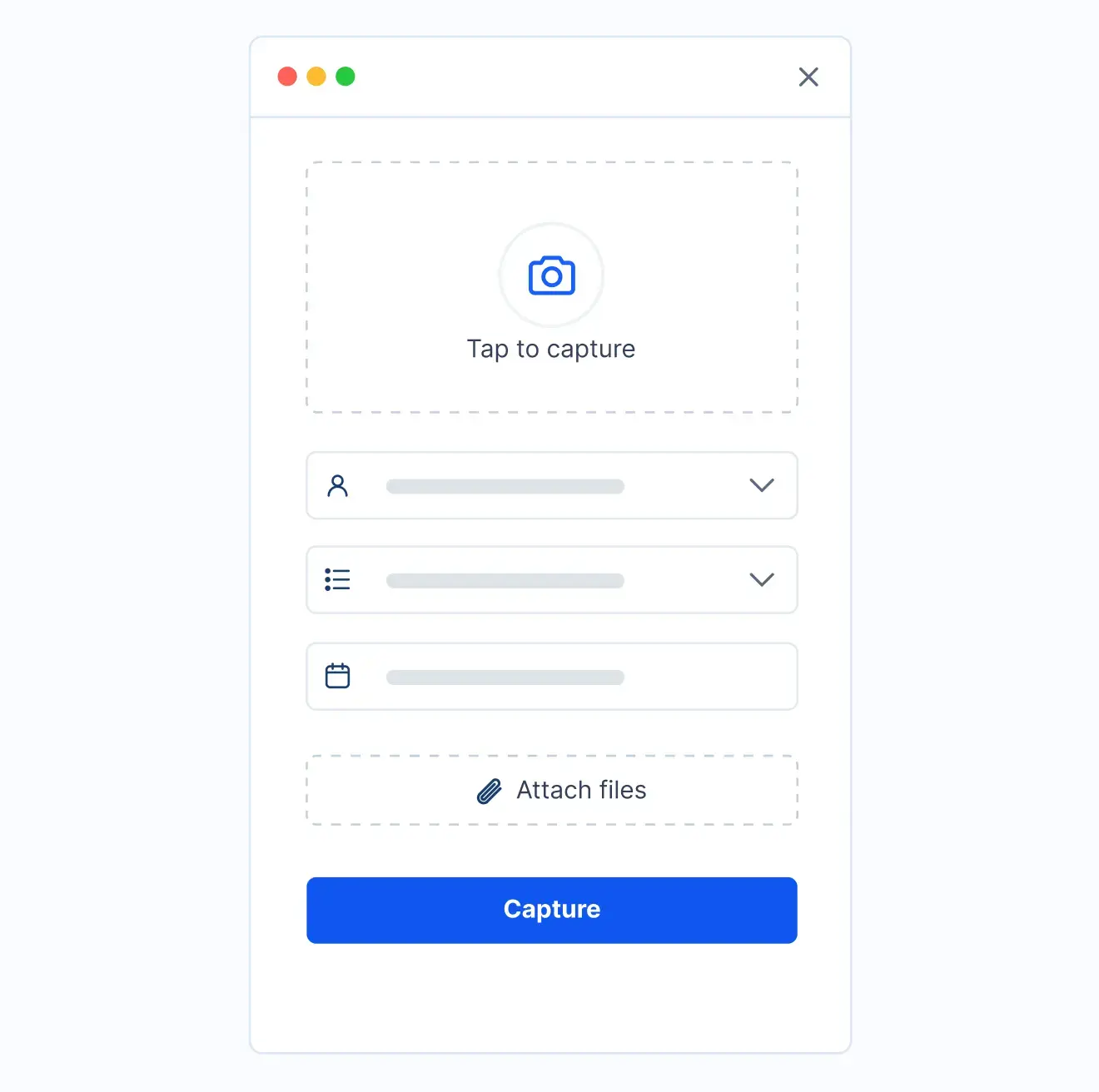
An adverse event or unanticipated problem is logged and triaged by severity at intake.
Assess
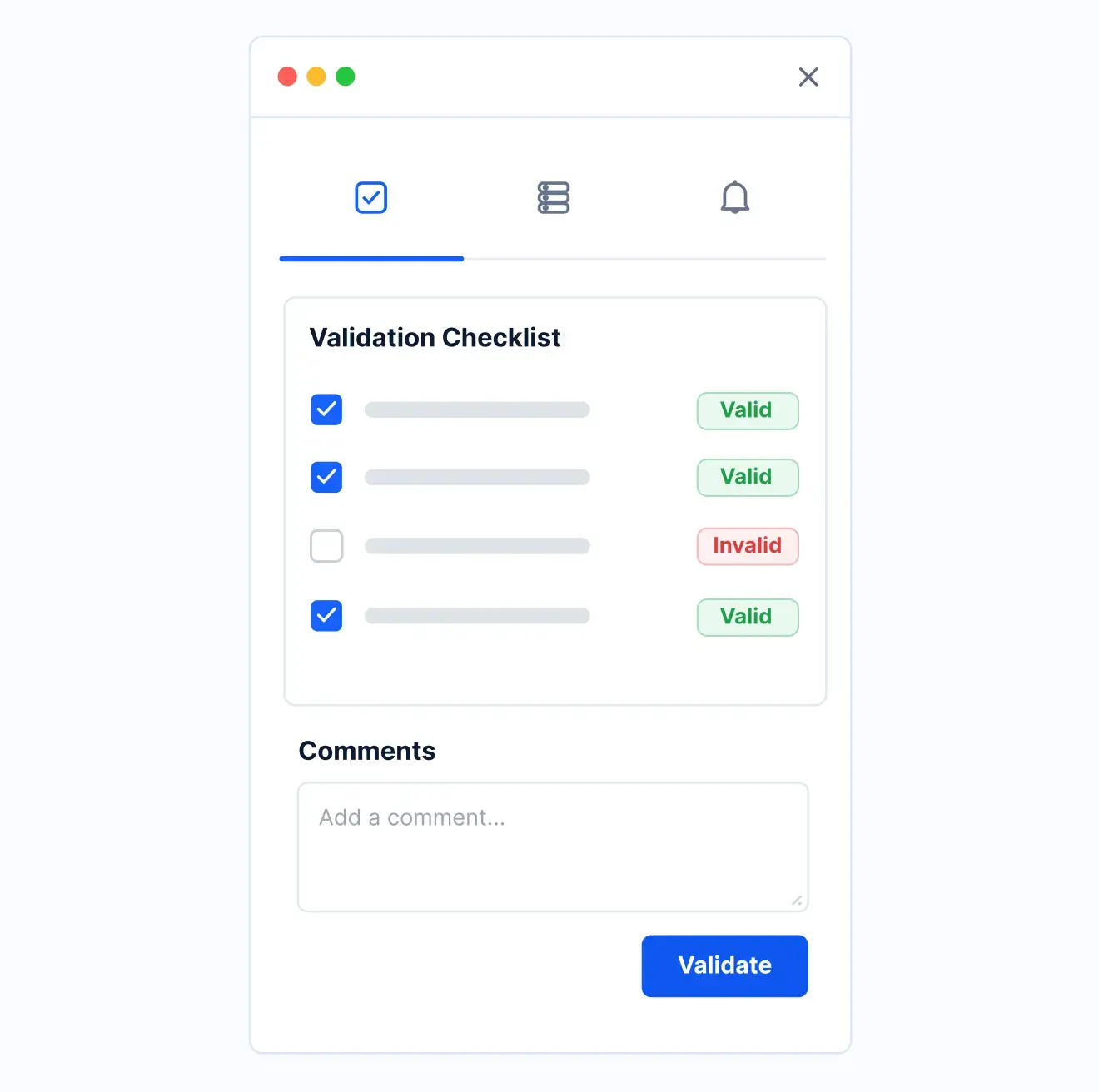
The applicable reporting window begins automatically, based on the event's classification.
Resolve
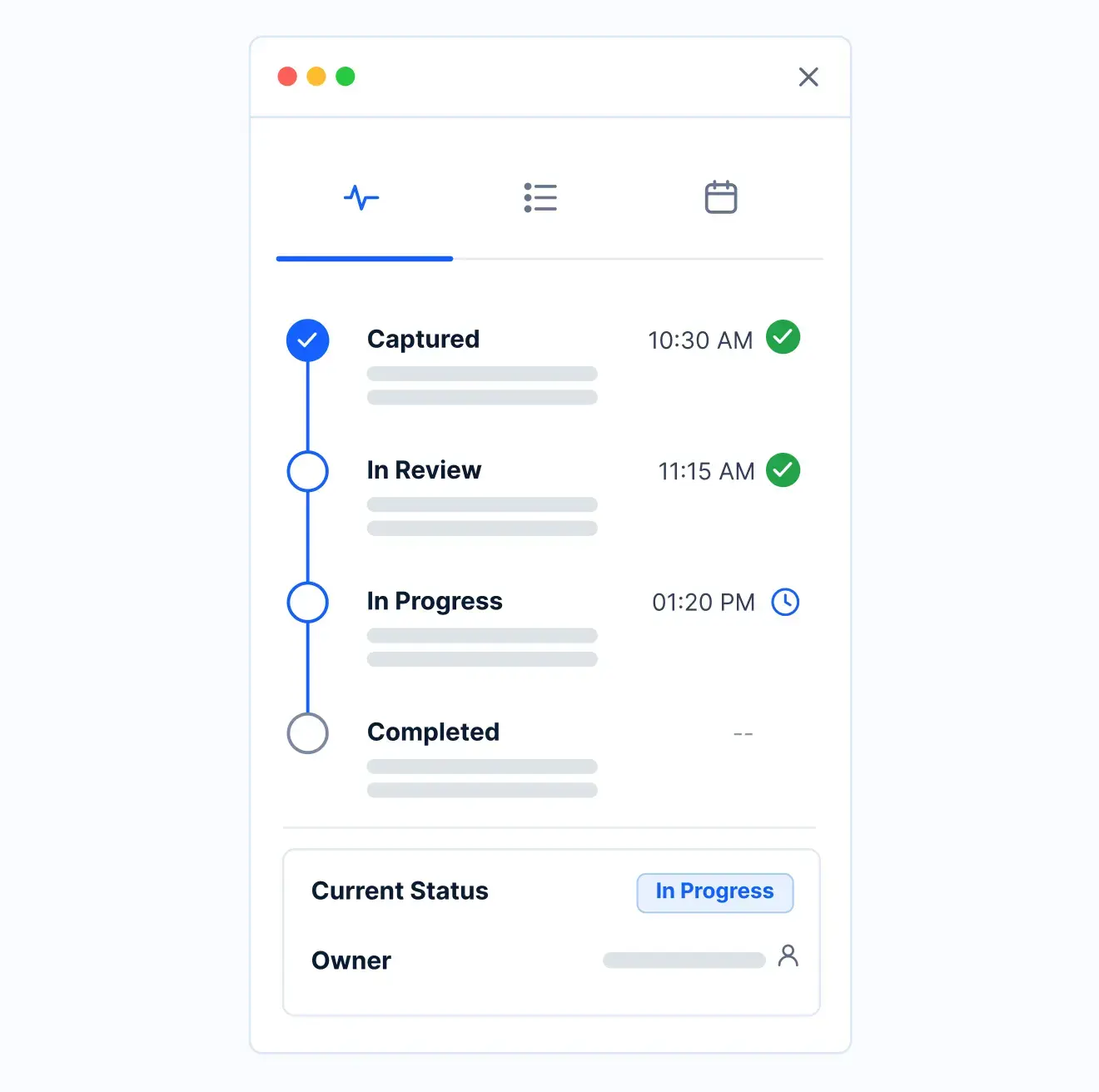
Routing to the IRB, sponsor, and OHRP follows the protocol's actual notification requirement, not a manual checklist.
Record
Corrective action and closure are logged against the same event, ready for review.
What changes when adverse event reporting runs on Kissflow
| Process | Before Kissflow | On Kissflow |
|---|---|---|
| Severity classification | Judged informally, sometimes after the clock has started | Assigned at intake, starting the correct notification window immediately |
| Notification routing | Worked out case by case | Follows the protocol's actual requirement automatically |
| Deadline visibility | Not visible until someone checks the report date | Tracked against the reporting window from the moment of intake |
| Investigation record | Lives apart from the original report | Attached to the same event record throughout |
| Closure | Undocumented or scattered across email | A documented remediation step with a closure date on file |
| Audit trail | Reconstructed from email after the fact | Timestamped automatically at every step |
Connects to your IRB submission system; it stays the system of record
Kissflow does not replace your IRB platform or the protocol file it holds. It is where an adverse event on that protocol gets triaged, its notification clock tracked, and its investigation closed out on time.
.svg)



.svg)
.svg)
.svg)
.svg)

.svg)
.svg)
.svg)
.svg)
.svg)

.svg)

.svg)

.svg)
.svg)
.svg)
.svg)
.svg)
.svg)
.svg)
.svg)
.svg)

.svg)
Built for a clock that starts the moment it happens
Live in weeks
Forms, routing, and dashboards are configured in the visual builder, and the AI Builder can generate a starting workflow from a description of your reporting process.
The right clock, every time
The notification window is set by classification, not left to whoever is triaging the report that day.
Routing that follows the protocol, not a memory
Sponsor and OHRP notification happens automatically when the protocol requires it.
Investigation stays on the record
Findings and corrective action attach to the same event from report to closure.
Role-based access
Investigators see their own events; the IRB office sees the full reporting log.
An audit trail for every notification
Every classification and notification is timestamped automatically.
Related apps
Protocol Amendment & Continuing Review Management System
Tracks the routine amendment and renewal deadlines on the same protocol; see the FAQ for the difference.
Research Audit Preparation & Evidence Assembly Management System
Where a closed adverse event record feeds broader research audit readiness.
Research Compliance Orchestration (IRB/Ethics/Export Control)
The cross-office hub for a sponsored award touching IRB, ethics, and export control together.
We help research offices start the right reporting clock the moment an event is reported, not after someone figures out which one applies.
.gif)

“If a company cannot enable everybody to use AI, they will never get the true benefit of AI. Platforms like Kissflow allow us to put that capability in the hands of our users in a safe way.”
Vagesh Dave
GVP & CIO at McDermott International, Ltd
See The Full Story

“Advanced automation of all processes is easy to set up. I cannot imagine how to manage workflows without this software.”
Tanay Tiwary
Global Head - Digitalization & Business Improvement
See the Full Story

“Kissflow supports rapid application development by building a working application prototype in the shortest amount of time.”
Maria Theresa Cabigon
CIO, SN Aboitiz Power Group
See The Full Story
See what Kissflow can do for you
Talk to usGot questions? We're here to help.
Get SupportNo. Your IRB submission platform remains the system of record for the protocol file. Kissflow triages the event, starts the correct notification clock, and tracks the investigation to closure.
Protocol Amendment & Continuing Review tracks the scheduled, dated obligations of an approved protocol. This app handles an unplanned event, an adverse event or unanticipated problem, reported as it happens, with its own severity-based notification clock.
Any adverse event or unanticipated problem occurring on an active protocol, from a minor deviation to a serious event requiring sponsor and OHRP notification.
By the event's severity and relatedness classification at intake, which sets the applicable reporting window, 24 hours, 5 days, or 10 days, automatically.
Yes. Severity classification, notification routing, and dashboards are configured in the visual builder, and the AI Builder can generate a starting workflow from a description of your reporting process.
The IRB chair, plus the sponsor and OHRP where the protocol's own reporting requirement calls for it, routed automatically based on the event's classification.
Configuration and AI-assisted setup typically move initial rollout to weeks, not a multi-month systems project.
Kissflow is certified to SOC 1, SOC 2, SOC 3, and ISO/IEC 27001, supports HECVAT review, and is built to support FERPA and GLBA Safeguards obligations, with data residency options in the US, EU, APAC, and Oceania.