Reservoir Management App
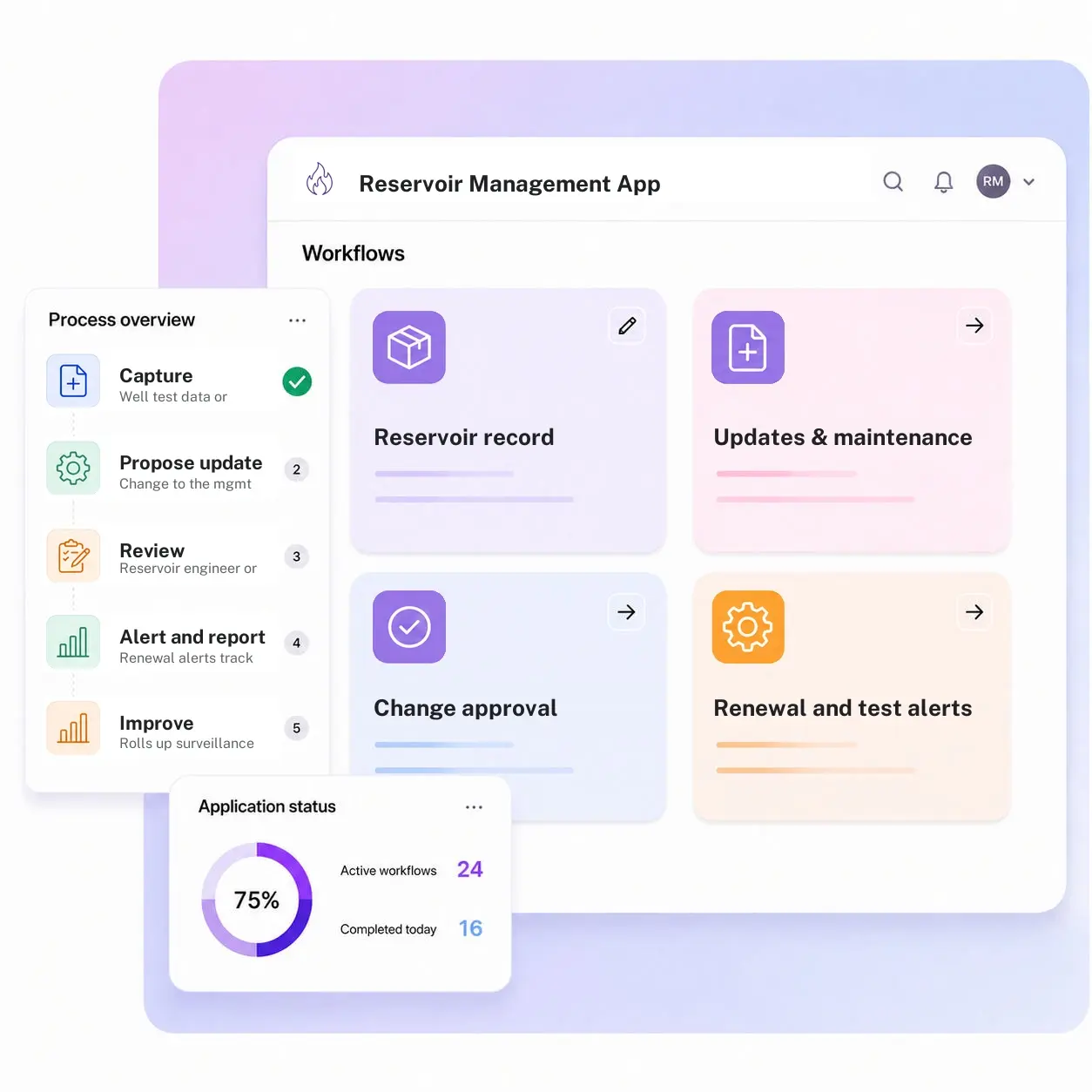
Kissflow tracks well test data, production surveillance, and updates to the reservoir management plan as one governed record, with change approval, renewal alerts, and an audit trail, so an update to how a reservoir is being managed is reviewed and traceable, not just a new file overwriting the last one.
Trusted by energy operators worldwide






A well's choke gets adjusted on a hunch that turns out right, and the data that would have confirmed it sooner sat in three spreadsheets
Reservoir engineers make good calls constantly, on incomplete information, because the well test result, the pressure trend, and the last approved management plan update live in three places that don't talk to each other. A file share can hold the latest spreadsheet someone saved. It can't show who approved the last plan change, when the next well test is due, or whether this recommendation contradicts one made two months ago.
Kissflow runs reservoir management data as a governed record: well test results and production surveillance readings captured against the well and reservoir, updates to the management plan routed through change approval before they land in the record of reference, renewal alerts for the next test or review interval, and an audit trail that shows who approved what and when. It sits alongside your reservoir simulation and petrotechnical software, which stays the system of record for the subsurface model itself.
Reservoir engineers and asset team leads configure record structure and approval routing in the visual builder. Every update carries an approver and a timestamp, so the plan a new team member reads today is the one that was actually last approved.
What a spreadsheet-based reservoir record misses
Well test data sits disconnected
The latest test result lives in a file that doesn't link to the well's history or the current management plan.
Plan updates overwrite without review
A spreadsheet gets edited directly, with no approval step and no record of what changed or why.
Test intervals get missed
Nothing alerts anyone that a well is due for its next test until it's already overdue.
No audit trail for reserves reporting
Reconstructing who approved a management plan change takes a manual search through file versions.
Six modules. Built so the plan everyone reads is the one that was actually approved.
Every module ships with default forms, routing, and dashboards. Configure each one to your reservoir management process in the visual builder.
Reservoir record creation
A governed record per well and reservoir, capturing test data, surveillance readings, and current management status.
Updates and maintenance
Structured updates to well test data and production surveillance, tied to the reservoir's continuous record.
Change approval
Routes a proposed update to the reservoir management plan for review before it lands in the record of reference.
Renewal and test alerts
Flags when a well's next test or surveillance interval is coming due, before it's overdue.
Audit and reporting
Maintains a full trail of updates and approvals, ready to support reserves engineering and regulatory reporting.
Reservoir dashboard
Rolls up surveillance trends and pending updates across every well and reservoir in the asset.
From request to system of record in four steps
Submit
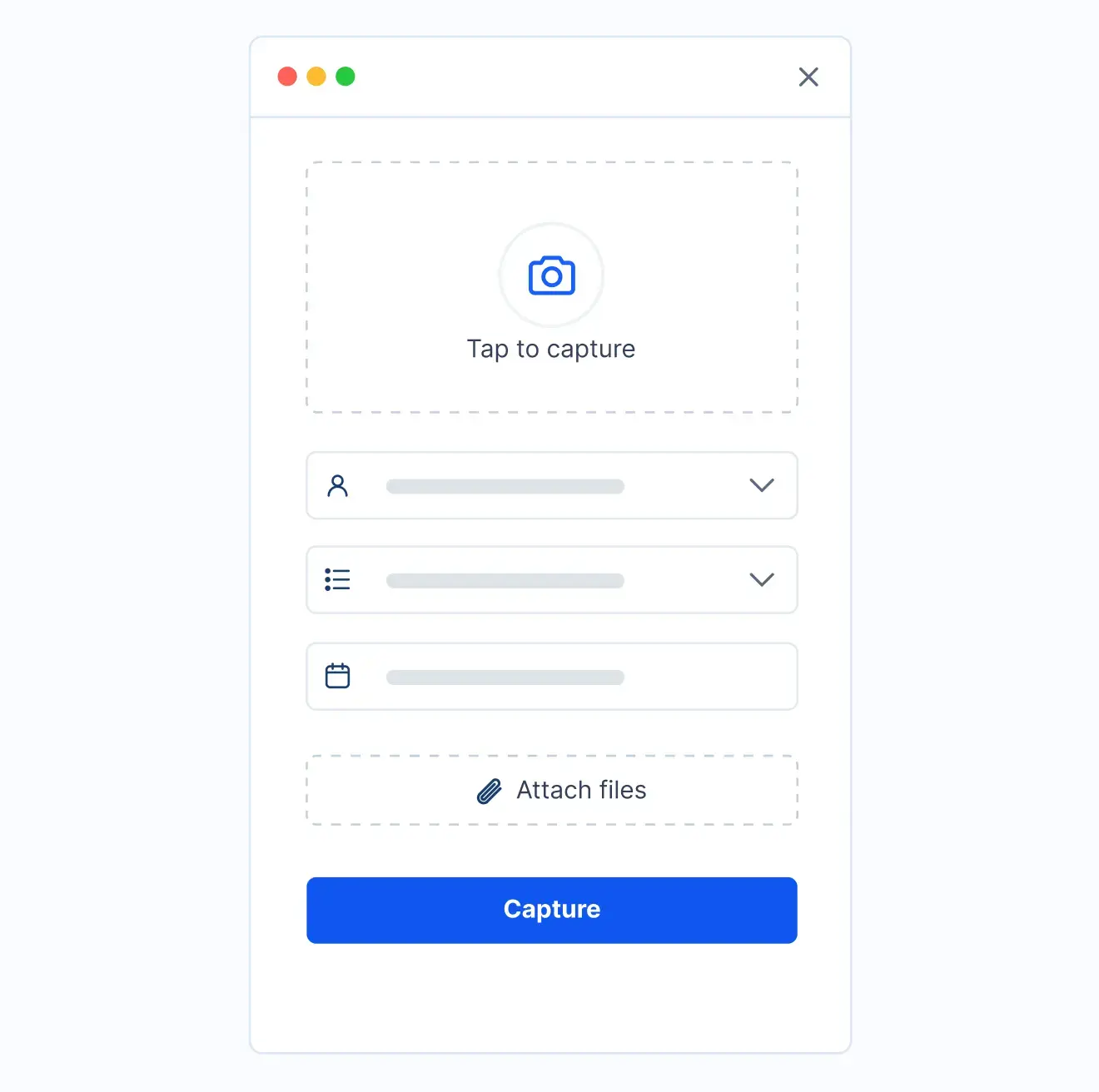
A change to the reservoir management plan is submitted, with well test data or surveillance readings attached as supporting evidence against the governed record.
Review
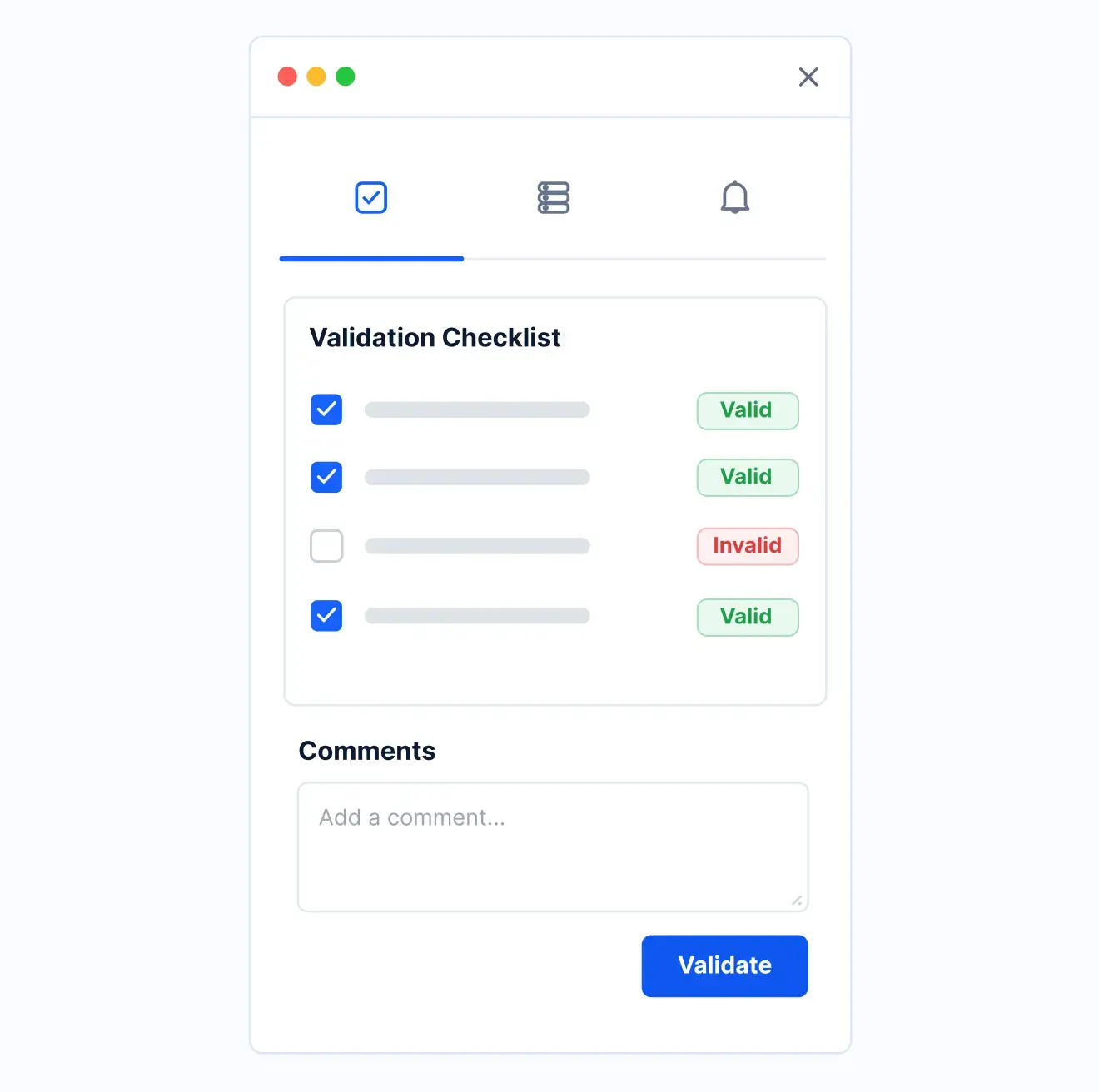
A reservoir engineer or asset lead reviews the update against the data before it is reflected in the record of reference.
Approve
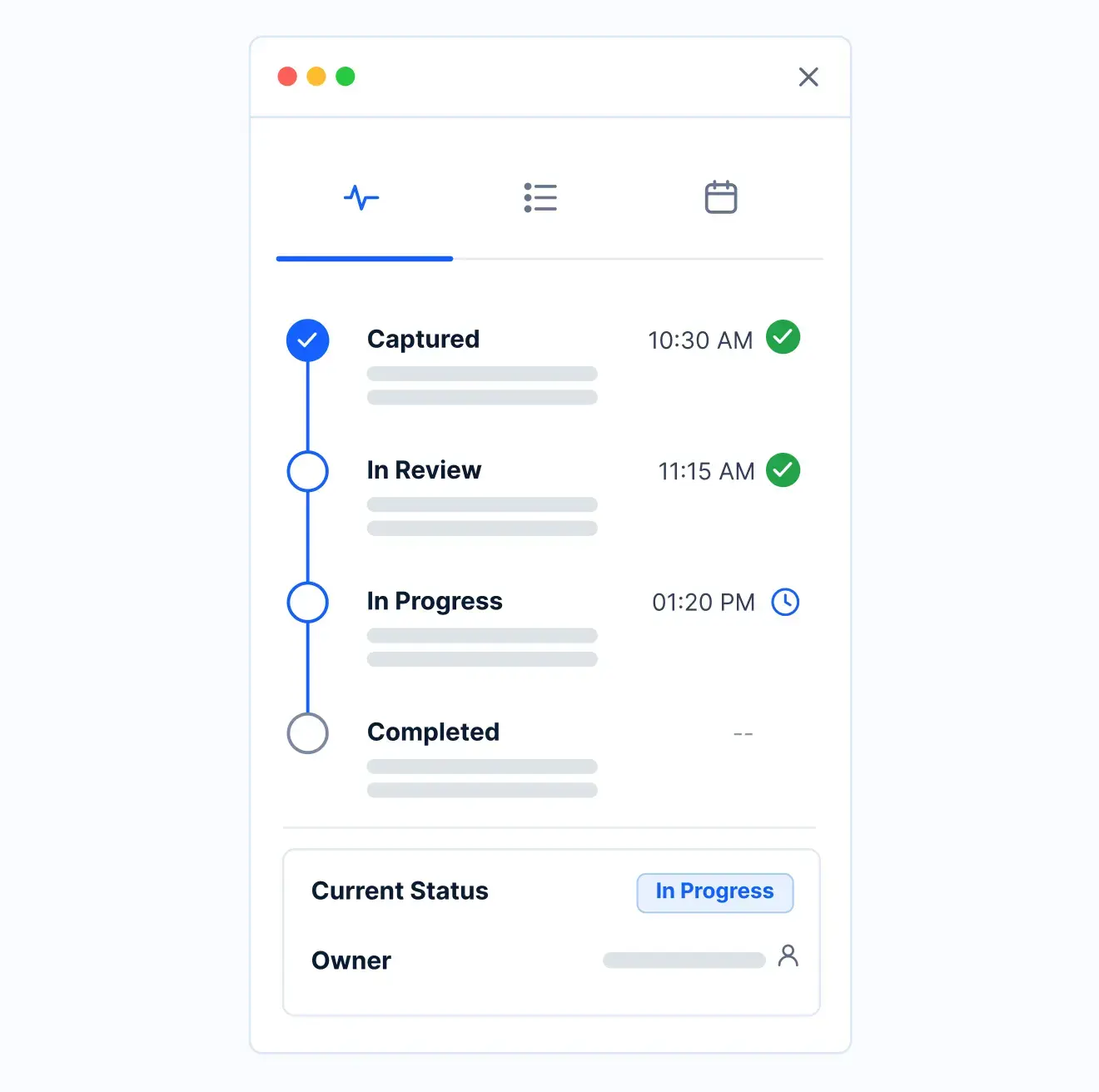
The approved update becomes the plan of reference, superseding the prior version rather than a new file quietly overwriting the last.
Record
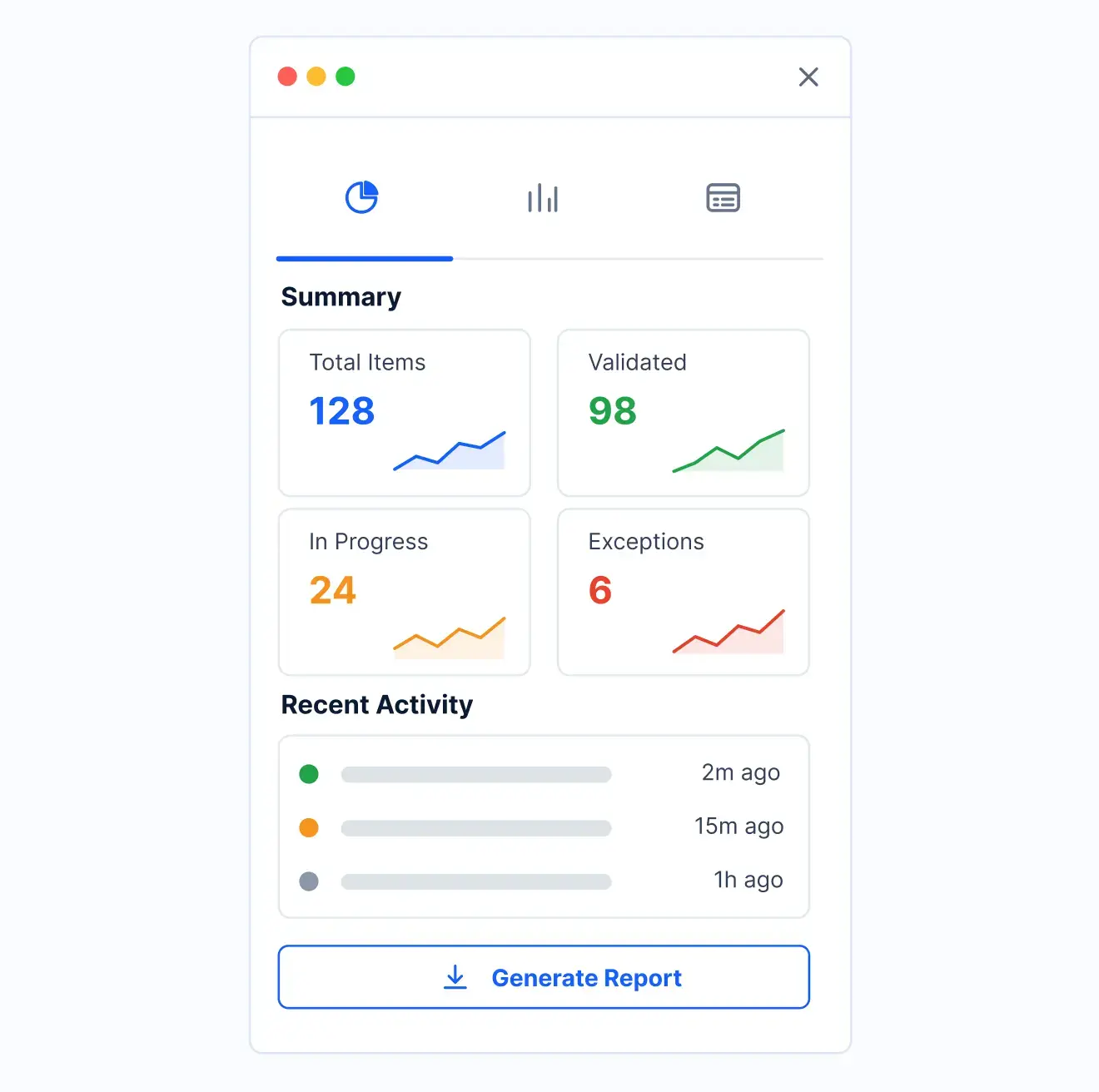
Renewal alerts track the next test interval, and every update feeds the audit trail and dashboard.
What changes when reservoir management data runs on Kissflow
| Process | Before Kissflow | On Kissflow |
|---|---|---|
| Well test data | Lives in a disconnected file | Linked to the well's governed record |
| Plan updates | Overwritten directly, with no review | Routed through change approval before landing in the record |
| Test intervals | Missed until overdue | Flagged by renewal alerts ahead of the date |
| Audit trail | Reconstructed manually from file versions | Maintained automatically with every approval |
| Reservoir visibility | Spread across spreadsheets by well | Rolled up on one dashboard across the asset |
| Handoff to simulation software | Manual re-entry of governed changes | A clean, approved record ready to inform the subsurface model |
Connects alongside your reservoir simulation and petrotechnical software
Petrel, Eclipse, or your reservoir simulation software stays the system of record for the subsurface model. Kissflow tracks the operational record and approval trail around it.
.svg)



.svg)
.svg)
.svg)
.svg)

.svg)
.svg)
.svg)
.svg)
.svg)

.svg)

.svg)

.svg)
.svg)
.svg)
.svg)
.svg)
.svg)
.svg)
.svg)
.svg)

.svg)
Built so the last approved plan is the one on record
Change approval, not silent overwrite
A management plan update is reviewed before it replaces the record of reference.
Test intervals that alert ahead of time
A well due for its next test surfaces before the interval lapses.
An audit trail built as the work happens
Every update and approval is timestamped, ready for reserves and regulatory reporting.
Live in weeks
Record structure and approval routing configure in the visual builder, without a systems project.
One dashboard across the asset
Surveillance trends and pending updates roll up across every well and reservoir.
Access restricted to the asset team
Role-based access keeps subsurface data scoped to reservoir engineering and asset leadership.
Related apps
Drilling Optimization App
Consumes reservoir management recommendations to inform an active well's drilling plan.
AI-Enabled Seismic Analytics App
The subsurface interpretation layer that feeds prospect and reservoir data upstream of this record.
Tank Inventory & Compliance App
Tracks the produced volumes downstream of the reservoir once they reach storage.
We help asset teams keep the reservoir record and the approved plan in sync
.gif)

“If a company cannot enable everybody to use AI, they will never get the true benefit of AI. Platforms like Kissflow allow us to put that capability in the hands of our users in a safe way.”
Vagesh Dave
GVP & CIO at McDermott International, Ltd
See The Full Story

“Advanced automation of all processes is easy to set up. I cannot imagine how to manage workflows without this software.”
Tanay Tiwary
Global Head - Digitalization & Business Improvement
See the Full Story

“Kissflow supports rapid application development by building a working application prototype in the shortest amount of time.”
Maria Theresa Cabigon
CIO, SN Aboitiz Power Group
See The Full Story
See what Kissflow can do for you
Talk to usGot questions? We're here to help.
Get SupportNo. Petrel, Eclipse, or your reservoir simulation and petrotechnical software stays the system of record for the subsurface model. Kissflow tracks the operational data around it, well test results, production allocation, change approvals, and the audit trail for reserves reporting.
Well test data, pressure and production surveillance readings, change requests to reservoir management plans, and the approval and audit history behind reserves-relevant updates.
A spreadsheet holds the last file someone saved. This app links well test data to a governed record with change approval and renewal alerts, so an update to the reservoir management plan is reviewed, not just overwritten.
Configurable by role, typically a reservoir engineer or asset team lead reviews and approves updates before they're reflected in the record of reference.
Yes. A reservoir management update can trigger a linked recommendation, visible to related workflows like drilling optimization, without duplicating the underlying data.
It maintains the audit trail, updates, approvals, and timestamps, that reserves reporting draws on. The formal reserves report itself is produced by your reserves engineering process.
Record structure, approval routing, and alert rules configure in the visual builder, without an engineering project.
Kissflow is certified to SOC 1, SOC 2, SOC 3, and ISO/IEC 27001, with role-based access restricting subsurface data to the asset team.











