Incident & Near Miss Reporting That Doesn't Depend on a Toolbox Talk
Kissflow makes reporting a near miss as easy as reporting an incident from any channel, triages every report by severity with an SLA timer attached, tracks root cause investigation to a closed corrective action, and builds a searchable history so a new report gets checked against similar past events.
Trusted by energy operators worldwide




A near miss with no injury and no equipment damage is the easiest incident in the world to not report.
Nothing forces anyone to write down a near miss, even though it carries the same lesson as an incident that actually caused harm. Told once in a toolbox talk and never again, the informal version teaches nobody outside that room. A verbal mention can pass along a warning for a week, if it travels at all. It can't triage a report by severity, assign it for investigation with an SLA attached, connect this near miss to the three similar ones filed last quarter, or show a safety manager the pattern building across sites before it turns into a lost-time injury.
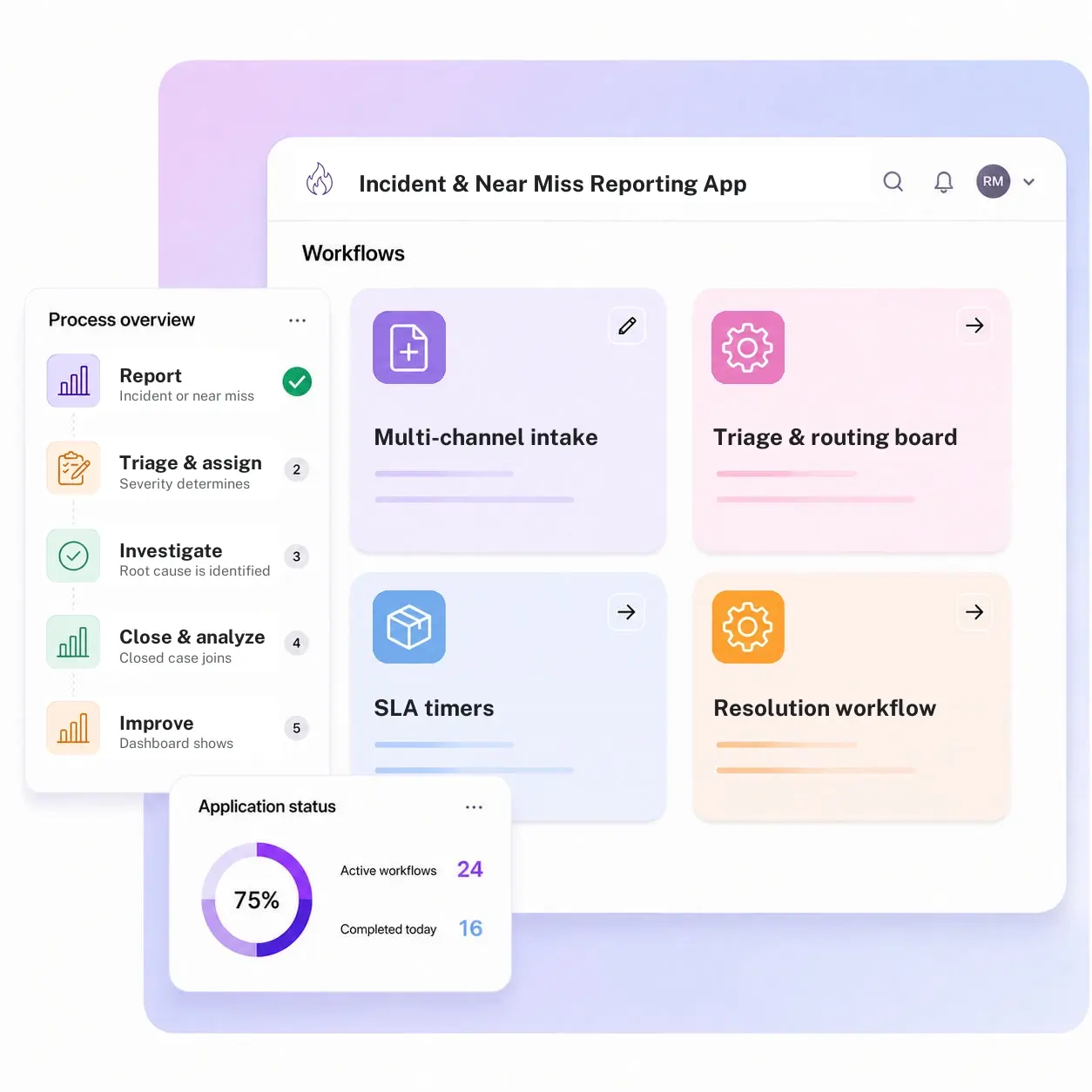
Kissflow runs incident and near miss reporting as a case workflow rather than a word-of-mouth warning: intake from whichever channel is easiest for the reporter, a triage and routing board that assigns every report by severity, SLA timers that keep an investigation from quietly sitting, a resolution workflow with root-cause analysis tracked to a closed corrective action, a searchable knowledge base of past incidents and near misses, and trend analytics that surface a pattern by type, site, and crew.
Where a near miss loses its lesson before it's ever written down
Near misses go unreported
With no injury or damage, a near miss gets mentioned once verbally and never becomes a record anyone can learn from.
Triage is inconsistent
Whether a report gets investigated quickly or sits for a week depends on who happens to see it, not a defined severity rule.
Root cause gets skipped under time pressure
A report gets closed with a quick fix, and the actual root cause never gets identified or shared.
Lessons don't travel
The same incident type recurs at a different site or crew because nothing connects this report to the ones like it.
Six modules. Every report triaged, investigated, and connected to what came before it.
Every module ships with default forms, routing, and dashboards. Configure each one to your severity rules and SLA policy.
Multi-channel intake
A report can come in from a phone, a kiosk, or a form, so the barrier to reporting a near miss stays low.
Triage and routing board
Every report is triaged by severity and routed to the right investigator, with nothing left unassigned.
SLA timers
Investigation and closure run against a timer tied to severity, so a serious report can't quietly sit.
Resolution workflow
Corrective actions from the investigation are tracked to closure, not left as a note in the case file.
Root-cause knowledge base
Closed incidents build a searchable history, so a new report can be checked against similar past events.
Trend analytics
A dashboard shows incident and near-miss trends by type, site, and crew, surfacing a pattern before it becomes a lost-time injury.
From request to system of record in four steps
Report
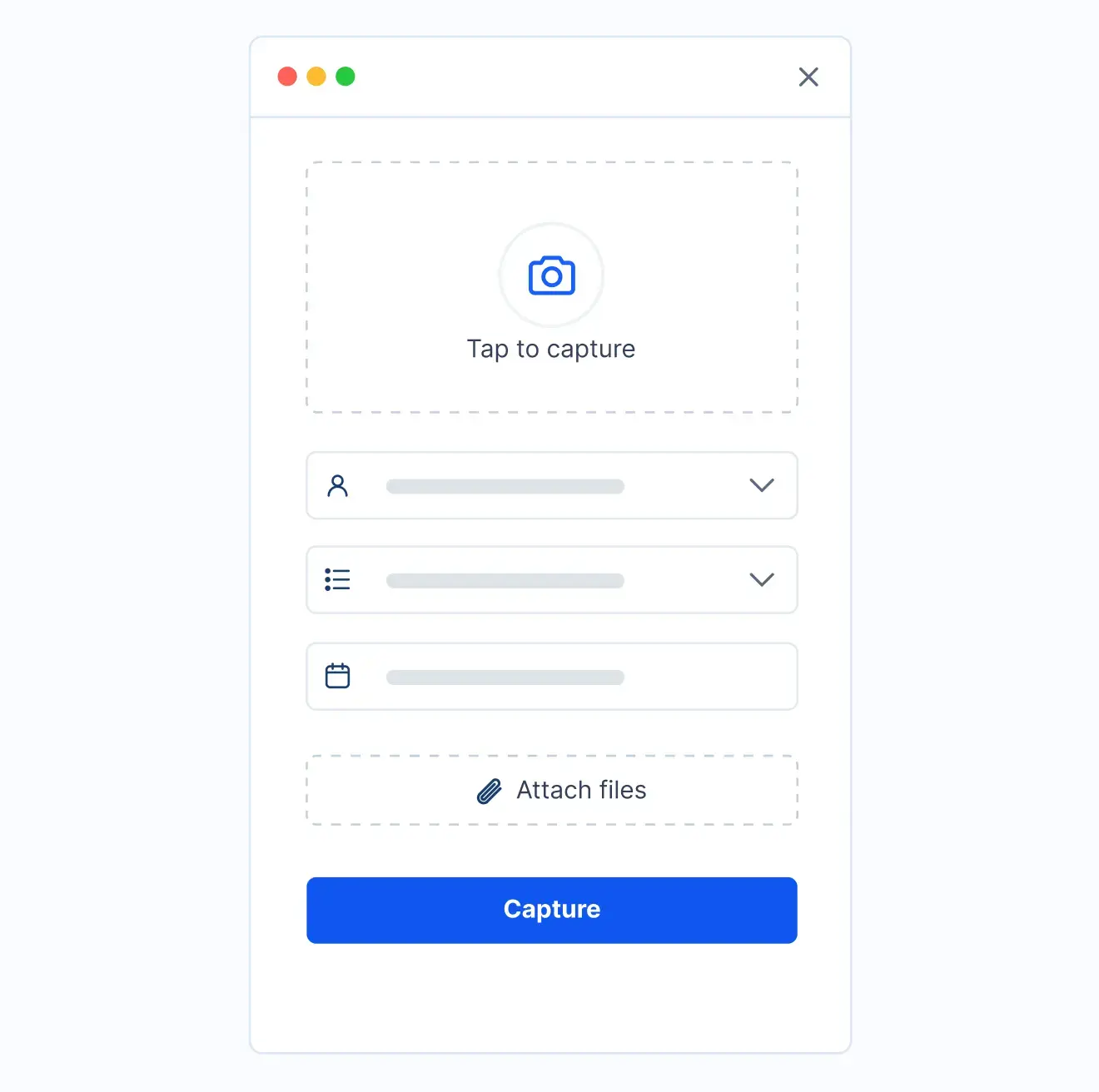
An incident or near miss is logged through whichever channel is easiest for the reporter.
Assess
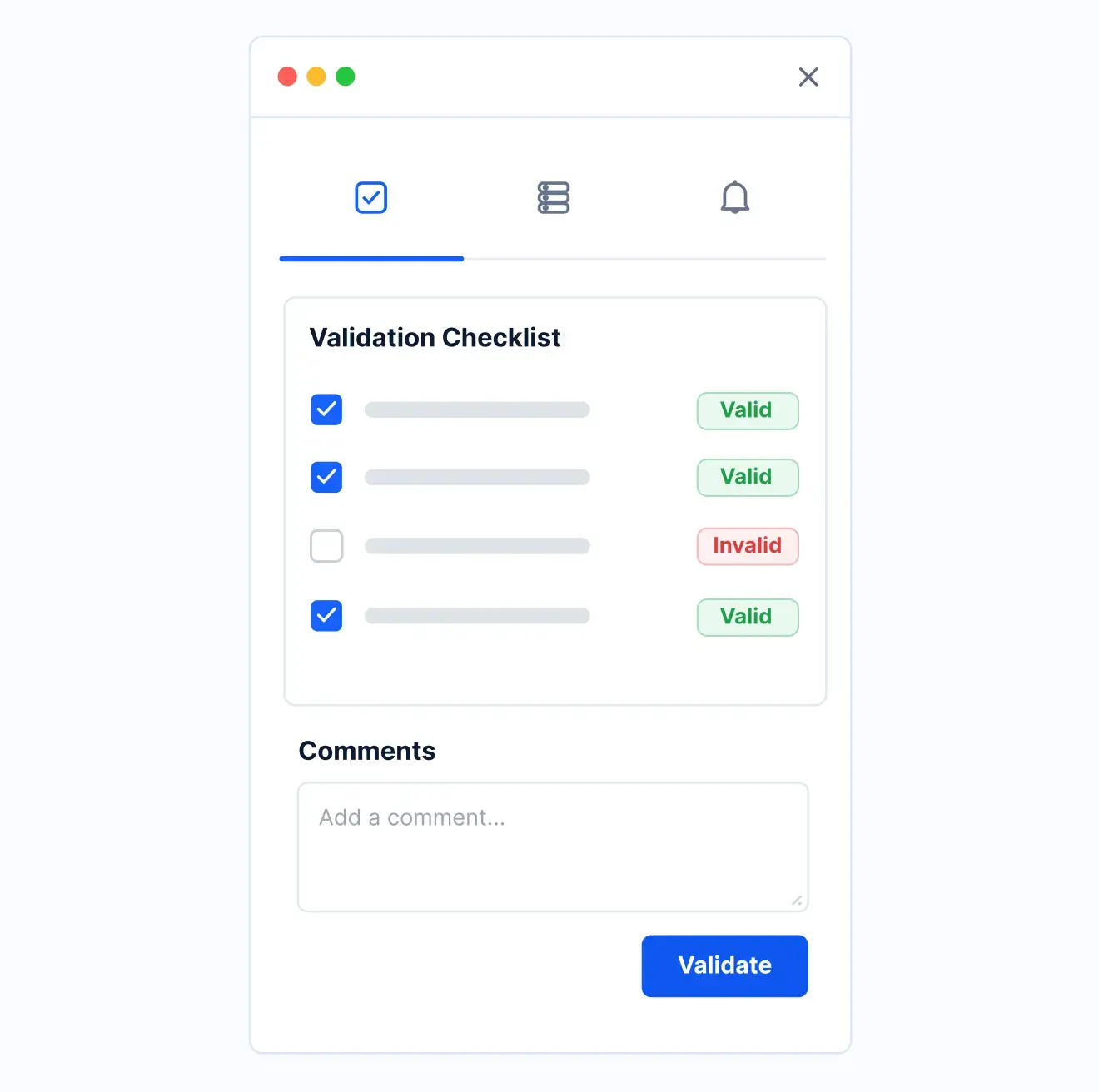
Severity determines who the report routes to and starts the SLA clock on the investigation.
Resolve
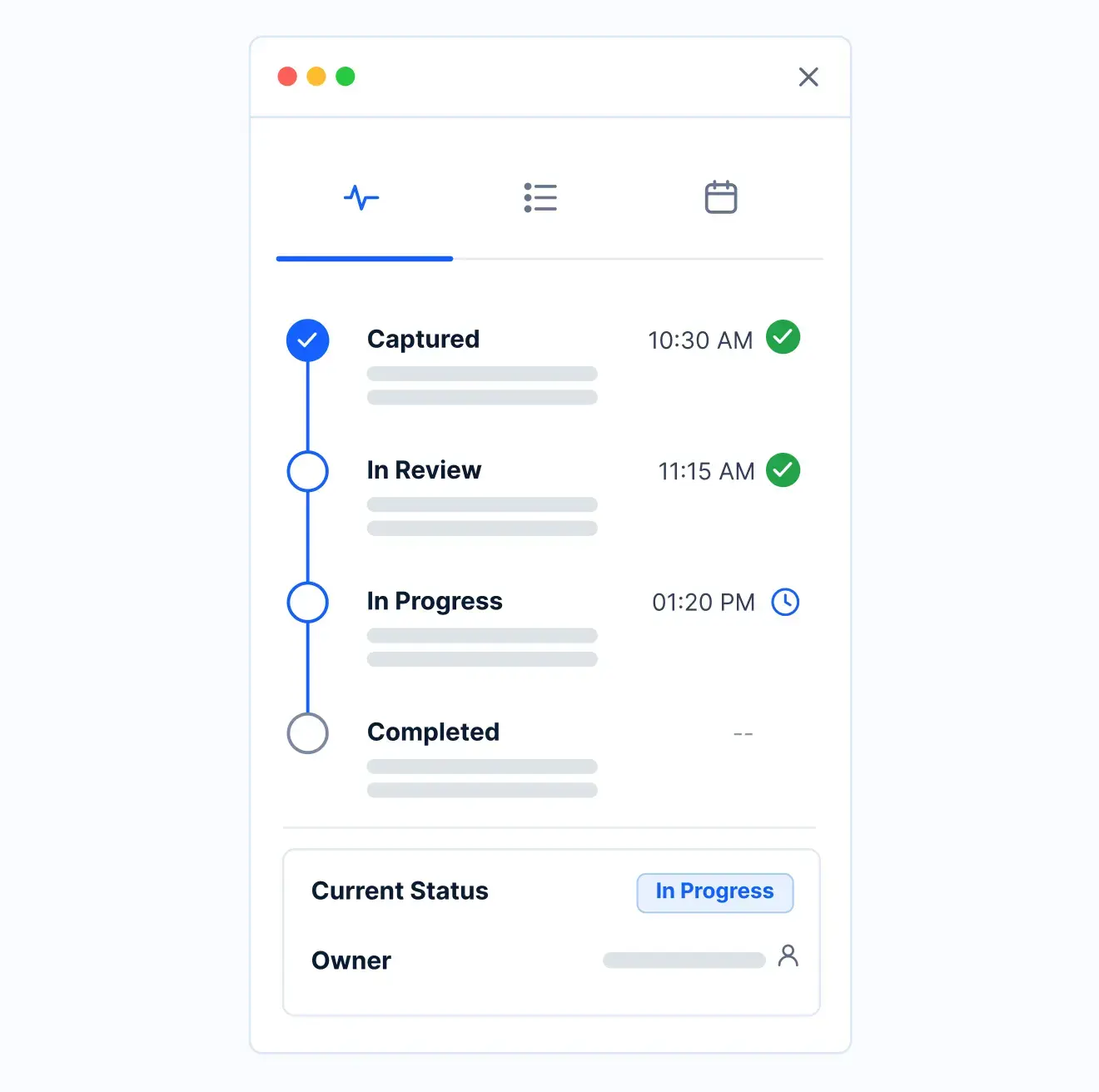
Root cause is identified during investigation, and every corrective action it produces is tracked to closure.
Record
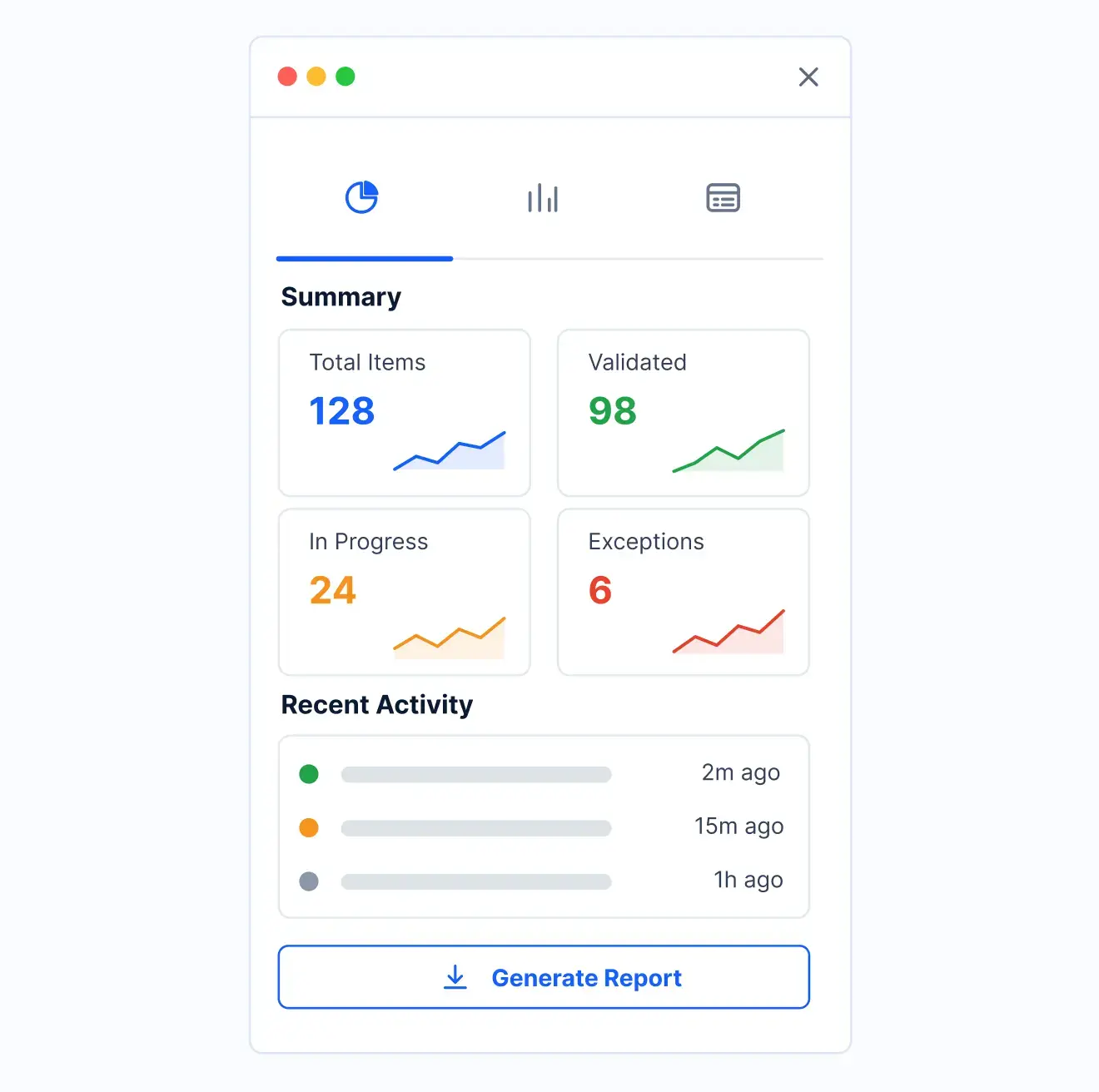
The closed case joins the searchable knowledge base and feeds the trend analytics that surface a pattern, so a new report is checked against similar past events.
What changes when incident reporting runs on Kissflow
| Process | Before Kissflow | On Kissflow |
|---|---|---|
| Reporting | A verbal mention in a toolbox talk, easily forgotten | Logged through an accessible multi-channel intake |
| Triage | Depends on who happens to see the report | Consistent, severity-based routing |
| Investigation timing | No deadline; serious reports can sit | Tracked against an SLA timer tied to severity |
| Root cause | Often skipped for a quick fix | Required as part of the resolution workflow |
| Lessons learned | Don't travel beyond the crew that saw it | Searchable in a knowledge base across sites |
| Trend visibility | No pattern recognition across reports | Visible on a dashboard by type, site, and crew |
Connects to your EHS platform; that stays the system of record for formal regulatory incident reporting
Kissflow doesn't replace your EHS platform's regulatory reporting module. It runs the intake, triage, investigation, and trend-analysis workflow that feeds it.
.svg)



.svg)
.svg)
.svg)
.svg)

.svg)
.svg)
.svg)
.svg)
.svg)

.svg)

.svg)

.svg)
.svg)
.svg)
.svg)
.svg)
.svg)
.svg)
.svg)
.svg)

.svg)
Built to keep reporting low-friction
Reporting stays low-friction
Multiple intake channels mean a near miss with no injury still gets reported, not just mentioned once.
Consistent triage
Severity, not who happens to see the report, decides the routing.
Nothing sits quietly
SLA timers keep an investigation moving on a schedule tied to how serious it is.
Lessons that travel
A searchable knowledge base connects a new report to similar past incidents across sites.
Live in weeks
Configure intake channels and triage rules in the visual builder, or describe the use case to the AI Builder.
Governed from day one
Role-based access and a complete audit log are built into every report.
Related apps
Safety Audit Action Tracker
Close findings from a periodic formal safety audit against a standard.
Corrective Action Plan Tracker
Track failure-investigation actions against a cause with a scheduled effectiveness review.
Emergency Response App
Coordinate site-wide muster and accountability when an incident escalates into a declared emergency.
We help crews report a near miss without it disappearing into a toolbox talk
.gif)

“If a company cannot enable everybody to use AI, they will never get the true benefit of AI. Platforms like Kissflow allow us to put that capability in the hands of our users in a safe way.”
Vagesh Dave
GVP & CIO at McDermott International, Ltd
See The Full Story

“Advanced automation of all processes is easy to set up. I cannot imagine how to manage workflows without this software.”
Tanay Tiwary
Global Head - Digitalization & Business Improvement
See the Full Story

“Kissflow supports rapid application development by building a working application prototype in the shortest amount of time.”
Maria Theresa Cabigon
CIO, SN Aboitiz Power Group
See The Full Story
See what Kissflow can do for you
Talk to usGot questions? We're here to help.
Get SupportSafety Audit Action Tracker closes findings that came out of a periodic, formal audit against a standard. This app is the front door for any incident or near miss, reported as it happens, investigated, and, where warranted, handed to a broader corrective action program.
Corrective Action Plan Tracker manages the formal, cause-based corrective action and its scheduled effectiveness review, typically for larger or recurring issues. This app is the intake, triage, and initial investigation workflow that often feeds it.
As low as you configure it, a phone, a kiosk, or a quick form, so a report with no injury or damage still gets filed.
Configurable rules route a report based on its type, potential consequence, and location, so a serious near miss gets the same urgency as an actual incident.
No. Your EHS platform stays the system of record for regulatory filings. This app runs the intake, investigation, and trend workflow that feeds it.
Yes, the knowledge base is searchable by incident type, site, and root cause.
Configuration and AI-assisted app generation move delivery from a multi-month program to a matter of weeks.
Kissflow is certified to SOC 1, SOC 2, SOC 3, and ISO/IEC 27001, with role-based access and a full audit log on every report.