Cross-Department Process Standardization for the Approval That Runs Five Different Ways
Travel approval, purchase requests, room booking, each gets one registered version departments actually adopt, tracked and reviewed on a schedule, so a new hire never spends their first month reverse-engineering a routing chain someone else already built.

Trusted by leading universities worldwide




The same travel approval runs a different way in every building
The same travel approval runs one way in the business school and an entirely different way two buildings over in the college of engineering, and neither department knows the other's version exists. New staff learn whatever their own department happens to do, nobody can say which departments have adopted a shared standard and which haven't, and a process rolled out once, years ago, drifts further from current practice every year nobody revisits it.
Cross-Department Process Standardization Management System registers one approved version of a shared process, tracks which departments are actually running it, and schedules a periodic review so the standard stays current instead of frozen at rollout. The approved version of a shared process, travel approval, purchase request, room booking, gets held in one registry, the standard forms and routing every department is expected to use live in one library, and adoption tracking shows which departments are running the standard and which are still on their own version. A scheduled review keeps the standardized process current, and variance reporting shows where departments have diverged and by how much.
What breaks when the same process runs a different way in every department
No single version of the process exists
Travel approval, purchase requests, and room booking each have as many variants as there are departments.
New staff learn whatever their department happens to do
Not a documented institutional standard.
Adoption is invisible
Nobody can say which departments have switched to the standard process and which haven't.
Standards go stale
A process gets rolled out once and never revisited, drifting further from practice every year.
Six modules. Built for one process, adopted everywhere, reviewed on a schedule.
Every module ships with default forms, routing, and dashboards. Configure each one to match the shared processes your institution wants to standardize.
Standard process registry
The approved version of a shared process, travel approval, purchase request, room booking, held in one registry, not memory.
Template and form library
The standard forms and routing every department is expected to use, held in one library instead of four versions.
Department adoption tracking
Which departments are running the standard process, and which are still on their own version, tracked directly.
Periodic process review
Every standardized process comes up for a scheduled review, not a one-time rollout that freezes at launch forever.
Adoption and variance reporting
Where departments have diverged from the standard, and by how much, visible in one adoption and variance report.
Change history
Every revision to a standard process is versioned and attributed, so nobody has to guess who changed what and when.
From request to system of record in four steps
Capture
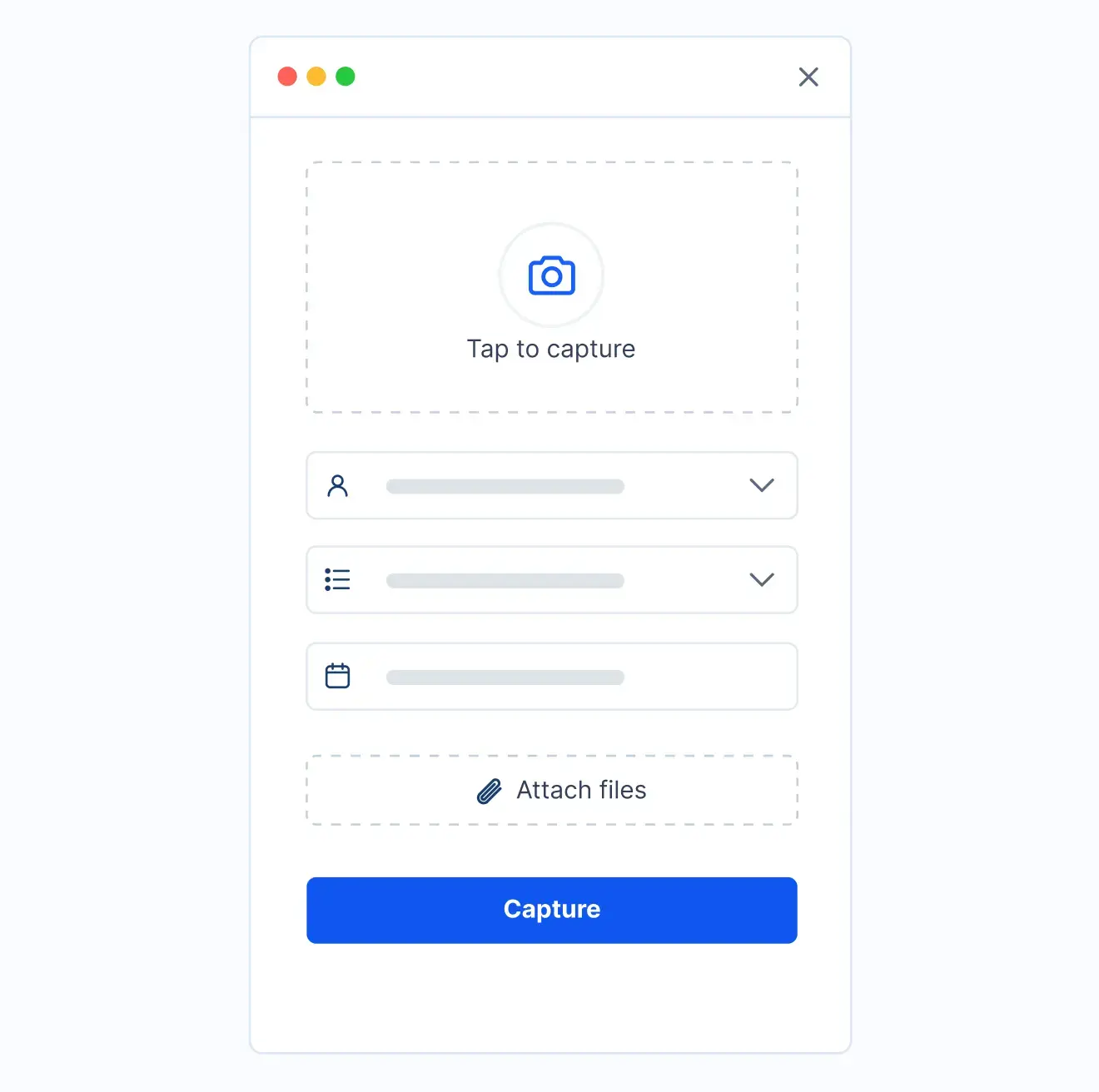
The approved version of a shared process is registered and documented in one place.
Validate
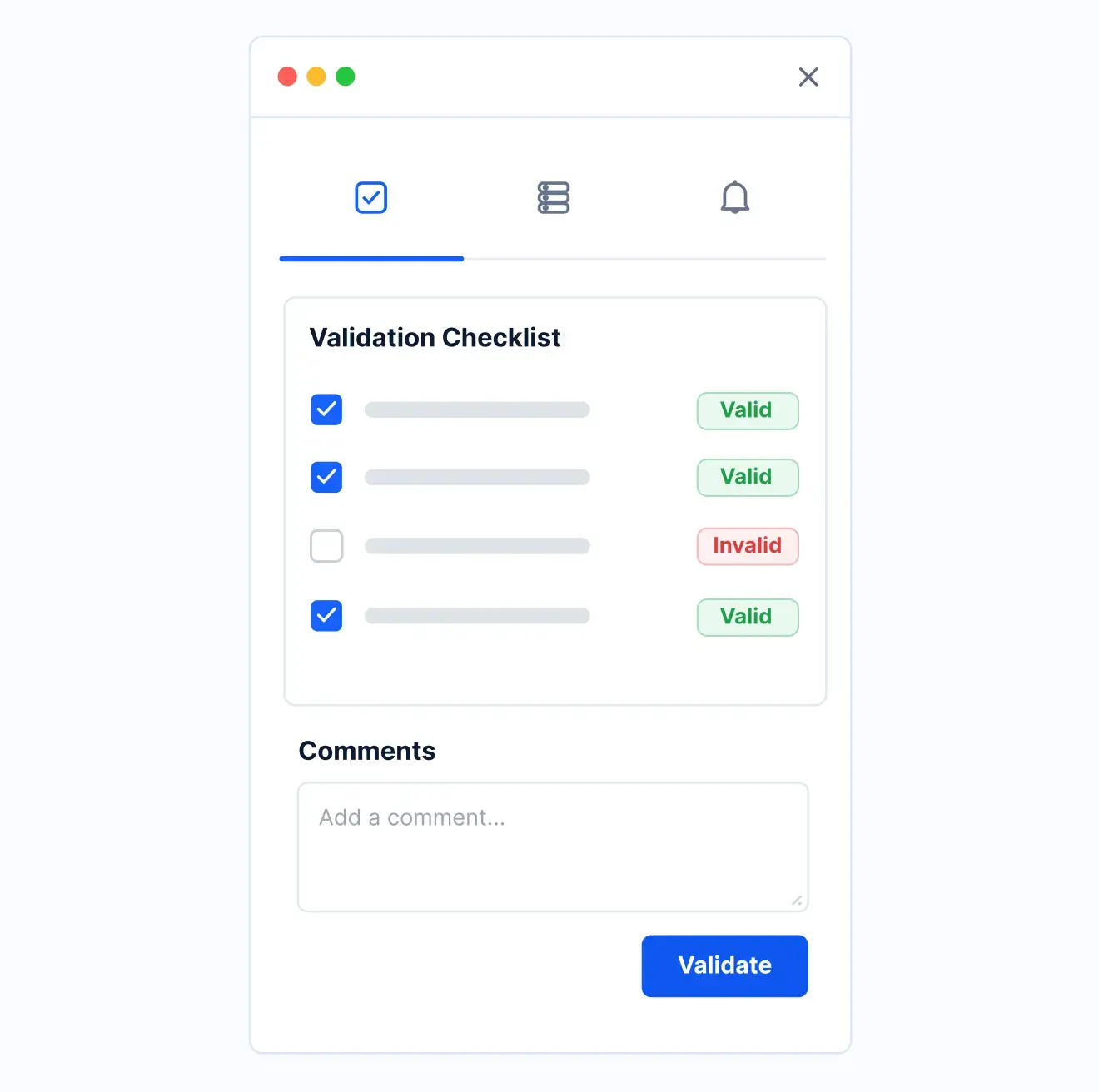
Departments adopt the standard form and routing, replacing whatever version they were running before.
Track
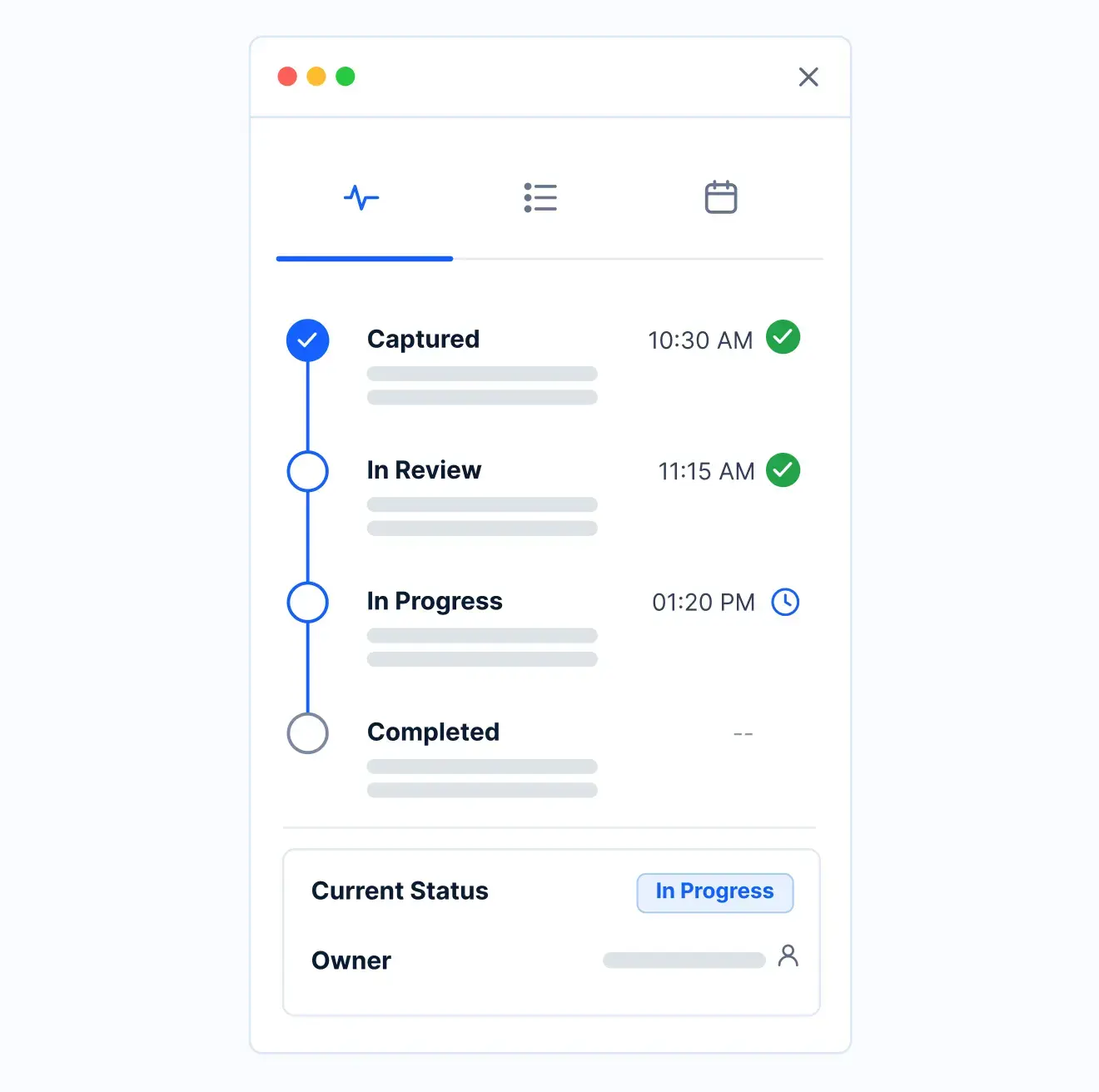
Adoption is tracked department by department, showing who has switched and who has not yet.
Report
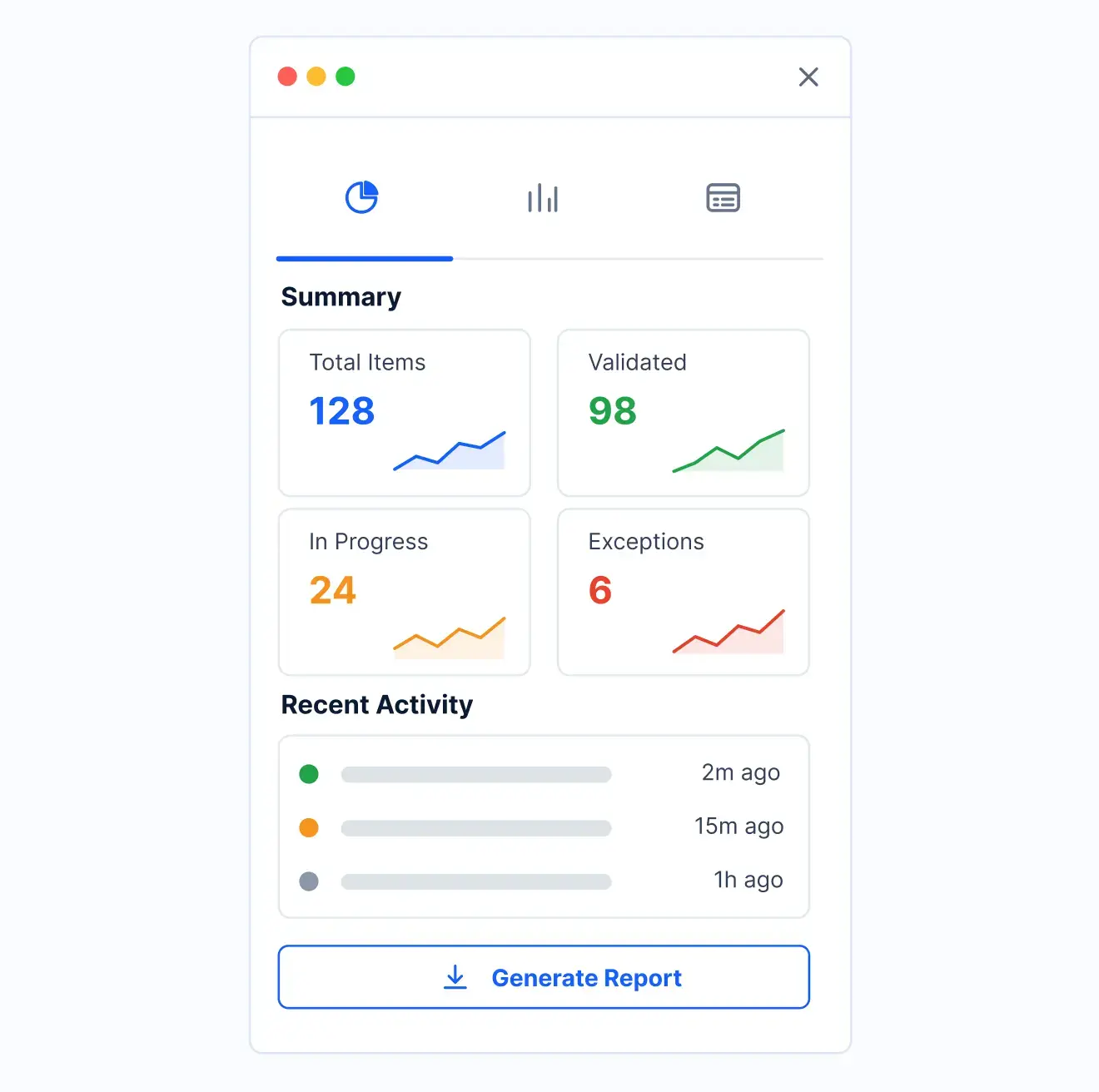
The process comes up for scheduled periodic review, keeping the standard library current rather than frozen at rollout.
What changes when process standardization runs on Kissflow
| Process | Before Kissflow | On Kissflow |
|---|---|---|
| Process version | As many as there are departments | One registered standard |
| Rollout | Announced once, then forgotten | Tracked with adoption status |
| Forms and routing | Department-specific | A shared template library |
| Review | Never revisited | Scheduled periodically |
| Variance | Invisible | Reported by department |
| Change history | Untracked | Versioned and attributed |
Connects to your document systems; department systems stay the system of record
Kissflow does not replace each department's own systems. Kissflow is the registry and adoption-tracking layer for the standard process itself, travel approval, purchase requests, room booking, that departments are expected to run.
.svg)



.svg)
.svg)
.svg)
.svg)

.svg)
.svg)
.svg)
.svg)
.svg)

.svg)

.svg)

.svg)
.svg)
.svg)
.svg)
.svg)
.svg)
.svg)
.svg)
.svg)

.svg)
Built for a standard that's actually adopted, not just announced
One registered version of every shared process
No department is left running its own variant because it never got the update.
Adoption tracked department by department
The institution can see exactly who has switched to the standard and who hasn't.
Live in weeks
Process templates, routing, and review schedules are configured in the visual builder, and the AI Builder can generate a starting workflow from a description of your shared processes.
An ERP-adjacent record
Department systems stay where they are; Kissflow is the registry and adoption layer for the shared process itself.
Drift from the standard surfaces before it becomes the norm
A department diverging from the registered version is visible before it hardens into its own process again.
Role-based access
Departments see their own adoption status; the process owner sees adoption across the institution.
Related apps
Inter-Department Academic Coordination Management System
Coordinates a single cross-department initiative, distinct from this app's ongoing governance of the process itself.
Faculty Governance Committee Coordination
The standing committee structure that often approves a new standard process before it's registered.
Academic Policy Enforcement and Exception Management
Runs the same version-and-review discipline for policy that this app runs for operational process.
We help institutions get every department onto the same version of a shared process, not five of them.
.gif)

“If a company cannot enable everybody to use AI, they will never get the true benefit of AI. Platforms like Kissflow allow us to put that capability in the hands of our users in a safe way.”
Vagesh Dave
GVP & CIO at McDermott International, Ltd
See The Full Story

“Advanced automation of all processes is easy to set up. I cannot imagine how to manage workflows without this software.”
Tanay Tiwary
Global Head - Digitalization & Business Improvement
See the Full Story

“Kissflow supports rapid application development by building a working application prototype in the shortest amount of time.”
Maria Theresa Cabigon
CIO, SN Aboitiz Power Group
See The Full Story
See what Kissflow can do for you
Talk to usGot questions? We're here to help.
Get SupportNo. Each department's own systems stay the system of record for their own work. Kissflow is the registry and adoption-tracking layer for the standard version of a shared process across departments.
Inter-Department Academic Coordination manages a specific cross-department initiative with a start and end date. This app governs the standard process itself, on an ongoing basis, applied repeatedly across every department and every instance of that process, not tied to one initiative.
Whatever a shared administrative process an institution wants run the same way everywhere, travel approval, purchase requests, room booking, or a common intake form, registered as the approved version.
Adoption tracking flags the variance so the process owner can follow up, before the department's own version quietly becomes its de facto process again.
Yes. Process templates, routing, and review schedules are configured in the visual builder, and the AI Builder can generate a starting workflow from a description of your shared processes.
Access is role-based. Individual departments see their own adoption status; the process owner sees adoption across the full institution.
Configuration and AI-assisted setup typically move initial rollout to weeks, not a multi-month systems project.
Kissflow is certified to SOC 1, SOC 2, SOC 3, and ISO/IEC 27001, supports HECVAT review, and is built to support FERPA and GLBA Safeguards obligations, with data residency options in the US, EU, APAC, and Oceania.