Process Safety Management Exception Workflow
A process safety management exception workflow handles cases where a PSM element requirement cannot be met on time: an overdue PHA action, a lapsed mechanical integrity inspection, an out-of-date procedure. Each exception routes through technical review, risk acceptance, and compensating measures with a defensible record.

Trusted by energy operators worldwide






The exception that is never written down is the one that hurts you
Process safety management is a set of standing requirements: hazard analyses on a cycle, mechanical integrity inspections on an interval, procedures reviewed and current, operator training refreshed, management of change applied to every change. Real operations miss some of these some of the time. A test falls outside its window because the unit could not be taken down. A procedure is one revision behind because the change it reflects is still in MOC.
What separates a controlled operation from an exposed one is not whether exceptions occur. It is whether each one is visible, risk-assessed, time-bound, and accepted by someone with the authority to accept it. Handled informally, an exception has no expiry, no compensating measure, and no owner, and it is indistinguishable from an unnoticed gap when an incident investigation looks backward.
Kissflow runs PSM exceptions as a governed application. Each exception names the element and requirement it departs from, carries a technical assessment and compensating measures, is accepted for a bounded period by an authority whose level matches the risk, and expires rather than persisting. The exception inventory is reportable at any time, which is the question a regulator, an insurer, or a board asks.
Every real operation has exceptions. Few have a register of them.
Exceptions are handled informally
A test outside its window or a procedure a revision behind is managed by conversation, leaving no record that a departure was ever accepted.
Compensating measures are described, not tracked
The measures holding the risk are agreed verbally and never verified as actually in place.
Acceptance happens at whatever level was available
Without authority matching, a significant departure can be accepted by someone whose role does not carry that risk.
Exceptions have no expiry
An exception with no end date becomes the operating norm, and the return-to-compliance plan never gets written.
Six process modules
Every module ships with default PSM elements, risk criteria, acceptance authority levels, and dashboards. Configure each one to your program in the visual builder.
Element and requirement register
PSM elements and their standing requirements held as the baseline an exception is raised against, so every exception names what it departs from.
Technical assessment
Structured assessment of the consequence of not meeting the requirement, including scenario, safeguards affected, and the residual risk with the proposed compensating measures in place.
Compensating measures
The measures put in place while the exception stands, recorded with owners and verification, rather than described in a paragraph nobody tracks.
Risk acceptance authority
Acceptance routed to an authority level matched to the residual risk, so a higher-risk exception cannot be accepted at a lower level.
Bounded validity and expiry
Every exception carries an expiry date and a plan to return to compliance, and expiry escalates rather than passing silently.
Exception inventory reporting
The live inventory of open exceptions by element, unit, risk level, and expiry, reportable to regulators, insurers, and the board on demand.
From request to system of record in four steps
Report
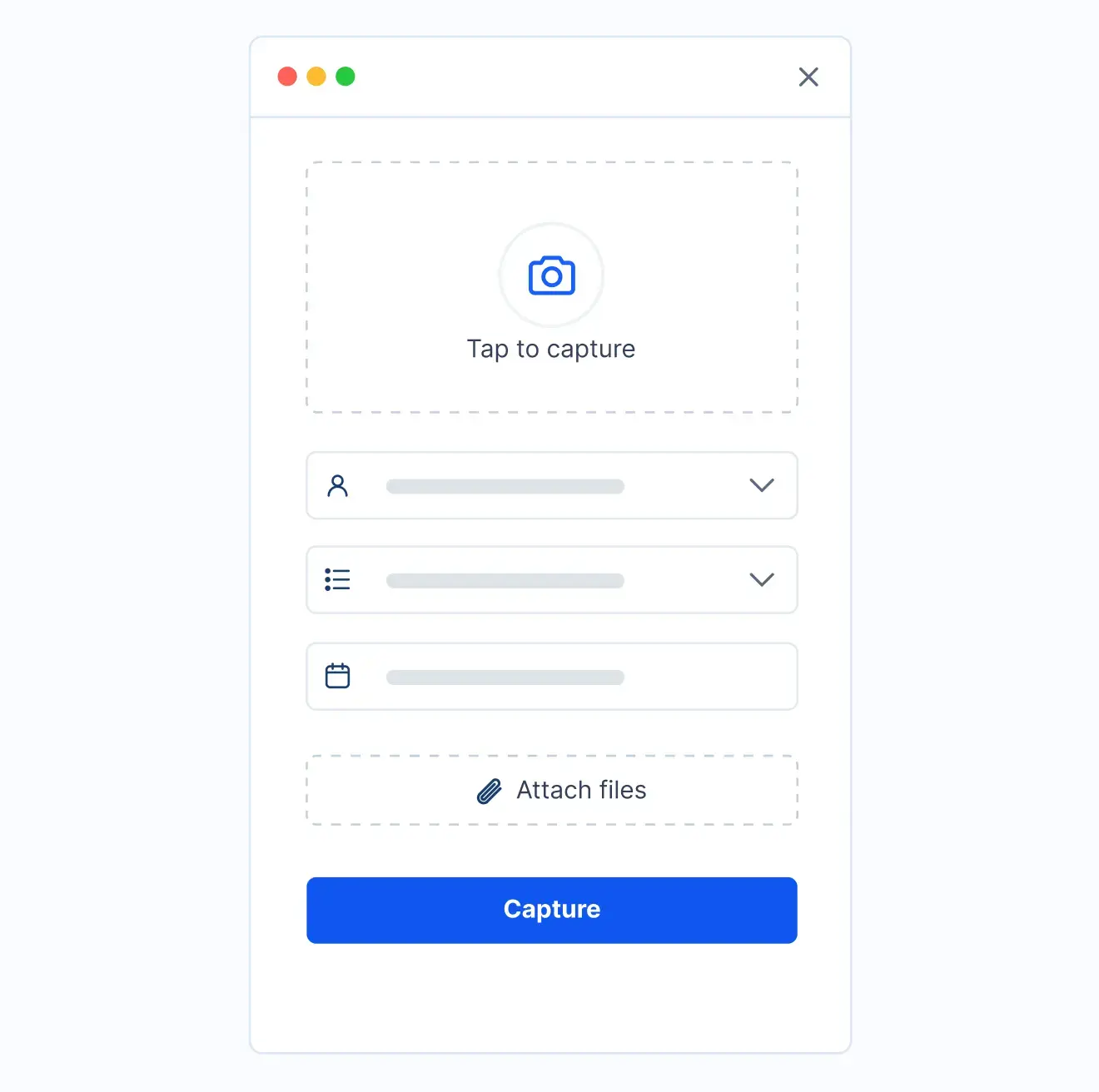
An exception is raised naming the PSM element and the specific requirement it departs from, with the reason it cannot be met and the intended period.
Assess
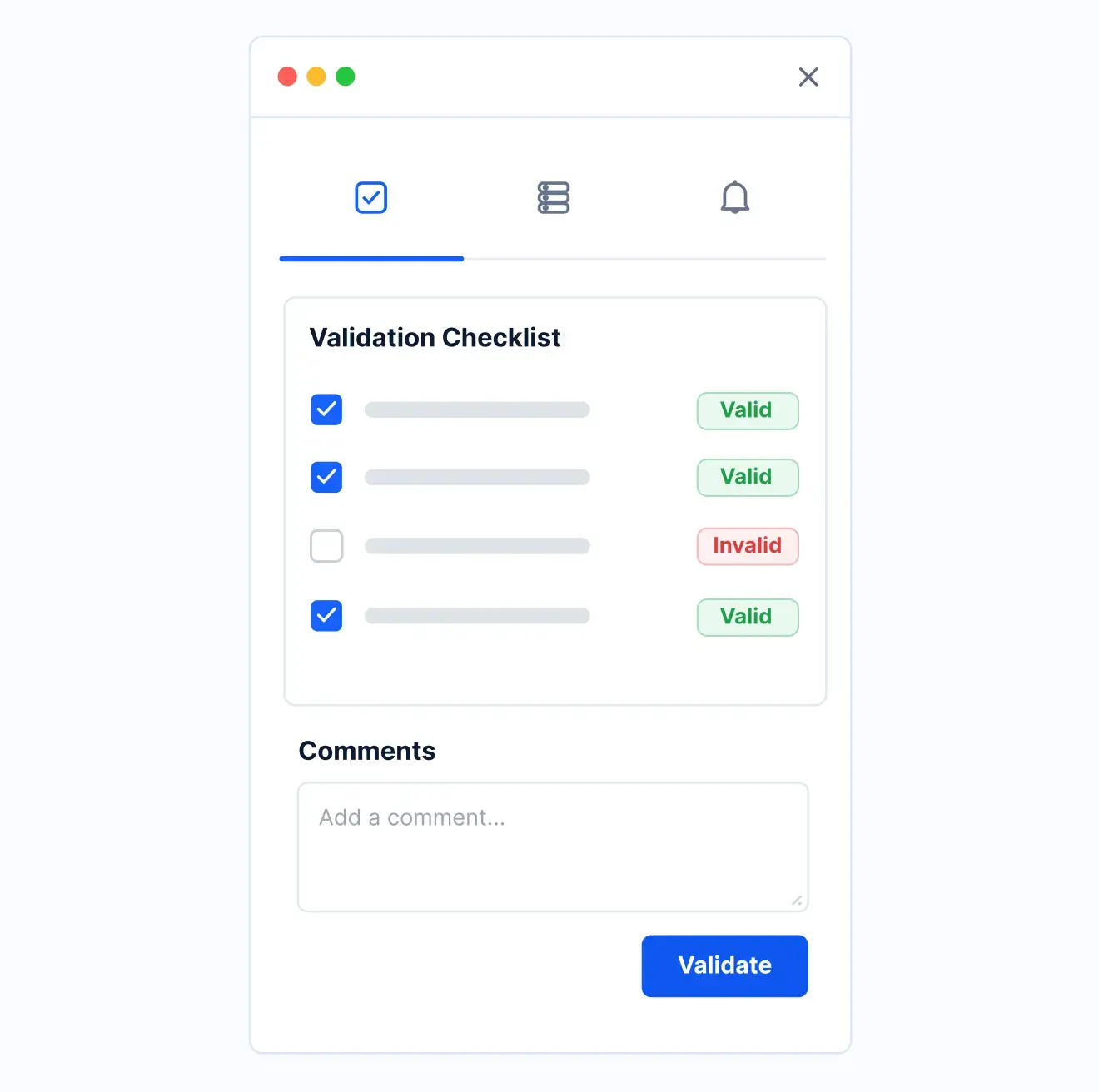
Technical assessment establishes the consequence, the safeguards affected, and the residual risk with proposed compensating measures, setting the acceptance authority the risk level requires.
Resolve
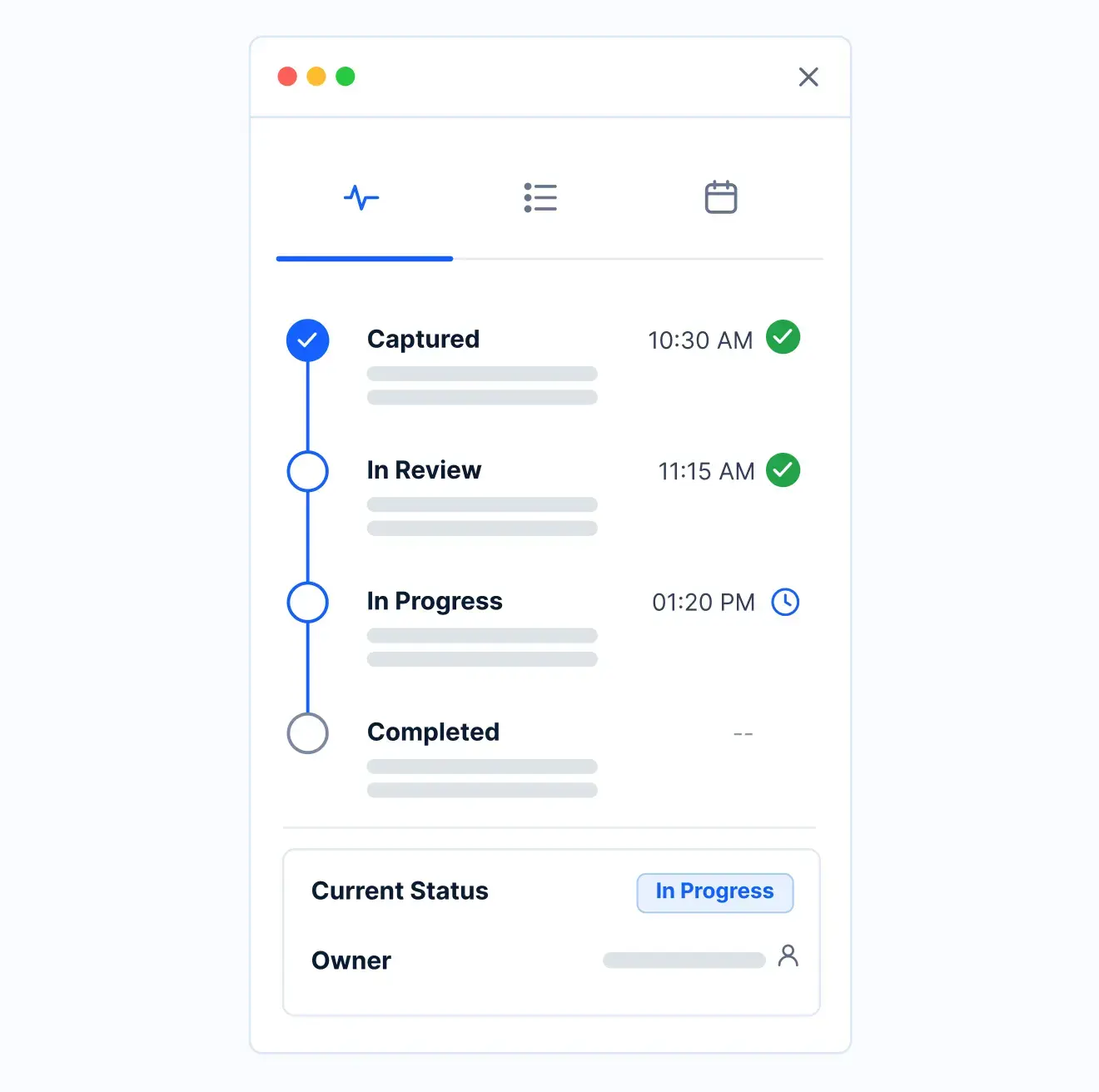
Compensating measures are implemented and verified, and the exception is accepted for a bounded period by the matched authority with a plan to return to compliance.
Record
The exception closes when compliance is restored, or escalates at expiry, and the full record is retained in the exception inventory.
What changes when PSM exceptions run on Kissflow
| Process | Before Kissflow | On Kissflow |
|---|---|---|
| Exception visibility | Handled informally and undocumented | Raised against the element and requirement departed from |
| Risk assessment | An opinion formed in a meeting | Structured assessment of safeguards and residual risk |
| Compensating measures | Described but not tracked | Recorded with owners and verification |
| Acceptance authority | Whoever was available to say yes | Matched to residual risk by rule |
| Duration | Open-ended until someone notices | Bounded, with expiry escalation |
| Inventory | Not available as a single view | Reportable by element, unit, risk, and expiry |
Connects to the systems your operation already runs on
.svg)



.svg)
.svg)
.svg)
.svg)

.svg)
.svg)
.svg)
.svg)
.svg)

.svg)

.svg)

.svg)
.svg)
.svg)
.svg)
.svg)
.svg)
.svg)
.svg)
.svg)

.svg)
Built for the exceptions every real operation has
Authority matched to risk
A higher-risk exception cannot be accepted at a lower authority level, which is the control most informal processes lack.
Exceptions expire
Every acceptance is bounded with a return-to-compliance plan, so an exception cannot quietly become the operating norm.
The inventory is the answer
Open exceptions by element, unit, and risk level are reportable on demand to a regulator, an insurer, or a board.
An exception layer, not a PSM system
Your PHA, mechanical integrity, and MOC systems hold the program. Kissflow runs the exception, risk acceptance, and compensating measure workflow around it.
Governed from day one
Single sign-on, role-based access, and a timestamped audit log are how the app is built. Kissflow runs in the business-process layer, segmented from the OT and control network.
Live in weeks, not a program
Configure in the visual builder, or describe the program and let the AI Builder generate the app. Delivery moves from weeks to days.
Related apps
Safety critical equipment compliance
Hold the verification and performance-standard status of every safety critical element, with impairment tracked on record.
Safety audit action tracking
Route audit and inspection findings to named owners and track every corrective action to verified closure.
High-risk activity approval
Route hot work, confined space, and isolation authorizations on risk tier with conflict checks.
We help process safety leaders make every exception visible, bounded, and accepted
.gif)

“If a company cannot enable everybody to use AI, they will never get the true benefit of AI. Platforms like Kissflow allow us to put that capability in the hands of our users in a safe way.”
Vagesh Dave
GVP & CIO at McDermott International, Ltd
See The Full Story

“Advanced automation of all processes is easy to set up. I cannot imagine how to manage workflows without this software.”
Tanay Tiwary
Global Head - Digitalization & Business Improvement
See the Full Story

“Kissflow supports rapid application development by building a working application prototype in the shortest amount of time.”
Maria Theresa Cabigon
CIO, SN Aboitiz Power Group
See The Full Story
See what Kissflow can do for you
Talk to usGot questions? We're here to help.
Get SupportIt handles cases where a process safety management requirement cannot be met on time, such as an overdue hazard analysis action, a lapsed mechanical integrity inspection, or a procedure behind its current revision. Each exception carries a technical assessment, compensating measures, a matched acceptance authority, and an expiry date.
No. Those systems hold the program, the inspection intervals, and the hazard analyses. Kissflow runs the exception, risk acceptance, and compensating measure workflow around them, connecting through APIs and integration connectors.
The residual risk established in the technical assessment determines the authority level required to accept the exception, so a higher-risk exception cannot be signed off at a lower level than your standard permits.
Every acceptance is bounded by an expiry date with a plan to return to compliance, and expiry escalates rather than passing silently.
Yes. Fields, categories, routing rules, and escalation thresholds are configured by the process owner in the visual builder, and every change is written to the same audit log as a manual edit.
No. Kissflow runs in the business-process layer alongside the systems you already own and connects to them through APIs and integration connectors. It does not replace your EHS suite, your ERP, or your maintenance system, and it does not operate inside the control system.
No. Kissflow AI maps natural language to platform metadata and produces an inspectable blueprint, so every app is auditable and the process owner can maintain it.
Kissflow is certified to SOC 1, SOC 2, SOC 3, ISO/IEC 27001, HIPAA, GDPR, and CCPA, hosted on Google Cloud with data residency in the US, EU, APAC, and Oceania.