PPAP Submission Management Software
A customer asks for a Level 3 PPAP on a part that changed suppliers mid-year, and pulling the warrant, control plan, FMEA, and capability study into one package by Friday means chasing five people for five documents. Kissflow assembles the package, routes it for review, and tracks it to customer approval.

Trusted by leading manufacturers worldwide


Every PPAP element assembled and tracked to customer sign-off, not chased down the week it's due
A customer asks for a Level 3 PPAP on a part that changed suppliers mid-year, and the package needs a part submission warrant, a control plan, an FMEA, a capability study, and whatever else that level requires, each owned by a different engineer. Assembling it by the deadline usually means chasing five people for five documents and hoping nothing's outdated, and a package assembled the night before is where an outdated control plan revision slips through unnoticed.
Kissflow tracks PPAP as one submission record: elements are checked off as they're collected, the package routes through internal review before it goes out, the customer's decision tracks against the submission, and a rejected package routes into resubmission instead of starting over. The PSW, control plan, FMEA, MSA, and capability study check off against the part's submission level, and the package routes through internal quality review before it reaches the customer. Once submitted, the decision, approved, conditional, or rejected, tracks against the submission, and a rejection links to resubmission carrying the reason forward. A dashboard shows every part's status across the supplier and customer base.
A PPAP package assembled the week it's due is a package assembled from whatever's on hand
Elements scatter across owners
The warrant, control plan, FMEA, and capability study each live with a different engineer, with no shared checklist of what's required.
Submission level requirements aren't tracked
Nobody has a clear record of which elements a Level 3, versus a Level 1, submission actually requires.
Internal review happens informally, or not at all
A package goes to the customer without anyone internally checking it for completeness first.
Customer rejections restart the whole process
A rejected submission gets reassembled from scratch instead of tracked as a resubmission against the original package.
Six modules. Configurable to your operating model.
Every module ships with default forms, approval logic, integrations, and dashboards. Configure each one to your operating model in the visual builder.
Element collection & package builder
Checks off required elements, PSW, control plan, FMEA, MSA, capability study, against the part's submission level.
Internal review
Routes the assembled package through internal quality review before it goes to the customer for approval.
Customer submission
Tracks the package once it's submitted to the customer, with the submission date and level on record.
Customer approval tracking
Tracks the customer's decision, approved, conditionally approved, or rejected, against the specific submission.
Re-submission management
Routes a rejected package into a tracked resubmission cycle, linked to the original submission and the reason.
PPAP status dashboard
Shows every part's PPAP status, submission level, and approval state across your supplier and customer base.
From request to system of record in four steps
Submit
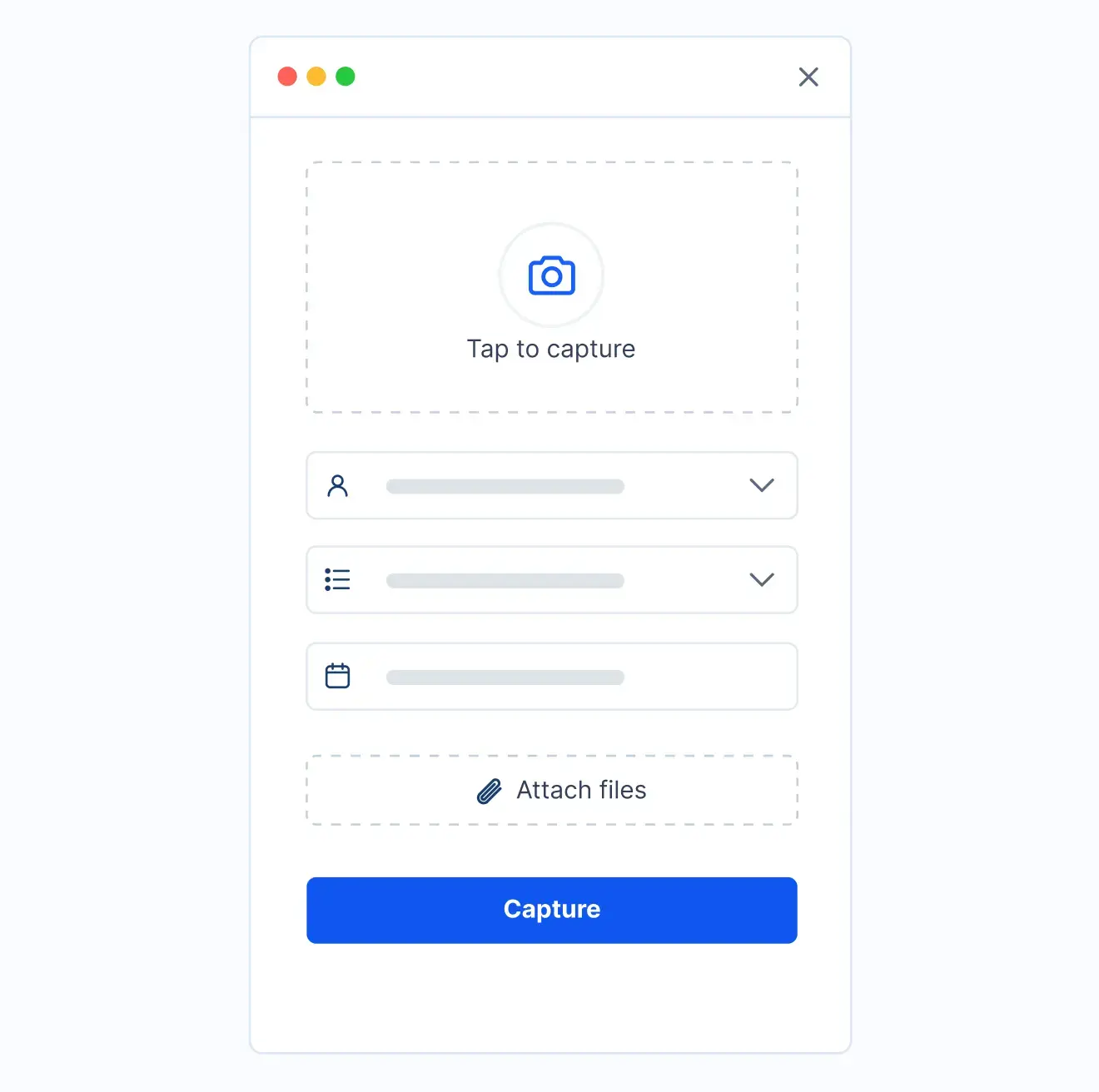
Required elements are checked off against the part's PPAP submission level as they are completed and assembled into one package.
Review
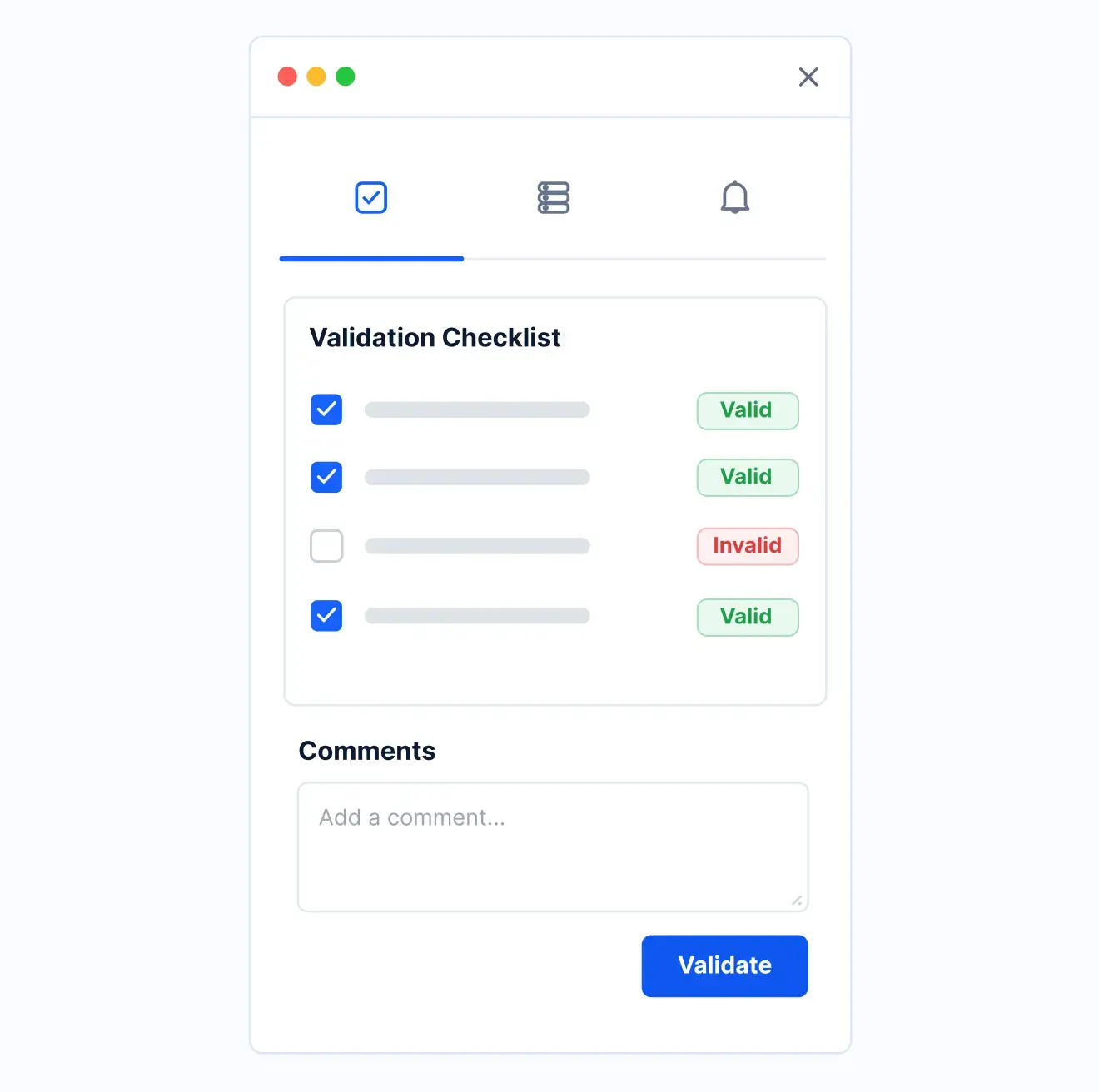
The assembled package routes through internal quality review before it goes to the customer.
Approve
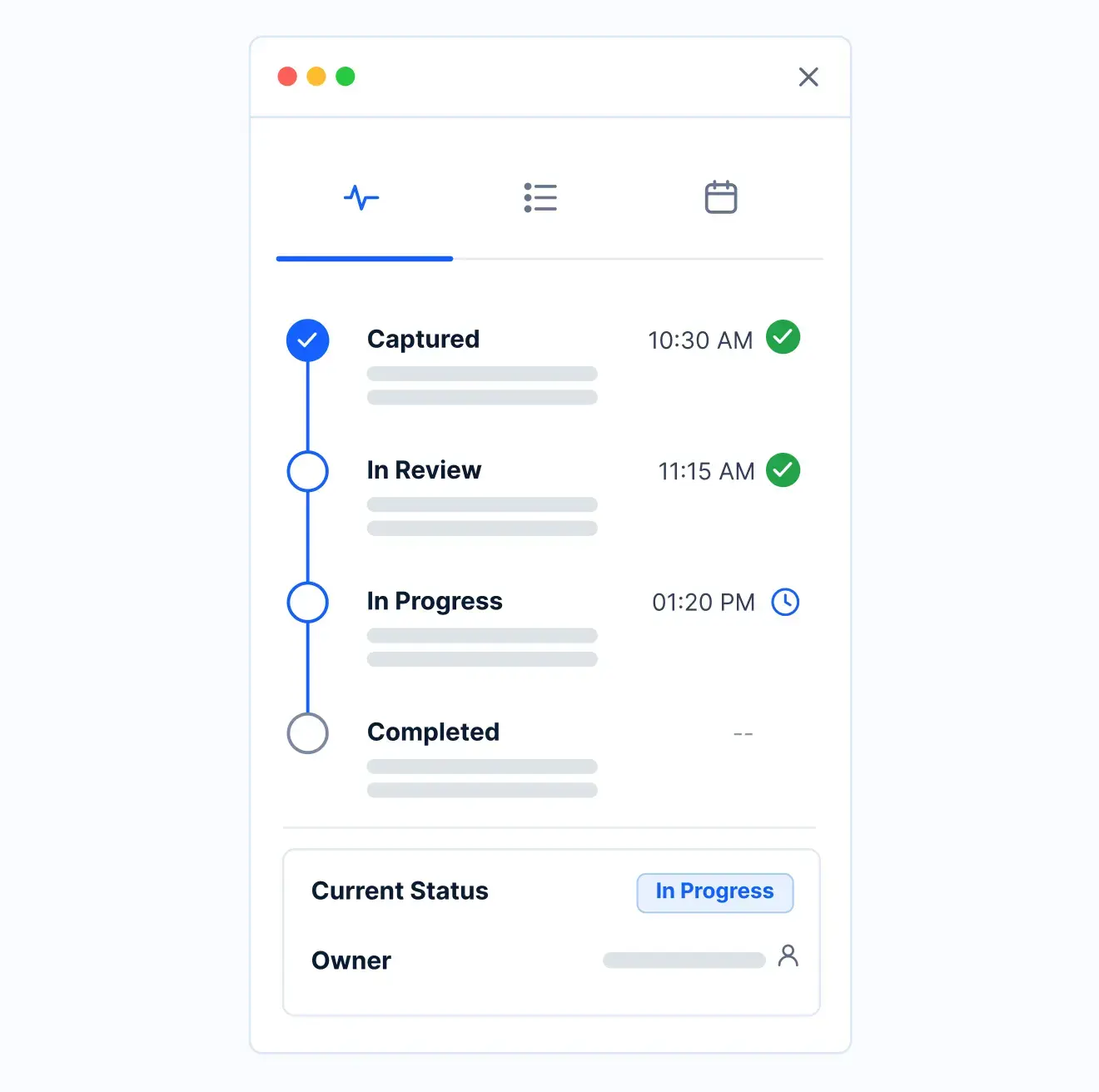
The package is submitted to the customer, with the submission date and level recorded, and the customer's decision is logged.
Record
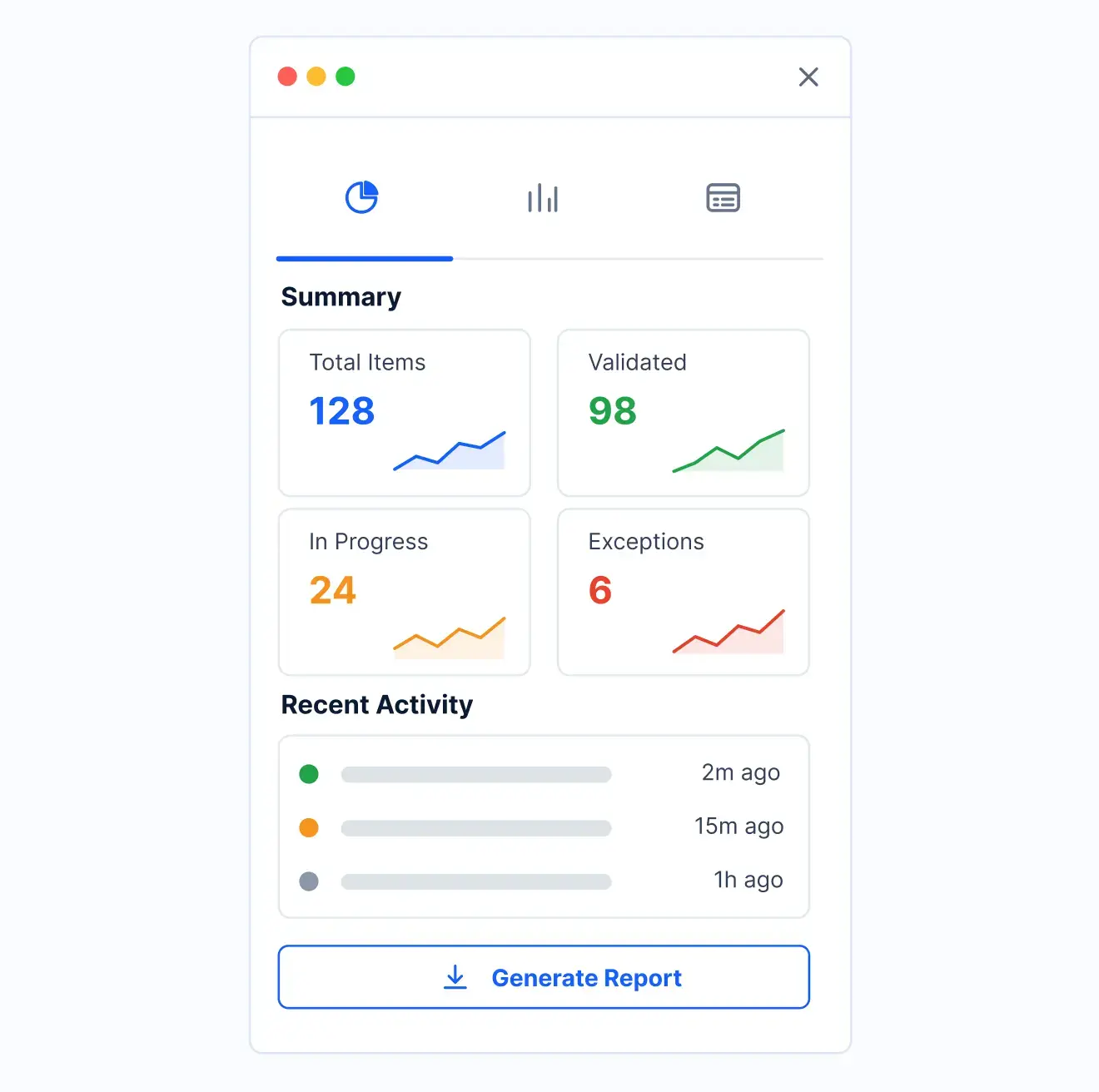
An approved package is recorded against the part; a rejected one routes into a tracked resubmission.
What changes when PPAP submissions run on Kissflow
| Process | Before Kissflow | On Kissflow |
|---|---|---|
| Elements | Chased from five owners the week it's due | Checked off against the submission level as they're completed |
| Submission level | Tracked informally, if at all | Defines exactly which elements the package requires |
| Internal review | Skipped or inconsistent | Required before the package goes to the customer |
| Customer decision | Tracked in an email thread | Logged against the submission with date and outcome |
| Rejections | Restart the process from scratch | Routed into a tracked resubmission linked to the original |
| Visibility | No single view of PPAP status across parts | One dashboard across every part and customer |
Connects to the PLM, quality, and supplier portals already holding your submission documents
.svg)



.svg)
.svg)
.svg)
.svg)

.svg)
.svg)
.svg)
.svg)
.svg)

.svg)

.svg)

.svg)
.svg)
.svg)
.svg)
.svg)
.svg)
.svg)
.svg)
.svg)

.svg)
Built around submission levels, not a generic document checklist
Built around submission levels, not a generic checklist
The required element set adjusts to the part's actual PPAP level.
Internal review before it ever reaches the customer
No package goes out without a completed internal quality check.
Resubmissions tracked, not restarted
A rejected package stays linked to its history, reason for rejection, and revision.
Customer decisions on record
Every approval, condition, or rejection is logged against the specific submission.
Live in weeks, not a re-implementation
Configure submission levels, element checklists, and review routing in the visual builder without a PLM-scale rollout.
One dashboard across every part and customer
See PPAP status for every submission, part, and customer relationship in one place.
Related apps
APQP (Advanced Product Quality Planning)
Run the broader five-phase program that PPAP submission closes out at validation, and after any change.
PFMEA / DFMEA Management
Maintain the failure mode analysis that's one of the required elements in most PPAP submission levels.
Control Plan Management
Maintain the control plan that's a required PPAP element and stays live after the submission is approved.
We help manufacturers assemble a complete PPAP package without chasing five owners for five documents
.gif)

“If a company cannot enable everybody to use AI, they will never get the true benefit of AI. Platforms like Kissflow allow us to put that capability in the hands of our users in a safe way.”
Vagesh Dave
GVP & CIO at McDermott International, Ltd
See The Full Story

“Advanced automation of all processes is easy to set up. I cannot imagine how to manage workflows without this software.”
Tanay Tiwary
Global Head - Digitalization & Business Improvement
See the Full Story

“Kissflow supports rapid application development by building a working application prototype in the shortest amount of time.”
Maria Theresa Cabigon
CIO, SN Aboitiz Power Group
See The Full Story
See what Kissflow can do for you
Talk to usGot questions? We're here to help.
Get SupportAll five levels defined by AIAG, or your own customer-specific variant. The required element checklist adjusts to whichever level a submission targets.
No. It tracks collection of elements produced elsewhere, the FMEA, control plan, capability study, and links to those records. Use the PFMEA and Control Plan apps to produce the documents themselves.
A resubmission stays linked to the original submission record, the customer's rejection reason, and the specific elements that changed, instead of starting a fresh package.
Routing is configurable, typically the plant or supplier quality engineer responsible for the part, before it's released for submission.
Yes. Quality teams configure submission levels, element checklists, and review routing in the visual builder, and the AI Builder can generate a working app from a plain-language description.
Through APIs and integration connectors, under single sign-on and role-based access, with every action written to an audit log.
Configuration and AI generation move delivery from weeks to days, without a multi-year platform program or an engineering backlog.
Kissflow is certified to SOC 1, SOC 2, SOC 3, ISO/IEC 27001, HIPAA, GDPR, and CCPA, hosted on Google Cloud with data residency in the US, EU, APAC, and Oceania.