Asset Disposal Authorization Documentation Software
Deciding whether an aging asset gets scrapped, sold, or repaired is a call someone has to defend later, to finance and to audit. Kissflow runs that decision as a governed workflow: condition and valuation review, multi-stage approval, and a documented disposal record.

Trusted by leading manufacturers worldwide


One authorization path for retiring an asset, from request to disposal record
A forklift with a cracked mast and two years left on its depreciation schedule is not obviously scrap and not obviously worth repairing, and somebody still has to decide, document, and defend that call later.
That call gets defended to finance, which wants to know why a partially depreciated asset is being written off early, to the auditor, who wants documentation showing the decision followed a consistent process rather than a supervisor's judgment on a slow Tuesday, and sometimes to environmental compliance, if the asset requires special handling because of fluids, batteries, or hazardous residue. Without a governed path, that decision gets made informally, on inconsistent criteria from one plant to the next, and the paperwork that should back it up gets assembled after the fact, if at all, when someone finally asks for it.
Kissflow runs that decision as a governed workflow: a documented request, condition and valuation review, multi-stage approval scaled to the asset's book value, environmental flagging where required, and a disposal record that ties the asset's final status back to exactly who authorized it and why.
Asset disposal without a governed path leaves finance and audit guessing
Disposal decisions happen informally
An asset gets scrapped or sold on a supervisor's call, with no documented review of condition, value, or disposal method.
Fixed asset records fall out of sync
The asset register still shows the item as active weeks after it physically left the plant, because nobody updated the record.
No environmental or compliance check
An asset that requires special disposal handling gets treated like ordinary scrap because nobody flagged the requirement before it left.
No documentation trail for audit
When an auditor asks why a still-depreciating asset was written off, there is no record of the condition assessment or approval behind the decision.
Six modules. Configurable to your fixed asset policy.
Every module ships with default forms, approval logic, integrations, and dashboards. Configure each one to your operating model in the visual builder.
Disposal request intake
Captures the asset, its condition, current book value, and the proposed disposal method in one form.
Condition and valuation review
Routes the request for a formal condition assessment and valuation check before it reaches an approver.
Multi-stage approval
Routes the disposal through finance and operations sign-off, with authority level scaled to book value.
Compliance and environmental flag
Flags assets requiring special environmental or regulatory disposal handling before the standard path is used.
Disposal documentation
Collects the disposal certificate, sale or scrap documentation, and photos, tied to the asset record.
Audit trail
Keeps the full record, condition assessment, approval, and disposal documentation, searchable by audit.
From request to system of record in four steps
Submit
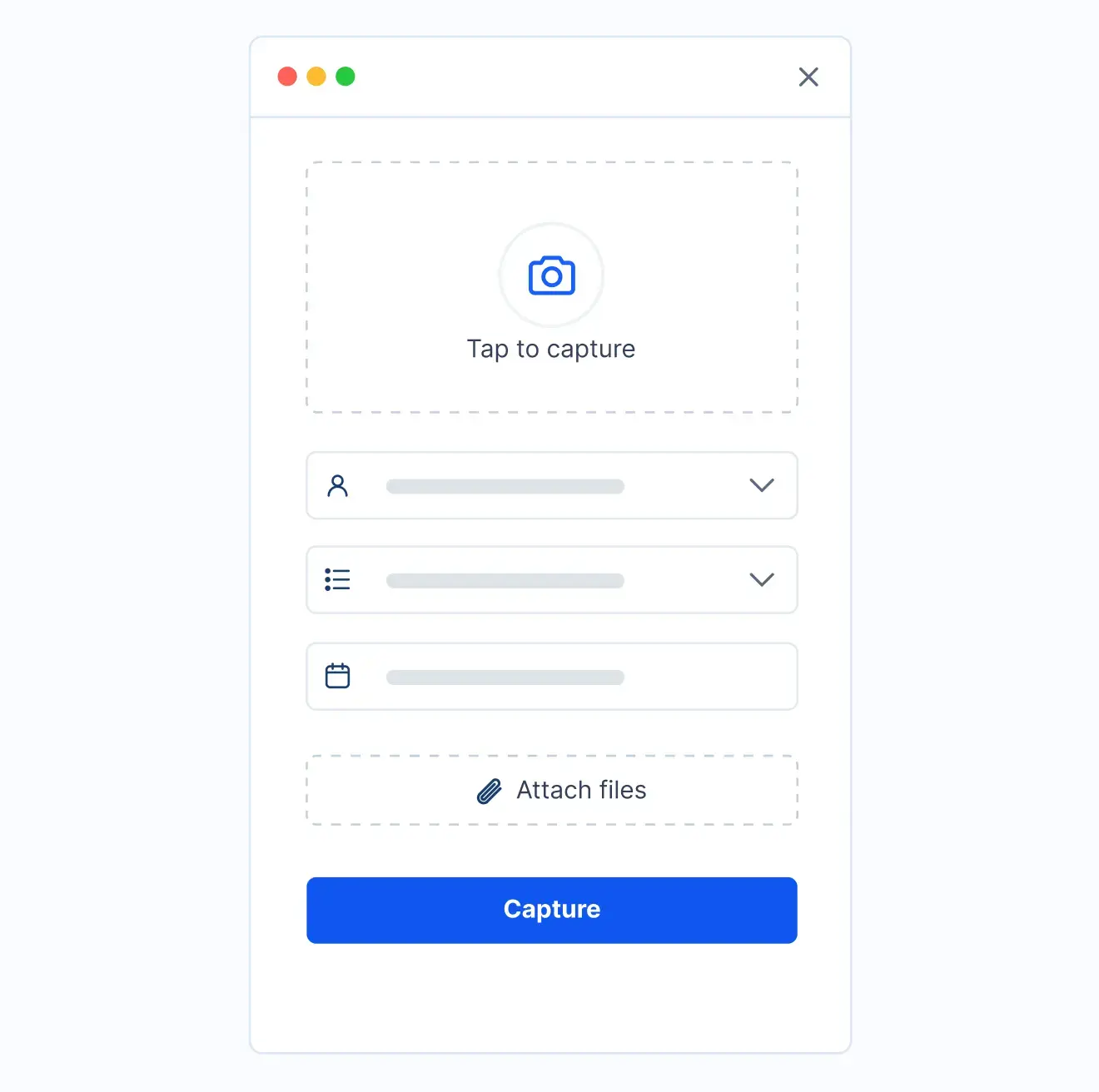
A plant or maintenance lead submits the asset, its condition, and the proposed disposal method.
Review
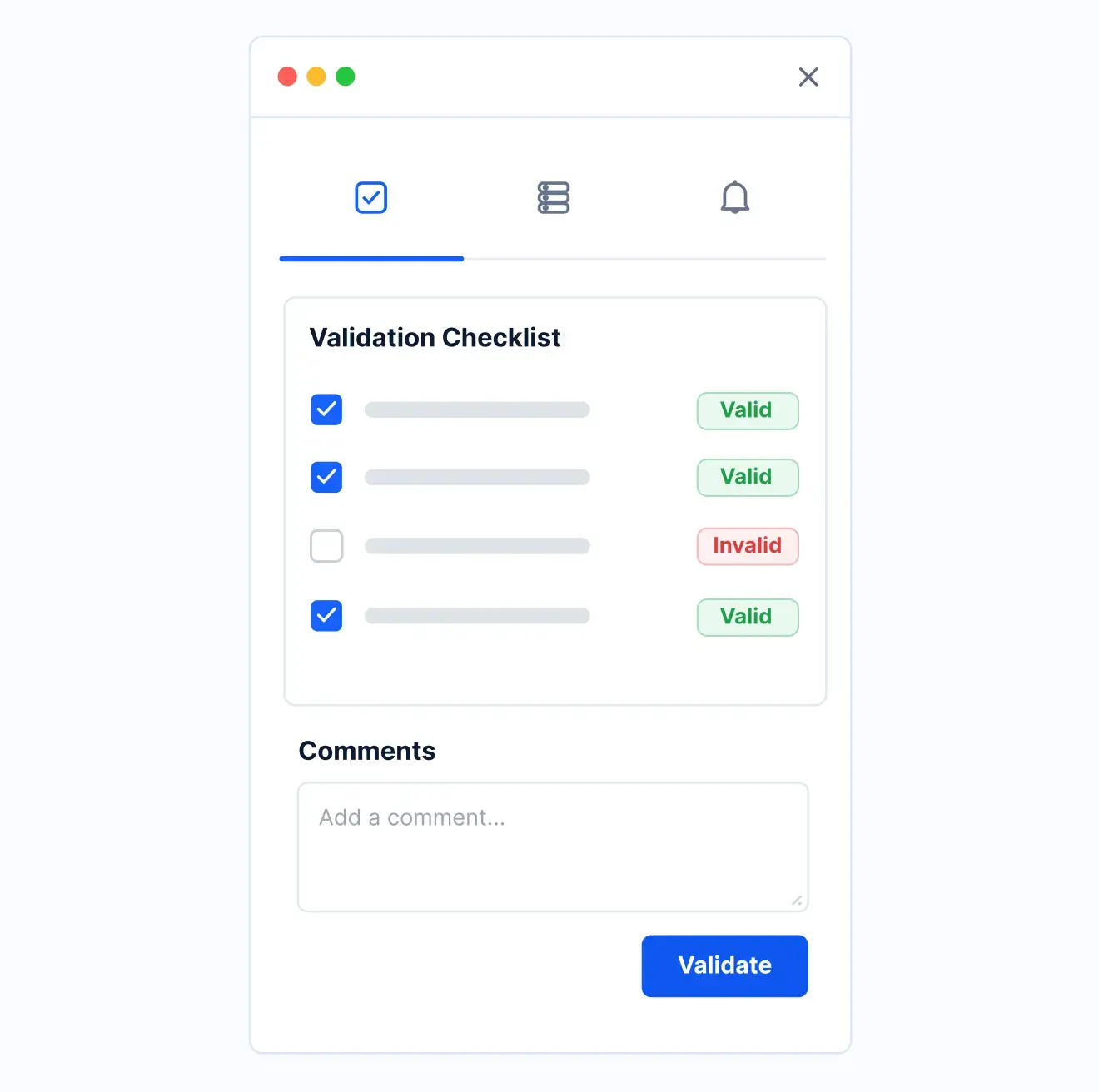
The asset's condition and book value are reviewed, and any compliance requirement is flagged.
Approve
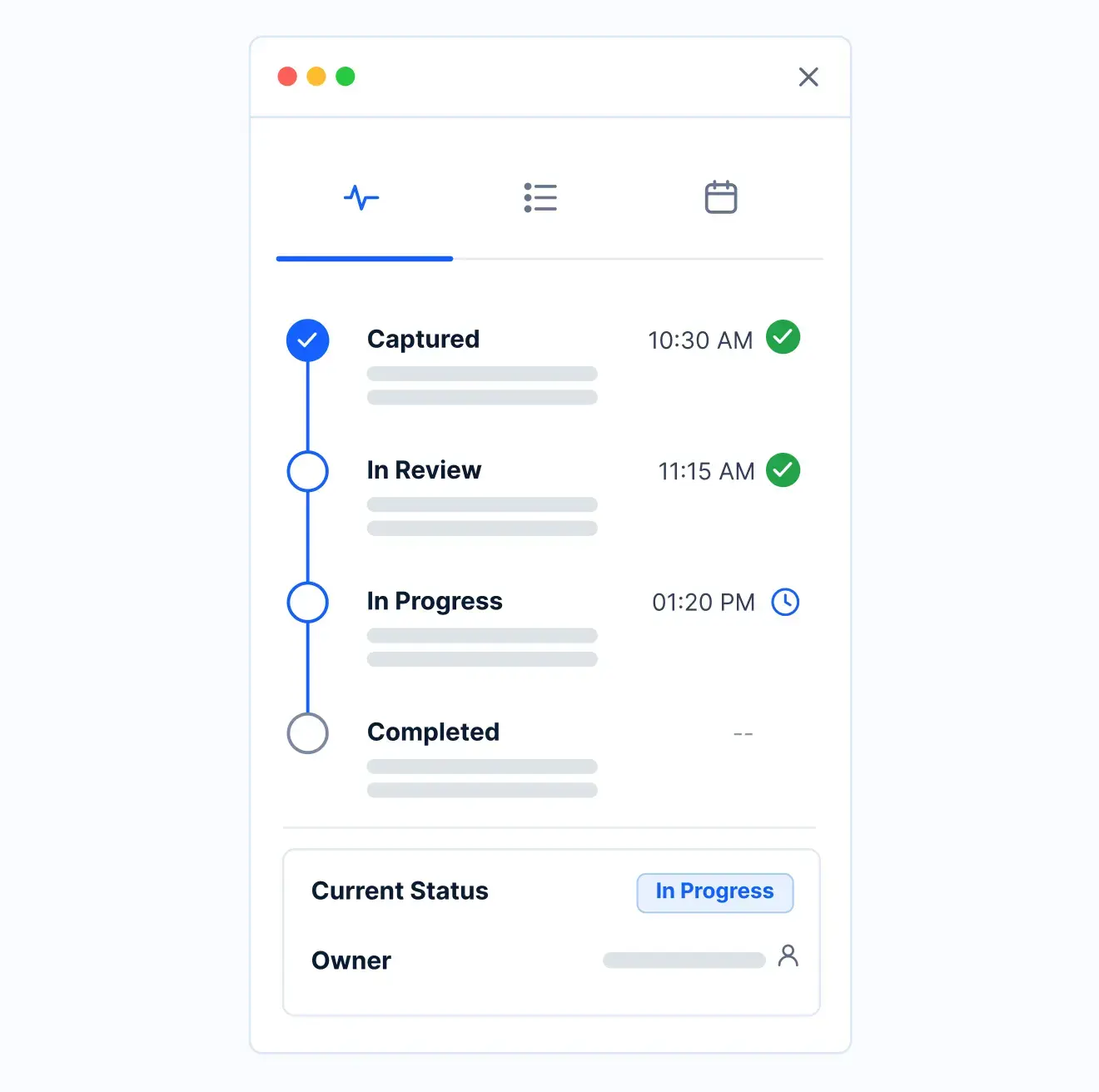
The disposal routes to finance and operations for sign-off, with escalation if a decision stalls.
Record
The disposal is executed, documentation is collected, and the asset record is closed out as a defensible disposal record for finance and audit.
What changes when asset disposal runs on Kissflow
| Process | Before Kissflow | On Kissflow |
|---|---|---|
| Disposal request | Decided informally by whoever has authority over the asset | Submitted through one structured intake form |
| Condition review | Assessed inconsistently, if at all, before disposal | Condition and valuation reviewed before approval |
| Approval | Sign-off happens verbally or not at all | Routed to finance and operations, scaled to asset value |
| Compliance check | Special disposal requirements get missed | Flagged automatically before the standard path is used |
| Documentation | Disposal certificates and records scattered or missing | Collected and tied directly to the asset record |
| Asset register | Stays out of sync with what actually left the plant | Updated and logged the moment disposal is complete |
Connects to the asset register and ERP systems you already run
.svg)



.svg)
.svg)
.svg)
.svg)

.svg)
.svg)
.svg)
.svg)
.svg)

.svg)

.svg)

.svg)
.svg)
.svg)
.svg)
.svg)
.svg)
.svg)
.svg)
.svg)

.svg)
Built for how plant assets actually get retired
Governance built into the workflow
Condition review, approval, and documentation are how every disposal moves, not a control added after the fact.
Compliance flagging before disposal, not after
An asset needing special handling gets flagged before it is treated like ordinary scrap.
Live in weeks, not a re-implementation
Configure the intake form, approval thresholds, and documentation checklist in the visual builder, without a change request against your ERP.
One audit trail, not a reconstruction
Every condition assessment, approval, and disposal record is logged as it happens, not rebuilt when an auditor asks.
Ties directly to the asset register
The disposal record updates the same asset the register already tracks, so the two never drift apart.
Made for cross-team sign-off
Operations, finance, and compliance see the same disposal record with their own view of it.
Related apps
Asset Transfer & Relocation Authorization Management System
Authorize moving an asset between plants or cost centers, for assets still in active use rather than headed for disposal.
Project Budget Variance Escalation & Approval Management System
Track the budget impact of a capital project this asset's disposal or replacement is connected to.
Maintenance Work Order Coordination (EAM-Lite)
Coordinate repair work orders for an asset whose condition is still under review before a disposal decision is made.
We help plant and finance leaders keep asset disposal documented and defensible
.gif)

“If a company cannot enable everybody to use AI, they will never get the true benefit of AI. Platforms like Kissflow allow us to put that capability in the hands of our users in a safe way.”
Vagesh Dave
GVP & CIO at McDermott International, Ltd
See The Full Story

“Advanced automation of all processes is easy to set up. I cannot imagine how to manage workflows without this software.”
Tanay Tiwary
Global Head - Digitalization & Business Improvement
See the Full Story

“Kissflow supports rapid application development by building a working application prototype in the shortest amount of time.”
Maria Theresa Cabigon
CIO, SN Aboitiz Power Group
See The Full Story
See what Kissflow can do for you
Talk to usGot questions? We're here to help.
Get SupportThat app authorizes moving an asset that is staying in active use to a different plant, line, or cost center. This app authorizes retiring an asset for good, through scrap, sale, donation, or write-off, and documenting that decision.
Any permanent removal of an asset from active use: scrapping, selling, donating, or writing it off the fixed asset register.
Routing is configurable. Typically a plant operations lead and a finance approver, with the approval tier scaled to the asset's book value.
No. Your ERP or fixed asset system stays the system of record for asset value and depreciation. Kissflow runs the request, review, and approval workflow that updates it.
Yes. Process owners configure forms, routing, and thresholds in the visual builder, and the AI Builder can generate a working app from a plain-language description.
Through APIs and integration connectors, under single sign-on and role-based access, with every action written to an audit log.
Configuration and AI generation move delivery from weeks to days, without a multi-year platform program or an engineering backlog.
Kissflow is certified to SOC 1, SOC 2, SOC 3, ISO/IEC 27001, HIPAA, GDPR, and CCPA, hosted on Google Cloud with data residency in the US, EU, APAC, and Oceania.