Integrate Twilio With Kissflow
Integrate Kissflow with Twilio to boost workflow automation by adding communication tools, allowing SMS notifications and updates to keep teams and stakeholders informed instantly.
127K
Active customer integrations
4.9M
Total integration runs
*count across our customer base

Key Points
- Enhanced Communication
- Improved Engagement
- Increased Scalability
- Data-Driven Insights
Twilio
What, Why, and How to Integrate
with Kissflow? How to connect Twilio
with Kissflow?
Get a personalized introduction to the Kissflow platform
Book A DemoWhat is Twilio?
Twilio is a cloud communications platform that provides developers with the tools and APIs needed to integrate various communication functionalities into their applications.
Twilio allows users to create and manage communication experiences without building complex telecom infrastructure from scratch. The platform offers various services, allowing businesses to send automated alerts, notifications, and reminders, facilitate video conferencing, conduct interactive voice response (IVR), and support real-time chat across web and mobile platforms.
With extensive documentation, a supportive developer community, and numerous integration options, Twilio has become a go-to platform for companies looking to harness the power of digital communication.
Why Integrate Twilio with Kissflow?
Why integrate Twilio with Kissflow?
Integrating Twilio with Kissflow can provide several compelling benefits, especially for organizations that rely on communication capabilities and workflow automation. Here are some reasons why this integration can be valuable:
1. Automated Notifications: Use Twilio to send SMS or voice notifications directly from Kissflow workflows, informing team members about task statuses, updates, or approvals.
2. Real-time Updates: Instantly communicate changes in project statuses or process flows, ensuring everyone involved stays aligned.
3. Trigger Actions: Configure Kissflow to trigger Twilio actions based on specific workflow stages (e.g., sending a message when a task is completed).
4. Customer Feedback: Leverage Twilio to gather feedback through SMS or calls, which can be directly managed and analyzed within Kissflow.
5. Handle Large Volumes: Twilio’s cloud-based services can accommodate increased communication needs as your organization grows without significant additional infrastructure costs.
6. Single Platform Management: Integrating Twilio with Kissflow allows teams to manage communication and workflow from a central location, simplifying operations and improving efficiency.
7. Insightful Analytics: Combine communication data from Twilio with workflow metrics from Kissflow to gain deeper insights into performance and areas for improvement.
How to connect Twilio with Kissflow?
How to integrate Twilio with Kissflow?
Here is a step-by-step guide on how to integrate Twilio with Kissflow:
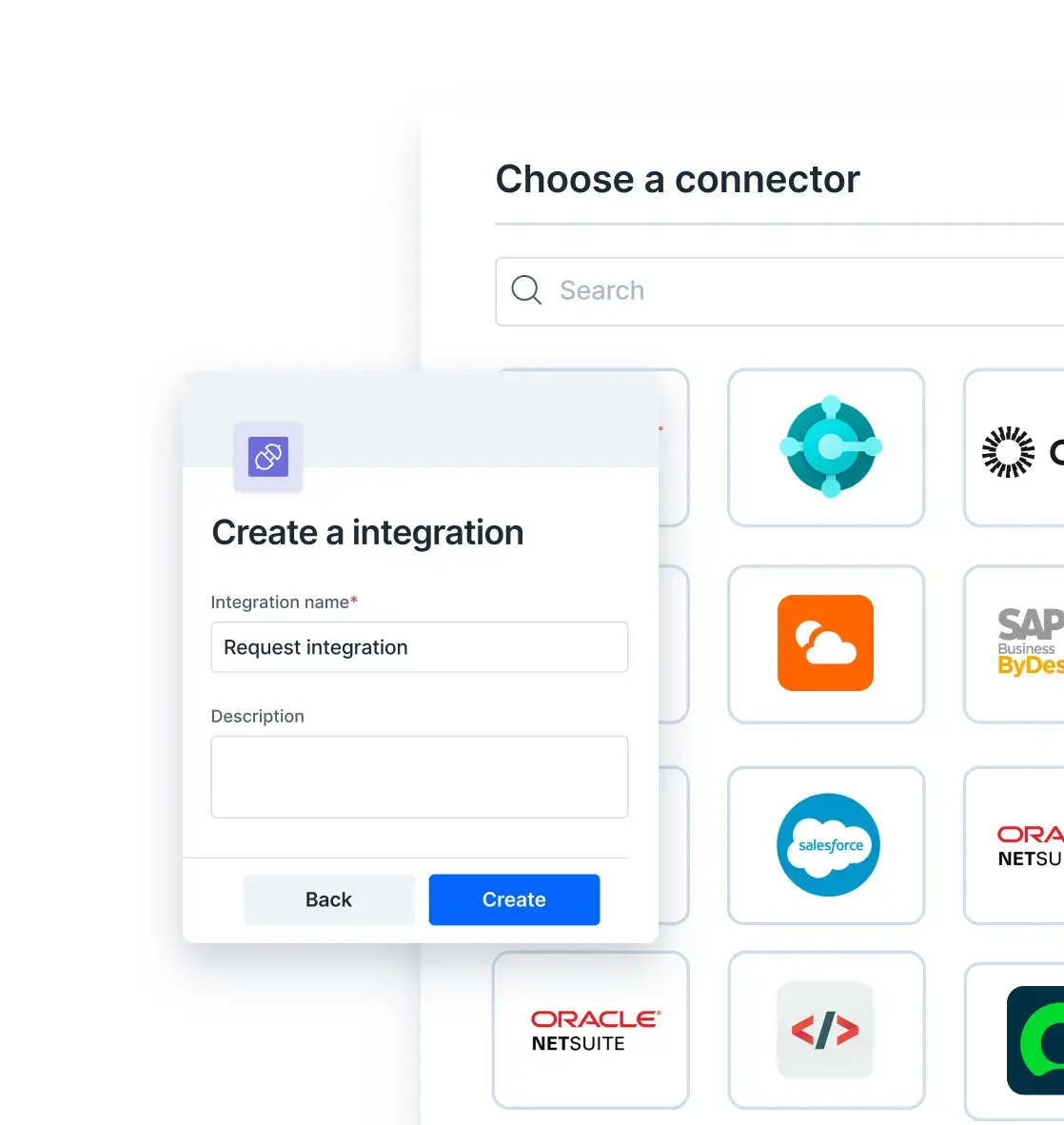
1. Inside your Kissflow account, click your profile picture on the top right corner of the screen and click Integrations from the dropdown. Now, click the New integration button to provide a name and description for your integration.
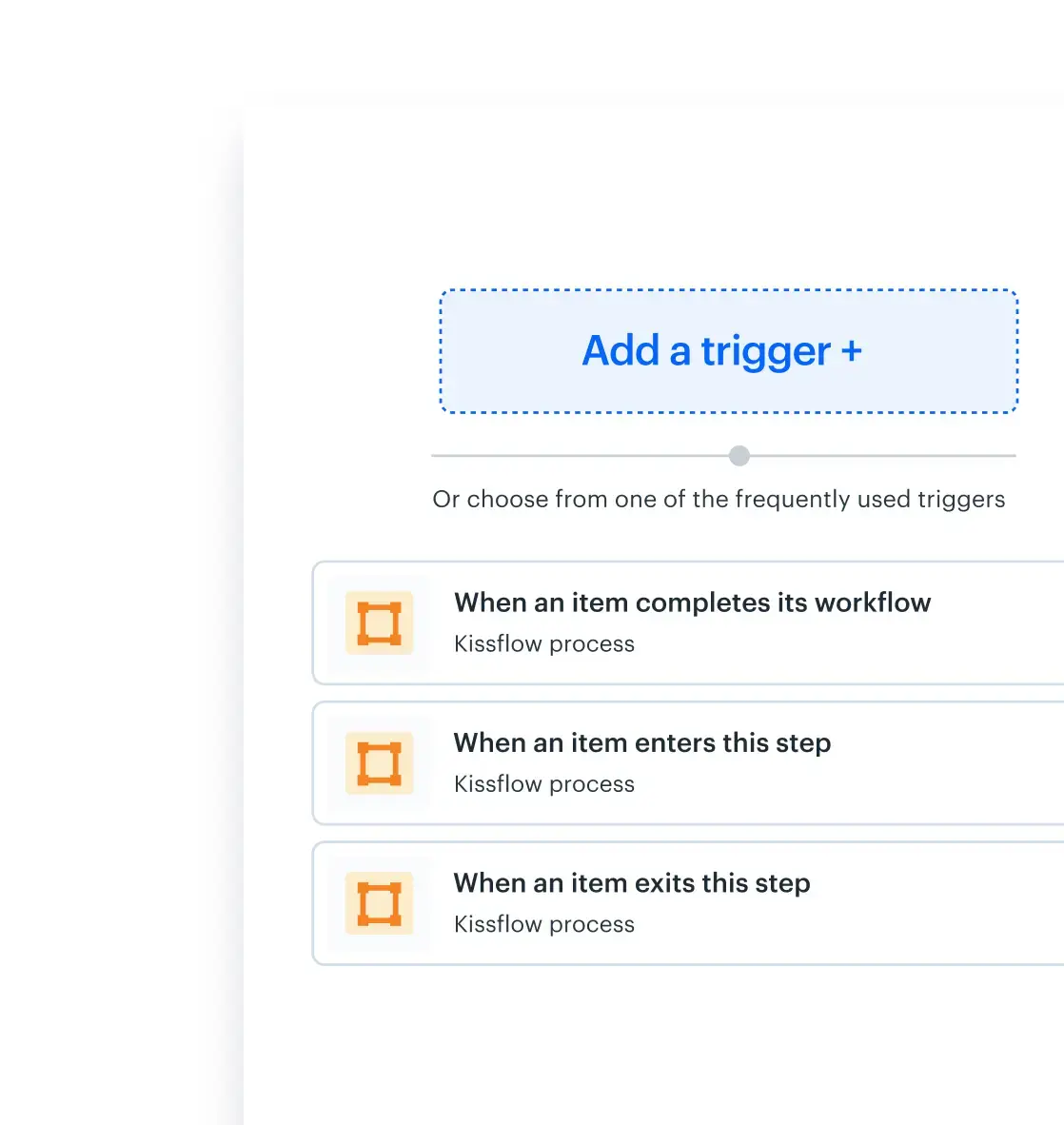
2. Once inside your editor, set up a trigger step, for example, a Kissflow Case system trigger event, when the status of an item is updated.
3. After setting up your trigger step above, click the Add button (+) next to set up your action step. Search for Twilio and select the action. If you choose the action Send a WhatsApp message, both the sender and recipient must have an active WhatsApp account.
4. After choosing your action event, authenticate the connector. Click +Add an account and sign in using your Account SID and Auth Token. You need to have an account with Twilio to get your unique Account SID and Auth Token. Login to your Twilio account and scroll down to Account Info to find your Account SID and Auth Token.
5. After authenticating with your Twilio account, add relevant values against the Twilio form fields. You can hit Refresh fields to view all the updated fields in the selected Twilio form. You can also map Twilio fields from your trigger step or fields from your previous action steps. These values will be automatically added to item fields after the action is executed.
6. After a successful configuration, test whether your Twilio action step is set up correctly by clicking the Test button. The connector will pull field data from your selected Twilio account and display it as a JSON output. Similar to trigger step, errors are notified to you right away. Fix them before retesting the action step.
Click here to learn more.
Setting up a Twilio connector
After creating a custom workflow with your Twilio connector's action step, switch ON the toggle button to activate the integration run. Once a trigger event occurs, an SMS is sent to your specified Twilio number.
Conclusion
You now have an integrated solution where Kissflow can send SMS notifications through Twilio. Customize the payload and handle different scenarios as per your business requirements. Make sure to refer to the official documentation of Twilio and Kissflow for any updates or changes to the APIs.
Notification and messaging processes sometimes require review before being sent externally. Low code development platform supports building these controlled routing steps.
Communication workflows triggered through Twilio often involve conditional logic and routing. A No-Code Platform allows teams to build these automated paths without development effort, improving responsiveness.
Key Actions
Unleashed by Integrating
Twilio

Send an SMS
This action sends SMSs to a number or numbers
Send a WhatsApp message
This action sends a WhatsApp message to a number
Seamlessly Integrate Kissflow with Your Twilio– Start Connecting Today!

Frequently Asked Questions
- 1. Create a Twilio Account: Sign up for a Twilio account and obtain your Account SID and Auth Token.
- 2. Obtain a Twilio Phone Number: Purchase a Twilio phone number that you will use for sending messages or making calls.
- 3. Access Kissflow Integration Tool: Go to Kissflow and open the integration settings. Look for the Twilio integration option.
- 4. Enter Twilio Credentials: Input your Twilio Account SID, Auth Token, and the phone number you obtained into the Kissflow integration settings.
- 5. Create a Workflow: Design your Kissflow workflow to include Twilio actions, such as sending SMS or initiating calls based on specific triggers.
- 6. Test the Integration: Perform tests to ensure that the integration works as expected, sending messages and making calls appropriately.
- SMS Notifications: Send automated text messages to users regarding workflow updates, approvals, or reminders.
- Voice Calls: Trigger phone calls for automated reminders, confirmations, or information sharing as part of a business process.
- Interactive Voice Response (IVR): Set up IVR systems for customer interactions when integrated into customer service workflows.
- Cost: Sending SMS or making calls through Twilio incurs costs, which may vary based on usage and destination.
- API Limitations: Both Twilio and Kissflow have API limitations regarding the number of requests, which may affect high-volume users.
- Configuration Complexity: Setting up the integration may require a moderate level of technical understanding, particularly with API configurations and workflow design.
- Use Twilio Console: Log in to your Twilio Console where you can view the dashboard with analytics on message delivery, status, and error logs.
- Webhook Integration: Set up webhooks in Twilio to receive real-time updates on message statuses, such as delivered, failed, or undelivered.
- Kissflow Reporting: Utilize the reporting and analytics features in Kissflow to assess workflow performance, including communications triggered by Twilio actions.
Have questions about Kissflow + Twilio? Chat with an integration expert now
Integrations are part of the app, not separate
Create enterprise integrations to your core systems directly inside Kissflow’s app builder without switching tools







Every app is built to connect

Configure inside the builder
Use the same platform to connect your app as you do to build it

No middleware to manage
See any mismatches or errors from within the platform

Built-in governance
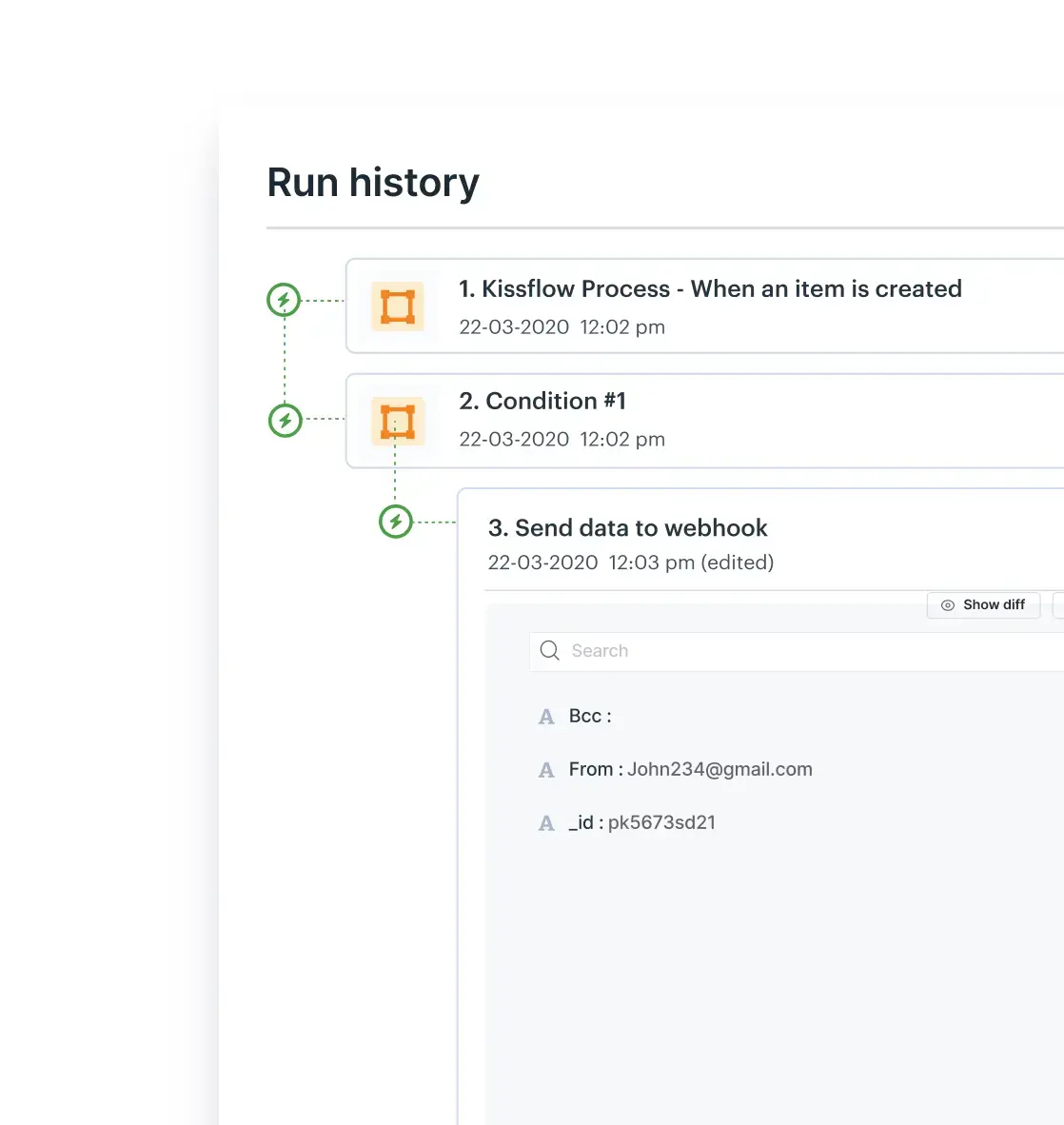
Get admin reports on every run, adjust payloads, and monitor status
Marketing

ActiveCampaign
ActiveCampaign is a customer experience automation (CXA) software that assists organizations in better engaging their customers.

Mailchimp
Mailchimp is a marketing automation platform and email marketing service for managing mailing lists and creating email marketing campaigns to send to customers
Signatures

Adobe Sign
Adobe Sign is a cloud-based e-signature service that enables users to submit, sign, track, and manage signing procedures through a browser or mobile device.

DocuSign
DocuSign is an electronic signature technology and digital transaction management service for facilitating electronic exchanges of signed documents.
Project Management

Asana
Asana is project management tool for modern businesses. Organize, track, and manage your tasks with Asana's web and mobile applications.

Basecamp
Basecamp is an online collaboration app that lets people manage their work together and communicate with one another.

Smartsheet
Assign tasks, track project progress, manage calendars, share documents, and manage other work, using a tabular user interface.

Jira
Jira is an issue tracking product by Atlassian that allows bug tracking and agile project management. This integration allows you to connect to cloud-hosted instances of Jira.

Monday.com
Monday.com is a versatile project management software that enables users to manage all their projects efficiently in one centralized platform. Teams can create customizable workflows, track project progress, assign tasks, and collaborate in real-time.
Security and Identity Tools

Azure Active Directory
Microsoft Azure Active Directory (Azure AD) offers cloud-based Identity and Access Management (IAM) solution to enterprise customers.

Okta
Okta helps companies manage and secure user authentication into applications and for developers to build identity controls into applications, website web services, and devices.
Phone and SMS

File Management and Storage

Accounting and Finance

Expensify
Expensify is an application that makes it easy to import expenses directly from a credit card to create expense reports quickly and easily

FreshBooks
Connect Kissflow with FreshBooks to automate accounting workflows, streamline invoicing, and reduce manual entry.

Quickbooks
Quickbooks is an accounting software package and geared mainly toward small and medium-sized businesses

XE.com
XE.com provides currency exchange rates, tools, and services for individuals and businesses around the world

Xero
Xero's cloud-based acconting software lets businesses track their expenses with ease.
Google Workspace

Gmail
One of the most popular email services, Gmail keeps track of all your emails with threaded conversations, tags, and Google-powered search to find any message you need.

Google Calendar
Google Calendar allows you to organize and share your schedule with friends and colleagues.

Google Drive
Google Drive will keep all your files organized and up to date

Google Sheets
cloud-based spreadsheet application that allows users to create, edit, and collaborate on spreadsheets in real-time
Chat and Video Conferencing

Google Chat
Google Chat is a communication service designed for teams and business environments.

Microsoft Teams
Microsoft Teams is a collaborative workspace within Microsoft 365 that acts as a central hub for workplace conversations

Slack
Slack is a platform for team communication: everything in one place, instantly searchable, available wherever you go. Offering instant messaging, document sharing and knowledge search for modern teams.
Customer Relationship Management

HubSpot
HubSpot offers a full platform suite of inbound marketing, sales, and customer service tools for modern teams

Salesforce
Salesforce provides customer relationship management software and applications focused on sales, customer service, marketing automation, analytics, and application development.

Salesmate
Salesmate is a sales and custom relationship management software that can be used by teams of any size

Zendesk
Zendesk is a cloud-based help desk management solution offering customizable tools to build customer service portal, knowledge base and online communities.
Enterprise Resource Planning (ERP)

Oracle NetSuite
Oracle NetSuite is a cloud-based ERP platform popular with small to mid-sized businesses, unifying financials, inventory, CRM, and e-commerce in one system.

Microsoft Dynamics 365 Business Central
Microsoft Dynamics 365 Business Central is an all-in-one business management solution that helps organizations streamline processes, make informed decisions, and drive growth through finance, operations, sales, and customer service functionalities.

SAP Business ByDesign
SAP Business ByDesign is a cloud-based, mid-market ERP solution from SAP that combines finance, HR, procurement, and supply chain management in a single integrated suite.

SAP S/4HANA
SAP S/4HANA is SAP's next-generation ERP suite, built on the in-memory HANA database, designed for large enterprises needing real-time data processing across finance, supply chain, manufacturing, and other core business functions.
Microsoft Office

Microsoft Excel
Microsoft Excel is a spreadsheet application developed by Microsoft. It features calculation or computation capabilities, graphing tools, pivot tables, and a macro programming language called Visual Basic for Applications (VBA).

Microsoft OneDrive
Microsoft OneDrive offers a cloud service to host all your photos, videos, and files that are backed up, protected, synced, and made accessible on all your devices.

Microsoft Outlook
Microsoft Outlook is a popular suite of email, contacts, and calendaring services

Microsoft SharePoint
Microsoft SharePoint allows you to share and manage content, knowledge, and applications to empower teamwork and seamlessly collaborate across the organization
Human Resources (HR)

Information Technology (IT)


Stage 1
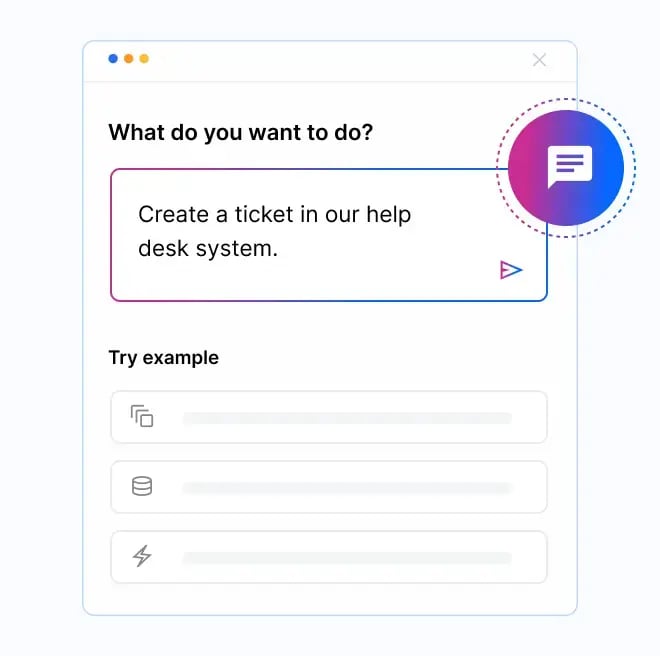
Describe in plain English
Enter what you want to accomplish. For example: 'Create a ticket in our help desk system.'
Stage 2
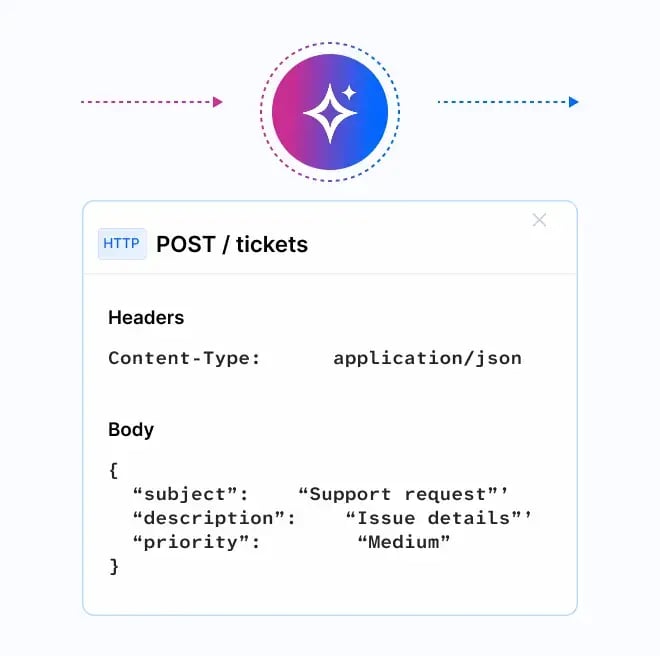
AI generates the action
Kissflow auto-populates the HTTP method, endpoint URL, and request payload.
Stage 3
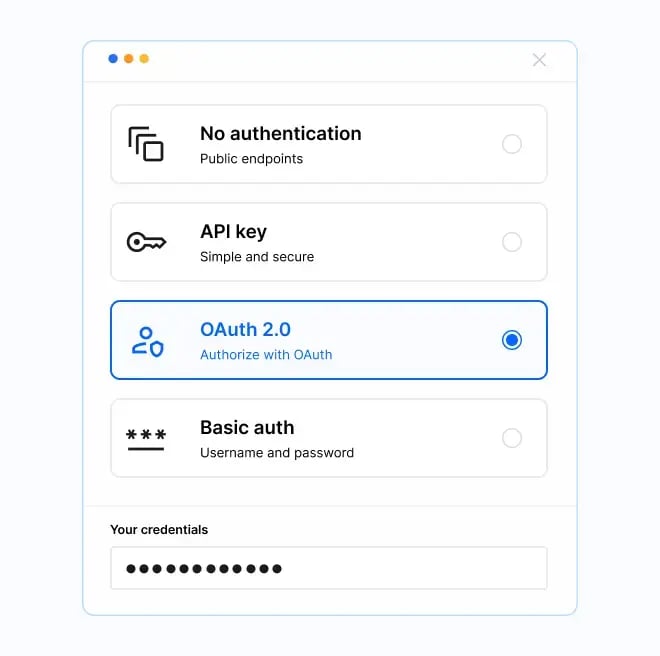
Choose authentication
Select from no auth, basic auth, API key, or OAuth2, and enter your credentials.
Stage 4

Test and deploy
Verify the connection with a live test, refine if needed, and add it to your workflow.