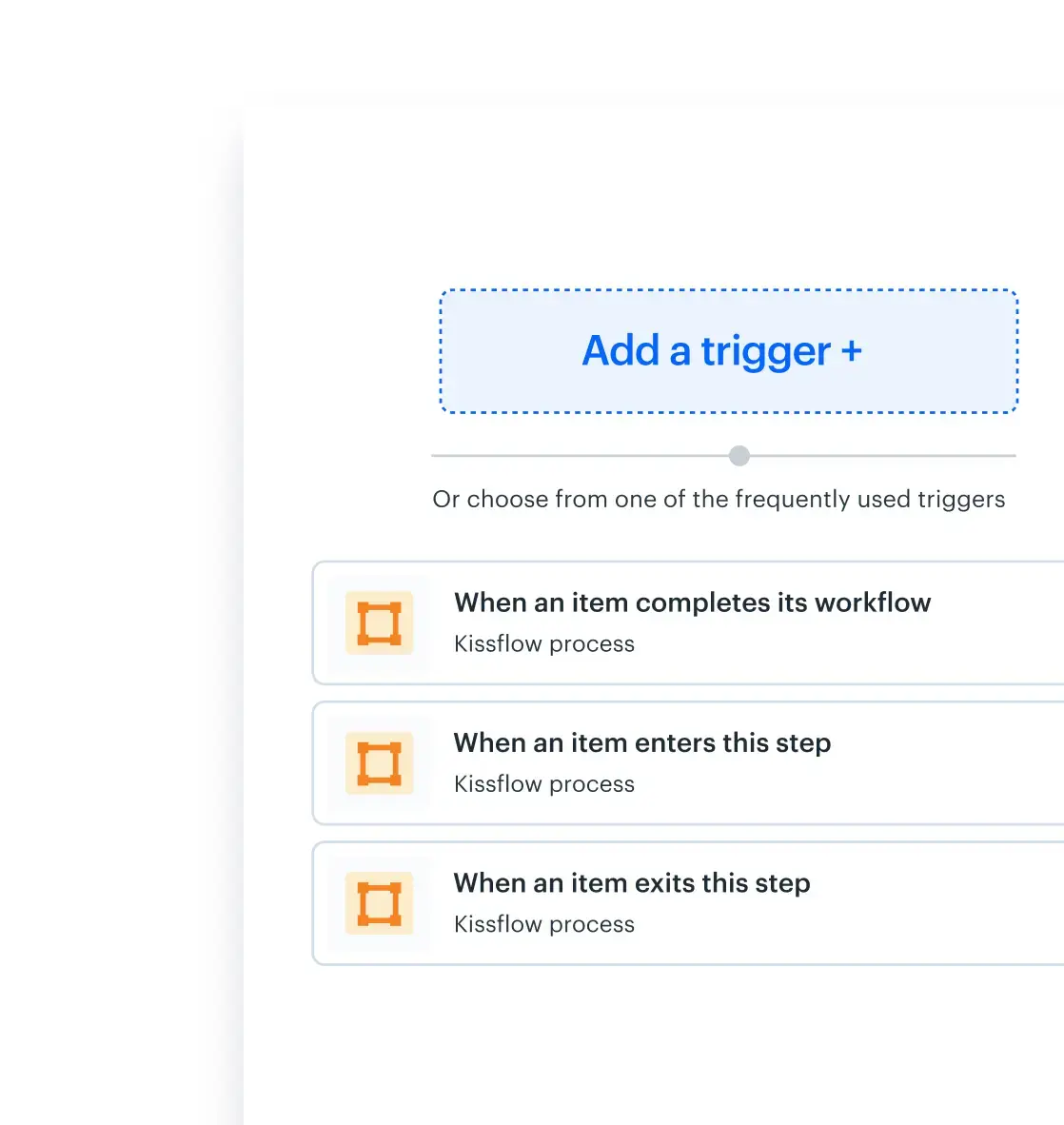
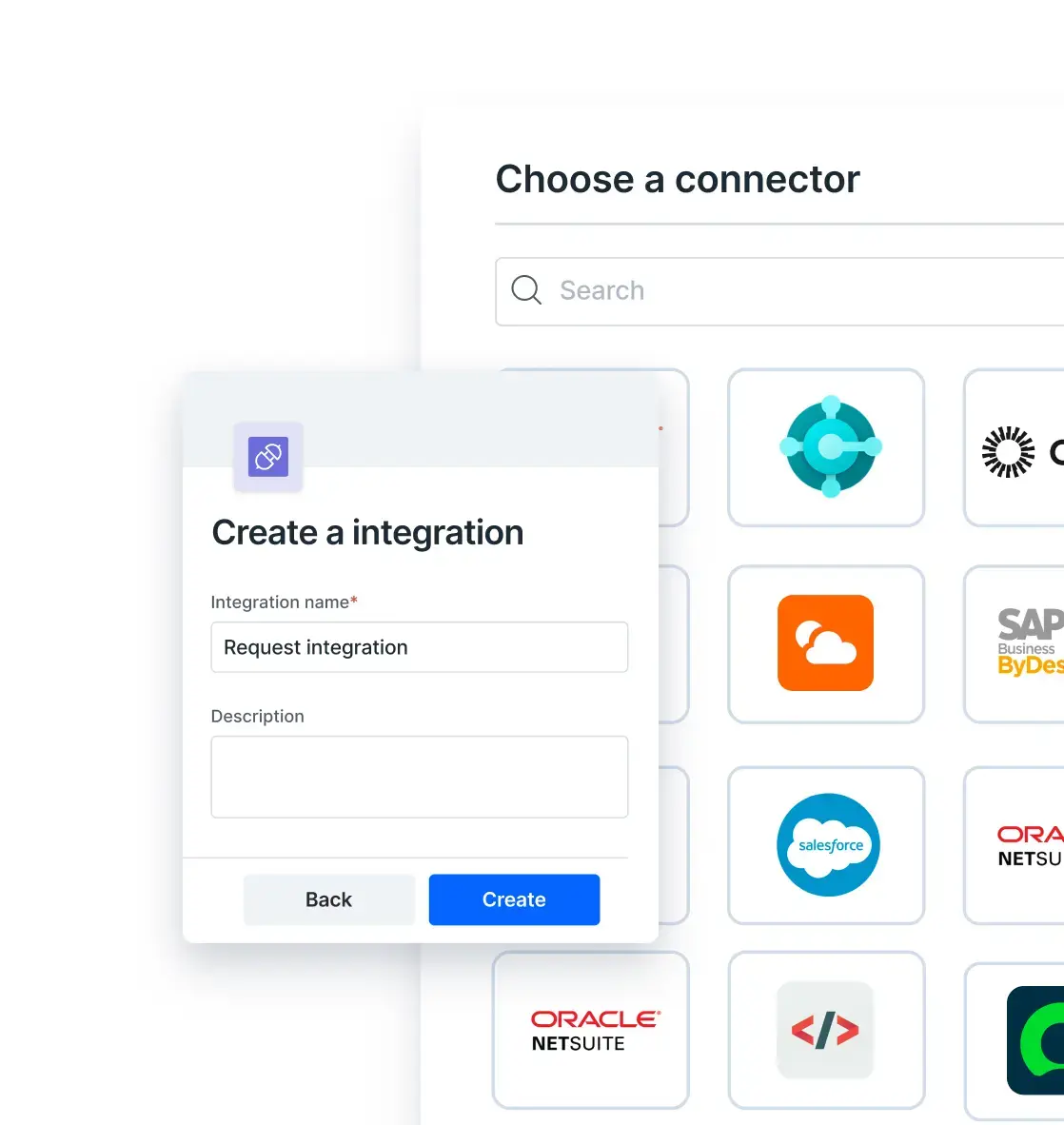
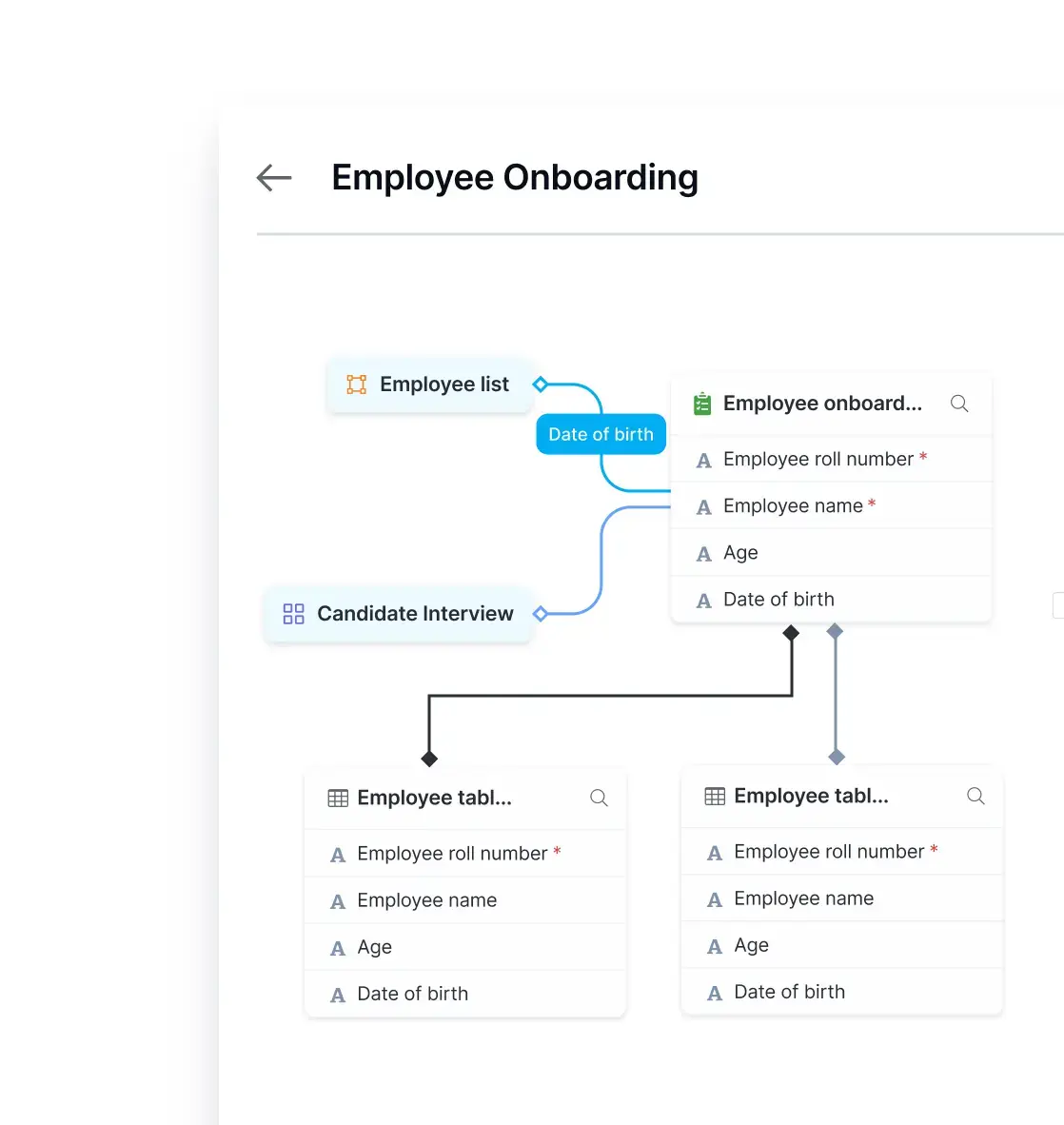
Integrations are part of the app, not separate
Create enterprise integrations to your core systems directly inside Kissflow’s app builder without switching tools







Every app is built to connect

Configure inside the builder
Use the same platform to connect your app as you do to build it

No middleware to manage
See any mismatches or errors from within the platform

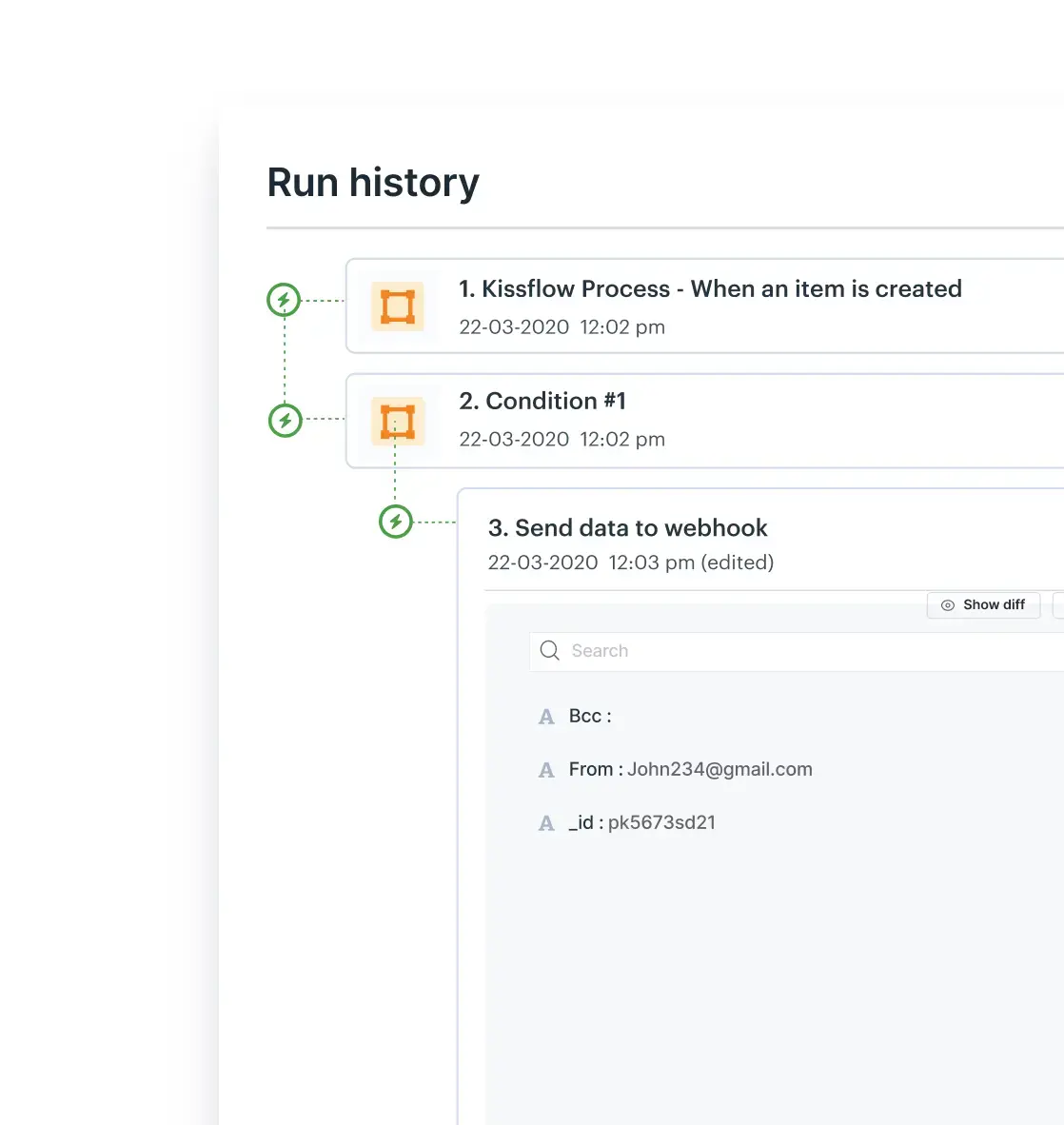
Built-in governance
Get admin reports on every run, adjust payloads, and monitor status
Marketing

ActiveCampaign
ActiveCampaign is a customer experience automation (CXA) software that assists organizations in better engaging their customers.

Mailchimp
Mailchimp is a marketing automation platform and email marketing service for managing mailing lists and creating email marketing campaigns to send to customers
Signatures

Adobe Sign
Adobe Sign is a cloud-based e-signature service that enables users to submit, sign, track, and manage signing procedures through a browser or mobile device.

DocuSign
DocuSign is an electronic signature technology and digital transaction management service for facilitating electronic exchanges of signed documents.
Project Management

Asana
Asana is project management tool for modern businesses. Organize, track, and manage your tasks with Asana's web and mobile applications.

Basecamp
Basecamp is an online collaboration app that lets people manage their work together and communicate with one another.

Smartsheet
Assign tasks, track project progress, manage calendars, share documents, and manage other work, using a tabular user interface.

Jira
Jira is an issue tracking product by Atlassian that allows bug tracking and agile project management. This integration allows you to connect to cloud-hosted instances of Jira.

Monday.com
Monday.com is a versatile project management software that enables users to manage all their projects efficiently in one centralized platform. Teams can create customizable workflows, track project progress, assign tasks, and collaborate in real-time.
Security and Identity Tools

Azure Active Directory
Microsoft Azure Active Directory (Azure AD) offers cloud-based Identity and Access Management (IAM) solution to enterprise customers.

Okta
Okta helps companies manage and secure user authentication into applications and for developers to build identity controls into applications, website web services, and devices.
Phone and SMS


File Management and Storage

Accounting and Finance

Expensify
Expensify is an application that makes it easy to import expenses directly from a credit card to create expense reports quickly and easily

FreshBooks
Connect Kissflow with FreshBooks to automate accounting workflows, streamline invoicing, and reduce manual entry.

Quickbooks
Quickbooks is an accounting software package and geared mainly toward small and medium-sized businesses

XE.com
XE.com provides currency exchange rates, tools, and services for individuals and businesses around the world

Xero
Xero's cloud-based acconting software lets businesses track their expenses with ease.
Google Workspace

Gmail
One of the most popular email services, Gmail keeps track of all your emails with threaded conversations, tags, and Google-powered search to find any message you need.

Google Calendar
Google Calendar allows you to organize and share your schedule with friends and colleagues.

Google Drive
Google Drive will keep all your files organized and up to date

Google Sheets
cloud-based spreadsheet application that allows users to create, edit, and collaborate on spreadsheets in real-time
Chat and Video Conferencing

Google Chat
Google Chat is a communication service designed for teams and business environments.

Microsoft Teams
Microsoft Teams is a collaborative workspace within Microsoft 365 that acts as a central hub for workplace conversations

Slack
Slack is a platform for team communication: everything in one place, instantly searchable, available wherever you go. Offering instant messaging, document sharing and knowledge search for modern teams.
Customer Relationship Management

HubSpot
HubSpot offers a full platform suite of inbound marketing, sales, and customer service tools for modern teams

Salesforce
Salesforce provides customer relationship management software and applications focused on sales, customer service, marketing automation, analytics, and application development.

Salesmate
Salesmate is a sales and custom relationship management software that can be used by teams of any size

Zendesk
Zendesk is a cloud-based help desk management solution offering customizable tools to build customer service portal, knowledge base and online communities.
Enterprise Resource Planning (ERP)

Oracle NetSuite
Oracle NetSuite is a cloud-based ERP platform popular with small to mid-sized businesses, unifying financials, inventory, CRM, and e-commerce in one system.

Microsoft Dynamics 365 Business Central
Microsoft Dynamics 365 Business Central is an all-in-one business management solution that helps organizations streamline processes, make informed decisions, and drive growth through finance, operations, sales, and customer service functionalities.

SAP Business ByDesign
SAP Business ByDesign is a cloud-based, mid-market ERP solution from SAP that combines finance, HR, procurement, and supply chain management in a single integrated suite.

SAP S/4HANA
SAP S/4HANA is SAP's next-generation ERP suite, built on the in-memory HANA database, designed for large enterprises needing real-time data processing across finance, supply chain, manufacturing, and other core business functions.
Microsoft Office

Microsoft Excel
Microsoft Excel is a spreadsheet application developed by Microsoft. It features calculation or computation capabilities, graphing tools, pivot tables, and a macro programming language called Visual Basic for Applications (VBA).

Microsoft OneDrive
Microsoft OneDrive offers a cloud service to host all your photos, videos, and files that are backed up, protected, synced, and made accessible on all your devices.

Microsoft Outlook
Microsoft Outlook is a popular suite of email, contacts, and calendaring services

Microsoft SharePoint
Microsoft SharePoint allows you to share and manage content, knowledge, and applications to empower teamwork and seamlessly collaborate across the organization
Human Resources (HR)

Information Technology (IT)


Stage 1
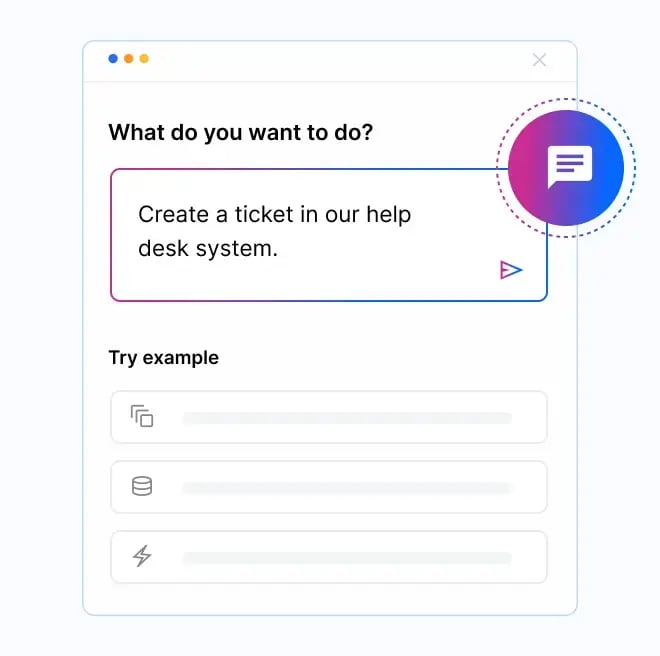
Describe in plain English
Enter what you want to accomplish. For example: 'Create a ticket in our help desk system.'
Stage 2
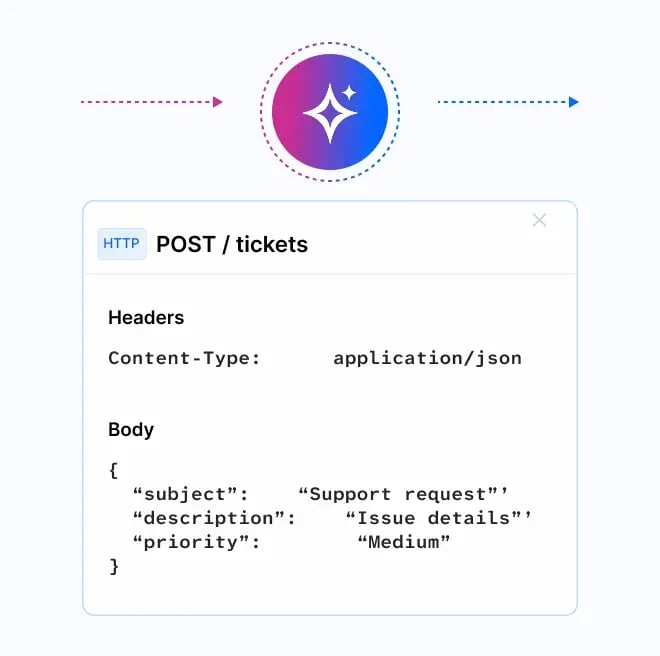
AI generates the action
Kissflow auto-populates the HTTP method, endpoint URL, and request payload.
Stage 3
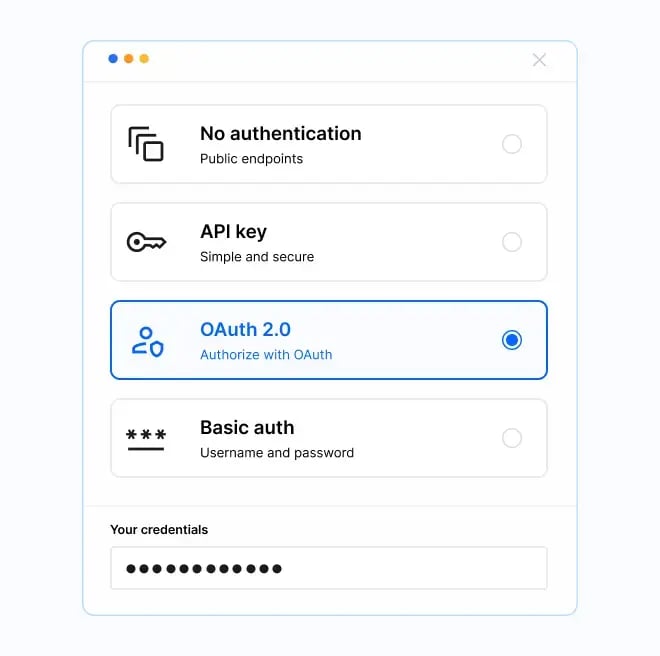
Choose authentication
Select from no auth, basic auth, API key, or OAuth2, and enter your credentials.
Stage 4
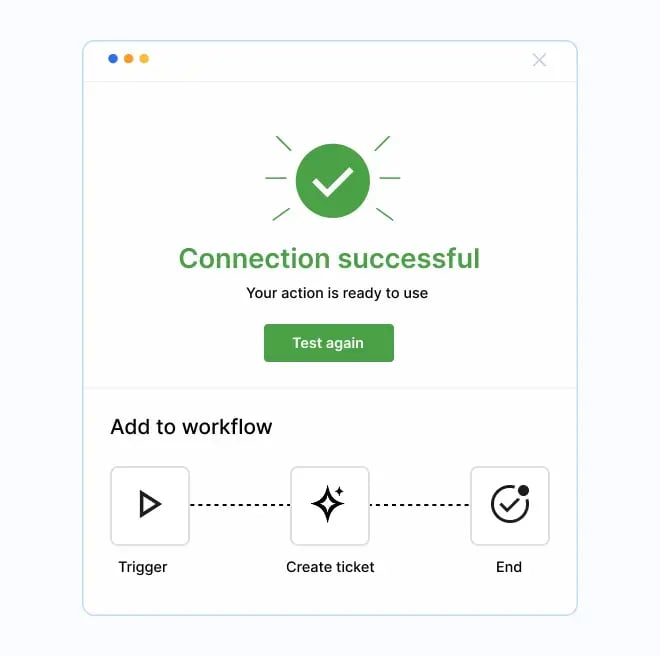
Test and deploy
Verify the connection with a live test, refine if needed, and add it to your workflow.